
On November 14, 1942, 523 Allied prisoners of war walked into a village called Jinguashi in Taiwan's Northeast Coast1. Most were soldiers from the British Commonwealth—British, Australian, New Zealand, Canadian, and South African. They had been marched by Japanese forces from Changi POW camp in Singapore to dig copper in this mountain's deepest tunnels. The Japanese called it "Mieiei Prisoner Labor Camp," locals referred to it as tǔ-pí-á-lâu (hollow-nose shack) in Taiwanese, while the prisoners themselves named that mine shaft "Hell Hole." Some survived nearly three years and left alive; others never made it out1.
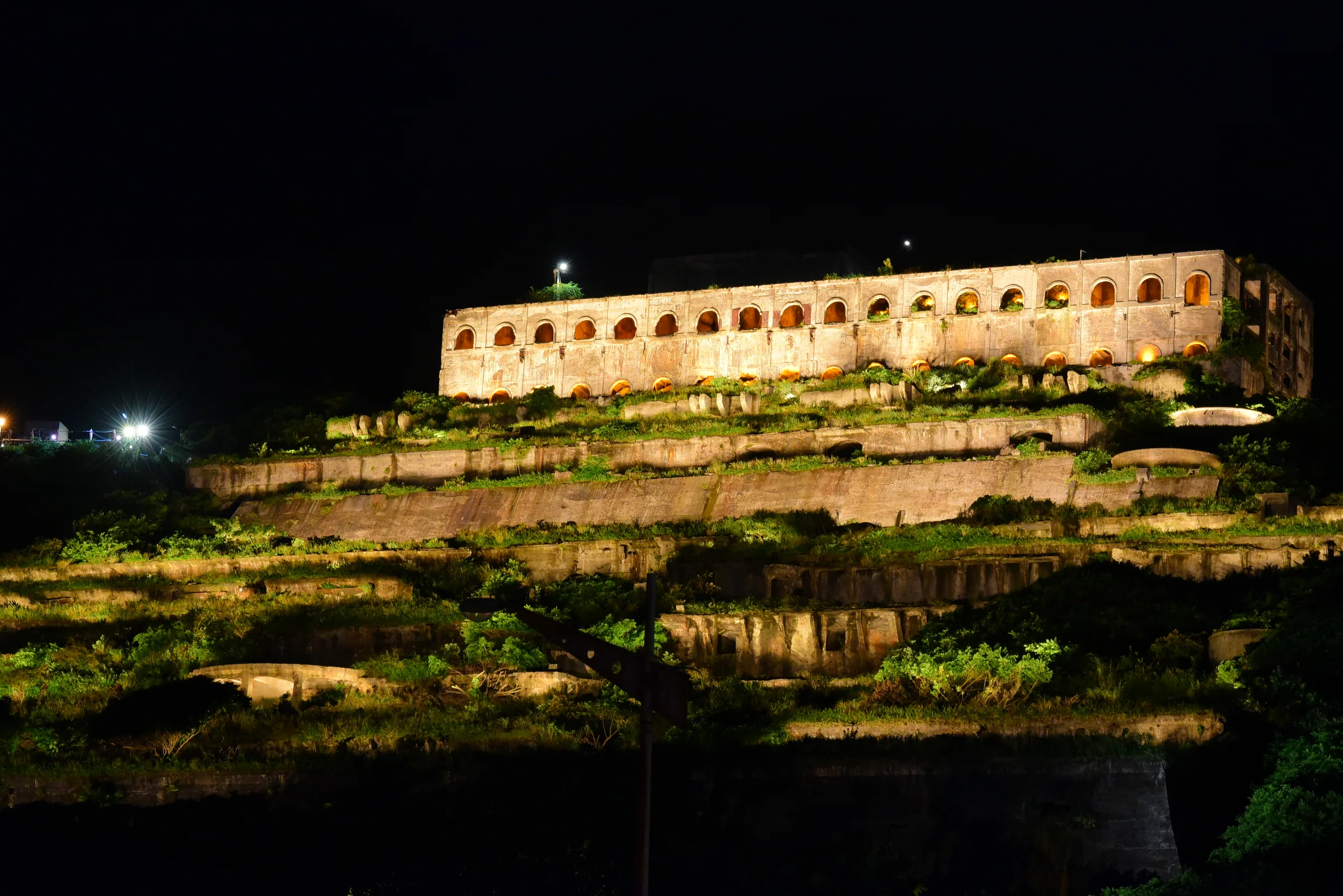
This is one layer of Jinguashi's life—a layer almost every generation of Taiwan people do not know. Most remember Jinguashi as the 220-kilogram gold brick you can touch, the orange lights that glow at night on the Thirteen Levels Ruins, and the unbeatable sea views when detouring from Jiufen to nearby spots. These are all true. But this mountain has several more layers beneath your feet.
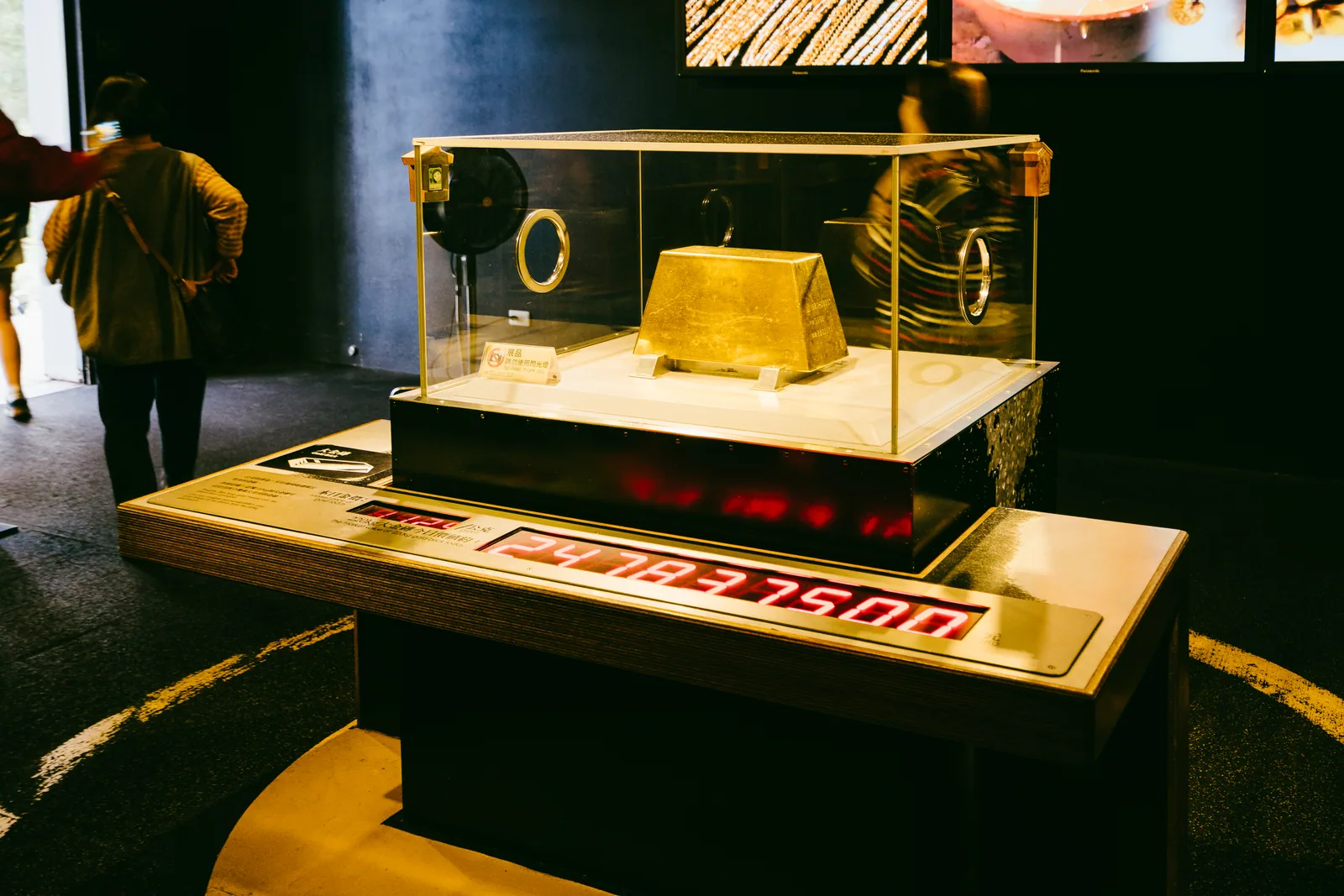
The 220-kilogram gold brick you can touch inside the National Gold Museum is most people's first impression of Jinguashi. Photo: Wei-Te Wong / Wikimedia Commons, CC BY-SA 2.0
30-second overview: Jinguashi stacks many layers of lives on one mountain: that alluvial gold in Keelung River in 1890; the eight hundred thousand people flooding in for a gold rush dream during the 1930s; those five hundred foreign POWs digging copper inside tunnels in 1942; local miners who traded lungs for gold, and silent figures falling down under Wang Tong's lens; orange lights illuminating Thirteen Levels in 2019; and today arsenic soil beneath visitors' feet that remains unwashed. This article aims to lay these layers out together. Because if you only see the gold, or only night lights, or only sea views, you will miss the true weight this mountain has shouldered.
That Alluvial Gold in the River, That Pumpkin on the Mountain Top
Jinguashi's story begins with a river. In 1890, workers building an iron bridge over Keelung River under Liu Ming-ch'uan discovered alluvial gold inside it2. News spread, and prospectors followed upstream along the river to find its source3. By 1893, they found a gold ore outcrop on top of one mountain. That huge rock resembled a pumpkin; in Taiwanese it is called "gold melon" (kim-kua). Thus this mountain and settlement were named Jinguashi (Gold Melon Stone).
But before the mountain could start making money, fate was rewritten. In 1895 Taiwan was ceded to Japan; the following year (Meiji Year 29, 1896), in September, the Governor-General of Taiwan promulgated "Taiwan Mining Rules," Article Two explicitly stating: "Mining operations are limited only to Japanese nationals"4. This single clause effectively closed the door on local residents legally mining overnight. At year-end 1895 government had issued about two thousand gold prospecting licenses; in January of 1896 it halted private panning under the guise of protecting river forests4. Next, the Governor-General divided the entire mining district into east and west halves along a straight north-south ridge line passing through Jilong Mountain (now Keelung Mountain): On October 8, 1896 Fujita Denzaburo's Fujita Group acquired western Ruifang Mines; on October 26 Tanaka Chobei from Kamaishi Mine acquired eastern Jinguashi Mines5.
📝 Curator's Note: This ridge line division was clean, yet it split the destinies of two settlements for a hundred years. Western Jiufen later revived thanks to one film A City of Sadness; Eastern Jinguashi revived through a light show—but that is later talk. What this cut truly removed at the time was the version of story "locals digging gold and getting rich": Gold would henceforth be dug by foreign capital using foreign technology, flowing ultimately to Tokyo. From the beginning, Jinguashi's golden years did not fully belong to people here.
In 1904, Benshan No. 3 Mine reached arsenopyrite copper ore; gold-silver deposits became gold-silver-copper deposits, adding another thing this mountain could give2. What truly pushed Jinguashi to its peak was capital relay. In 1925, Miyauchi Shintaro raised two million yen to buy Tanaka Group's mining rights and served as president; by April of 1933 he sold the mine at a high price of twenty million yen to Nippon Mining Co., Ltd. (a Mitsubishi zaibatsu affiliate), turning himself into a millionaire overnight, earning the title "King of Gold Mountains"6.
The succeeding Nippon Mining Zaibatsu entered with huge capital and immediately did two things: update equipment and build an entirely new concentration plant—that massive ruin built along the hillside at Shui-nandong by today's seaside commonly known as Thirteen Levels (actually eighteen floors)7. After using new technology for large-scale mining, Jinguashi gold output reportedly surged to nearly seventy thousand taels in 1938, earning it the title "Asia's Number One Precious Metal Mine," attracting about eighty thousand prospectors at one point3. Scholar Zhang Yixi made this clear in a mine history study for the National Gold Museum: What earned Jinguashi its reputation as "East Asia's First Capital of Gold" was actually the Nippon Mining Zaibatsu period after 1933, not Miyauchi Shintaro personally5. It was capital from zaibatsus that had the power to squeeze this mountain to its limit.
Over One Hundred Meters Below Sea Level: Bento Boxes, Silicosis, and Things Not Said Inside Mines
The golden years sound beautiful, but those who actually went underground traded their bodies for gold.
Vertical distribution of Benshan ore vein in Jinguashi extends from Golden Melon Peak at about 600 meters above sea level down to below sea level by 130 meters without ending8. In other words, miners had to work deep inside the mountain even lower than sea level. Inside tunnels it was stifling and oxygen-poor with falling rocks always possible; most common occupational disease was silicosis: Workers operating pneumatic drills for years inhaled fine quartz dust particle by particle into their lungs until they hardened bit by bit.
In this construction site where death brushed against you daily, language became a safety valve. Before entering mines miners would worship Guan Gong (God of War); inside tunnels there existed an entire set of taboos—psychological protection grown out from high-risk industry itself. As for miner bento boxes later becoming tourist attractions: three bowls of white rice with pickles and salted eggs. Rice needed to be abundant because physical labor consumed energy quickly; side dishes had to be heavily salty because sweat flowed profusely inside mines needing salt replenishment. Today visitors queue at the National Gold Museum buying "Miner Bento" for photos, few think that those full bowls of white rice with heavy-salty sides were originally calculated by bodies sweating underground.
Miners' positions in the museum are actually scarce. Mining history written truly by miners themselves is not in Jinguashi but next door in Houlong (Hou-tong). Retired old miner Zhou Chao-nan pays 3,500 yuan monthly pension to rent a locker room himself leaving miner memories bit by bit for posterity. This is local laborers' self-written history left behind—quite different from official "Golden Years" narrative.
Over Five Hundred Foreigners Came Here to Dig Copper
If local miners traded lungs for gold, then after Pacific War broke out those who came here trading lives for copper were a group of foreigners arriving from afar.
After the Pacific War started, gold was classified as non-defense material; Jinguashi switched to mining copper. On October 20, 1942, transport ship England Maru departed Singapore carrying about one thousand POWs mostly British nationals, arrived at Keelung on November 69. On November 14 among them 523 prisoners of war (34 officers, 489 soldiers) walked into Jinguashi village beginning what for some was a three-year ordeal110. Japanese called this place "Mieiei Prisoner Labor Camp," POWs named the copper mine beneath their feet as "Hell Hole."
Welshman Jack Edwards is one of those who survived. Before capture he was a corporal in Royal Corps of Signals; after Changi fell sent here. Later recorded days inside tunnels in memoir Banzai, You Bastards!: Every day walk 1,881 steep stairs to and from mining face work area, four people per group required daily output twenty-four mine carts worth copper ore or get beaten11. POWs wore cardboard hats, poor quality lamps, sandals. These details later appeared word-for-word in war crimes tribunal indictments becoming evidence of "severe lack of protective equipment"12.
How many died depends on how you count it. Oxford University scholar Venables published paper in Medical History 2025 statistics show recorded deaths during entire Jinguashi period were ninety-one people, among them about sixty-three percent (fifty-seven) related to beriberi disease—direct consequence of severe malnutrition13. Hong Kong War Crimes Trial records are eighty-four but that statistic only covers up to end of February 1945 missing about three months compared to actual camp operation ending date10. Two numbers not contradictory just statistical time windows differ. Looking at whole Taiwan: According to Michael Hurst's many years research confirmation, Japanese forces set sixteen POW camps in Taiwan detaining over four thousand three hundred Allied prisoners of war total about 430 deaths most occurring in Jinguashi1415. Overall death rate for Taiwan POWs was around ten percent far lower than outside world often hears "forty percent." That forty percent is entire Far East theater (including Burma-Thailand Death Railway etc. more severe battlefields) number not Jinguashi nor Taiwan's number16.
📝 Curator's Note: Here worth stopping a moment. Why Jinguashi POW camp fame "number one or two" relies on single highest death rate among camps—Pingtung Camp malaria death rate actually higher. What makes Jinguashi most notorious is cumulative people passing through here largest (over eleven hundred prisoners before and after), inside tunnel environment worst, many seriously ill POWs transferred to other camps like Baihe others dying elsewhere not counted in local Jinguashi deaths17. So "523 people finally only 89 left" simple subtraction yielding "four hundred plus died" algorithm wrong: Those eighty-nine refers to number of people still inside camp when Japan surrendered, not sole survivors. Definition of numbers needs more care than numbers themselves.
Two Doctors Saving People Inside Hell
Brightest light in a hell often those willing saving lives. Jinguashi POW camps had two military doctors one after another passing baton.
First British Royal Army Medical Corps Captain Peter Seed initially only medical officer inside camp. August 1943 Canadian Major Ben Wheeler transferred from other POW camp in Taipei area taking over, he was only Canadian person in Jinguashi13. Under extremely scarce medicine conditions Wheeler did several nearly impossible things. He made wooden splint for paralyzed prisoner letting others take turns massaging his legs maintaining muscles then let him pedal on self-made "bicycle" daily rehabilitation finally this man actually stood up walking again18.
Most dramatic time he saved Seed himself March 1945 Seed also critically ill suffering beriberi dysentery near death. Wheeler performed eight small blood transfusions for him successively, blood source from prisoner donors pulling him back from gates of hell13. Jinguashi squad leaders later jointly signed certificate thanking both Wheeler and Seed expressing gratitude "despite limited medical resources many lives have been saved" (many lives have been saved)13. Another officer George Blair who worked with him evaluation for Wheeler just one sentence: "one of finest men I have ever met."19
Wheeler's daughter Anne Wheeler later filmed father POW experience into 1981 Canadian documentary A War Story. Father never mentioned this period to her before he died she reconstructed what happened inside mountain relying on diary left by father.
That Wall Seventeen Meters Long Carved with Names
This history almost completely disappeared entirely dug out from weeds a Canadian person.
Michael Hurst (Hei Maikè) is Canadian living long-term in Taiwan. Late 1996 he heard Jinguashi once had notorious Japanese POW camp. He and several companions visited copper mountain village where old camp site located local elderly residents enthusiastically helping him search past traces17. Two months before monument erection personally spent ten days digging inch by inch inside overgrown camp ruins paths prisoners walked mine entrances searching17.
November 23, 1997 memorial unveiled officially. That day one hundred fifty relatives and supporters gathered in park now standing on old camp site commemorating over thousand Jinguashi POWs all once detained Taiwan other camps20. Most moving three true Jinguashi survivors personally attended: Les Davis Jack Edwards George Williams20. Three veterans returned places they were imprisoned lifting veil this monument for those alive and not returning ceremony ended with Last Post one minute silence Reveille music20.
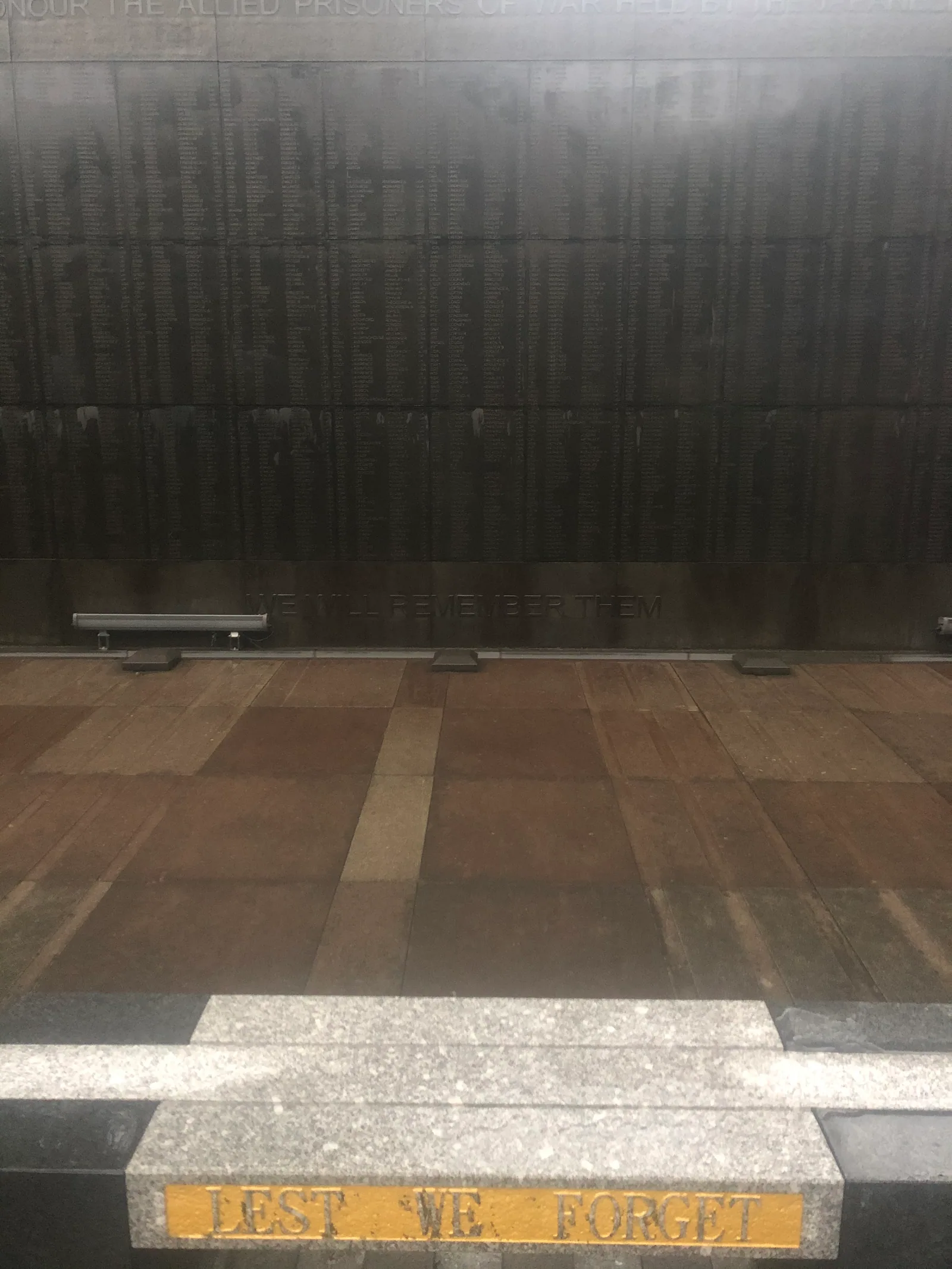
Memorial monument in Allied POWs Memorial Park. Photo: 121kao / Wikimedia Commons, CC BY-SA 4.0
Michael Hurst did not stop. In 1999 he established "Taiwan POW Camps Memorial Society" following twenty-plus years identified all four thousand three hundred seventy prisoners once Taiwan interviewed five to eight hundred veterans and family members wrote six-hundred-page Never Forgotten1410. Today walking into this memorial park you see wall about seventeen meters long over two meters high name carved every prisoner detained Taiwan rank nationality21. Park also has bronze statue "Mates" erected 2011: Two emaciated prisoners one supporting other shoulder inscription reads "Without a mate, no Prisoner of War could survive." (no partner POW cannot survive)22
📝 Curator's Note: Most important thing needing understanding entire matter Michael Hurst himself drew that line. He once said: "We do this not hate Japanese let those suffering know they were forgotten"23. This sentence is background color of monument. Another quote by Michael Hurst explains why history silent so long ago: "People knew all about Bridge on River Kwai but very few knew Taiwan's POW camps." (people knew bridge river kwai many fewer known taiwan pow camps)24 Mountain's camp history long overshadowed Burma-Thailand railway fame.
Post-war pursuit responsibility laid out also revealed complexity May 28, 1947 Hong Kong No. 5 War Crimes Military Tribunal Jinguashi case WO235/1028 made judgment nine defendants all Nippon Mining Co., Ltd staff not soldiers12. Mine manager Toda Mitsugu sentenced one year defense successfully argued POWs "forcibly sent his mine by military" role merely guide rather direct employment instead those using bare hands sometimes iron hammer beating prisoners site foremen Nagai Zushi each sentenced ten years12. Foreman hitting people heavier sentence than mine general manager. One phrase Japanese guilty cannot conclude this picture; what remains answer real not neat about responsibility falling who exactly.
And Jack Edwards story has encore post-war joined Hong Kong war crimes investigation team 1946 returned Jinguashi inside tunnel discovered document number 2701: According his own memoir that "if Allied forces landed Japan mainland massacre all POWs leaving no trace" secret order only surviving copy11. He spent forty-five years writing book. Later life said one sentence perhaps most should remember entire mountain: Allies rebuilt Japan Germany Italy Nobody rebuilt our lives Tears nightmares will remain till death I willing forgive None us forget.11
Wang Tong Twelve Years Earlier Than Museum Said "Silent"
Same mountain can have two completely different narratives. One sells tickets another closer truth latter twelve years earlier former.
1992 director Wang Tong brought Jinguashi big screen Hill of No Words his Taiwan Modern Trilogy third part (previous parts Strawman Banana Paradise) story tells two brothers Ah-Zhuo Ah-Lian escaping long-term labor contract exploitation running away gold rush dream chasing fortune throwing themselves into mining Jinguashi25. Film shot on location in Jinguashi two love main lines parallel: Ah-Zhuo loves widow Ah-Rou Ah-Lian loves young prostitute Fu-Mei-zi26. That year 29th Golden Horse Awards film won six awards at once Best Feature Film Best Director Original Screenplay Best Art Direction Best Costume Design plus Audience Choice Award for Favorite Movie25 (Strictly speaking Golden Horse formal competition items five audience choice another mechanism so some materials write "five major awards" refers same thing).
Twelve years later November 4, 2004 National Gold Museum opened on same mountain Taiwan first ecological museum concept using warm nostalgia golden years packaging place worth remembering27.
Same mountain one side Wang Tong lens people drowned gold other museum showcase golden years. Two narratives none right wrong this mountain originally both simultaneously looking outward layer clearer Japanese Wikipedia Jinguashi Mine item entire passage details mining technology management system even 1939 nationality employee numbers listed clearly completely omit POW forced labor28. Same mountain context Chinese English grew almost no intersection three stories.
Guan Gong Still Remains Shrine Only Remaining Pillars
Gods miners worship gods colonizers worship now one alive other only stone pillars this mountain divided layers even faith.
Jinguashi has two religious buildings coexisting destinies vastly different One Quanji Tang Han people: 1896 Huang Shichun Huang Renxiang brothers first set grass hut in Shiwei area worshipping Guan Di Jun official name "Quanji Tang" established October 2, 1900 built temple current site29. June 2, 1991 top installed bronze statue weighing twenty-five tons thirty-five feet tall Guan Di Jun believed Southeast Asia largest Guan Gong holy image (National Gold Museum official page conservatively calls Taiwan's largest)30 Miners worship Guan Gong before entering mines rather faith more like psychological management facing high risk.
Another Japanese Golden Shrine created Meiji Year 31 March 2, 1898 built mine operator Tanaka Chobei main deity Daikoku-tenjin Kanayama-hiko-no-mitama Sarutahiko-no-kami three gods every summer July fifteenth held grand mountain god festival fireworks song dance drama sumo miners residents gathered celebrate31. But Japanese left shrine also withered now only few lonely stone pillars torii standing halfway hillside.
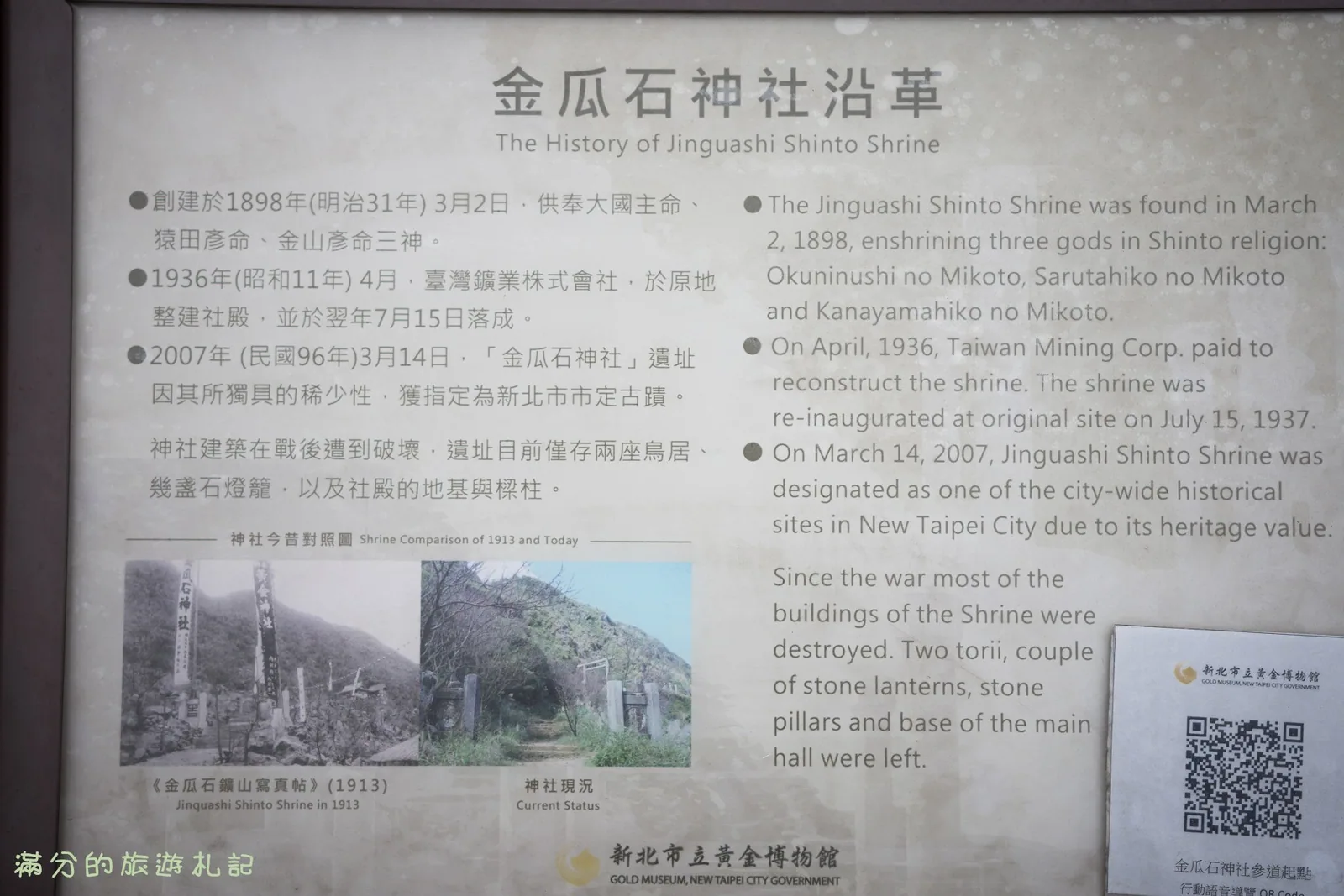
Ruins of Golden Shrine, remaining stone pillar stands on half mountain slope. Photo: fullfen666 / Wikimedia Commons, CC BY-SA 2.0
📝 Curator's Note: Two temples one alive dead faith superiority inferiority irrelevant Quanji Tang survived because it lived with locals worshipping Guan Gong miners here daily rely that god Golden Shrine fell down from beginning end colonial capital built "to stabilize hearts" following withdrawal set capital also lost reason living same mountain what remains what ruins often depends whether truly needed people here.
Not far from Quanji Tang another house built for inspection never happened Crown Prince Chalet.
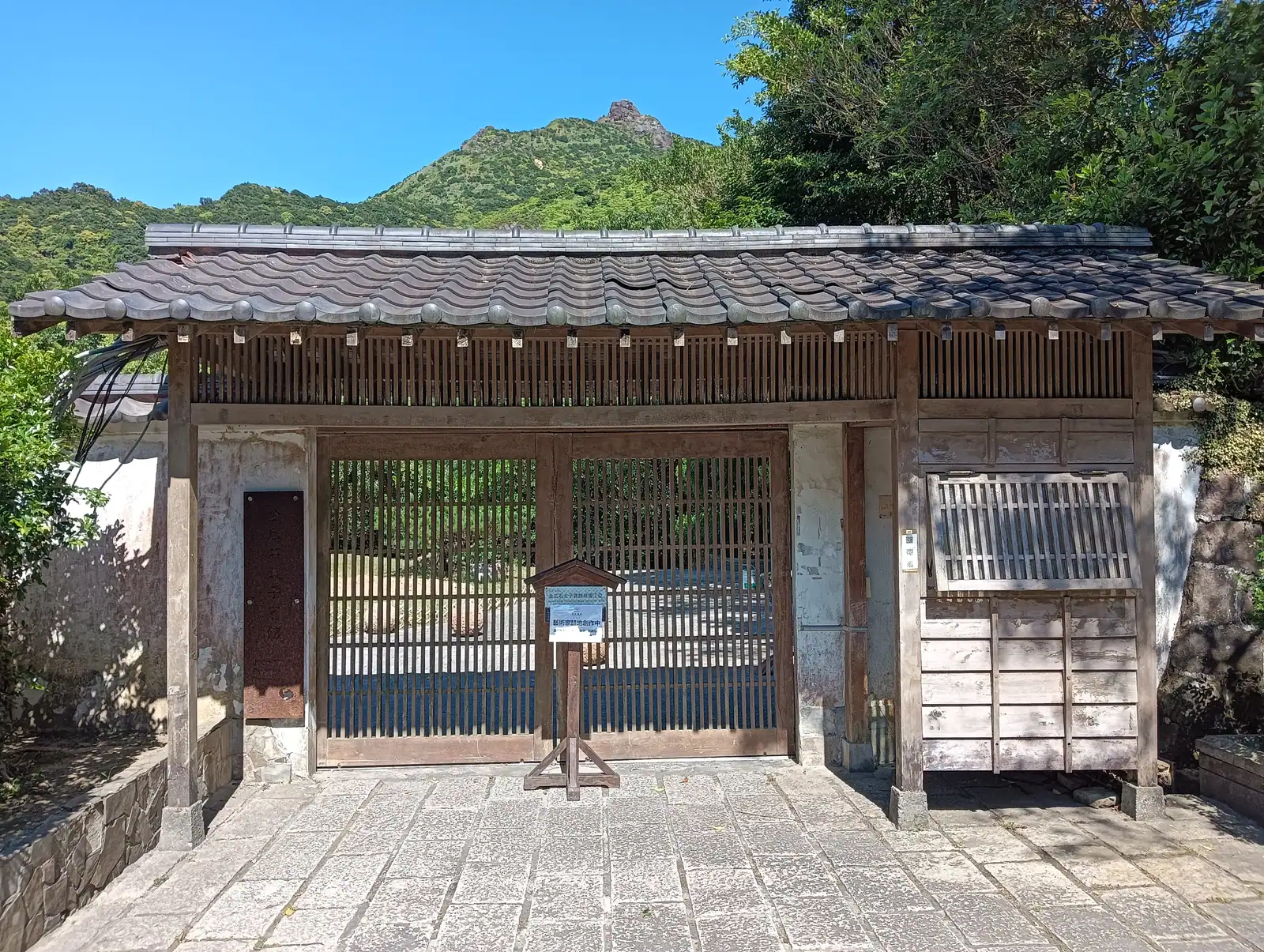
Crown Prince Chalet exterior, western-eastern eclectic study architecture style building. Photo: Allervous / Wikimedia Commons, CC BY-SA 4.0
1922 Tanaka Mining Co., Ltd built temporary residence preparing for Crown Prince Hirohito (later Showa Emperor) scheduled visit mine inspection ultimately prince did not come folk rumor because miner suffered diver's disease cough symptoms resembled malaria made prince retreat but this is rumor not official record3. This western-eastern eclectic study architecture today New Taipei City designated cultural heritage. And what Crown Prince Chalet truly speaks set colonial capital class order highest grade hosting guests Crown Prince chalet second factory manager dormitory next general Japanese staff living "four-connected buildings": four households connected each independent entrance hall living room kitchen bathroom bath Japanese staff homes still like this local miners wooden board houses another world entirely.
Place Where Orange Lights Light Up Underneath Soil Still Not Washed Clean
This mountain final layer life today's appearance: both photo spot also unhealed wound most visitors standing observation deck looking down will treat two different things same thing.
1987 international copper price collapsed taking over operation Taiwan Gold Company ceased operations Jinguashi population plummeting from tens thousands less than two thousand mostly elderly this mountain silent thirty-plus years until Mid-Autumn Festival 2019 re-lit September 13 that year night Taipower held lighting ceremony at Shuindan Thirteen Levels Ruins by international lighting master Zhou Lian using fifteen different wattage angles about three hundred sixty sets lights dyeing hillside built massive ruin amber orange32. Zhou Lian New York BPI Lighting Company president representative works including American Statue Liberty and Natural History Museum New York. Since then every night 6 PM to 9 PM Thirteen Levels light on time Shui-Jin-Jiu area exploded IG secret spot33.
But Taipower Chairman Yang Wei-fu words at lighting ceremony key matter: "1987 took over Taiwan Gold Company remaining concentration plant because building previously listed pollution site dust sealed thirty-three years later hope use public art revitalizing cultural assets way regeneration."34 This sentence rarely simultaneously admits two things here is cultural asset also polluted site Taipower official press release title says more directly this first soil contaminated land combined with cultural asset activation35. Orange lights uses distant viewing method letting general public continue appreciate mountain city beauty but pollutant soil itself still sealed inside not open outside.
This brings to those two matters must distinguish clearly.
First Yin-Yang Sea. Visitors standing observation deck looking down see Shuindan Bay sea surface half yellow half blue many think mine discharge pollution actually mainly natural phenomenon National Taipei University of Technology Resource Engineering Institute Associate Professor Yu Bing-sheng early 1998 published academic paper studying this phenomenon: Jinguashi mountain area itself contains large amount pyrite weathering dissolved iron ions flowing along stream to estuary encountering alkaline seawater quickly oxidize insoluble ferric hydroxide suspended colloid only float sea surface layer about three meters inside form "upper yellow lower blue" stratification36. His conclusion clear: This natural geological reaction not polluted37
Strongest counter-evidence Thirteen Levels concentration plant stopped operation thirty-plus years Yin-Yang Sea color never disappeared: "Thirteen levels concentrating factory closed 30 plus years Yin Yang sea also didn't disappear."37 If yellow factory discharge residue early should fade with time. (Honest supplement Chinese Wikipedia etc public data terms more conservative write natural combined human cause but no specific research support this compromise ratio.)
Second true wound: Soil underneath waste flue. Completely different from Yin-Yang Sea Thirteen Levels Ruins beside three waste flues Japanese colonial period built discharge smelting copper toxic smoke artificial facilities. Here soil officially tested indeed contains excessive arsenic copper heavy metals real human pollution site early 2010 New Taipei City Environmental Protection Agency according Soil Groundwater Pollution Remediation Act announced "pollution control site"; Taipower subsequent proposed health risk assessment and control plan May 2016 formally physical sealed three entrances added iron fences38. As of 2026 this area still closed prohibited entry also no remediation completion or delisting public news found36. Orange lights illuminating Thirteen Levels underneath is这片 soil not washed clean.
This mountain did not die away Summer 2026 Jinguashi hosting mine art season theme "Time's Ore Vein: Future Gold" artists Zhou Xuehan Kang Yazu bringing works into this mountain city39. Every November International War End Peace Memorial Park holds Allied POW memorial ceremony because November 14 exactly year prisoners entered Jinguashi day; November 9, 2025 that event US UK Australia New Zealand Canada Netherlands six country representatives attended offering flowers silence21. Jinguashi not dead site mountain still being remembered returning people.
Standing at Benshan No. 5 Mine Entrance Seeing Whole Mountain
Today you can walk into Benshan No. 5 mine wearing miner helmet along tunnel inside front seventy meters tunnel interior year-round constant eighteen degrees40. Walking out mouth of mine looking up Golden Shrine ruins pillars down seaside Thirteen Levels turn around that wall carved with names name wall.
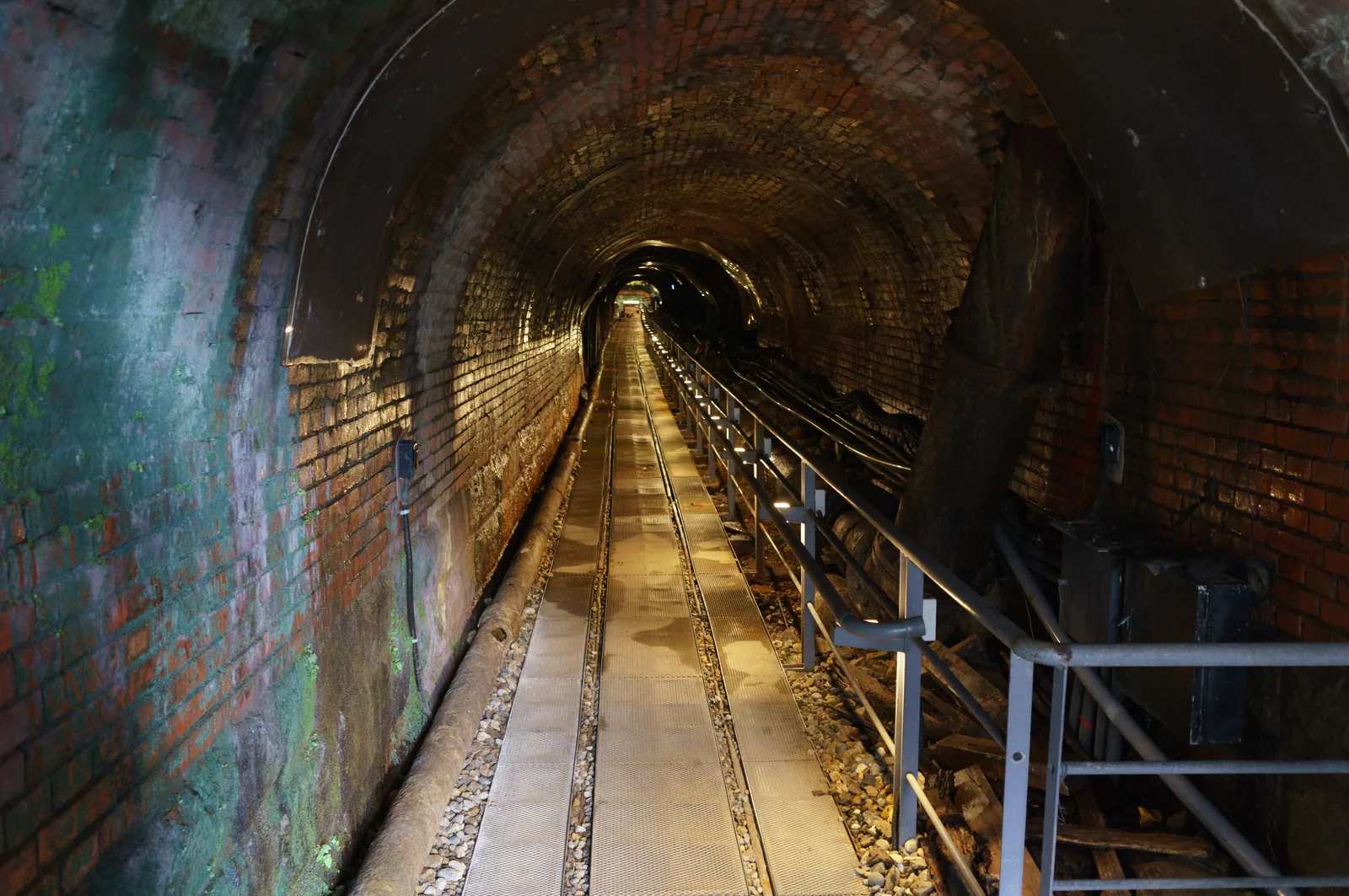
Benshan No. 5 tunnel section open for visitor experience Photo: eugene_o / Wikimedia Commons, CC BY 2.0
Back start that November day of 1942 Those five hundred twenty-three foreign POWs walking into Jinguashi and earlier local miners trading lungs gold and even earlier river picking alluvial gold making fortune dream prospectors actually standing same mountain Mountain name contains gold but it shouldered far more than gold: That alluvial gold in river 1890 eight thousand people's gold rush dream 1938 five hundred digging copper POWs inside tunnels local miners trading lungs for gold silent figures falling down under Wang Tong lens orange lights illuminating Thirteen Levels 2019 and today visitors underneath that patch arsenic soil not washed clean.
Every beautiful photo you take Jinguashi stacked one layer life This mountain beauty true wounds also true they same thing Next time come besides taking orange light maybe walk name wall Recognizable names few but every once was this mountain shouldered a life.
Further Reading: Japanese Colonial Period in Taiwan|Keelung City|Guan Di Jun Worship|The Economic Miracle (Post-war state capital operation Jinguashi complete context Taiwan Gold Company)|Alishan: Empire's Forest and Gao Yisheng Mountain, History of Taiwan Forest Development (Sister pieces belonging same Japanese imperial resource colonial system)
Image Sources
- Hero (Thirteen Levels Night View): 2019 The Lighting Show at 13 Levels, Jinguashi Gold Ecological Park — Photographer Taiwankengo Wikimedia Commons CC BY-SA 4.0
- Benshan Fifth Tunnel Interior: 2017-10-24 Benshan Fifth Tunnel of the Jinguashi gold mine — Photographer eugene_o (originally published on Flickr), Wikimedia Commons CC BY 2.0
- Golden Shrine Ruins Pillars: New Taipei - Jinguashi Shrine (32321306791) — Photographer fullfen666 (originally published on Flickr), Wikimedia Commons CC BY-SA 2.0
- Allied POW Memorial Park: Monument in the peace park — Photographer 121kao, Wikimedia Commons CC BY-SA 4.0
References
- Taiwan POW Camps Memorial Society — Kinkaseki Camp — Taiwan POW Camps Memorial Society official page, records "November 14, 1942, 523 Allied prisoners of war arrived Jinguashi village beginning three-year ordeal for some," primary authoritative source Kinkaseki camp arrival date.↩
- Story Studio: History of Mining in Jinguashi — Taiwan history popular media, organizing 1890 Keelung River discovery alluvial gold 1904 Benshan No.3 mine reached arsenopyrite copper ore 1933 Nippon Mining built flotation plant 1938 production peak complete context.↩
- Wikipedia: Jinguashi — Records place name origin mountain shape resembling gold melon 1938 near seventy thousand taels production peak eight hundred thousand people gathered Crown Prince Chalet visit rumor etc comprehensive data attached official academic references.↩
- Huang Shao-heng "Gold Production Industry in Taiwan During Early Japanese Colonial Period (1895-1912)" — New Taipei City National Gold Museum official commissioned academic research PDF quoting verbatim 1896 "Taiwan Mining Rules" Article Two "Mining operations limited only to Japanese nationals," attached 1895-1908 gold production statistics.↩
- Zhang Yixi "Research on Mine History of Jinguashi During Japanese Colonial Period (Meiji Taisho Years)" — New Taipei City National Gold Museum official commissioned academic research records October 8, 1896 Fujita Group acquired Ruifang October 26 Tanaka Group acquired Jinguashi ridge line division date explicitly state "East Asia First Capital of Gold" reputation belongs Nippon Mining Zaibatsu period after 1933.↩
- Wikipedia: Miyauchi Shintaro — Records Miyauchi Shintaro 1925 acquired Jinguashi mining rights two million yen 1933 April sold twenty million yen to Nippon Mining Co., Ltd. becoming millionaire obtaining title "King of Gold Mountains" timeline.↩
- Wikipedia: Shuindan Concentration Plant Ruins — Records Thirteen Levels commonly known actually eighteen floors built by Nippon Mining Co., Ltd 1933 completed two phases 1935-1936; explains waste flue actual three pieces May 2016 due arsenic copper exceed standards Cultural Affairs Bureau Environmental Protection Agency decision sealed.↩
- Ministry of Economic Affairs Geological Survey and Mining Management Center Geological Knowledge Service Network — Government geological unit official page records Benshan ore vein vertical distribution extends from Golden Melon Peak at 600 meters above sea level below sea level by 130 meters without ending, attached gold silver copper production official statistics.↩
- CombinedFleet.com — England Maru — WWII Japanese ship shipping records database clarifying England Maru had two voyages to Taiwan carrying Jinguashi POWs October 20, 1942 departure Singapore November 6 arrival Keelung second voyage.↩
- Civilian Historical Materials Digital Platform 1937-1949: 4370 — WWII Allied prisoners of war detained by Japanese forces in Taiwan — Chinese primary historical materials records Jinguashi five hundred twenty-three POWs (thirty-four officers + four hundred eighty-nine soldiers) split Hong Kong War Crimes Trial record of eighty-four deaths July 1942 to end February 1945 statistical window Wheeler no anesthesia razor blade surgery etc details.↩
- Wikipedia: Jack Edwards (British Army soldier) — Records survivor Jack Edwards daily walk 1,881 stairs daily output twenty-four mine carts quota 1946 as war crimes investigation team member at Jinguashi discovered document number 2701 massacre secret order (Wikipedia marks this from Edwards own memoir), wrote Banzai You Bastards! recorded complete quote "Allies rebuilt Japan Germany Italy Nobody rebuilt our lives Tears nightmares will remain till death I willing forgive None us forget."↩
- Hong Kong War Crimes Trials Collection — Case WO235/1028 — University of Hong Kong collection war crimes trial official archives records Jinguashi case nine Japanese mining staff defendants May 28, 1947 judgment general manager Toda Mitsugu sentenced one year foremen Nagai Zushi each ten years indictment charges tunnel dangerous environment cardboard hat poor equipment.↩
- Katherine M Venables "Doctors in the Japanese POW camps in Taiwan," Medical History 2025;69(2):277-304 — Oxford University scholar peer-reviewed medical history paper statistics Jinguashi full period recorded deaths ninety-one beriberi related sixty-three percent detailed description doctors Peter Seed Ben Wheeler relay and Wheeler for Seed continuous two weeks blood transfusion rescue details.↩
- Central News Agency: Michael Hurst and Taiwan POW Camp History — CNA interview records Michael Hurst lived in Taiwan over thirty years spent twenty-plus years identified all prisoners interviewed eight hundred veterans family members wrote Never Forgotten, provided whole island over four thousand three hundred POWs sixteen known camps statistical context.↩
- dark-tourism.com — Kinkaseki — International dark tourism data network records Taiwan fourteen POW camps total four hundred thirty deaths mostly occurring Jinguashi over one thousand prisoners once passed through or stayed at Jinguashi camp detailed memorial park objects.↩
- COFEPOW — The Taiwan POW Camps Memorial Society — British Far East prisoners of war descendants organization official page records Taiwan POW death rate "over ten percent" (430/4300+), key contrast source clarifying forty-percent mortality belongs entire Far East not specific to Taiwan.↩
- Taiwan POW Camps Memorial Society — The Society — Association official page records seriously ill prisoners transferred Baihe other camps (fifteen former Jinguashi prisoners later died at Baihe due malnutrition disease exhaustion), explains source difference between local death numbers original population.↩
- The Globe and Mail: Canadian historian on a mission to honour survivors of Japanese POW camps — Canadian mainstream newspaper report records Canadian doctor Ben Wheeler wooden splint self-made bicycle paralyzed prisoner walking again rescue deeds.↩
- George Blair paper (Medical History related research) — Peer-reviewed medical history paper records Taipei camp officer George Blair evaluation for Ben Wheeler "one of finest men I have ever met," clarifies Blair stationed at Taipei camp not Jinguashi.↩
- Taiwan POW Camps Memorial Society — The Kinkaseki Memorial Dedication — Association official record records November 23, 1997 unveiling ceremony one hundred fifty attendees three Jinguashi survivors Les Davis Jack Edwards George Williams personally attended Last Post silence Reveille music details.↩
- New Taipei City Tourism Network: International War End Peace Memorial Park — Official tourism page records every November due prisoners entered Jinguashi day held memorial ceremony 2025 multi-country representatives attended etc information.↩
- dark-tourism.com — Kinkaseki (Memorial Objects) — Records 2011 erected "Mates" bronze statue two emaciated prisoners supporting each other inscription "Without a mate, no Prisoner of War could survive," about seventeen meters long name wall eternal flame.↩
- BBC Chinese: WWII Taiwan Allied POW History (Michael Hurst interview, 2015) — BBC Chinese report records Michael Hurst stance "We do this not hate Japanese let those suffering know they were forgotten," key neutral political barrier quote for article.↩
- Taipei Times: Hell Camp remembered (2005) — English primary report records Michael Hurst quote "People knew all about Bridge on River Kwai but very few knew Taiwan's POW camps," describes camp unearthed artifacts various memorial monuments.↩
- Golden Horse Film Festival Official: Hill of No Words — Golden Horse Executive Committee official page records Hill of No Words Wang Tong Taiwan Modern Trilogy third part Taisho era background Jinguashi location attached plot summary "Ah-Zhuo Ah-Lian two brothers escaping long-term labor contract exploitation chasing fortune dream throwing themselves into mining Jinguashi."↩
- Wikipedia: Hill of No Words — Records 29th Golden Horse six awards complete list (five formal competition items + Audience Choice Award for Favorite Movie), two love main lines parallel Ah-Zhuo × Widow Ah-Rou Ah-Lian × Young Prostitute Fu-Mei-zi other film festival award records.↩
- New Taipei City National Gold Museum: Main Hall Vision — Museum official page self-describes "Domestic first ecological museum concept since November 2004 opened," explains combining community preservation Jinguashi Shuindan area natural ecology historical memory concepts.↩
- Wikipedia: Kinkaseki Mine — Japanese Wikipedia item entire passage details mining technology management system 1939 nationality employee statistics completely omit POW forced labor English Chinese language context narrative gap verifiable evidence.↩
- Wikipedia: Jinguashi Quanji Tang — Records Quanji Tang complete timeline 1896 Huang Shichun Huang Renxiang brothers set grass hut worshipping Guan Di Jun official name "Quanji Tang" established October 2, 1900 built temple current site.↩
- New Taipei City National Gold Museum: Quanji Tang — Museum official page records Guan Di Jun bronze statue weight twenty-five tons thirty-five feet tall June 2, 1991 installed officially conservatively calls "Taiwan's largest Guan Gong holy image" (Southeast Asia largest widely circulated folk saying).↩
- New Taipei City National Gold Museum: Jinguashi Shrine Ruins — Museum official page records Golden Shrine "Created Meiji Year 31 March 2, 1898 built mine operator Tanaka Chobei," main deity Daikoku-tenjin Kanayama-hiko-no-mitama Sarutahiko-no-kami every July fifteenth held mountain god festival.↩
- ETtoday Travel Cloud: Lighting Thirteen Levels — Tourism media primary report records September 13, 2019 Mid-Autumn lighting "matching fifteen different wattage angles about three hundred sixty sets lights," international lighting master Zhou Lian directed next day every night 6 PM to 9 PM lit.↩
- New Taipei City Tourism Network: Shuindan Concentration Plant Ruins (Thirteen Levels) — Official tourism page confirms Thirteen Levels every night 6 PM to 9 PM fixed lighting time.↩
- Epoch Times: Taipower lights up Thirteen Levels Ruins (September 13, 2019) — Primary report records Taipower Chairman Yang Wei-fu lighting ceremony original words "1987 took over Taiwan Gold Company remaining concentration plant because building previously listed pollution site dust sealed thirty-three years later hope use public art revitalizing cultural assets way regeneration."↩
- Taiwan Power Company: Taiwanese version 'Sky Castle' Taipower Mid-Autumn launches Thirteen Levels Ruins Public Art First Soil Contaminated Land Combined Cultural Asset Activation — Taipower official press release title itself "First soil contaminated land combined cultural asset activation," framework sentence officially simultaneously admitting polluted site and cultural assets dual identity.↩
- Hao Hao Wan FUNIT: Yin-Yang Sea and Thirteen Levels Pollution Summary — CTS News primary report records waste flue "2010 Taipei County (now New Taipei City) Environmental Protection Agency announced pollution control site," Taipower 2013 control plan approval executed fences monitoring comprehensive summary Yin-Yang Sea natural cause explanation; as of writing no remediation completion news found.↩
- Liberty Times: Yin-Yang Sea Natural Phenomenon Not Pollution (August 19, 2019) — Primary report records National Taipei University of Technology Resource Engineering Institute Associate Professor Yu Bing-sheng verbatim words "This natural geological reaction not polluted" Thirteen levels concentrating factory closed 30 plus years Yin Yang sea also didn't disappear.↩
- TVBS: Jinguashi Waste Flue Closed (May 12, 2016) — Primary report confirms waste flue May 2016 physical closure action one week three entrances all iron fences sealed three months later fenced entire factory.↩
- Central News Agency: 2026 Mine Art Season "Time's Ore Vein: Future Gold" (July 4, 2026) — Official press release records 2026 mine art season theme Time's Ore Vein Future Gold curating unit New Taipei City Cultural Affairs Bureau annual artists Zhou Xuehan Copy: Jinguashi Kang Yazu Seeking Gold Missing That Forgotten Moment.↩
- Wikipedia: Jinguashi (Benshan No. 5 Mine) — Records Benshan No. 5 mine altitude about 295 meters stopped mining 1972 National Gold Museum planning open front seventy-meter tunnel to visitors interior year-round constant eighteen degrees.↩