
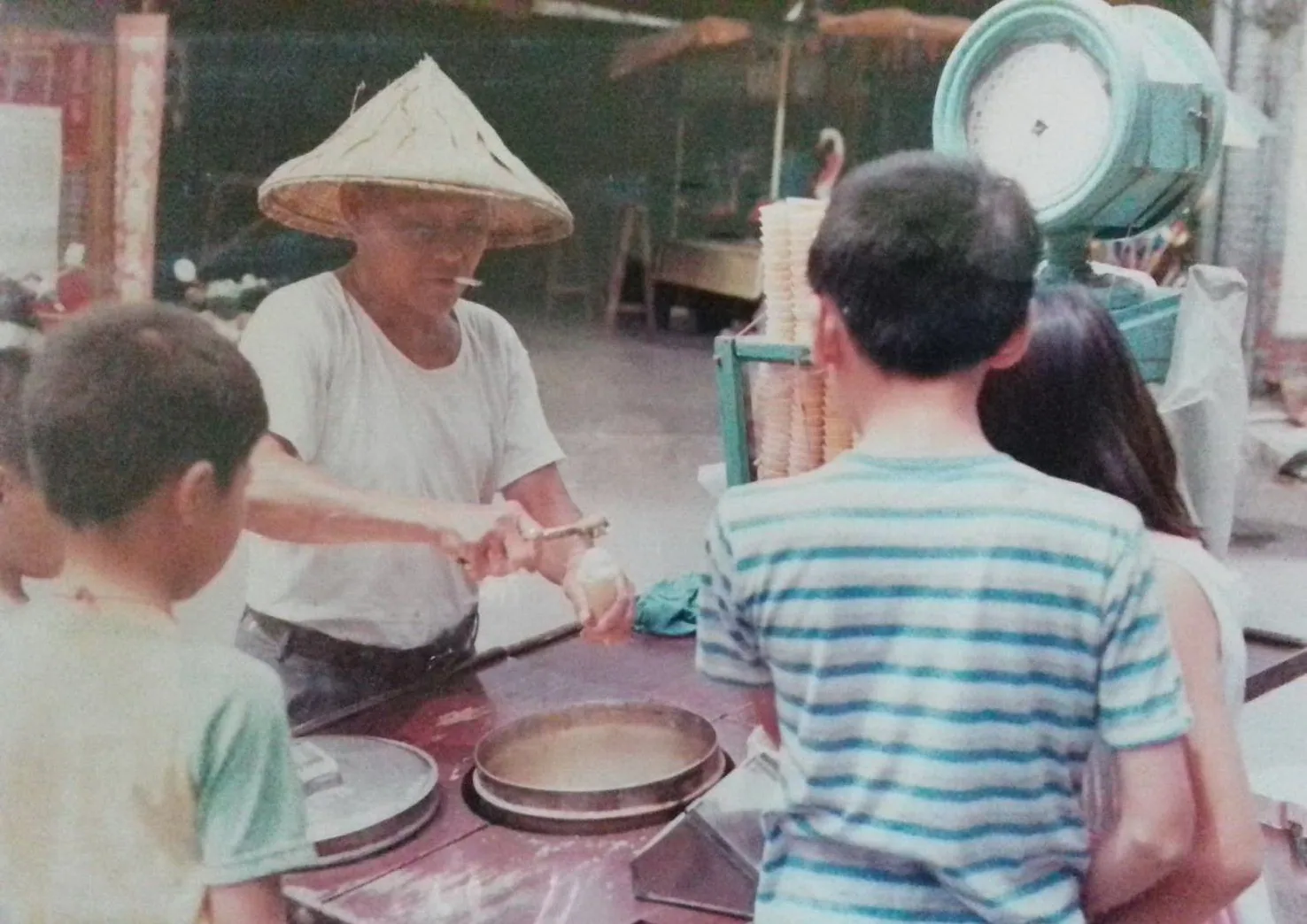
Figure 1|A Bapu ice cart vendor on a Taiwan street in 1987. Photo by Allenwang6212a. Image licensed under CC BY-SA 4.0, image page: Wikimedia Commons. This article embeds the image via a normal external URL only; no download was made.
30-Second Overview: Around 1947, Fan Yang-kai, a third-grade student in Hsinyulin, Hsinchu, carried an ice bucket weighing about 2.5 kg to sell ice after school. Decades later, bicycle vendors still relied on a metal horn that emitted sound when a rubber bulb was pressed, allowing the "Bapu" sound to pass through alley entrances before delivering ice into children’s hands. This ice often featured a chewy texture created by starch, linked to port-based ice production, ice bucket insulation, weather risks, and after-school part-time work. What Bapu truly preserved was not just three-colored ice, but a method by which food met people through sound, objects, and human labor. 1 2 3
Around 1947, Fan Yang-kai was still a third-grade elementary school student in Hsinyulin Township, Hsinchu County. After school, he would wholesale an ice bucket from an ice factory and walk back home along a route of more than four kilometers to sell it. The empty ice bucket weighed about 2.5 kg; when full, it was a substantial burden for a child. 1
About seventy-five years later, in 2022, in Kaohsiung’s Hamaxing (Scaochientou) district, an ice product exhibition originating from discussions on fishery ice placed Bapu carts, egg ice, branch ice (zhizibing), and vintage ice shavers on the same historical timeline. 4
Separated by different eras, the two scenes are connected by the same contrast: Bapu tastes light, but it is heavy to make. The entry is a refreshing scoop, but behind it lies the ice factory, ice buckets, bicycles, selling horns, weather forecasting, and a child’s risk calculation regarding unsold ice products.
📝 Curator’s Note: Bapu is not about placing ice on the street for sale. It is about turning the entire street into an ice shop, letting sound find customers first, and then letting customers decide whether to approach.
Hearing "Bapu" Before Seeing the Ice
A metal ice cream selling horn preserved by the National Taiwan Museum of History is approximately 20.5 cm long. Its metal front is curled like a French horn, with a black rubber bulb attached to the tail. Pressing the rubber bulb forces air into the reed at the tail of the metal horn, producing a short, loud sound. The Ministry of Culture’s Collection Network places it back in the post-war streetscape: vendors riding bicycles, carrying ice buckets and cones on the rear seat,穿梭 through alleys and streets. 2 3
Figure 2|Ice cream selling horn, Registration No. 2004.028.1601. Image source: Ministry of Culture Collection Network, custodial unit is the National Taiwan Museum of History. Page marked "Public Browsing Only."
This artifact is not just an old tool, but a sound design. Before the vendor enters the line of sight, the sound has already passed through the alley entrance. Residents can judge from inside the house which direction the vendor is approaching; children can run to the door before adults give permission.
The name "Bapu" writes the selling format into the ice cream’s name. When people say the food’s name, they also describe a street experience: not a fixed counter waiting for selection, but movement, sound, stopping, and then customers gathering around.
Another selling horn collected by the Taichung City Government Cultural Bureau, Registration No. 20100060591, has dimensions recorded as 5 cm long, 5 cm wide, and 13 cm high. The description similarly points to the linkage between the rubber bulb, reed, and "Bapu" sound. 5 The appearance of the same artifact in different collections shows us that it was not an accidental accessory for a single vendor, but a street-selling technology that could be replicated.
How the Horn’s Shape Became a Business
Sound on the street is not decoration; it is a vendor’s marketing tool. Fixed stores can rely on signs, windows, and regular customers for recognition. Bicycle ice carts have no fixed address; they can only turn "I am here" into a signal that penetrates walls.
This also explains the vitality of the Bapu name. It is not a literal translation of the English "ice cream" into Taiwanese or Mandarin, but a naming of the ice product by its selling sound. The food name thus leaves a record of the transaction scene: who made the sound, who heard it, who walked out of the house.
Figure 3|Side view of the selling horn. Image source same as Figure 2, Public Browsing Only.
Early ice buckets were usually placed on tricycles or bicycles. The cart carried ice, but the horn carried expectation. Children, neighbors, or people after school hearing the sound knew a brief choice was about to happen: should they run out to buy a scoop? The National Taiwan Museum of History’s summer ice product article also places ice buckets, selling, and after-school streets in the same life image. 6
📝 Curator’s Note: The ice spoon determines the shape of a scoop; the horn determines when a segment of public life begins. The most important artifact may not be the tool that scoops the ice, but the sound that gathers people.
Why It Is Not Ordinary Cream Ice Cream
In everyday language, Bapu is often called ice cream, but its production logic differs from Western ice cream, which relies on milk, cream, and dairy fat as its main structure. Related food culture articles point out that Taiwanese Bapu usually does not rely on fat for texture, but uses starch thickening to give the ice a soft, chewy quality. 7 8
The artifact description on the Ministry of Culture’s Collection Network also directly writes the difference into the collection record: Bapu is made with starch, forming an ice product with a "Q" (chewy/bouncy) texture. Foreign ice cream often uses milk or cream as raw materials. 3
| Production Clue | Recognizable Features of Bapu Ice | Why It Affects Texture |
|---|---|---|
| Main Structure | Starch, sugar, and various flavored fruits or beans | Gelatinized starch limits water movement, providing resilience |
| Freezing Process | Cooling, stirring, and freezing act simultaneously | Ice crystals are broken up; texture is not just a binary of hard and soft |
| Eating Experience | Powdery taro, sandy red beans, sweet-sour pineapple | Oral sensation has bite, not just creamy smoothness |
Taking taro flavor as an example: taro is first boiled and mashed into a paste; tapioca starch is mixed with cold water and added for gelatinization; then mixed with maltose and sugar; finally entering a low-temperature, fast-stirring ice-making trough. 7
This process should not be misread as "simpler because there is no dairy fat." It is another kind of engineering: materials must balance sugar content, water content, starch gelatinization, and freezing speed, while ensuring the product is suitable to be scooped, placed in a wafer cup, and finished by the customer on the street.
After starch gelatinizes with heat, it absorbs water, limiting water movement. Cooling, stirring, and freezing acting together form a denser, more elastic texture. This also explains why Bapu does not rely on fat for heavy smoothness like cream ice cream, but leaves a clearer bite sensation on the tongue.
The Labor in the Ice Bucket Was Never Background
Fan Yang-kai’s oral history turns "selling ice products" from a nostalgic image back into a job. Starting around 1947, he sold clear ice and mung bean ice on weekdays, and only sold larger quantities of higher-priced ice cream on holidays. On good weather days, he could sell one bucket per day; on rainy days, unsold ice might remain. The ice factory allowed returns the next day, but if the ice had completely melted, it could not be returned. 1
Ice buckets are not lightweight props; weather is not a simple seasonal background. Children had to estimate today’s sunshine, distance, and customers, while bearing the risk that melted ice could not be returned. The coolness of the ice product thus coexisted with family income, child labor, and concrete economic calculations.
The ice bucket Fan Yang-kai used had a zinc-plated outer layer, a glass inner liner, and a cloth-wrapped wooden stopper for insulation. The ice spoon was made of copper; when scooping, one had to handle the softer ice first, then press the handle, letting the scraper inside the spoon deliver a scoop of ice into the wafer cup. 1
These details show that Bapu’s "old-fashioned" nature is not a filter, but a series of actions that must be completed by hand: carrying the ice bucket onto the cart, keeping the ice in a scoopable state, controlling scoop size with the ice spoon, and completing delivery in front of customers.
After elementary school graduation, Fan Yang-kai no longer sold ice, but the ice bucket and ice spoon remained in the home, later donated to the Bitan Elementary School Ancient Relics Museum. When an instrument originally used to maintain low temperatures and accelerate transactions enters an exhibition space, its function changes: no longer delivering ice into customers’ hands, but preserving a segment of child labor for later generations to view. 1
📝 Curator’s Note: A child carrying an ice bucket for four kilometers is not a "cute childhood story." It is a work route linking the ice factory, family income, after-school time, and weather risks.
From Port Ice to Street Sweetness
Bapu’s appearance cannot be explained solely by "Taiwanese people love eating ice." Kaohsiung City Government’s ice product topic links Kaohsiung’s ice food history back to the 1910s: the Dagoshui (Dogouchi) water system and power plant provided the water and electricity needed for the ice industry; Hamaxing (Scaochientou) saw the appearance of ice factories, supplying ice for fisheries and also operating civilian edible ice. By the 1920s and 1930s, ice technology matured, and ice product varieties increased. 4
Ice did not exist as a dessert from the beginning. It was first the foundation of fisheries, preservation, and port economy, before more stably entering ice shops, streets, and homes. The Bapu cart can be understood as a microcosm of ice infrastructure transforming into daily consumption: freezing capacity leaves the factory, enters buckets on bicycles, and finally becomes a wafer cup in a child’s hand.
This conversion also explains why ice product history is related to transportation history and power history. Without stable ice production, vendors could not obtain sellable ice. Without bicycles, ice buckets could not enter residential areas; without selling sounds, mobile vendors would struggle to let customers know they were nearby.
The Ministry of Agriculture’s Food Culture Compilation lists Bapu alongside shaved ice (chao-bing), branch ice (zhizibing), snow ice, and egg ice, pointing out that Taiwan’s ice products appear, transform, or fade with the times. 9 Bapu is not an isolated "old flavor," but one answer to Taiwan’s continuous adjustments among materials, equipment, and consumption methods.
Three Colors, Chewy Texture, and Shared Rules of a Scoop
Common Bapu features colors and flavors like taro, red beans, and pineapple. Their juxtaposition is not merely for aesthetics, but to allow a small wafer cup to simultaneously contain the thickness of starch, the sandiness of beans, and the acidity of fruit. Different flavors scooped into the same cup also allow consumers to avoid making a full commitment to a single flavor.
"Three colors" is more like an ordering syntax: customers point to flavors by color; vendors arrange different textures in the same cup with ice spoons. This is a small-scale, low-threshold sharing. Children can pick their favorite color; adults can choose different flavors in the same cup.
Early Bapu stalls even designed purchasing as a game. The National Taiwan Museum of History’s article records that some Bapu carts had airplane spinning platforms, allowing customers to place bets. If they won, they could use a giant ice spoon to scoop out a large ice ball called "Tian Ba Wang" (Heavenly Overlord). 6
This game shows Bapu’s value lies not only in taste. Waiting, betting, watching the ice spoon fall, and sharing results are all part of eating ice. A scoop of ice can be eaten, but the game extends the purchase into a gathering. Vendors sell not just cold sweetness, but a rule that allows bystanders to join.
From Spinning Platform to "Winning Ice"
"Pinball machines" can help today’s readers quickly imagine those carts that turned buying ice into a game, but existing museum data’s more precise term is "Airplane Spinning Platform." The National Taiwan Museum of History records that early Bapu carts had airplane spinning platforms; after customers placed bets, if they won, they could use a giant ice spoon to scoop out a large ice ball called "Tian Ba Wang." 6
Therefore, what is won is not just an abstract "prize": it may be more scoops, a larger ice ball, or turning the quantity of a single purchase into a result worth gathering around. This rule is not identical on every cart, and "pinball" cannot be assumed as standard equipment for all Bapu carts. A more reliable statement is that Bapu carts once combined spinning, betting, luck, and ice scooping into a "Winning Ice" game.
Another visual record from Xiaoliuqiu leaves a different gifting language from "Tian Ba Wang." Photographer Li Jianlong captured Xiaoliuqiu — Bapu Grandma on December 10, 2011. The photo description reads "Handsome guys get 2 scoops" and "Beautiful ladies get 2 scoops," describing the grandma making friends with tourists using Bapu. 10 This is a photo description for a specific vendor and scene; it cannot be generalized as a common rule across Taiwan. But it does remind us that Bapu’s playfulness sometimes relies not on mechanical devices, but on gifting, addressing, and on-site interaction.
| Game/Interaction Form | Verifiable Outcome | Evidence Boundary |
|---|---|---|
| Airplane Spinning Platform | After winning, use giant ice spoon to scoop "Tian Ba Wang" large ice ball | Early Bapu cart records from National Taiwan Museum of History |
| Luck games on Bapu carts | May increase number of scoops or quantity | Varies by cart and era; cannot be unified |
| Xiaoliuqiu Bapu Grandma interaction | Photo description records "Give 2 scoops" | 2011 specific photo and vendor case |
| Free cup | Current data insufficient to prove it is a universal fixed rule | Should be marked as individual vendor activity; not a traditional custom |
Figure 4|Xiaoliuqiu — Bapu Grandma, Photographer Li Jianlong, taken on Xiaoliuqiu on December 10, 2011. Page author account is zero, uploaded in 2012. Photo page: Digital Island, licensed under CC BY-NC-SA 3.0 Taiwan. Image embedded via normal external URL only; no download.
Figure 5|Another angle of the ice cream selling horn. Image source same as Figure 2, Public Browsing Only.
How Ice Products Circulate in Local Networks
The case of Zhunan Qingliang Ice Shop pulls preservation back to a still-operating store. The Hakka Cultural Assets Digital Network records that this ice shop, founded in the Japanese era and opened in front of Zhunan Railway Station in the 36th year of the Republic of China (1947), preserves ice buckets and ice scoops. In early years, large ice buckets held Bapu, small ice buckets held branch ice; ice buckets were also supplied to platform vendors, grocery stores, and school welfare stores for repackaging and sale. 11
These containers show that ice product circulation once relied on a decentralized, refrigeration-saving local network. Ice shops are the supply end; railway stations are flow nodes; platform vendors bring ice to travelers; grocery stores and school welfare stores place short-term low-temperature commodities into daily life.
From this perspective, Bapu carts are not moving alone on the street. Behind them lies at least a chain of relations: ice factories, ice shops, equipment supply, bicycle repair, wafer cups, and flavor materials. When any link changes, the vendor’s route and costs change accordingly.
This local network also has gender and family division aspects. Existing oral data most easily leaves the image of "Grandpa Selling Ice," but ice product preparation, cleaning, bookkeeping, child care, and store maintenance were not necessarily completed solely by the vendor standing on the street. Without sufficient primary data, one cannot imagine household or female labor as proven facts. What is certain is that the vendor seen on the street is often just the most visible endpoint of the entire supply network.
From Cart to Ice Shop: Family Processes Behind a Scoop
Bapu’s mobility does not mean it lacks a fixed production base. Taking Yongfu Ice Cream in Ximending, Taipei, as an example: the first generation, Wu Yong-fu, pushed a cart selling three-color ice in early years, later settled on a street corner, and then entered a fixed store due to changes in city management and vendor environments. This path reminds us: the history of street ice products is not a linear evolution of "carts disappearing, ice shops replacing," but the same flavors, recipes, and interpersonal credit finding ways to continue selling in different spaces. 12
Yongfu’s family memory also supplements the most easily ignored part of Bapu production. Taro needs to be boiled, ground into paste, and enter low-temperature ice makers. Red beans often need to be soaked and boiled in advance; ingredients must cool before combining with the ice base. Reports record that family members began preparation at dawn; a pot of red beans might need several hours of slow cooking; on busy days, multiple rounds had to be repeated. These processes make "old flavor" no longer just a taste descriptor, but a production technology maintained by time, heat control, and physical labor. 12
Ice temperature and tools also change texture. Yongfu’s case uses an ice maker at approximately minus 35 degrees Celsius for rapid cooling, making ice gradually denser as it rubs against the machine wall. Early methods used shaking ice and coarse salt for cooling. This does not mean one method is necessarily more traditional than another, but that Bapu has always adjusted between materials and equipment: preserving textures from starch and natural ingredients, while using more stable ice tools to meet modern store demands. 12 13
Ice spoons also have their own craft history. Cultural reports point out that early copper ice scoops were hand-beaten by craftsmen in Huatan, Changhua; different sized spoons served daily quantities and could distinguish ice ball sizes after wins/losses in "airplane platform" games. As ice spoon makers gradually decreased, what disappeared was not just an old artifact, but a complete technology chain from metal forming, quantity control, to street game rules. 12
One Ice Product, Several Industrial Turns
Bapu also experienced turns from master-apprentice inheritance to family takeover, and then facing competition from modern brands. Yongfu Ice Cream’s report mentions that the first generation learned ice making from Japanese masters. Before masters left Taiwan after the war, recipes and methods remained in apprentices’ hands, later transforming into their own cart and store businesses. This inheritance is not an abstract "Japanese influence," but a concrete technical transfer occurring at the work site: who taught cooking, how to master freezing, how to judge if a bucket of ice could be sold. 12
Around the 1980s, European and American ice cream brands entered Taiwan; many local ice shops relying on wholesale from ice factories faced pressure. The response of Taiwanese ice was not to completely imitate cream ice cream, but to retain a lighter route not centered on creamy heaviness, then establish recognition through taro, red beans, peanuts, longan, or seasonal fruits. This choice makes Bapu not just a "preserved old taste," but a product that re-explains its value through materials and texture in competition. 12 13
From the official introduction in the English version, Taiwanese-style ice cream today is still placed on a continuous spectrum of traditional ice shops, local ingredients, and new flavor creations, rather than being treated only as a nostalgic object in museums. 14 This perspective is important: if Bapu is to continue, it does not need to always stay on a bicycle passing through alleys. It can also preserve the ability to make ingredients into shareable small portions in stores, exhibitions, local imagery, and the daily labor of new generations.
Names, Flavors, and Local Differences
"Bapu" is first an auditory word, then becomes a food name. It condenses the sequence of vendors pressing rubber bulbs, sound passing through streets, and customers walking out of homes into two syllables. But this does not mean ice products across Taiwan all use the same name, same recipe, or same selling rules. Different data shows Bapu, three-color ice, taro ice, branch ice, and egg ice listed together; names sometimes point to products, sometimes to selling methods, sometimes to a generation’s local memory. 9 12
Flavors are not fixed three-color patterns. Early Yongfu Ice Cream’s three-color ice included taro, red beans, and egg. Egg is actually a colloquial name formed by its pale yellow appearance, corresponding possibly to vanilla flavor. Another batch of local data records combinations like taro, red beans, and pineapple. Treating one color scheme as the only orthodoxy would instead obscure Bapu’s characteristics of varying according to materials, shops, seasons, and local supply. 9 12
Low Temperature, Hygiene, and Time Limits of a Scoop
Bapu’s cold chain is usually not maintained by complete freezers, delivery vehicles, and store equipment like modern chain ice products. Early vendors had to use ice buckets, liners, cloth stoppers, and the ice itself to buy time. Here, "insulation" is not an abstract technical term, but a countdown from picking up ice from the factory to the cart stopping. If ice melts, besides texture change, it may become a direct loss that cannot be returned to the ice factory. 1
Therefore, the hygiene conditions of street Bapu cannot be imagined solely by today’s food factory standards, nor romanticized as "more natural in the past." What can be determined is that ice bucket cleaning, ice spoon contact, wafer cup preservation, ingredient cooking, and selling time are all practical issues jointly facing texture and safety. But existing oral and collection pages do not provide unified hygiene standards representative of all vendors across Taiwan. A more rigorous writing is to view it as a low-temperature labor limited by equipment, weather, distance, and shop experience, rather than endorsing all old-time vendors. 1 11 12
Quantity, Price, and the Social Scale of "One Scoop"
A scoop of ice seems like a small consumption, but is actually simultaneously affected by ice spoon size, flavor cost, weather, foot traffic, and game rules. "Tian Ba Wang" is attractive precisely because it places ordinary scoops and giant ice balls in the same transaction. Customers buy not just fixed weight, but quantity that may increase due to luck. The "Give 2 Scoops" phrasing in Xiaoliuqiu imagery also shows gifting ice can become a way for individual vendors and customers to build relationships; one cannot generalize this to assume all vendors have the same discounts. 6 10
Existing sources do not provide sufficient continuous historical price lists; therefore, it is inappropriate to write a single era’s unit price as representative of all Taiwan Bapu. What is relatively certain is that Bapu, with wafer cups, small quantities, multiple flavors, and gamifiable portions, allows children to participate in street consumption. "Buy one scoop" thus becomes a family’s allowance expenditure for children, sharing among peers, and a visible unit for vendors to judge today’s business. 1 6 12
Urban Governance and Mobile Vendor Space
Bapu carts need to move, but this does not mean they can stay permanently anywhere. Yongfu Ice Cream’s store history points out: after Taipei City was elevated to a municipality, conditions for street corner vending changed; the first generation thus bought a narrow "staircase corner" as a fixed settling place. This example should not be simplified into simple urban progress or traditional decline. It shows city management, land use, and consumer flow jointly change small vendors’ operating space, forcing a business originally surviving on routes to turn into a store. 12
Moving from streets into stores also changes sound and customer relationships. Mobile vendors must actively notify people "I am here"; fixed stores can rely on signs, addresses, and regular customer returns. The former turns communities into mobile markets; the latter compresses mobile markets into recognizable storefronts. The disappearance of Bapu culture, therefore, is not only equal to fewer ice carts, but also includes sound no longer being part of residents’ daily schedules. 2 5 12
Child Consumption and Invisible Family Support
Bapu is often recorded as children’s happiness after school, but Fan Yang-kai’s case reminds us that children may also be the vendors themselves. Carrying ice buckets after school,往返 between ice factories and homes, bearing weather risks for ice returns, are two sides of the same street economy as "children taking allowance to buy ice." If only leaving photos of children surrounding ice carts, it is easy to exclude child labor experiences from memory. 1
On the other hand, ice shop family inheritance is not only completed by people standing in front of counters. Cooking red beans, handling taro, cleaning buckets, making ice cream cakes, and caring for stores are often distributed among different family members. But individual reports cannot directly infer Taiwan ice shops’ gender division. A more stable conclusion is that behind Bapu as a street commodity exists a group of preparation, cleaning, bookkeeping, and care work easily obscured by selling sounds. 12
What Imagery Preserved, and What It Did Not
Modern imagery lets us see 1987 Bapu ice carts, 2011 Xiaoliuqiu vendors, and 2014 Tainan Confucius Temple Old Street taro ice carts. They preserve cart bodies, flags, horns, clothing, streetscapes, and the photographer’s viewing position at the time. 15 10 But photos usually cannot alone tell us ice recipes, daily prices, vendors’ complete routes, income, hygiene processes, or work by non-photographed people. Imagery is important evidence, but not a complete life history.
Therefore, Bapu’s preservation cannot only increase photo counts; it also needs to preserve image descriptions, shooting dates, locations, authors, licenses, and oral contexts. For a street photo, "who took it" and "where it was taken" are as important as "what people in the frame are doing." Only by returning imagery to specific times and places can later readers avoid piecing together different generations, different vendors, and different game rules into a non-existent single tradition. 15 10
When Streets Disappear, How Does Bapu Remain
Bapu can still be found in some tourist areas, night markets, and local ice shops, often encountering eating methods like peanut roll ice cream. 7 Minivision News Network’s compilation of Taiwan ice product history also uses flavors like taro, red beans, pineapple, and starch thickening processes to explain differences between Bapu and general cream ice cream. 8
On October 29, 2014, Digital Island user Bee captured Confucius Temple Old Street Ancient Taro Ice in Zhongxi District, Tainan City: a vendor wearing a bamboo hat rode a bicycle, with a "Taro Ice" flag hanging on the side, passing through street houses and pedestrians opposite the Confucius Temple. The photo description specially noted that the author’s childhood often heard Bapu sounds; now in Confucius Temple Old Street, uncles selling Bapu can still occasionally be seen. 15
Figure 6|Confucius Temple Old Street Ancient Taro Ice, Bee, October 29, 2014, Zhongxi District, Tainan City. Image page: Digital Island, licensed under CC BY-NC-SA 3.0 Taiwan. Image embedded via normal external URL only; no download.
The value of this photo lies not only in it "proving Bapu still exists." It pushes the preservation question close to a specific place: Confucius Temple Old Street is not an abstract old-flavor background, but a street in Zhongxi District, Tainan City, where pedestrians, shops, flags, and bicycles still intersect. When Bapu appears here, mobile selling has not completely returned to the past; it has gained new stopping points in the modern flow of tourist districts. 15
But "still existing" does not mean the original life scene is completely preserved. When people seek Bapu in fixed stores, festival markets, or exhibitions, the ice product is preserved, but the rhythm of mobile selling and sound arrival may be extracted.
Kaohsiung’s 2022 War Against the Sun — Ice Product Design and Ice Product Exhibition recombined Bapu carts, branch ice, egg ice, and vintage ice shavers through exhibition, letting different generations look back at ice food history through artifacts. 4 This preservation is not sealing Bapu in a "most orthodox" year, but acknowledging it simultaneously belongs to ports, ice factories, school after-school roads, and today’s cultural exhibition spaces.
Figure 7|Public browsing detail image of ice cream selling horn. Image source same as Figure 2, Public Browsing Only.
Preserving Bapu cannot only preserve the appearance of "three-color ice." If only leaving colors, one loses its most powerful cultural structure: a child carrying an ice bucket, a horn passing through streets, a group temporarily gathering for the same scoop of ice.
The real challenge is not judging which scoop is most old-fashioned, but how to preserve recognizable relations during transformation: ice must have describable texture; carts must have understandable work; horns must have sounds reminding people of street corners; stories must explain who, where, and at what cost delivered it to customers’ hands.
The Residual Warmth of One Scoop
Bapu’s counter-intuitive nature lies in its texture being extended by starch, its life maintained by mobility. Starch makes ice a recognizable Taiwanese texture; bicycles and horns make it must constantly move. One end is material control of moisture; the other end is vendor assumption of time, weather, and routes.
1947 Hsinyulin ice buckets, 2022 Hamaxing exhibition spaces, and the 20.5 cm long selling horn in museums do not form an uninterrupted nostalgic straight line. Between them lie industrial changes, disappearing work, and processes of local memory being re-collected. 1 4 2
When we again hear "Bapu," we can still recognize what it asks of us: leave the indoors, move toward the sound. Before the ice melts, complete a shared choice. What Bapu preserves is not a forever-unchanging ice, but a method of food meeting people on the street.
📝 Curator’s Note: What Bapu is most worth leaving is not the unverifiable nostalgia of "it tasted better before," but that path which can be re-seen: ice factory to ice bucket, ice bucket to bicycle, horn to street corner, finally the scoop in the ice spoon.
References
Footnotes
- Zeng Zhaojiong: Grand Director Fan Yang-kai’s Ice-Selling Childhood — Hakka Cultural Assets Digital Network oral history report, recording Fan Yang-kai carrying ice buckets for sale from 1947, ice bucket equipment, weather risks, and childhood labor experiences.↩2345678910
- National Taiwan Museum of History: Ice Cream Selling Horn — Museum collection page providing registration number, artifact dimensions, materials, and selling context; primary collection data for verifying Bapu horn forms.↩234
- Ministry of Culture Collection Network / National Cultural Memory Library: Copper Ice Cream Selling Horn — Ministry of Culture collection data explaining the artifact relationship between copper horns, rubber bulbs, and Bapu sounds, preserving material evidence of post-war street selling technology.↩23
- Li Xiaoping: War Against the Sun! "Great Port Reading Ice" Cools the Summer — Kaohsiung City Government News Bureau’s Kaohsiung Pictorial ice product topic, explaining port city ice food history from Hamaxing ice production, fishery ice, and 2022 exhibition.↩234
- Taichung City Government Cultural Bureau: Ice Cream Selling Horn — Taiping Ancient Farm Relics Museum collection page recording another selling horn’s dimensions, rubber bulb, and reed structure; can be cross-verified with National Taiwan Museum of History collections.↩2
- National Taiwan Museum of History: Taiwan Summer Old Flavor — National Taiwan Museum of History’s summer ice product article, recording Bapu carts, ice buckets, airplane spinning platforms, and game context of "Tian Ba Wang" large ice balls.↩2345
- iThome / Shi Li: Story of Taiwanese Ice Cream: Bapu, Chao-bing, Zhizibing, Egg Ice — Food culture article comparing Taiwanese ice product materials, textures, and selling forms, explaining Bapu starch structure and its position in street ice products.↩23
- Minivision News Network: "Bapu" Is Not Ice Cream? Let’s Understand Taiwan Ice History Together — Minivision program text report compiling Taiwan ice product history, Bapu flavors, and cassava starch thickening claims; supplementary material for public food context.↩2
- Ministry of Agriculture Agricultural Knowledge Portal: Sweet Encounter of Fruits and Ice — Ministry of Agriculture official food culture data, listing Bapu alongside chao-bing, zhizibing, snow ice, etc., presenting historical changes in Taiwan ice products.↩23
- zero: Xiaoliuqiu — Bapu Grandma — Digital Island’s Xiaoliuqiu local imagery, photographed by Li Jianlong in 2011, preserving "Give 2 Scoops" and other specific selling interactions and tourism exchange photo descriptions.↩234
- Liu Rongchun: Ice Shop Artifacts, Hakka Spirit — Hakka Cultural Assets Digital Network report on Zhunan ice shop’s ice buckets, ice scoops, and supply networks; supplementing Bapu’s circulation background from ice shops to stations and welfare stores.↩2
- Huang Yue-xuan: Yongfu Ice Cream — Inheriting the Loud Bapu Sound — Culture Bank store interview and craft report, recording Yongfu family’s master-apprentice inheritance, ice making temperature, ingredient processes, hand-made ice spoons, and history of cart turning into stores.↩2345678910111213
- Deng Hui-chun: How to Quench Summer Heat? Eating Ice Is Better — Kuanghua Chinese article focusing on Bapu, taro ice, and three-color ice, compiling Taiwanese ice product store inheritance, flavor changes, and contemporary continuation.↩2
- Cathy Teng: A Cold Treat to Beat the Heat: Taiwanese-Style Ice Cream — Taiwan Panorama English version starting from local ice shops and Taiwanese-style ice products, providing a contemporary cultural and industrial transformation observation for international readers.↩
- Bee: Confucius Temple Old Street Ancient Taro Ice — Digital Island’s local imagery record, shot in 2014 on Tainan Confucius Temple Old Street, preserving Bapu bicycles, taro ice flags, and on-site context of tourist districts re-stopping.↩234