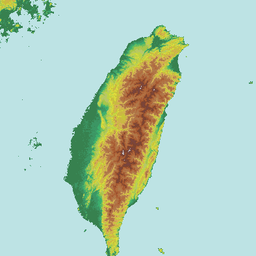
Taipei City 臺北市
6 candidates- 郭璽 台灣麻將最大黨 Help write
- 沈伯洋 Democratic Progressive Party Read article
- 蕭文乾 臺灣SoR無法黨 Help write
- 唐新民 三勢團結促進聯盟 Help write
- 蔣萬安 Kuomintang Incumbent Read article
- 林志成 Independent Help write
2026 Local Public Officials Election, Republic of China (Taiwan)
On November 28, 2026, Taiwan votes for nine local offices on the same day
Voting hours
Sat, Nov 28, 8 a.m. to 4 p.m.
What to bring
Your National ID card (a personal seal is optional)
Where to vote
The polling station for your household registration address
22 races, 81 candidates. Every candidate is shown in the same format, with no polls and no indication of who is ahead. Until the ballot-number draw, candidates in each race are listed by registration date.
Sources: CEC approval notice; “Incumbent” labels follow Central News Agency (CNA) reporting
Jump to
The questions people ask most before voting day, each answered with an official source.
Saturday, November 28, 2026, from 8 a.m. to 4 p.m. National Referendum Case No. 22 is voted on the same day during the same hours.
Official source: CEC election announcement
Citizens aged 20 or older who have lived in the electoral district continuously for at least four months, with both counted up to the day before voting day. Anyone who moved their household registration into the district after the election announcement of August 20 cannot vote in this election.
Official source: Civil Servants Election and Recall Act
Your National ID card. When you collect your ballots you sign, stamp a seal, or press a fingerprint on the voter roll, and any one of the three is enough, so a personal seal is optional. Without your ID card you cannot collect ballots. If your card was lost and the new one has not been issued yet, bring the temporary certificate with your photo from the household registration office.
Official source: Civil Servants Election and Recall Act, CEC rules against duplicate voting and ballot fraud
At the polling station for your household registration address. Taiwan has no general absentee voting, so you need to go back to where your household is registered. Polling stations are announced by each city and county election commission, linked from the CEC polling station notice.
Official source: CEC polling station notice, Civil Servants Election and Recall Act
Phones must be switched off before you bring them in, photography is not allowed, and you may not show your marked ballot to anyone; violations can be penalized. With several elections on the same day, cast all your ballots in one visit, because once you leave the polling station you cannot go back in to vote.
Official source: Civil Servants Election and Recall Act
The election bulletin reaches every household no later than two days before voting day and is also published on the CEC bulletin website. Official platform presentations run November 13 to 27 for special municipality mayors and November 18 to 27 for county and city mayors.
Official source: CEC election and referendum bulletin site, CEC election work schedule
As soon as voting closes at 4 p.m., each polling station becomes a counting station on the spot. Ballots are read aloud and counted in public, and the results are posted at the station entrance.
Official source: Civil Servants Election and Recall Act
Same-day referendum
National Referendum Case No. 22 is voted on the same day and during the same hours as the local elections: November 28, from 8 a.m. to 4 p.m.
「你是否支持政府使用『核電』振興經濟,以廢除『非核家園』的能源政策?」
Unofficial translation by Taiwan.md
Do you support the government using “nuclear power” to revitalize the economy, so as to abolish the “nuclear-free homeland” energy policy?
This card covers the voting procedure only and does not present either side’s arguments. For official materials, see the CEC notice and the referendum bulletin site.
Official sources: CEC referendum notice, Referendum bulletin site
Statutory schedule adopted by the CEC at its 622nd commission meeting on October 31, 2025
Schedule per the CEC’s 622nd commission meeting. Voting hours and final seat counts follow the official announcement of 2026-08-20.
“Nine-in-one” means nine categories of local office are elected on the same day: from special municipality and county mayors down to village chiefs, and from councilors and representatives to Indigenous district offices.
In total 11,051 officials elected CEC press release
6
Mayors of the six special municipalities, four-year terms
381
Council representatives in the six municipalities; seats vary by city
16
Executives of non-special-municipality counties and cities
538
Representatives in county and city councils
198
Heads of grassroots self-governing units
2,076
Grassroots elected representatives
6
Autonomous Indigenous district executives established in 2014
50
Representatives of autonomous Indigenous districts
7,780
Taiwan’s most local elected offices
Seats for special municipality mayors, county and city mayors, and both types of councilors follow the CEC election announcement of 2026-08-20; the other five categories follow the CEC press release of 2026-09-07. Across all nine categories, 11,051 officials will be elected.
Four sides of the same election, each on its own page.
Start with these articles to understand why this election is structured the way it is, not just who may win.
Taiwan.md does not rebuild civic tools. These are the public-interest tools and sources every voter should know.
We do not report campaign news, publish polls, or endorse candidates.
We place this election back inside three decades of democratic infrastructure: how the nine offices work, how political donations become transparent, why Taiwan has 7,780 village and borough chiefs, how the Central Election Commission is structured, and how recalls and referendums operate.
Voting is the last-mile action of democracy. The institutions, civic oversight tools, and information infrastructure underneath it are what keep democracy standing.
This section keeps documenting how that infrastructure grows, who maintains it, and where it can break.
🧬 Taiwan.md — not campaign coverage, but a record of democratic infrastructure