
30-Second Overview: Taiwan's drone industry is experiencing a burst driven by geopolitics. The Ministry of National Defense (MND) plans to procure nearly 50,000 military drones with a budget of NT$50 billion, and drones are a core item in the Executive Yuan's NT$1.25 trillion special budget. Thunder Tiger has become the first Taiwanese enterprise to pass the U.S. Blue UAS (Blue Unmanned Aircraft Systems) Cleared List certification. From spraying farmland to battlefield reconnaissance, Taiwan's drone industry is moving from "OEM" to "defense autonomy," attempting to become the next strategic industry after semiconductors.
In 1979, Thunder Tiger was founded in Taichung, making remote-controlled model airplanes. For forty-six years, this company has produced toys, aero-models, and even dental equipment. No one predicted that on September 21, 2025, one of Thunder Tiger's FPV kamikaze drones, the "Overkill," would become the first Taiwanese product to pass the U.S. Department of Defense "Blue UAS Cleared List" certification1.
The Blue List is the Pentagon's certification for drones that are "secure enough to be used by U.S. government agencies." Prior to this, the list consisted almost entirely of domestic U.S. and allied manufacturers. What Thunder Tiger obtained was not just a certificate, but an entry ticket to the U.S. government drone procurement market: a market valued in the tens of billions of dollars.
📝 Curator's Note
The explosion of Taiwan's drone industry shares a structural similarity with the rise of Taiwan's semiconductor industry: both markets were created by geopolitics. Semiconductors arose because the world needed a chip manufacturing base not controlled by China; drones are rising because the U.S. needs a drone supply chain that excludes Chinese components. In both instances, Taiwan was in the right position.
From Farmland to the Battlefield
Taiwan's drone applications began in agriculture.
Around 2017, agricultural drones began appearing in the fields of Yunlin and Chiayi. A multi-rotor drone equipped with a pesticide tank could complete 40 minutes of traditional manual spraying in just 10 minutes, using only one-fourth to one-twentieth of the amount of pesticide required by traditional methods2. By 2021, over one thousand pilots in Taiwan had obtained dual licenses for agricultural spraying and drone operation.
But it was not agriculture, but the military, that truly launched the industry.
In 2023, the MND opened its first public tender for "military-grade commercial" (COTS) drones. This term is crucial: these are not military-spec products designed and manufactured by the military itself, but commercial-specification drones purchased from private vendors, supplemented with military-grade cybersecurity and communication encryption. The concept comes from lessons learned on the Ukrainian battlefield: cheap, high-volume, expendable commercial drones are more effective in actual combat than expensive military-grade equipment3.
A NT$50 Billion Tender and 50,000 Drones
On July 23, 2025, the MND officially announced the largest-scale military-spec commercial drone procurement project in history: between 2026 and 2027, it expects to procure nearly 50,000 drones for approximately NT$50 billion, covering five types of aircraft: multi-rotor reconnaissance drones, fixed-wing attack drones, VTOL (Vertical Take-Off and Landing) fixed-wing drones, FPV kamikaze drones, and micro-reconnaissance drones4.
The first wave of 3,600 units, worth approximately NT$7 billion, has already been awarded. Winning vendors include CIRC (中光電智能機器人), Evergreen Aerospace (長榮航太), Zhifei Technology (智飛科技), and Shintong Information (神通資訊). Mass deliveries will begin in the second half of 2026, with an expected delivery of 11,270 units, followed by another 37,480 units in 2027.
This is only the beginning. Within the Executive Yuan's NT$1.25 trillion special budget, drones are one of seven core items, planning a total volume of over 200,000 drones of various types and over a thousand unmanned surface vessels5.
| First Wave | Subsequent Planning |
|---|---|
| 3,600 units | 50,000 units (NT$50 billion) |
| NT$7 billion | Part of the NT$1.25 trillion special budget |
| CIRC, Evergreen Aerospace, etc. | Competition among 20+ vendors |
| 2_026 Delivery | Phased delivery from 2026–2033 |
💡 Did You Know?
In 2024, CIRC's drone revenue was less than NT$100 million. If government tenders deliver as scheduled, its revenue will explode to over NT$1 billion in 2026, a more than tenfold increase. A single defense order has rewritten the destiny of a company.
The Non-Red Supply Chain
"Non-Red Supply Chain" is the keyword for Taiwan's drone industry.
The global civilian drone market has long been monopolized by China's DJI (Da Jiang Innovations), with a market share exceeding 70%. However, DJI products are viewed as security risks by many governments: imagery and flight data captured by these drones could be transmitted to Chinese servers. Since 2020, the U.S. government has progressively banned federal agencies from using DJI products and established the Blue List as an alternative6.
Here lies Taiwan's opportunity: the U.S. and its allies need a drone supply chain that does not rely on Chinese components. Taiwan possesses the foundation of semiconductors and precision manufacturing, maintains a security alliance with the U.S., and has its own defense needs to serve as a testing ground. Approximately NT$300 billion of the NT$1.25 trillion special budget will be manufactured by local Taiwanese firms, with the goal of establishing this "non-red supply chain"7.
📝 Curator's Note
Thunder Tiger's path into the U.S. market is noteworthy: first securing Blue UAS certification (solving the trust issue), then targeting the U.S. Army's "Drone Dominance Program," which expects to deliver a portion of over 200,000 small drones to the U.S. military by 2027. A model airplane company from Taichung is bidding for Pentagon orders.
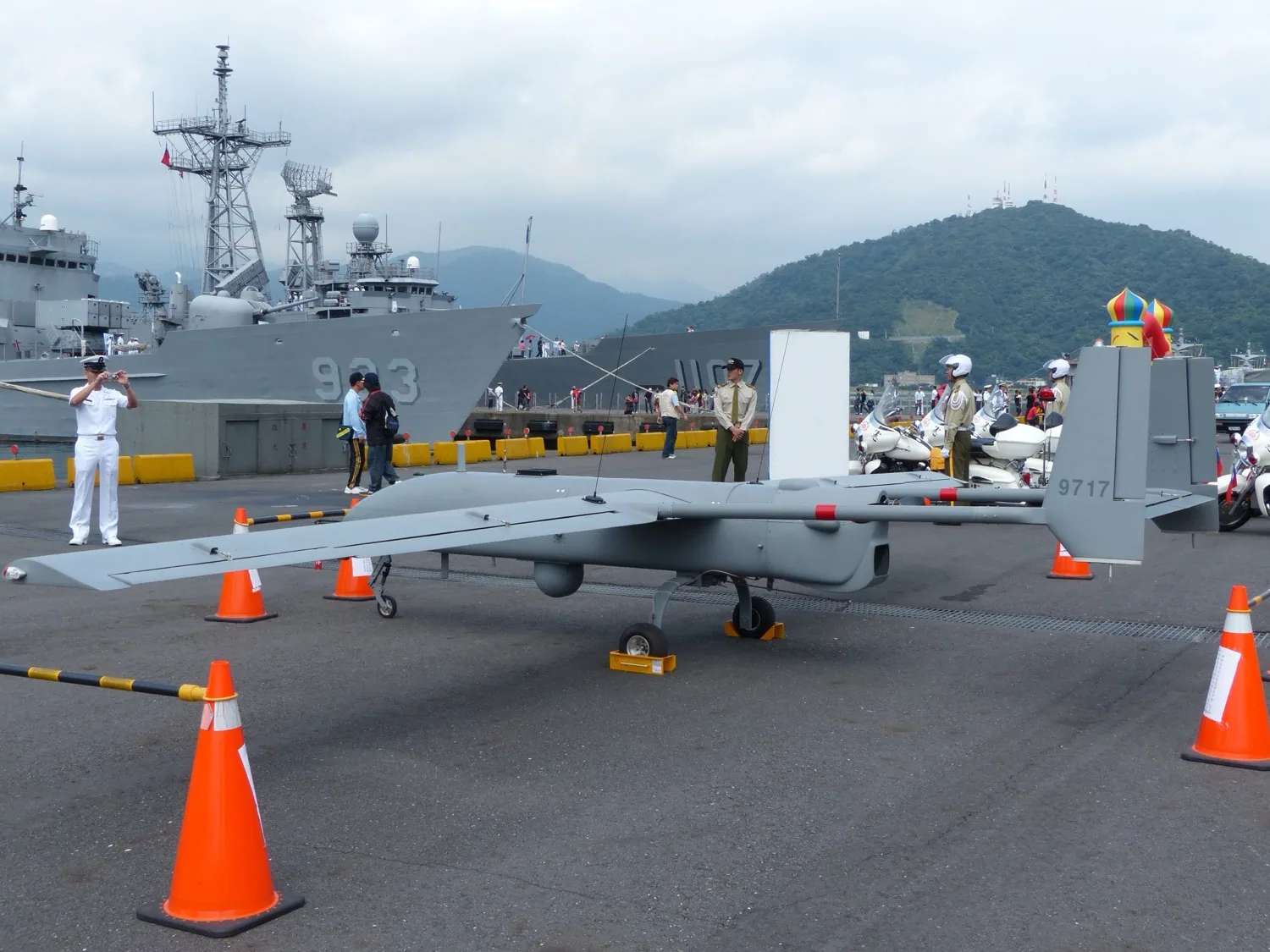
May 4, 2013, NCSIST "Albatross" (銳鳶) UAV (No. 9717, NCSIST Albatross series) displayed at Pier 11, Zhongzheng Naval Base, Kaohsiung Open Day. Photo: Xuan Shisheng. CC BY-SA 3.0 via Wikimedia Commons.
The Blue List and an Entry Ticket
The true scarcity of the Blue List can be seen in one number: as of early 2026, within the entire Taiwan drone industry, only one company and one product have directly passed Blue UAS Cleared certification: Thunder Tiger's Overkill FPV8. The remaining spots for over forty full platforms and over 160 components still belong to North American and allied manufacturers.
This is not because the list is new. The Blue UAS program has been online since 202/0, and on December 3, 2025, it was officially transferred from the Defense Innovation Unit (DIU) to the Defense Contract Management Agency (DCMA). The new portal is located at bluelist.dcma.mil, managed by the "Unmanned Systems Experimental Command" (US-X) based in Palmdale, California9. After the mechanism has been operating maturely for over five years, Taiwan has only managed to squeeze into one seat.
The difficulty of obtaining this ticket is written into the law. The parent authority of Blue UAS is Section 848 of the 2020 National Defense Authorization Act (NDAA): it prohibits the DoD from procuring any drones "manufactured in China or containing critical Chinese components." Specifically prohibited key components include flight controllers, radios, data transmission devices, cameras, gimbals, ground control systems, operating software, and data storage units: essentially every part of a drone that "stores or transmits data." In 2022, the provision was expanded to include Russia, Iran, and North Korea10. For a vendor to apply for Blue UAS, they must prepare a complete BOM (Bill of Materials) from chips to software for Pentagon review; every source from a "covered country" must be replaced. U.S. vendors admitted at the Taiwan-U.S. Defense Industry Forum that "removing all Chinese components from small drones is extremely difficult"11.
Thunder Tiger is taking a direct path, but they are not alone. In June 2025, Thunder Tiger signed an MOU with the U.S. defense tech company Auterion, integrating Auterion's Skynode AI platform into the Overkill series. That same month, NCSIST also signed a strategic partnership with Auterion; this was the first time NCSIST had signed an agreement of this level with a foreign defense technology company12. Three months later, Overkill passed Blue UAS. At the October U.S. Army Association (AUSA) exhibition, Thunder Tiger shared a booth with Auter_rion, rebranding Overkill as "Flying Blade" and playing combat test footage of detecting moving targets within a 1 km range in complex electromagnetic environments. In December of the same year, Thunder Tiger announced its participation in the U.S. Army's "Drone Dominance Program" bid: an $1.1 billion program using a four-stage gauntlet system, where 25 companies enter operational testing, eventually leaving about 12 to produce the first 30,000 units, with a target unit price of $2,300. Thunder Tiger plans to establish an assembly plant in Ohio in Q1 2026 to comply with "Buy American" requirements13.
💡 Did You Know?
There is a second path for Taiwanese manufacturers who cannot secure the ticket: acting as hardware providers for those who have. CIRC (中光電智能機器人) manufactures Teledyne FLIR's SIRAS quadcopter in Taiwan, which is ultimately integrated in the U.S.; another Teledyne FLIR model, the Ion M440, is already on the Cleared List. Sysgration (系統電, 5309) collaborated with U.S.-based Vantage Robotics in September 2025 to launch the Vesper and Trace, two Blue UAS/NDAA-compliant drones. The cost of this indirect path is that Taiwan's name will not appear on the list; instead, products are sold back to the U.S. under American brands.
The legislative layer is also moving. In April 2026, U.S. Senators Ted Cruz and John Curtis (Republicans) along with Jeff Merkley and Andy Kim (Democrats) jointly proposed the "Blue Skies for Taiwan Act of 2026" (S.4259), requesting that the State Department work with the DoD to "establish a fast track for Taiwanese Blue UAS vendors" and establish a Blue UAS working group to assess Taiwan's capacity and identify opportunities and obstacles for integrating Taiwan-made components into the U.S. defense supply chain14. The existence of the bill is an implicit admission: Taiwanese vendors are currently moving too slowly, necessitating legislation to lower the barriers.
⚠️ Controversial Viewpoint
Defense media outlet DefenseScoop revealed a structural loophole in the Blue List in November 202 $\text{5}$: NDAA 848 only lists components that "store or transmit data"; mechanical components such as motors and passive electronic components are not prohibited. Several drones that have passed Blue UAS still contain Chinese motors15. This loophole is a double-edged sword for Taiwan: on one hand, it lowers the cost for Taiwanese vendors to replace parts; on the other, it weakens the trust commitment that "Blue List = complete de-Chinaization."
A Dual-Track Industry Base: NCSIST vs. Five Private Firms
Taiwan's drone industry runs on two legs. One is indigenous military-spec, led by the National Chung-Shan Institute of Science and Technology (NCSIST/中科院). The other is military-spec commercial, undertaken by five winning private vendors. The two legs perform different tasks and are allocated different resources.
The NCSIST leg focuses on high-end, self-developed models. The Teng-yun Type II is a large reconnaissance drone using the same engine as the U.S. Army's MQ-9B "SkyGuardian," capable of staying airborne for over 20 hours; mass production budget is not expected until 20268. The Albatross (銳鳶) Type II is a naval carrier-based reconnaissance drone with a 12-meter wingspan, a 300 km control distance, and a maximum range of 2,000 km, with mass production starting in 20259. The Red Sparrow (紅雀) Type III succeeds the Type II, operated by the Marine Corps as a small reconnaissance drone for company-level field units8. The Jian-xiang (劍翔) is an anti-radiation loitering munition that has been in mass production since 2019, with plans to deliver 104 units within six years, integrated into the Air Force Air Defense and Missile Command10.
In 2025, NCSIST announced it would release the production, system integration, and technology licensing of these models to private vendors, marking the first wave of policy-driven restructuring to "devolve indigenous technology to civilian mass production"8.
The private leg handles "military-spec commercial" procurement: orders placed by the military, produced by vendors to commercial standards, plus encrypted communications and cybersecurity certification. The first wave of 3,037 units, worth approximately NT$6.887 billion, was awarded in 2024 to four companies; the second wave of NT$6.951 billion was awarded in August 2025 to the same four companies[^14]:
| Vendor | Primary Products | Capacity |
|---|---|---|
| CIRC (中光電智能機器人) | Micro (1,485 units) + Reconnaissance (1,552 units), optical payloads | Over 3,000 units shipped in 2025, Taiwan's largest; clients include Teledyne FLIR, certified by Europe/Australia/Japan12 |
| GEOSAT (經緯航太) | Naval Reconnaissance + Army Micro | Visual payload with 30x zoom, 1080P high-res, 640×512 infrared thermal imaging |
| Evergreen Aerospace (長榮航太) | Carrier-based Reconnaissance + Full-unit assembly/testing | Converting aviation maintenance lines to military use |
| Zhifei Technology (智飛科技) | Land-based Reconnaissance | Focusing on military-spec commercial turnkey solutions |
| Shintong Information (神通資訊) | Micro Recon + Micro Tactical + Encrypted Comms | Encrypted communication modules are a key software-layer position |
With the addition of Thunder Tiger and AIDC (漢翔) to the drone alliance, this private leg is taking shape: however, each company's capacity is still measured in "thousands," not "tens of thousands." CIRC's 3,000+ units in 2025 is Taiwan's largest scale, but compared to Ukraine's monthly production of 200,000 units, it looks like a family workshop.
The Invisible Half of the War: Counter-UAS
Drone warfare is never just about "I can hit you." The Ukrainian frontline has opened another dimension: counter-UAS (counter-unmanned aircraft systems) are now as important as attack drones.
NCSIST has two projects on this axis. The Lei-hu Project uses high-energy lasers to strike small drones and successfully shot down live targets during 2025 combat evaluations13. Another is the "Drone Defense System," which passed testing in 2024; it can detect small drones (U.S. Spec Class 1-2: under 25kg, below 3,500 ft altitude, below 466 km/h) within a 5 km range. The system includes control stations, threat detection radar, jamming systems, and man-portable jammers14. Technical methods follow two paths: "soft kill" (electronic jamming to force drones to hover, return home, or land) and "hard kill" (high-energy lasers, 2_0mm or 30mm cannons for direct destruction).
The private sector representative is Tron Future (創未來科技), which showcased a five-module counter-UAS system at the 2025 Paris Air Show, attracting inquiries from European and Middle Eastern delegations15. Thunder Tiger approaches from the attack side to advance counter-measures: they have publicly listed DJI as a long-term research subject, aiming to understand enemy drone behavior patterns to develop more precise counter-logic16.
Within the Executive Yuan's NT$1.25 trillion "Strengthening Defense Resilience and Asymmetric Capabilities Plan" (covering 8 years from 2026–2033), "unmanned vehicles and their counter-systems" is the second largest item, with NT$335 billion allocated specifically for this; it plans to procure over 210,000 drones of various types and a thousand unmanned vessels: a quantity several times larger than the total of the past decade17.
The Scale Problem: Does Taiwan Need Tens of Thousands or Millions?
This is the sharpest question facing the entire industry.
⚠️ Controversial Viewpoint
Analysis from ASPI (Australian Strategic Policy Institute) is blunt: Taiwan's drone program scale is far too small. 210,000 units sounds like a lot, but Ukraine's monthly production surpassed 200,000 in 202_5, with an annual total exceeding 4.5 million—the frontline consumption rate and production rate are nearly parallel lines. Taiwan's NT$1.25 trillion budget plans to procure 210,000 units over 8 years, averaging 26,000 per year, which is only one and a half months of Ukraine's monthly production. Critics argue that Taiwan does not need 210,000; it needs 2 million1819.
Ukraine's experience also tells the world another thing: the FPV drone industry was forced into existence by the battlefield. In 2023, Ukraine produced nearly 300,000; in 2024, it surged to over 2 million; in 2025, it hit 4.5 million. This curve is a demand function back-calculated from frontline consumption. Taiwan does not have this curve yet: only a special budget draft still under review by the Legislative Yuan, and a group of private vendors producing thousands per month.
Two structural problems stand in the way. First is mass production consistency: military drones must pass cybersecurity, NDAA 848, and electromagnetic interference tests; every single unit must be identical. Civilian production lines transitioning to military-spec are still catching up on this QA layer. Second is the core component supply chain: if any Chinese chip remains in flight controllers, cameras, or gimbals, they cannot enter the Blue List. Taiwan is strong in semiconductors, but the midstream industry for flight controller boards and gimbal modules is still dominated by small and medium-sized enterprises; expanding capacity requires time and capital.
From OEM to Strategic Industry
Taiwan's drone industry is at a turning point.
For the past thirty years, Taiwanese vendors have been OEMs. Semiconductors are the success story of this path: from ASE's testing and packaging in the 1980s to TSMC's 2nm process in 2025, geopolitics pushed OEM into an "irreplaceable" position. The drone industry stands at a similar starting point: geopolitics requires a supply chain without China; Taiwan has semiconductors, precision manufacturing, a U.S. alliance, and its own defense needs as a testing ground.
But the structures are different. Semiconductor success depends on the yields and processes of a very small number of top-tier factories; drone success depends on the mass production and consumption of a vast number of factories. A semiconductor fab's depreciation cycle is 5–7 years; an FPV drone's depreciation cycle is "the moment it flies away." In a fab, more expensive is better; in drones, cheaper is better. These are two completely different industrial philosophies.
The Ukrainian frontline has written a new textbook: the core of future warfare is not one very expensive drone, but ten thousand drones so cheap they can be used as consumables. Whether Taiwan can produce drones like it produces chips—in large quantities, cheaply, and with stable quality—will determine how high this industry can fly20.
✦ "Semiconductors make Taiwan indispensable. Drones might make Taiwan invulnerable—provided Taiwan makes enough of them, fast enough, and cheap enough."
Looking at this industry through the lens of the island's history, the story has barely begun. TSMC traveled a path from "I just want to survive" in 1987 to "the most important man" by 2025. Taiwan's drone industry only reached the stage of "the first unit entering the Pentagon procurement list" in 2025. Based on the 8-year timeline of the NT$1.25 trillion budget, by 2033, Taiwan needs to build an industry from scratch that can compete on the same scale as Ukraine, while simultaneously solving engineering problems across multiple axes: cybersecurity, supply chain, mass production QA, software AI, and counter-UAS. This is more complex than the early semiconductor race because the opponent is time itself: every year of delay means facing an even more asymmetric battlefield.
The production line that Thunder Tiger started in Taichung in 1979, compared to TSMC's 2nm plant in Baoshan, Hsinchu, is now separated by scale and time. The former produces 1,000 military-spec drones per month; the latter produces 50,000 wafers per month. Both factories stand at the same geopolitical position for Taiwan, but the rhythm of the opponents they face is completely different. The semiconductor opponent is clock speed; the drone opponent is the number of units consumed every minute on the Russo-Ukrainian battlefield.
Where this story traveled
Further Reading
- Taiwan's Defense and Military Modernization — The full picture of the "hedgehog strategy" behind 200,000 drones
- Semiconductor Industry — Taiwan's previous strategic industry to rise due to geopolitics
- Development of Taiwan's Space Industry — From drones to satellites, Taiwan's ambitions in the sky
- Taiwan's Robotics Industry — Another case of "strong components, weak full-unit integration," facing similar structural challenges as drones
Image Sources
This article uses 2 public domain / CC-licensed images, all cached at public/article-images/technology/ to avoid hotlinking from source servers:
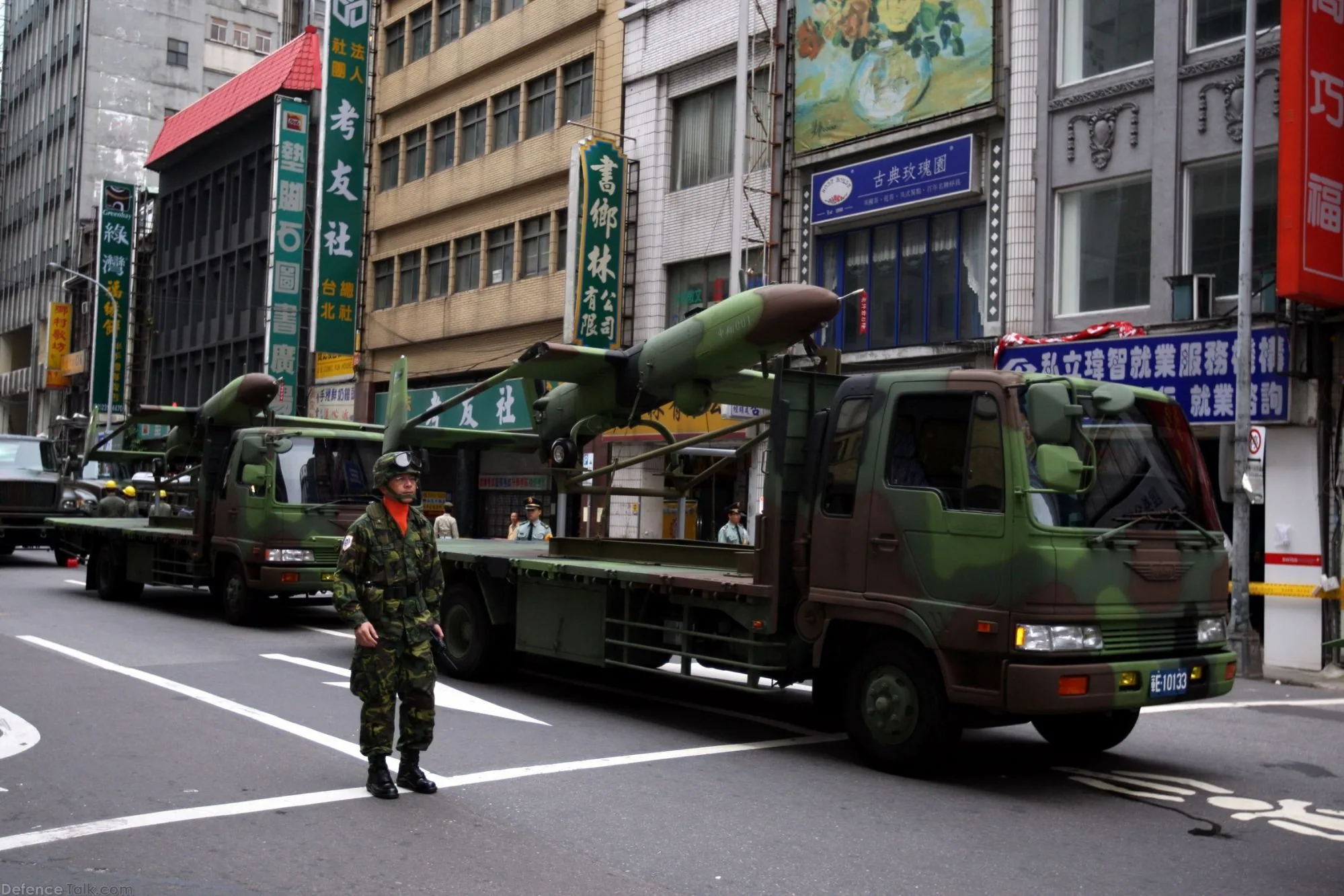
- Hero: Chung Shyang II UAV — Photo: Kliu1, 2007-10-11 NCSIST Chung Shyang II (Albatross series) displayed during the Republic of China National Day Parade. Public domain via Wikimedia Commons.
- Inline: UAV 9717 Display at No.11 Pier — Photo: Xuan Shisheng, 2013-05-04 NCSIST Albatross (銳鳶) UAV No. 9717 displayed during the Kaohsiung Zhongzheng Naval Base Pier 11 Open Day. CC BY-SA 3.0 via Wikimedia Commons.
References
- Aviation Week: Taiwan's Thunder Tiger Eyes U.S. Army's Drone Dominance Program — Reports that Thunder Tiger's "Overkill" FPV drone is the first Taiwanese drone to pass Blue UAS certification.↩
- Agri-Media: Intelligent Upgrades for Agricultural Unmanned Aircraft — Agricultural drones are 6 times more efficient than manual labor, with pesticide use reduced by one-fourth to one-twentieth.↩
- The News Net: MND opens first tender for "military-spec commercial" drones; six key points at a glance — Analyzes the origin of the military-spec commercial concept, tender specifications, and competition among private vendors.↩
- Economic Daily News: NT$50 billion drone procurement project brings opportunities to Thunder Tiger, CIRC, Evergreen Aerospace, etc. — MND plans to procure nearly 50,000 drones for NT$50 billion in 2026–2027, covering five types of aircraft.↩
- TechNews: MND's NT$1.25 trillion budget establishes 200,000 drones — Drones are a core item among seven major items in the special budget, planning 200,000 drones and over a thousand unmanned vessels.↩
- Vision Times: Taiwan Drones Gain Strategic Access to US and Global Democratic Markets — $\text{—}$ Analyzes how Taiwan's drone industry gains strategic opportunities in U.S. and allied markets after the DJI ban↩
- Fengyun Academy: Government NT$50 billion military drone tender — Details of the first wave of 3,600 units, winning vendors (CIRC, Evergreen Aerospace, Zhifei, Shintong), and delivery schedules.↩
- Liberty Military Channel: Strengthening MIT Drones; NCSIST to release Teng-yun and Red Sparrow drone technologies — $\text{—}$ In 2025, NCSIST announced the release of Teng-yun Type II, Albatross Type II, and Red Sparrow Type III production, integration, and licensing to private firms↩234
- Liberty Military Channel: First Albatross (銳鳶) Type II UAV delivered; subsequent mass production subject to mission adjustments — $\text{—}$ Naval reconnaissance drone with 12m wingspan, 300km control distance, and 2,000km range; mass production from 2025↩2
- Wikipedia: Jian-xiang UAV — $\text{—}$ NCSIST anti-radiation loitering munition; plans to deliver 104 units within six years starting in 2019, integrated into Air Force Air Defense and Missile Command↩2
- TechNews: Second wave of military-spec commercial drones; four vendors awarded NT$6.951 billion contracts — $\text{—}$ Two waves of tenders for CIRC, GEOSAT, Evergreen Aerospace, Zhifei, and Shintong: NT$6.887 billion in 2024 + NT$6.951 billion in 2025↩
- Economic News: CIRC pushes drone production; next year's shipments to increase several-fold to 10,000 units — + Economic Daily News: CIRC delivery volume grows exponentially $\text{—}$ CIRC's 2025 drone shipments exceed 3,000 units, making it Taiwan's largest; primary client Teledyne FLIR, certified by Europe/Australia/Japan↩2
- China Times: NCSIST develops "Drone Defense System" to demonstrate indigenous defense capability — $\text{—}$ NCSIST Lei-hu project high-energy laser anti-drone system successfully shot down live targets in 2025 combat evaluation↩2
- CNA: Air Force: NCSIST drone defense system reaches functional capability through testing — $\text{—}$ 5 km detection range, targeting U.S. Spec Class 1-2 UAS (under 25kg, 3,500 ft, 466 km/h), featuring soft and hard kill modes↩2
- DefenseScoop: Pentagon's growing list of 'made in America' drones has a loophole for certain parts made in China — $\text{—}$ Analysis of the policy loophole in NDAA 848 regarding non-data components (motors, etc.)↩2
- TechNews: Developing drone counter-measures; Thunder Tiger: DJI is a long-term research subject — $\text{—}$ Thunder Tiger's strategy of advancing from the attack side to the counter-measure side↩
- TechNews: Details of MND's NT$1.25 trillion special budget revealed — + CNA: NT$1.25 trillion special budget; MND reveals quantities for 7 types of weapons $\text{—}$ NT$1.25 trillion over 8 years (2026–2033); seven major items; unmanned vehicles and counter-systems at NT$335 billion / 210,000+ drones / 1,000+ unmanned vessels↩
- ASPI Strategist: Taiwan's drone program is far too small — $\text{—}$ Analysis by the Australian Strategic Policy Institute that Taiwan's drone program scale is insufficient to meet combat consumption rates↩
- The Reporter: Entering Ukraine's drone production lines (Part 1): From zero to 4.5 million annual units — + TechNews: Direct communication between frontline and vendors; Ukraine's drone industry explosion $\text{—}$ Ukraine's growth from 300,000 in 2023 $\rightarrow$ 2 million in 2024 $\rightarrow$ 4.5 million in 2025; the demand function driven by frontline consumption↩
- Global Taiwan Institute: Taiwan's Emerging Indigenous Drone Industry — An Overview — $\text{—}$ Comprehensive analysis by the Global Taiwan Institute on the current state, challenges, and international cooperation prospects of Taiwan's drone industry↩