
30-second overview: On March 27, 2020, Chen Sheng-wei, a 44-year-old research fellow at Academia Sinica, called the editor-in-chief of CommonWealth Magazine and solemnly said that he “wanted to do something”: create a free programming course for the public. Two days later, he fell and lost consciousness; 13 days after that, he died. When he passed away, Taiwan AI Academy (AIA), which he had founded in 2018, had already trained more than 6,000 people. At the same time, the National Development Council’s “AI Small Country, Big Strategy” called for NT$16 billion over five years; Chen built his own school with NT$180 million in private fundraising, NT$30 million each from six companies including Formosa Plastics, Chimei, and Inventec. Eight years later, alumni exceeded 10,000. AIA is the most un-Taiwan-like piece of Taiwan’s industrial upgrading puzzle.
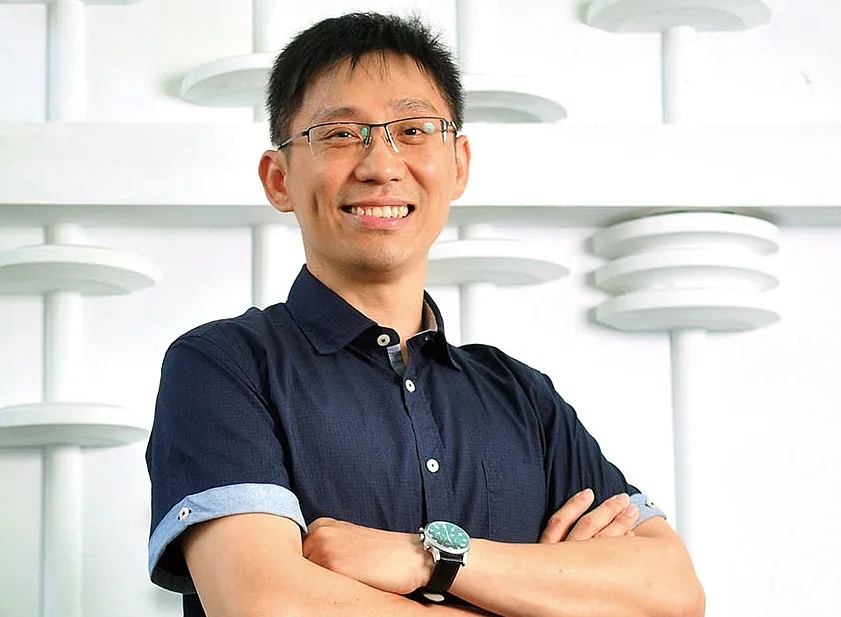
Chen Sheng-wei (1976-2020), founder and CEO of Taiwan AI Academy. Photo: Taiwan AI Academy official. via aiacademy.tw.
The Phone Call That Was Never Finished
On March 27, 2020, Chen Sheng-wei solemnly called the editor-in-chief of CommonWealth Magazine. He said: he wanted to do something1.
Two days later, he fell at an inline skating rink and hit his head. On the drive home, he suddenly felt unwell and pulled over at the roadside. After being taken to hospital, he remained unconscious for 13 days and died on April 11, 20202. He was 44.
The thing he wanted to do was to create a free programming education course for the public: no tuition, no degree requirements, open to anyone who wanted to learn programming, followed by matching talent to positions needed by companies1.
That phone call did not contain a complete plan. After Chen Sheng-wei died, no one carried the idea through.
Looking back at the final three years before his death: in 2017 he began visiting factories one by one with H. T. Kung; in 2018 the first cohort of 530 students began classes; in 2019 he wrote a book titled Artificial Intelligence in Taiwan. That phone call was an additional layer he wanted to add on top of what he “should already have completed.”
The problem was that he had run out of time.
An Academia Sinica Researcher “Descending to Earth”
Chen Sheng-wei’s given name was Chen Kuan-ta. He was born in 1976. He studied at Taichung First Senior High School, then in the Department of Computer Science at National Tsing Hua University, earned a master’s degree in computer science from Tsing Hua, and a PhD in electrical engineering from National Taiwan University. In 2006, he joined the Institute of Information Science at Academia Sinica as an assistant research fellow; in 2011 he was promoted to associate research fellow, and in 2015 to research fellow3.
This is the most typical elite path for a Taiwanese academic.
Academia Sinica researchers are paid by the state to conduct top-tier research, publish SCI papers, and train doctoral students. In 14 years at Academia Sinica, Chen Sheng-wei published more than 130 academic papers3, and received the ACM Taipei Chapter’s 2009 “K. T. Li Young Researcher Award” and the IEEE Communications Society Multimedia Technical Committee’s 2014 “Best Journal Paper Award”3.
But around midnight on a winter night in 2013, he said something to his wife, Ho Chia-chen:
“Does Taiwan have a place where workers can improve themselves like students and resolve their anxiety about knowledge?”4
There was no ready-made answer to this question. Taiwan had universities, cram schools, and online courses, but it did not have a place specifically for engineers who were already working to become students again.
So the following year, in 2014, he founded the Taiwan Data Science Annual Conference himself, which at its peak attracted 1,800 participants in a single year5. In 2016, he established the Taiwan Data Science Association. But the conference and the association were still “annual events,” not a “continuous learning venue.”
The difference was frequency: anxiety about knowledge is a daily problem. An annual conference cannot solve it.
At some point in 2017, Professor H. T. Kung, then on leave from Harvard and back in Taiwan, approached him. Kung was the William H. Gates Professor at Harvard University and was 72 at the time. Academia Sinica president James C. Liao introduced this senior scholar to Chen Sheng-wei, then 41 and only two years into his promotion as research fellow6.
Kung recalled to a CommonWealth reporter:
“Everest Textile was among the first companies that Sheng-wei and I visited.”7
The two drove every week into factories in central and southern Taiwan. They visited companies one by one and explained their ideas again and again6. Within half a year, they had visited more than 10 manufacturing companies. At that point in 2017, most business owners were skeptical about AI, but Chen Sheng-wei and H. T. Kung carried a mission of evangelism.
Starting from these on-site observations, Chen Sheng-wei gave himself a role:
“A worldly computer scientist, a technology evangelist.”8
The term “descending to earth” usually carries a derogatory meaning in academic circles: it suggests that a researcher has given up top-tier research to do applied popularization. Chen redefined it in his own language:
“As long as scholars are willing to take one step outward, they have the ability to lead society in their own way.”9
During the period when they were entering factories, he and Kung discovered something: rather than using single projects to solve problems for single factories, what Taiwan needed was the systemic construction of giving more engineers the ability to solve problems.
At the 2017 Artificial Intelligence Annual Conference, Academia Sinica president James C. Liao publicly announced the establishment of “Taiwan AI Academy”6.
From that midnight question to his wife to the president’s public announcement, roughly four years had passed.
NT$16 Billion Over Five Years, and NT$180 Million From Six Companies
In August 2017, Minister of Science and Technology Chen Liang-gee announced the “AI Small Country, Big Strategy” at a press conference, a plan to invest approximately NT$16 billion over five years to cultivate AI talent10.
This was the government version of Taiwan’s national AI strategy.
At the same time, Chen Sheng-wei took the proposal for Taiwan AI Academy in a different direction: he went to Formosa Plastics, Chimei, Inventec, Elan Microelectronics, MediaTek, and AUO11.
Six companies, each contributing NT$30 million.
Total amount: NT$180 million11.
This was the private-sector version of Taiwan’s AI talent strategy.
The tension between these two numbers far exceeded the numbers themselves. NT$180 million is one-ninth of NT$16 billion.
But the execution speed of the two strategies was completely different. To find out what the government’s five-year “AI Small Country, Big Strategy” actually accomplished, one has to go back through government annual reports to identify individual cases. AIA, the private-sector version, opened on January 27, 2018, with its first cohort of 530 students12.
From announcement to opening day: less than half a year.
📝 Curator’s Note
One phenomenon has two readings. The first: government dysfunction, private-sector self-rescue, and Taiwan’s industrial upgrading has always been driven by anxiety. The second: Chen Sheng-wei, the scholar, had thought for four years starting from that midnight question in 2013 before acting, so the school opened quickly not because the private sector is naturally agile, but because the idea had already been considered long enough.
Both readings hold. But only their overlap is complete: institutional rupture is the backdrop; an individual bearing the cost is the foreground.
After Chen Liang-gee’s press conference ended and the government’s plan was printed, Chen Sheng-wei called companies. Business owners asked what level of commitment they needed to make, what contracts they had to sign, and what returns they could expect. His terms were direct: companies would not own the school, would not own the students, and would not own the data. The school would be a foundation, and students would move freely after graduation.
The six companies signed on to those terms.
The First Class on Academia Sinica’s Seventh Floor
The morning of January 27, 2018, on the seventh floor of Academia Sinica’s Interdisciplinary Research Building12.
The opening ceremony for Taiwan AI Academy’s first cohort.
There were 210 students in the Technical Leader Program and 320 in the Executive Weekend Program, 530 people in total12. Chen Sheng-wei personally taught the first class.
The Technical Leader Program ran for 12 weeks, five days per week, full-time from 9 a.m. to 6 p.m., with tuition of NT$48,00013. There were 430 applicants, 210 admissions, and an admission rate of 48%. The entrance exam tested five subjects: calculus, linear algebra, probability, statistics, and programming13.
The Executive Weekend Program ran for 12 weeks, all day every Saturday from 9:30 a.m. to 8:30 p.m., with tuition of NT$36,00014. There were 470 applicants and 320 admissions.
The design of the two programs reflected Chen Sheng-wei’s understanding of “filling the gap.”
The Technical Leader Program was for engineers who could already write code; the gap it filled was the new technical field of AI and machine learning. Frontline engineers took weekday leave to attend class, with employers signing affidavits of consent. The Executive Program was for mid- and senior-level managers already leading teams; the gap it filled was the lateral communication ability of “can I understand what engineers are saying?” Saturday classes allowed them to attend without affecting work.
Two programs, two kinds of gap-filling: this was the first structural difference between AIA and other online MOOC courses.
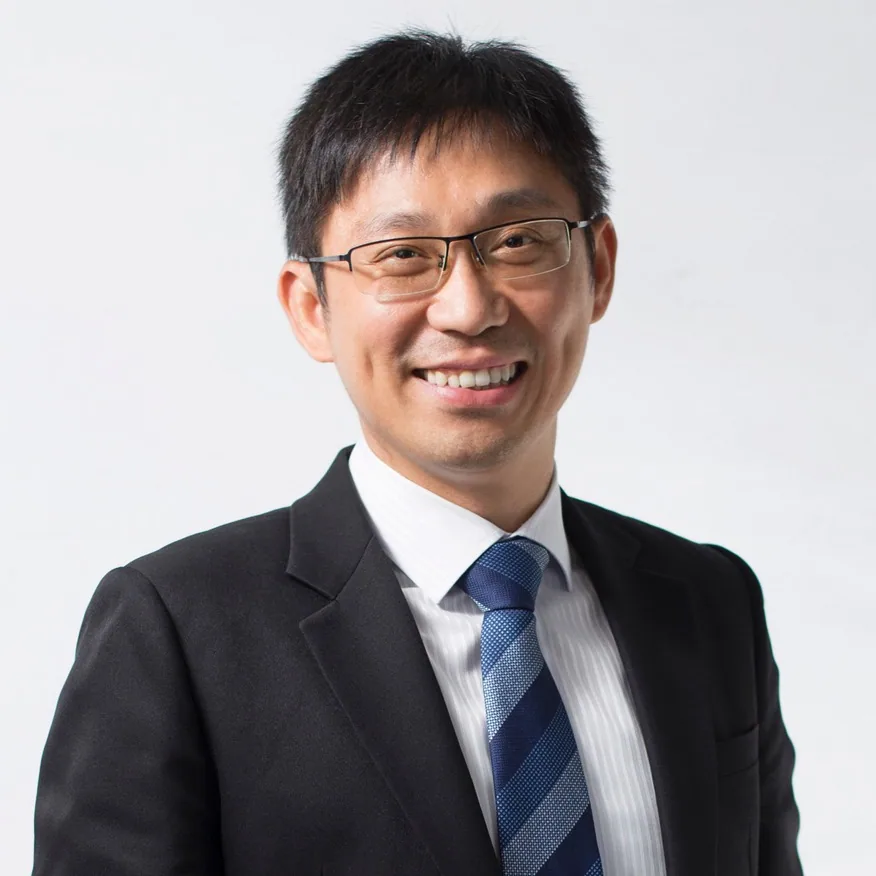
CEO Chen Sheng-wei speaking at a public Taiwan AI Academy event. Photo: Taiwan AI Academy official. via aiacademy.tw.
Among the students admitted to the first cohort was one who later shared a public reflection on AIA’s official student testimonial page. His student number was AT071039, and his name was Chen Yen-chin. He wrote:
“In three months, the school taught a very large amount of knowledge. Some of it may be material people study over two or three years in a master’s program, compressed into three months and handed to us.”
“It would not be an exaggeration to define Taiwan AI Academy as AI’s military academy.”15
The metaphor “AI’s military academy” captured the temperament of the first cohort: 100% attendance, graduation projects tied to real industry problems, and a class of peers pushed into a shared high-pressure environment.
On April 29, 2018, the first cohort of 530 students held its graduation ceremony16. Student graduation projects included stock market prediction devices, manufacturing defect detection, customer churn early-warning systems, and other applied projects. MediaTek, AUO, Inventec, Chunghwa Telecom, and Cathay Financial Holdings sent representatives to the site; some described the recruiting scene as a “talent grab”16.
The graduation survey for the first cohort’s alumni showed: 72% returned to their original companies after graduation, 15% found new jobs, 4% started businesses, 7% were waiting for opportunities, and 2% pursued further study17.
The figure that 72% “returned to their original companies” was AIA’s double-edged sword.
It validated that AIA was not a “job-quitting and job-hopping tool,” but a “continuing education channel for employed workers.” Employers sending employees to AIA would not directly lose talent. It also meant that AIA’s talent pipeline delivered AI capabilities back into existing industries, rather than creating a wave of new AI startups. This differed from South Korea’s government-led model in 2018 of becoming “the first in the world to complete national AI textbook compilation, with nine major strategies and 100 actions”[^46]: South Korea wanted to create a national AI strategy, while Taiwan used AI to strengthen existing industries.
The two models correspond to two national structures. Taiwan’s semiconductor industry is strong enough; what it needs is for AI engineers to connect with the existing ICT chain, not for AI to become an independent industry.
“We Solve Our Own Problems”
Chen Sheng-wei repeated one sentence many times. To the media, to students, to business owners:
“We must make the world see Taiwan and think of AI.”18
This sentence appeared in many settings. At first hearing, it sounds like a familiar Taiwanese national slogan, but paired with his corresponding strategy — AIA accepted no government funding, did not own student data, and allowed graduates to move freely — it carries another layer of meaning.
It was not about a government subject in which “Taiwan makes the world see.” It was a private-sector subject in which “we make the world see.” In the last long interview with The Reporter before his death, Chen made this framing more concrete:
“Some people say data is the oil of the new era; then artificial intelligence (AI) is the electricity of the new era, and in the future no modern industry will be unrelated to AI.”19
This sentence was included in Artificial Intelligence in Taiwan: Opportunities and Challenges for Industrial Transformation, coauthored with Wen Yi-ling and published by CommonWealth Magazine in July 201920. Under the title was one subtitle line: “Opportunities and Challenges for Industrial Transformation.”
The book was almost AIA’s manifesto: treating AI as infrastructure on the level of “electricity” — something every industry needs and cannot do without — rather than as an academic elite toy.
Also in 2018, Chen Sheng-wei was recruited by E.SUN Financial Holding president Joseph N. C. Huang to become the first chief technology officer in Taiwan’s financial industry21. Under his tenure, E.SUN’s big data team, CRV (Customer Risk & Value), built an 80-person professional data science team21 and advanced “nearly 100 AI projects.”
He simultaneously held three identities: AIA CEO, E.SUN Financial Holding CTO, and Academia Sinica research fellow. He once explained to the National Tsing Hua University alumni center why he accepted the E.SUN position:
“Looking back, to be honest, I was somewhat resistant! Software people usually feel that banks have nothing to do with them. I originally thought that in this life, aside from depositing money, I would have no connection to banks at all.”22
But he accepted. Because “entering industry” was an extension of AIA’s philosophy: it was not enough to teach engineers and let them go their own way; scholars themselves also had to walk in and demonstrate it once.
When Chen died, former National Development Council minister Chen Mei-ling wrote a line of remembrance that summarized this philosophy:
“Chen Sheng-wei would not wait for the government to provide resources; he created resources himself and used the right methods to solve the industrial transformation needs Taiwan faced. He was truly helping Taiwan.”23
One Thousand Days Without Vacation
From the period in March 2017 when he and H. T. Kung visited Everest Textile, to his death in April 2020, the total was roughly 1,100 days.
During those more than one thousand days, Chen Sheng-wei held three positions: research fellow at Academia Sinica’s Institute of Information Science (academic research), CEO of Taiwan AI Academy (teaching + fundraising + organizational management), and CTO of E.SUN Financial Holding and E.SUN Bank (industry practice).
In remarks at an online memorial lecture after his death, his wife Ho Chia-chen said that in those years she had almost never seen her husband take a vacation4.
Professor Lin Yi-bing, Lifetime Chair Professor in the Department of Computer Science at National Chiao Tung University, told the Central News Agency three days after Chen’s death that he had “only met with him last week to discuss cooperation.” In other words, Chen was still running affairs during the week he fell24.
Academia Sinica president James C. Liao mourned him after his death:
“Chen Sheng-wei was a once-in-a-century talent among those I have seen. In this generation, Sheng-wei was almost the best leader, organizer, communicator, and innovator I have ever seen.”25
E.SUN Financial Holding president Joseph N. C. Huang recalled Chen Sheng-wei’s catchphrases:
“The direction cannot be wrong, and the speed cannot be slow!” “How about it, difficult, right! That is exactly why it is full of challenge!”26
These are colleagues’ memories. But returning to Chen’s own interviews before his death, he repeatedly emphasized that he was neither a “hero” nor a “martyr.” The Central News Agency’s April 13, 2020 memorial feature quoted writer Yen Tze-ya’s observation:
“He clearly could have earned a great deal of money,” but “wanted to make a difference”27
“Make a difference” was an English phrase Chen himself also used. When describing his vision, he said that he hoped to make society a little better.
On March 29, 2020, Chen Sheng-wei fell and hit his head at an inline skating rink. On the drive home, he suddenly felt unwell and pulled over at the roadside. He was taken to hospital with a cerebral hemorrhage and fell into a coma. Thirteen days later, on April 11, 2020, he died2.
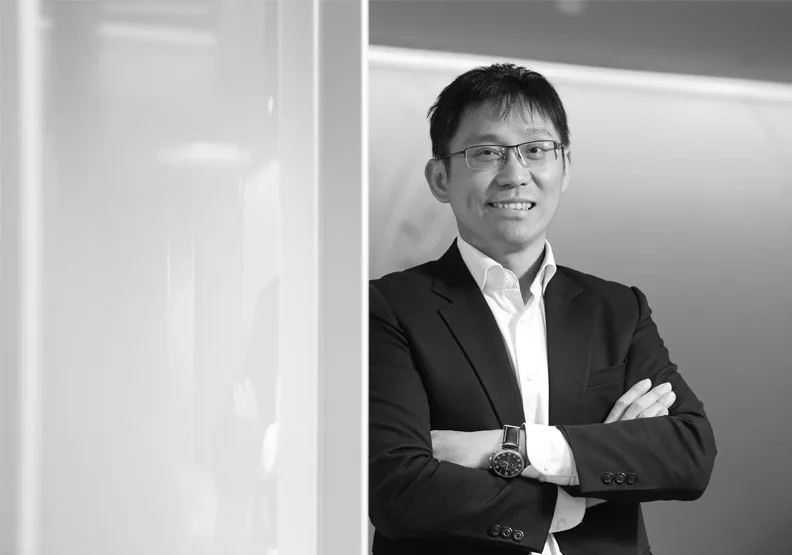
Portrait from a Global Views Monthly interview shortly before Chen Sheng-wei’s death. Photo: Chang Chih-chieh / Global Views Monthly, 2020. via gvm.com.tw (fair use editorial commentary).
After news of his death spread, AIA alumni, E.SUN, Academia Sinica, g0v, and Taiwan’s data science community worked together to launch an online memorial platform in the style of an anime game scene on April 21. The team worked overnight and finished at 1 a.m.25.
Chen’s nickname in the video game world was “Fox God” (World of Warcraft). He was one of the few Academia Sinica scholars who was both a “data scientist + gamer.” The animated style of the online memorial echoed his “otaku” identity. Within one day of launch, the message board had accumulated nearly 1,000 messages.
Yu Meng-hsun of the Right Plus accountability association remembered something Chen Sheng-wei said shortly before his death when handing off the accountability platform he had built to its successor:
“The platform is yours now, all of it is yours! From now on, you are the one who has to worry about it!”28
This was his typical way of speaking: direct when handing something over, free of sentimentality, with a slight joke. He worked extremely fast, and in the several years before his death he was constantly handing things over, each time cleanly. AIA’s successor was Tsai Ming-shun. The E.SUN CTO position had a deputy. His research fellow position at Academia Sinica was handled subsequently within the institute.
But the last thing he wanted to do, the “free public programming course” in that phone call, was not handed off to anyone in time.
The Three Years After Him
On August 31, 2020, AIA’s legal structure was reorganized29.
The Foundation for Technology, Ecology, and Development terminated its entrusted operation contract with the Artificial Intelligence Technology Foundation. Tsai Ming-shun became AIA’s acting CEO, and Liao Hung-yuan became the foundation’s acting CEO.
Tsai had more than 20 years of experience in data science and digital transformation at international companies including SAP, Oracle, and Teradata, and joined the AIA preparation team in 2017 as chief operating officer30. When Chen Sheng-wei died, Tsai had already worked at AIA for roughly three years.
This was a dual stress test of “founder death + institutionalization challenge.”
The normal pattern for technology NGOs is: the founder dies, and the organization gradually collapses within two years, because the founder’s personal charisma is the organization’s adhesive. AIA went in the opposite direction: by May 2024, alumni had exceeded 10,000 and cumulative corporate partners surpassed 2,00031.
But as AIA moved from 2020 to 2024, its course structure changed fundamentally.
AIA in 2018: a 12-week intensive boot camp, 100% in-person attendance, NT$48,000 for the Technical Leader Program, NT$36,000 for the Executive Program, and an emphasis on “graduation projects tied to real corporate problems.”
AIA in 2024: a three-day, 21-hour “Introductory Large Language Model Implementation Program,” tuition NT$17,000 (alumni discount NT$15,300). Content covered Gemini, ChatGPT, Ollama, Make, NotebookLM, Gamma, Suno, and the Line API32.
The shift from “elite intensive program” to “short LLM course” was a change of the times. After ChatGPT launched at the end of 2022, the global structure of AI education demand changed dramatically. AIA had to add LLM modules, had to make tuition affordable for more people, and had to let non-engineering professionals attend.
This evolution also triggered internal discussion over “whether we are still the same AIA.” The alumni community split between “continuing Chen Sheng-wei’s ‘application-first’ philosophy” and “the LLM era has arrived, and the AIA model should be fully transformed”31.
⚠️ Contested View
AIA is not every alumnus’s success story.
On November 16, 2018, a student in AIA’s Taichung program posted a reflection on the PTT Soft_Job board under the username name0625. He listed several specific critiques:
“Overall, my impression of the teaching materials: not systematic, not sincere. It felt like a university group report, where each person completes one part separately and no one integrates it.”
“(The videos) are mainly 720p, and in different segments from the same day the volume varies a lot; in some, the speaker forgets the words for more than five seconds.”
“Raise your hand if you watched the course videos according to schedule? By my observation, less than half; raise your hand if you completed the course exercises according to schedule? By my observation, almost no one.”
“For the Taichung program’s job matching, the teaching assistants had already given us a heads-up that probably not many companies would come to look.”33
This critique is another side of AIA beyond the first cohort at the Taipei main campus: early branch-campus cohorts had weaker faculty than the main campus, fewer graduation matching resources than the main campus, and prerecorded rather than live course videos. Their student experience differed greatly in structure from the original Taipei program’s “in-person intensive + 100% attendance” model.
AIA’s official narrative does not proactively mention this critique. But while saying that Taiwan’s AI talent pipeline was “held up by Chen Sheng-wei alone,” one should also acknowledge that quality gaps created by branch campuses, online delivery, and scaling are unavoidable internal discussions in how this talent pipeline actually operated.
On October 8, 2021, AIA formally launched the “Chen Sheng-wei Memorial Lecture” established in his name34. The inaugural speaker was Chien Lee-feng, former managing director of Google Taiwan, on the topic “Trends of AI: An Industrial Perspective.”
Ho Chia-chen said at the launch ceremony:
“I am very grateful that the Taiwan AI Academy Foundation established the Chen Sheng-wei Memorial Lecture. This is a positive affirmation of Sheng-wei, and it will continue Sheng-wei’s passion, carrying forward the wish to make Taiwan seen by the world because of AI.”35
In 2025, Tsai Ming-shun was named one of Manager Today’s 18th “100 MVP Managers”30. On September 27-28, 2024, AIA held the “Taiwan Artificial Intelligence Annual Conference” at Academia Sinica36, continuing the lineage of the “Taiwan Data Science Annual Conference” that Chen had founded himself in 2014.
From 2018 to 2026, AIA has walked eight years. Chen Sheng-wei was there only for the first three.
The Class That Never Was
No one heard the full vision in that phone call on March 27, 2020.
Two days later, Chen Sheng-wei fell. Thirteen days later, he passed away. The free programming course for all that he wanted to launch never materialized.
But by May 2024, AIA alumni had surpassed ten thousand. At Tsai Ming-shun's press conference, there was no need to repeat the phrase Chen Sheng-wei always kept on his lips: "When the world sees Taiwan, let them think AI." Over the past six years, that sentence had already been written into the résumés of Taiwan's tech industry through more than ten thousand engineers.
AIA evolved from a 12-week, NT$48,000 full-time intensive camp to a 3-day, 21-hour, NT$17,000 LLM short course. From technical leaders to industry popularization. From a single school to a talent pipeline.
The "free programming course for all" that Chen Sheng-wei wanted never came to be. But the other thing he wanted — "no one falls behind because they can't find AI talent" — was half achieved.
That unfinished phone call left behind an unfulfilled aspiration, and ten thousand people who once sat in AIA classrooms.
Further Reading:
- The Rise of the AI Island Nation: Taiwan's Artificial Intelligence Development and Future Strategy — A panoramic narrative of Taiwan's AI policy framework, industrial layout, five strategic domains, and international cooperation
- Taiwan's AI Daily Life — On-the-ground practices of AI in Taiwan's convenience stores, hospitals, farms, classrooms, and other everyday scenarios
- Semiconductor Industry — How the AI engineers cultivated by AIA over eight years reconnect with the existing ICT ecosystem of the semiconductor powerhouse
- Why Taiwan Needs Its Own Knowledge Base — Dean Tsai Ming-shun says Taiwan's local data accounts for less than 0.1% of the internet world; this article quantifies that gap and discusses who should write the version
Image Sources
This article uses three publicly licensed images, all cached under public/article-images/technology/ to avoid hotlinking source servers:
- Portrait of CEO Chen Sheng-wei (2018) — Photo: Taiwan AI Academy official, 2018, fair use editorial commentary on AIA founder portrait
- Chen Sheng-wei speaking (2018) — Photo: Taiwan AI Academy official, 2018-2019 period, fair use editorial commentary
- Chen Sheng-wei portrait from Global Views Monthly interview (2020) — Photo: Chang Chih-chieh / Global Views Monthly, April 21, 2020 memorial feature, fair use editorial commentary on deceased public figure portrait
References
- CommonWealth Magazine: The AI promoter who cared about Taiwan — two days before the accident, he solemnly said he wanted to do something — CommonWealth Magazine’s 2020 memorial feature, recording details of Chen Sheng-wei’s phone call to the CommonWealth editor-in-chief two days before his death, on March 27, saying he “wanted to do something” (title and content summary available from public search results; full text partly paywalled).↩
- Central News Agency: Taiwan AI Academy CEO Chen Sheng-wei dies — Central News Agency obituary report dated April 13, 2020, including details of his death: fall while inline skating, loss of consciousness while driving home, hospitalization, and death.↩
- AIA: CEO Chen Sheng-wei profile page — Taiwan AI Academy official profile page, including education and career history (Tsing Hua computer science → NTU electrical engineering PhD → Academia Sinica assistant research fellow in 2006-08 → associate research fellow in 2011-01 → research fellow in 2015-03), more than 130 papers, and awards.↩
- CommonWealth Future City: Remembering Chen Sheng-wei and Taiwan’s data science community (Ho Chia-chen’s account) — CommonWealth Future City’s 2020 memorial feature on Chen Sheng-wei, in which Ho Chia-chen, in the closing speech of the 2020 Data Science Annual Conference, recounted what Chen said to her late one night at the end of 2013.↩
- Wikipedia: Chen Sheng-wei (supplementary section) — Same as [^1], supplementing records of the 2014 Taiwan Data Science Annual Conference, which drew up to 1,800 participants, and the 2016 establishment of the Taiwan Data Science Association.↩
- CommonWealth Future City: Saving the nation with artificial intelligence? Six companies jointly invest NT$180 million to establish Taiwan AI Academy — CommonWealth Future City in-depth 2018 report, including an interview with H. T. Kung, the Everest Textile case, and the process of visiting more than 10 factories.↩
- CommonWealth Future City: H. T. Kung interview (Everest Textile section) — Same as [^7], CommonWealth Future City’s 2018 in-depth report recording H. T. Kung’s memory of the starting point of cooperation with Everest Textile.↩
- Central News Agency: Chen Sheng-wei promotes AI development — Central News Agency memorial feature dated April 13, 2020, including Chen Sheng-wei’s self-description as a “worldly computer scientist, technology evangelist.”↩
- Central News Agency: Chen Sheng-wei promotes AI development (scholars’ responsibility section) — Same as [^A3], with the Central News Agency’s 2020 memorial feature further recording Chen’s view that “as long as scholars are willing to take one step outward.”↩
- Executive Yuan official website: AI Small Country, Big Strategy — Executive Yuan official policy announcement page for the five-year Taiwan AI strategy announced by Minister of Science and Technology Chen Liang-gee in August 2017, including budget scale and policy architecture.↩
- Taiwan AI Academy English About page — AIA’s official English introduction page, including the list of six founding sponsor companies: Formosa Plastics, Chimei, Inventec, Elan Microelectronics, MediaTek, and AUO, as well as founding background.↩
- iThome: Taiwan AI Academy opens today, with 530 first-cohort students attending four months of intensive training — iThome report dated January 27, 2018, including opening ceremony details, the admission count of 530, and the first cohort’s program structure.↩
- AIA: Technical Leader Program first-cohort admissions brochure — Taiwan AI Academy official admissions page, including course details such as NT$48,000 tuition, 12 full-time weeks, and a five-subject entrance exam.↩
- AIA: Executive Weekend Program first-cohort admissions brochure — Taiwan AI Academy official admissions page, including course details such as NT$36,000 tuition, full-day Saturday classes, 470 applicants, and 320 admissions.↩
- AIA student testimonial page — Taiwan AI Academy official student testimonial page, including a graduation reflection by first-cohort Technical Leader Program student Chen Yen-chin (AT071039), including the metaphor “AI’s military academy.”↩
- Taipei Times: First batch of AI Academy graduates — Taipei Times English report dated April 29, 2018 on the first graduation ceremony, including the presence of companies such as MediaTek, AUO, Inventec, Chunghwa Telecom, and Cathay Financial Holdings recruiting on site.↩
- TechNews: Taiwan AI Academy’s first graduation ceremony is about to take place — TechNews report dated April 25, 2018, including preparations for the graduation ceremony and first-cohort alumni survey results: 72% returned to original companies, 15% found new jobs, and 4% started businesses.↩
- CommonWealth Future City: Remembering Chen Sheng-wei — CommonWealth Future City’s 2020 memorial feature on Chen Sheng-wei, recording his often-repeated vision: “We must make the world see Taiwan and think of AI.”↩
- Central News Agency: Chen Sheng-wei drives industrial transformation with AI — Central News Agency memorial feature dated April 13, 2020, an authoritative source quoting the famous line from Chen’s book Artificial Intelligence in Taiwan: “data is the oil of the new era; AI is the electricity of the new era.”↩
- Books.com.tw: Artificial Intelligence in Taiwan: Opportunities and Challenges for Industrial Transformation — Coauthored by Chen Sheng-wei and Wen Yi-ling, published by CommonWealth Magazine on July 3, 2019; the written manifesto of AIA’s philosophy.↩
- United Daily News: Joseph N. C. Huang mourns Chen Sheng-wei — Memorial essay by E.SUN Financial Holding president Joseph N. C. Huang in April 2020, including information on Chen’s 2018 appointment as CTO of E.SUN Financial Holding and E.SUN Bank, and the 80-person scale of the CRV big data team.↩
- National Tsing Hua University Alumni Center: Interview with Chen Sheng-wei — National Tsing Hua University Alumni Center interview, in which Chen himself described his initial state of mind when accepting the CTO role at E.SUN Financial Holding in 2018: “To be honest, I was somewhat resistant.”↩
- Central News Agency: Chen Mei-ling mourns Chen Sheng-wei — Central News Agency 2020 memorial feature, recording former National Development Council minister Chen Mei-ling’s view of Chen: “he would not wait for the government to provide resources, but created resources himself.”↩
- Central News Agency: Lin Yi-bing on Chen Sheng-wei — Central News Agency 2020 memorial feature recording Professor Lin Yi-bing’s memory: “only met with him last week to discuss cooperation.”↩
- Global Views Monthly: Memorial feature on Chen Sheng-wei’s death — Global Views Monthly memorial feature dated April 21, 2020, including Academia Sinica president James C. Liao’s original phrase “once-in-a-century talent” and background on the online memorial.↩
- Global Views Monthly: Joseph N. C. Huang on Chen Sheng-wei — Global Views Monthly memorial feature in April 2020, in which E.SUN Financial Holding president Joseph N. C. Huang recounted Chen Sheng-wei’s catchphrases.↩
- Central News Agency: Yen Tze-ya mourns Chen Sheng-wei — Central News Agency 2020 memorial feature quoting writer Yen Tze-ya’s observation of Chen Sheng-wei: “He clearly could have earned a great deal of money, but wanted to make a difference.”↩
- Right Plus: Yu Meng-hsun mourns Chen Sheng-wei — Right Plus accountability association memorial essay dated April 14, 2020, recording Chen Sheng-wei’s direct, brisk speaking style when handing off the accountability platform to Yu Meng-hsun.↩
- AIA announcement: Foundation structure adjustment — AIA official announcement dated August 31, 2020, documenting the reorganization of the legal structure after Chen Sheng-wei’s death, with Tsai Ming-shun as acting CEO and Liao Hung-yuan as acting foundation CEO.↩
- AIA: Tsai Ming-shun receives the 18th 100MVP Manager award in 2025 — Taiwan AI Academy’s 2025 announcement of Tsai Ming-shun receiving Manager Today’s 18th “100MVP Manager” recognition, including his background at SAP, Oracle, and Teradata.↩
- Canopi: How does Taiwan AI Academy “solve its own problems”? — Canopi Magazine’s 2024 in-depth interview with Tsai Ming-shun and Hou Yi-hsiu, including the latest figures as of May 2024: more than 10,000 alumni and more than 2,000 partner companies.↩
- AIA: Introductory Large Language Model Implementation Program admissions brochure — Taiwan AI Academy LLM-A introductory program 2024 admissions page, including three days and 21 hours of instruction, NT$17,000 tuition, and course content covering Gemini, ChatGPT, Ollama, Make, NotebookLM, Gamma, Suno, and the Line API.↩
- PTT Soft_Job: AIA Taichung program student reflection — PTT Soft_Job board post by user name0625 on November 16, 2018, reflecting on AIA’s Taichung program, including specific critiques of teaching-material integration, video quality, and job-matching resources.↩
- AIA: Chen Sheng-wei Memorial Lecture launches on 10/08 — Taiwan AI Academy’s official page for the October 8, 2021 launch ceremony of the Chen Sheng-wei Memorial Lecture, including remarks by Ho Chia-chen, Liao Hung-yuan, and Chien Lee-feng, and the topic of the first lecture.↩
- AIA Memorial Lecture launch ceremony: Ho Chia-chen’s remarks — Same as [^17], AIA’s official page for the Memorial Lecture launch ceremony, recording Ho Chia-chen’s remarks on October 8, 2021.↩
- AIA Taiwan Artificial Intelligence Annual Conference 2024 — Official event page for AIA’s Taiwan Artificial Intelligence Annual Conference held at Academia Sinica on September 27-28, 2024, continuing the lineage of the Taiwan Data Science Annual Conference founded by Chen Sheng-wei in 2014.↩