
Hong Ni: From Fangyuan Library to HahaTai Streets, Three Names Share One Pen
30-Second Overview:
Hong Ni's real name is Hong Jie-ni. Born in Changhua Haixian in 1996, she grew up in Fangyuan. She uses the name "Jenny" on the streets, seeking local experiences from strangers; she returns to paper as "Hong Ni," organizing her mother, migrant life, baking apprenticeship, and emotions she is reluctant to reveal into prose. Her core tension lies in how the more accustomed she is to listening to others speak, the more she must learn to let herself say the hardest things.1 2
| 19961 | Three Names3 |
|---|---|
| Hong Jie-ni born in Changhua Haixian | Hong Jie-ni, Jenny, Hong Ni, with a childhood nickname Hong Ma-ni |
| 2 Awarded Short Stories1 3 | Is the Watermelon Sweet?, Super Bread |
📝 Curator's Note
What is most worth reading about Hong Ni is not that she simultaneously holds the roles of host and writer, but how she brings the attention of both jobs back together: street interviews require her to wait for strangers to say a little more, while prose requires her to admit that she also has things she cannot bring herself to say.
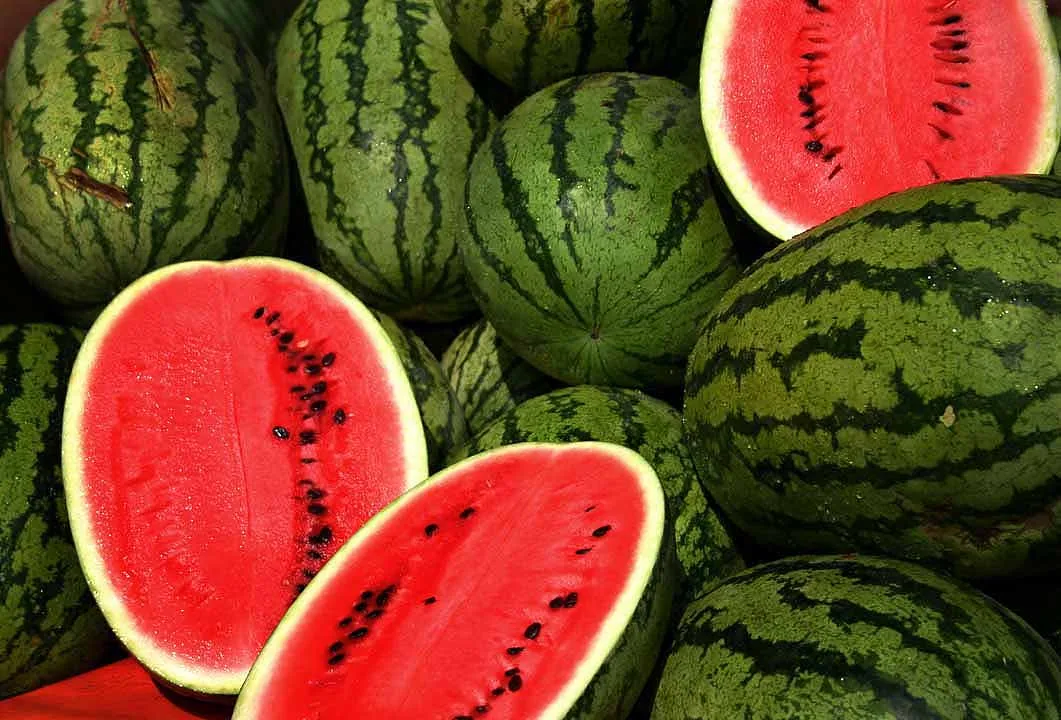
Figure 1 | Watermelon as a situational image in Hong Ni's short story Is the Watermelon Sweet?. Author: Steve Evans; Wikimedia Commons; CC BY 2.0. The image is not of Hong Ni or from Taiwan.4
In 1996, Hong Jie-ni was born in Changhua Haixian. In 2023, she won the Short Story Award at the nineteenth Lin Rongsan Literary Award for Is the Watermelon Sweet?; in 2025, Super Bread received the Excellence Award at the twenty-first Lin Rongsan Literary Award.1 3 The same person left her name through two short stories within two years, causing readers to begin noticing the two paths that were originally scattered across video and text.
In HahaTai, she is "Jenny," planning programs and hosting street interviews, asking questions of strangers. On the pages of a book, she is "Hong Ni," writing about family relations and growth using a watermelon, a loaf of bread, and a home in Haixian. When Yuanliu Publishing introduced The Melon Seller, they referred to her as Jenny, the HahaTai host, and Hong Ni, the recipient of the Lin Rongsan Literary Award.2 This is not merely a dual resume; it is an author's method for allocating herself between public work and private writing.
One Typo, Three Names
Hong Ni’s real name is Hong Jie-ni, and she graduated from Shih Hsin University's Department of Communication. The introduction to the Lin Rongsan Literary Award mentioned that she had filmed television programs for several years before transitioning to online video work, with her works also published in the United Daily News Binfen section.1 Her career did not advance along a straight line from "media worker turning into writer"; filming, hosting, planning, and writing have always overlapped, only the names used externally are different.
The 2025 award announcement provided the origin of the nickname "Hong Ma-ni." In elementary school, she wrote "Ma" instead of "Jie" in her given name; her teacher read the misspelling as "Hong Ma-ni," and this mistake became her childhood moniker.3 A single stroke error unexpectedly left the first link between her name and her family, making "Hong Ma-ni" not just a cute pun, but evidence of a life she was once called and remembered.
In an interview, she said: "The current me can let these two roles coexist naturally because they are both part of me."5 The "roles" referred to the posture required by work and writing respectively, not cutting a person into true and false halves. Jenny must face strangers; Hong Ni must face memory; one name asks the question out, while the other keeps the question within herself.
The February 2025 episode of the podcast Illegal Girl lalaLand also listed Hong Jie-ni, Jenny, and Hong Ni as different personas of the same guest, discussing her street interview work, literary award experience, and writing.6 The tone of the episode page is lighthearted, yet it reveals an important reality: she did not first select a successful image and then add a literary resume to it; the three names are records of work from different periods that only meet in the book.
Fangyuan Library: Local Sense Begins with a Book
Hong Ni grew up in Changhua Haixian, Fangyuan. She recalls: "Because we lived near the library, all five children in our family had a habit of reading."5 This statement is more concrete than "liking literature since childhood": a library, a family with five children, and a place to read accessible by walking constitute the early landscape of her later writing.
This starting point also changed how "place" appears in her work. Fangyuan is not just a birthplace mentioned in an author biography; it appears alongside family, food, reading, and experiences returning home. In interviews, she talks about knowing cities through food and place writing, and taking books when traveling; she once made a flavor the reason to set out for Fukuoka roasted chicken skin or Yunlin Dapi sauerkraut.5
📝 Curator's Note
Hong Ni's sense of place is not a list of tourist spots, but rather "who eats what here, who puts what in the fridge, and who grew up near the library"—these are life relationships. When she writes about Changhua, she writes about how the local area enters a person's body and memory.
The HahaTai official YouTube channel introduces itself in English as a video team from Taiwan, with content including street interviews, original programs, and conversations about daily life, relationships, identity, local culture, and Taiwanese people.7 This official positioning provides context for Jenny’s work: the street is not merely a shooting location, and interviewees are not just material waiting to be edited into jokes; they are speakers of local experience.
Jenny: Preparing Answers First, Then Letting the Scene Overturn Them
Hong Ni mentioned in United Literary when discussing local street interviews that the team first grasps the stereotypes about a certain place from the outside world before confirming whether that impression is valid on site.5 This is an interviewing method imbued with self-doubt: doing homework without treating it as a conclusion; knowing what others think, and then handing the question over to the people who live there.
The difficulty of street interviews often lies not in asking the first question, but in whether one can keep listening after the first answer. The podcast summarized Hong Ni's work as "street interview recording an era," listing segments where she discusses Visiting the Heart, her journey through street interviews, and work pressure.6 In this public program material, street interviewing is both content production and labor that continuously approaches people: the host must make the interviewee relax, while also finding truly meaningful answers within time constraints and production requirements.
This kind of training makes her prose not only good at depicting emotions but also at attaching emotions to objects and actions. During street interviews, she waits for strangers to finish speaking; in writing, she waits for a piece of fruit, a loaf of bread, or a family conversation to reveal another layer of meaning. Neither job believes that the first answer is sufficient.
Is the Watermelon Sweet?: The Expiration Date of Fruit, and Also Relationships
Is the Watermelon Sweet? begins with Hong Ni's fondness for watermelons. She writes about eating watermelon three times a day in college until she got diarrhea; when returning home, her mother would buy a watermelon in advance to put in the refrigerator for her daughter to eat together.8 These life details were not rushed into grand principles, but made "a mother's care" a visible action: buying it, putting it in the fridge, waiting for someone to come home.
The work then shows another side of the watermelon. It is large and suitable for sharing, yet it does not last long; when a person lives in Taipei without anyone to share with, the uneaten flesh turns sour and must be poured out.8 Hong Ni places kinship, love, and single life within the same shelf-life, allowing the reader to feel the sourness wafting from the refrigerator as the relationship changes, rather than through explanation.
"It's just eating fruit; no one needs to make things difficult for anyone."[—Hong Ni, Is the Watermelon Sweet?8
This sentence seems to talk about fruit, but it also talks about strain in relationships. When she compares herself to a cut watermelon, the article moves from "liking or not liking" to "whether to force it to stay." A reviewer published in Liberty Subsidiary Magazine felt that the work has a direct yet lingering power in writing about the gains and losses of kinship and love through sharing watermelons.8
Super Bread: Months of Apprenticeship, Seven Years of Revision
Another turning point for Hong Ni was an apprenticeship experience with bread lasting only a few months. Liberty Arts Network reported that she left drafts from her apprenticeship life, which took seven years of fermentation and revision to complete Super Bread; in the repetitive labor of making bread, she began to think about bread and love, material life, and relationships where one sacrifices oneself to feed others.3
She said: "Bread isn't just bread."3 This sentence is not forcing food into a symbol, but describing a way writing happens: the hands perform standardized work, while the brain branches out from repetition. The materials that were originally just work records gradually found a direction connected to mother-daughter kinship through repeated review.
Super Bread ultimately centers on family relations and mother-daughter kinship, earning the Excellence Award at the twenty-first Lin Rongsan Literary Award.3 It makes Hong Ni's writing arc clearer: nostalgia for local life and the weight of work experience coexist in her pen; she questions how a person gives, consumes, and reunderstands those who care for them through everyday objects.
The Melon Seller: If Not Written, Forgotten; If Written, Seen
The Melon Seller is Hong Ni's first collection of short stories. Yuanliu Publishing materials show that the book includes writings from nearly ten years starting in 2016, covering family memories in Changhua Haixian, migrant life, work experience, and personal growth, and also includes works such as Super Bread, Is the Watermelon Sweet?, Visiting the Heart, and The Worries of Youthful Livelihood.2
The author's afterword on the publisher's page calls this book a "Thirty-Year Memoir," stating: "This is my thirty-year memoir, things I might forget if I don't write them, and things I can't bring myself to say."2 This sentence reveals the true weight of the title. The "melon" in the book is not a life that has been fully organized, but material from life that must be processed before ripening and preserved before rotting.
Writing hands over private experience to readers, and pushes the author back to the scene of memory. Hong Ni said in her acceptance speech: "The writing I can do best right now is what I least want people to see."1 This sentence corresponds with the afterword of The Melon Seller: if not written, certain things will disappear; when written down, certain things are exposed in another way.
📝 Curator's Note
Hong Ni's prose brings the experience of a "HahaTai host" back to family and memory, allowing readers to see how a person turns curiosity about the outside world into an examination of themselves. She does not reveal a list of private details, but rather the hesitation involved in organizing those details.
Retaining the Same Curiosity Between the Lens and Paper
Hong Ni can be read within the context of contemporary Taiwanese prose, and also understood within the framework of the history of Taiwanese literature. Her works do not gain weight from grand themes, but by how the watermelon, bread, refrigerator, library, and family speak, one by one carrying emotion. These objects are small, yet they bring a life scale of a generation into the writing.
Her relationship with Changhua is not merely nostalgia remembered after leaving home. The Fangyuan library, Haixian family, and food from returning home have long constituted her way of viewing the world. When she interviews strangers on the streets of Taipei, what she takes away is not a blank questionnaire, but attention cultivated through local life.
This creates an interesting back-and-forth between the two names, Jenny and Hong Ni. Jenny hands over the topic to others in the public sphere; Hong Ni collects the topic back into herself on paper. The former requires facing sudden answers; the latter must bear the silence from many years ago. Media work demands immediate reaction; prose demands post-facto admission, but both start from the same action: not concluding too quickly for oneself or for others.
Hong Ni's three names do not ultimately cancel each other out. Hong Jie-ni is the real name; Jenny is the professional identity that walks into crowds; and Hong Ni is the author who cuts open the watermelon and kneads the bread again. Hong Ma-ni leaves a small elementary school typo between these three. When she writes "the writing I least want people to see," she does not turn herself into an invisible person, but allows readers to see: that one can hold fear, and even after fear, still submit that page.
Image Sources
This article uses 1 CC-licensed image, which has been cached in public/article-images/people/ to avoid hotlinking source servers. The image is Watermelons.jpg taken by Steve Evans, licensed under Creative Commons Attribution 2.0 Generic (CC BY 2.0); when using it, please retain the author's credit, original file page, and license terms. The image is only a situational illustration for Is the Watermelon Sweet? and does not represent Hong Ni, Fangyuan, or Taiwanese watermelon production areas.
Further Reading
- Hong Ni's _Is the Watermelon Sweet?_ and Reviewer Comments — Reading how Hong Ni writes about kinship, love, and single life through sharing and rotting watermelons.
- Interview with Jenny/Hong Ni in _United Literary_ — Understanding Fangyuan's reading background, local street interview methods, and her view on the two professional names.
- Award Announcement for _Super Bread_ — Tracking how the baking apprenticeship experience was revised over seven years into a prose about mother-daughter kinship.
- Yuanliu Publishing Book Page for _The Melon Seller_ — Checking book introductions, table of contents, author's afterword, and publication information.
References
- Liberty Arts Network: Recipients of the nineteenth Lin Rongsan Literary Award Short Story Prize — Introduction to the award winners in the literary prize section, recording Hong Ni's background, education, media work, literary experience, and acceptance speech.↩23456
- Yuanliu Publishing: The Melon Seller — The publisher's official book page, providing primary materials such as author biography, table of contents, work positioning, author's afterword, and publication specifications.↩234
- Liberty Arts Network: Hong Ni AKA Hong Ma-ni, Excellence Winner of the twenty-first Lin Rongsan Literary Award Short Story — A 2025 personality report that includes Hong Ni's discussion of her baking apprenticeship experience, the seven-year revision process for her work, the mother-daughter theme, and the origin of her nickname.↩234567
- Wikimedia Commons: Watermelons.jpg — Photographed by Steve Evans, CC BY 2.0; hotlink source and licensing information.↩
- United Literary: Jenny/Hong Ni: Different Names, All Part of Me — A literary media personality interview that includes Hong Ni's own words about her reading experience in Fangyuan, food and place, street interview work, and the coexistence of identities.↩234
- Apple Podcasts: EP221 Speaking Candidly Through Writing, Street Interview Recording an Era ft. Hong Ni/Jenny — The 2025 interview episode page lists the themes of Hong Ni/Jenny's program, her thoughts on street interviews, and writing discussions for readers to listen back to the original interview.↩2
- HahaTai official YouTube channel — The HahaTai official English channel introduction, stating that the main content is street interviews, original programs, and conversations about daily life, local culture, and Taiwanese people.↩
- Liberty Subsidiary Magazine: Is the Watermelon Sweet? — The full text of the short story awarded at the nineteenth Lin Rongsan Literary Award, along with reviewer comments, which can be used to check the watermelon imagery, quotes from the work, and reviews on writing about kinship and love.↩234
