
30-Second Overview: Chiang Ching-kuo became President in 1978 and announced the lifting of Taiwan’s 38-year martial law on July 15, 1987. These two events make him simultaneously the helmsman of an authoritarian regime and the decision-maker for political opening. This article does not write democratization as the gift of a single individual, but places his reforms, state violence, and the social movements that continued after the Formosa Incident on the same causal chain.
On May 20, 1978, Chiang Ching-kuo took the oath of office as President of the Republic of China in Taipei; on July 15, 1987, Taiwan lifted its 38-year martial law; on January 13, 1988, he passed away while in the presidency. 1 These three dates, lined up, look like a neat timeline of progress. But Chiang Ching-kuo was not someone standing outside the martial law regime, opening a door for Taiwan; he was one of the gatekeepers of that very door.
The historical puzzle he leaves behind is therefore not a voting question of "Was Chiang Ching-kuo good or bad?" but rather: Why did a person who once wielded an authoritarian state begin to dismantle several of the pillars he relied upon for rule in the last few years of his life? More vexingly, this dismantling did not start from a blank slate. He pushed the door open, but it was a succession of risk-taking voices during the martial law era who squeezed their bodies into the room, ensuring it could never be closed again.
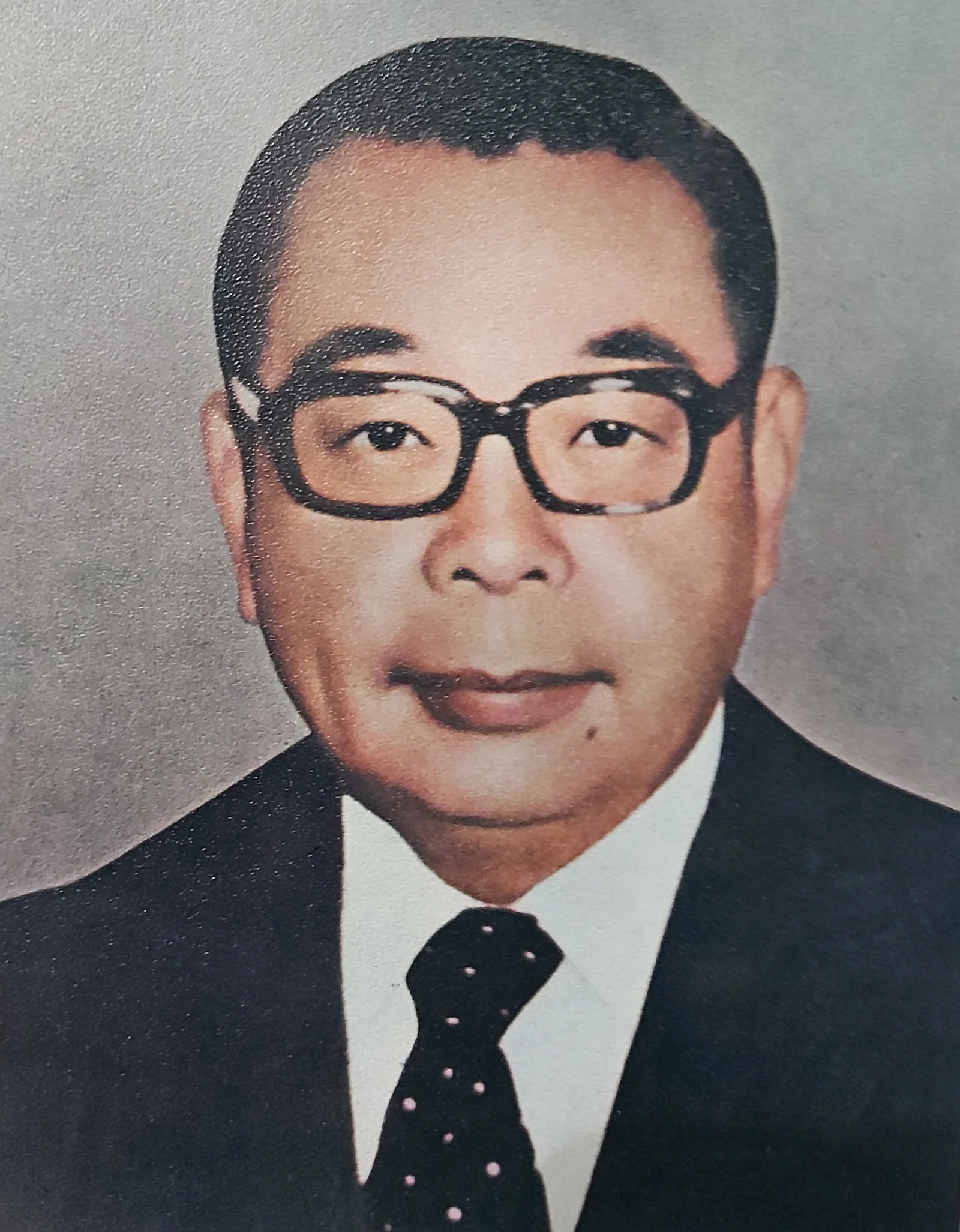
Image: Ado / Wikimedia Commons, CC BY-SA 4.0.
📝 Curator’s Note
The lifting of martial law is worth remembering not because a strongman suddenly became kind, but because even strongmen had to face a society that had already grown up.
A Successor in Crisis
Chiang Ching-kuo succeeded to the chairmanship of the Kuomintang (KMT) and served as Premier of the Executive Yuan in 1975, becoming President in 1978. Research by Wu Nai-te of the Academia Sinica places the democratization of the 1980s back into the context of the Formosa Incident and the masses of opposition movement participants, reminding readers not to over-attribute democratization to Chiang Ching-kuo alone. 2
This background is crucial because it changes the weight of the word "reform." For a ruler still seeking to maintain power, localization, elections, social construction, and political opening do not necessarily equal abandoning power; they can also be methods to keep the regime alive. Retrospect Journal’s analysis of this turning point points out that by the late 1970s, Taiwan had lost formal U.S. recognition and its diplomatic situation had worsened. Chiang Ching-kuo was facing not merely domestic governance, but the question of whether the regime could continue to exist amid Cold War shifts. 3
The Presidential Office’s official biography page organizes his term in more positive language: he promoted local construction, cultivated Taiwanese elites, narrowed the urban-rural gap, and advanced parliamentary restructuring and democratization politically; he lifted martial law in 1987, then allowed the establishment of new newspapers and political parties, and in November 1987 also opened travel for Taiwanese residents to the mainland. 1 This official narrative provides the skeleton of reform, but a skeleton is not the whole body.
Because before that, Taiwan’s political space was still constituted by martial law, bans on political parties and newspapers, restrictions on assembly, and the intelligence system. These institutions did not fall from the sky on a certain day, nor did they all vanish with a single decree lifting martial law.
Before the Lifting of Martial Law, Society Was Already Speaking
The Formosa Incident on December 10, 1979, is a scene that cannot be bypassed when discussing Chiang Ching-kuo’s late-life reforms. Memoir materials published by the Presidential Office in 2007 viewed the 1979 Formosa Incident and the founding of the Democratic Progressive Party (DPP) in 1986 as important factors leading to the lifting of martial law; the same material also recorded that many political demands then considered criminal later became part of Taiwan’s democratic system. 4
This contrast is more worth remembering than "Taiwan’s march toward democracy": A state that once could view the lifting of martial law, opening bans on parties and newspapers, full parliamentary renewal, and direct presidential elections as evidence of rebellion was later forced to write several of those demands into its own reform agenda. 4
On September 28, 1986, the Democratic Progressive Party was founded. Martial law had not yet been lifted, and organizing a new political party was a direct collision with the boundaries of the system. Ten days later, Chiang Ching-kuo met with The Washington Post publisher Katharine Graham, publicly stating for the first time that Taiwan would lift martial law. This temporal relationship is recorded in both the Presidential Office’s later memoir materials and the Chiang Ching-kuo Memorial Website, but their narrative stances differ: the former emphasizes the pressure of democratic movements, while the latter emphasizes Chiang Ching-kuo’s role in persuading comrades within the party. 4 5
This is not about choosing a "single truth" between the two versions. They jointly point to one thing: There was a decision-maker for the lifting of martial law, but no single decision-maker could have created that era alone.
📝 Curator’s Note
Writing democracy as a gift from a single leader simultaneously erases two groups of people: those suppressed by the state, and those who acted despite the risk of being suppressed by the state.
The Words "The Times Are Changing"
The Chiang Ching-kuo Memorial Website preserves a frequently cited statement. The website records that in 1986, in order to persuade party comrades to lift martial law, he said: "The times are changing, the environment is changing, and the trend is also changing." 5
This sentence is short enough to be printed on souvenirs, but it cannot be taken alone to prove that Chiang Ching-kuo had become a democrat. It is more like a key that opens the shift in his late-life political language; but the key opens a room that is still locked.
Xue Huayuan of the Foundation for National Policy Research reminds us that lifting martial law is a key step toward liberalization, but it cannot be directly equated with democratization. Because democracy is not just canceling emergency orders; it also includes regular elections to decide who governs, guaranteeing basic human rights, and allowing the people to continuously change the government. 6
A review by the Lowy Institute also points out that after the 1987 lifting of martial law, the government quickly enacted the National Security Law, continuing many powers previously held by the martial law system; it was not until the 1992 constitutional reform and the first multi-party direct presidential election in 1996 that Taiwan continued to pass several key institutional hurdles. 7
Thus, "The times are changing" is not a圆满 (perfect) ending, but rather the ruler’s admission that old methods can no longer continue unchanged. It brought new possibilities, but also left new restrictions.
A Reformer Cannot Wash Away His Responsibility
The historical evaluation of Chiang Ching-kuo most easily slides into two extremes here: one side writes him as an enlightened leader who single-handedly completed democratization, while the other, because he was part of the authoritarian regime, refuses to acknowledge that his decisions indeed changed the direction of the system. Both writings are too easy.
Xue Huayuan’s analysis directly points out that during Taiwan’s White Terror period, Chiang Ching-kuo must bear considerable decision-making or administrative responsibility for the Kuomintang authorities’ infringement of human rights; at the same time, his reform of lifting martial law indeed had key significance, but lifting martial law and democratization cannot be conflated. 6
The Chiang Wei-shui case (Note: Context implies Chiang Nan/Chiang Yen-lung case, specifically the assassination of Liu Yi-liang) makes this responsibility very concrete. The National Human Rights Memory Bank records that in 1984, writer Liu Yi-liang (Chiang Nan) was assassinated in the United States; the case involved members of the Zhu-Lian Gang absorbed by the Ministry of National Defense’s Bureau of Investigation and Investigation. In November 1984, Chiang Ching-kuo learned of the Bureau’s involvement; in January 1985, he ordered the investigation and handling of relevant officials, and later, under U.S. pressure, agreed to allow U.S. personnel to enter Taiwan for investigation. 8
This history cannot be simplified into "Chiang Ching-kuo ordered an investigation, so he had nothing to do with state violence." Quite the opposite, it shows a president having to handle consequences between the security system he led and international pressure. Chiang Ching-kuo’s later political opening does not delete the violence of the intelligence agencies from his responsibility of rule; reform cannot in turn demand that victims of the authoritarian period forgive.
This is why "authoritarian reformer" is a more accurate, and also more uncomfortable, title. His actions had historical effects, but historical effects do not equal moral immunity.
📝 Curator’s Note
A regime beginning to let go does not mean it did not hold people; a person pushing open a door does not mean he did not participate in building the wall.
From Lifting Martial Law to Democracy, There Is Still a Long Way to Go
On July 15, 1987, the martial law decree took effect. A week earlier, on July 7, the Legislative Yuan had先行 (first) resolved to lift martial law in the Taiwan Region; on July 14, Chiang Ching-kuo issued a presidential decree specifying it would take effect at midnight the next day. This sequence is important: The lifting of martial law was not a dramatic moment where the President announced it alone in front of cameras and it was immediately completed; it was an institutional conversion where executive orders, legislative procedures, and existing political pressures overlapped. 9
The dates are clear, but the meaning is not linear. For many Taiwanese, this represented the ability to reorganize, publish, assemble, and discuss things previously forbidden to talk about; for the state apparatus, it was replacing some emergency rule tools with new legal language. CNA’s historical summary lists the post-martial law opening of newspaper bans, party bans, full parliamentary renewal, and constitutional amendment as successive reforms, but these reforms were not completed simultaneously on July 15, but unfolded in stages. 9
The Lowy Institute describes the lifting of martial law as a starting point, not the endpoint of democratization. It points out that after the lifting, Taiwanese began to deal with the truths that had been forcibly silenced; the February 28 Incident, political victims, and memory sites like Green Island and Jingmei are places where public discussion regrew. 7
This process of "speaking again" was not clean, nor always gentle. It included the memories of victims, the silence across generations of families, the historical interpretations contested by parties, and society’s ongoing debate over "who has the qualification to represent Taiwan." But democracy was never about silencing debate; it is about allowing debate without the cost of being underground, informing, or military tribunals.
Therefore, the lifting of martial law must be read at least in three layers. The first layer is when the order took effect. The second layer is when the bans on newspapers and parties, parliamentary renewal, and constitutional reform were gradually loosened. The third layer is whether victims could be seen, whether state violence could be questioned, and whether the people could truly change the rulers. Remembering only the first layer would mistakenly write "lifting martial law" as "democracy is complete." 7 9
Chiang Ching-kuo died in January 1988, never seeing the 1996 direct presidential election, nor the alternation of power. Pouring all later democratic achievements back into his late years is a common laziness in historical narrative. Erasing all the decisions he made between 1986 and 1987 is equally lazy. A more honest statement is: He initiated a process whose endpoint he could not control, and Taiwanese society continued to push that process further after his death.
Who Pushed Reform to the Next Station
Chiang Ching-kuo’s reform has another easily overlooked scale issue: It changed the political entrance, but did not solve all political problems at once. The establishment of new political parties does not mean power is already equal. The loosening of newspaper bans does not mean everyone can safely tell their own history. The lifting of martial law does not mean victims immediately received complete judicial and public recognition. These subsequent tasks are precisely why the 1992 constitutional reform and the 1996 direct presidential election cannot be omitted. 7
Looking back from here at the phrase "Chiang Ching-kuo promoted democratization," it is best to split the verb: He approved, tacitly allowed, or led certain institutional shifts. Social movements forced the state to acknowledge that those shifts had become inevitable. Later elections, constitutional amendments, transitional justice, and memory work turned those shifts into more stable institutions. Different roles do not cancel each other out; they jointly constitute the causal chain of Taiwan’s democratization.
This splitting is not intentionally making the figure small, but avoiding writing history as a single-person biography. If Chiang Ching-kuo is left with only an "enlightened" label, we will not see the intelligence state he was part of. If democratic movements are left with only hero stories, we will also not see when and why loosening occurred within the institutions.
📝 Curator’s Note
Democratization is not about moving credit from one person’s hands to another’s, but about returning the question of "who can decide" to more people. Dates can confirm when an order took effect, but cannot alone answer who paid the price for freedom.
Official biographies often line up reform as a string of policies: localization, local construction, lifting martial law, opening newspaper bans, opening party bans. This arrangement helps confirm time and institutions, but hides "who demanded first, who bore the cost, who was still excluded after reform" outside the sentence. 1
In contrast, human rights archives split state violence into individual names, agencies, and actions: Who was monitored, who was absorbed, who ordered investigations, who changed handling under international pressure. It does not automatically provide complete answers, but forces readers to place reform and responsibility on the same table. 8
These two types of materials cannot replace each other. Official pages can explain how decision-makers describe themselves; human rights archives allow the governed to re-enter the narrative. When these two overlap, Chiang Ching-kuo will not be written as a character with only one voice.
Not the Endpoint
What is most worth writing about Chiang Ching-kuo is not whether he can be placed on a list of "people who contributed most to Taiwan," but rather that his contradictions allow us to see how institutions shifted.
An authoritarian government may make choices of opening due to international isolation, social movements, economic changes, rule crises, and the leader’s judgment. But once opening occurs, it no longer belongs only to the leader. Journalists, non-KMT figures, victims' families, lawyers, workers, farmers, women, and indigenous movement participants will all widen the crack into a public space.
The Presidential Office’s official narrative will place Chiang Ching-kuo at the center of reform. Academic and human rights materials remind us that beside the center, there have always been suppressed bodies and voices. 1 6 8 Reading these sources together yields not a prettier Chiang Ching-kuo, but an answer closer to the Taiwanese experience: Democracy is not a gift, nor a naturally ripe fruit, but a space that many people together guarded, expanded, and redefined after a crack was opened.
He pushed open the door, but he was not the master of democracy. The people outside the door are what later made Taiwan a place where masters could be changed.
This is Chiang Ching-kuo’s most difficult and most useful legacy to Taiwan: A process, not a monument.
Image Sources
- Ado / Wikimedia Commons — CC BY-SA 4.0
References
- Chiang Ching-kuo (6th - 7th terms) — Presidents since 1947 — Presidential Office official biography page, recording Chiang Ching-kuo’s term, lifting of martial law, opening of newspaper and party bans, and travel to the mainland for relatives.↩234
- The Role of Human Spiritual Ideals in Historical Transformation — The Formosa Incident and Taiwan’s Democratization — Academia Sinica’s Wu Nai-te research on the Formosa Incident, the masses, and the role of opposition movements in Taiwan’s democratization, and critique of explanations that over-attribute democratization to Chiang Ching-kuo.↩
- The Autocratic Democrat: why did Chiang Ching-kuo dismantle Taiwan’s authoritarian regime? — Edinburgh University Press historical journal review, analyzing possible motives for Chiang Ching-kuo’s reform from the perspective of Cold War diplomatic crises and international democratization waves.↩
- President Accepts U.S. "Washington Post" Interview and Publishes Article Titled "Taiwan Leader Pushes Referendum to Join UN under 'Taiwan' Name" — Presidential Office’s 2007 memoir materials, organizing the relationship between the Formosa Incident, the founding of the DPP, and Chiang Ching-kuo’s revelation of the martial law lifting plan to Graham in 1986.↩23
- Mr. Chiang Ching-kuo and Taiwan’s Democratization — The Chiang Ching-kuo Centennial Memorial Website preserves the Chinese paraphrase of "The times are changing, the environment is changing, and the trend is also changing" and the narrative of lifting martial law.↩2
- Re-evaluating the History of Chiang Ching-kuo and Taiwan’s Political Development — Xue Huayuan’s analysis of the differences between lifting martial law, liberalization, and democratization, and Chiang Ching-kuo’s responsibility for authoritarian rule and human rights infringement.↩23
- The end of martial law: An important anniversary for Taiwan — Lowy Institute review of the continuation of the National Security Law, constitutional reform, public memory, and democratic movements after the lifting of martial law.↩234
- The Chiang Nan Case — National Human Rights Memory Bank: Event — The National Human Rights Memory Bank organizes the timeline of the 1984 Chiang Nan case, the Bureau of Investigation’s involvement, Chiang Ching-kuo’s handling, and U.S. investigation pressure.↩23
- Unboxing Old Photos: President Chiang Ching-kuo Announces Lifting of Martial Law — CNA’s organization of the dates and subsequent reforms of the Legislative Yuan’s resolution on July 7, 1987, the presidential decree on July 14, and the effective date of martial law lifting on July 15.↩23