

30-second overview: Taiwan has 18,919 registered breakfast shops in operation nationwide (Ministry of Finance statistics, 2023), outnumbering convenience stores. The breakfast market has an estimated annual output value of about NT$200 billion, and roughly half of breakfasts are eaten away from home12. From the shaobing, youtiao, and soy milk brought by post-1949 mainland Chinese migrants to the chain-store era launched in 1983, when Mei & Mei made Western-style burgers affordable, Taiwanese breakfast developed its own distinctive structure of “Chinese-Western hybridity.”
At 6:30 in the morning, Taiwan’s streets begin to wake. The breakfast-shop auntie has already been busy for an hour. Danbing sizzles on the griddle, golden youtiao tumble in the oil fryer, and the soy milk machine hums as it grinds fresh soy milk. For Taiwanese people, breakfast is the most crucial meal of the day, as well as a cultural ritual on an enormous scale. According to 2023 Ministry of Finance statistics, registered breakfast shops in operation across Taiwan have surpassed 18,919, even exceeding the total number of convenience stores that Taiwan is so proud of12.
What makes Taiwanese breakfast distinctive lies in its ability to twist Chinese and Western foodways into the same plate. From traditional shaobing with youtiao, to Western-style burgers and toast, to locally invented danbing and rice rolls, Taiwanese people use breakfast to demonstrate a capacity for cultural inclusion and innovation. About half of Taiwan’s population chooses to eat breakfast away from home, and this market is estimated to generate as much as NT$200 billion annually2.
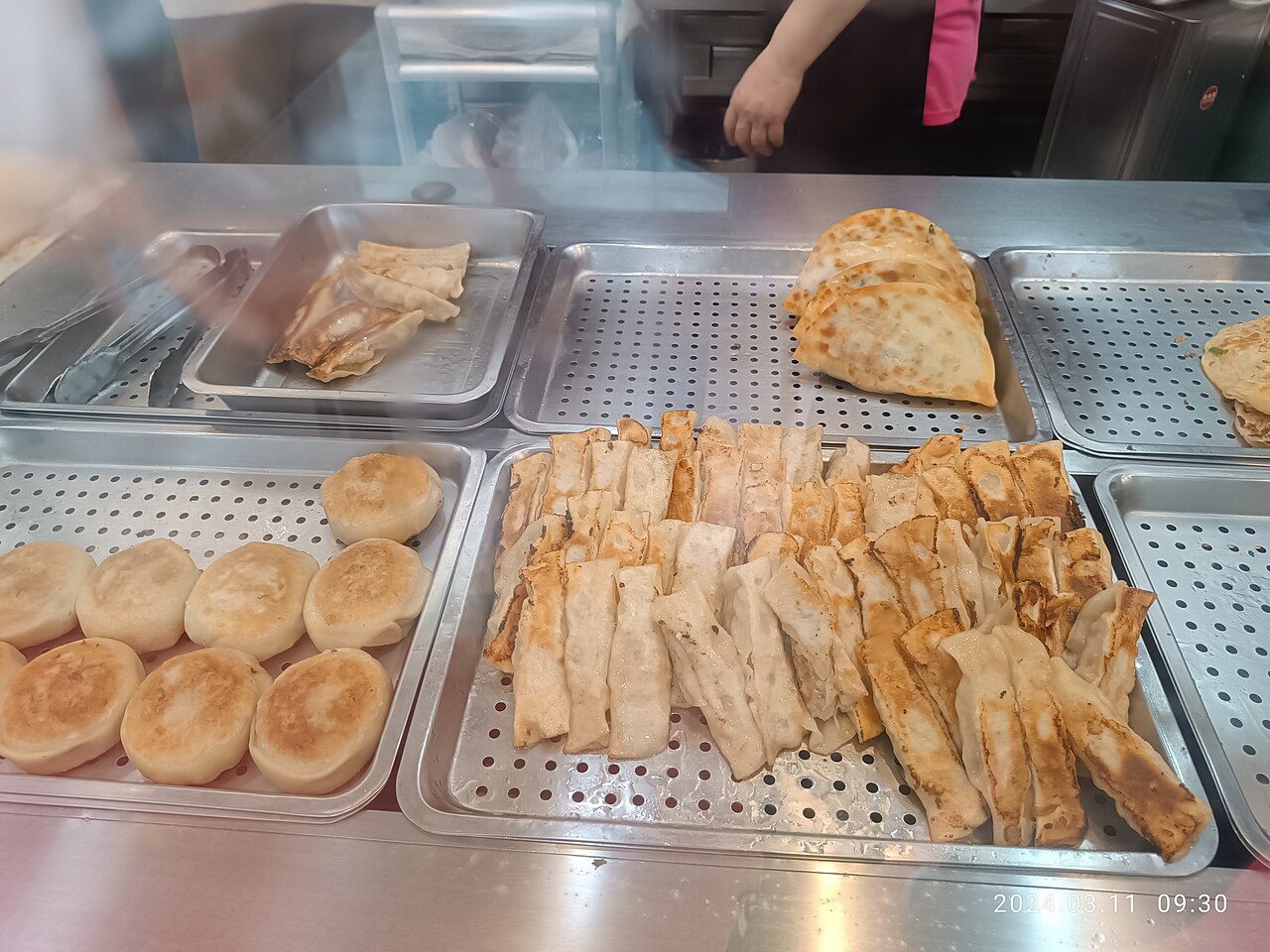
Image source: A typical Taiwanese breakfast shop, with danbing, burgers, soy milk, and more
The Historical Evolution of Breakfast Culture
From No Breakfast to a Breakfast Kingdom
Traditional Taiwanese agrarian society did not, in fact, have the concept of “breakfast.” A farmer’s day began at daybreak with fieldwork, and the first meal usually came around 10 a.m., at what was called “shangwu”; there were snacks in the afternoon to fill the gap, and the main meal, “night rice,” came in the evening. The entire rhythm revolved around the labor cycle of farmland, without any routine of “eating as the first thing after waking.” During the Japanese colonial period, Japanese people brought a regular three-meal system and a punctual rhythm of life. Together with urbanization and industrialization, “breakfast” gradually became a necessary independent meal.
Postwar Cultural Fusion
After 1949, large numbers of mainland Chinese migrants came to Taiwan, bringing northern Chinese food culture and techniques for processing beans. Yonghe Soy Milk in particular is said to have originated in 1955 at the Zhongzheng Bridgehead in Yonghe, New Taipei City, where retired soldiers founded it to serve bridge-repair workers. It later pioneered a 24-hour business model and became a representative symbol of Taiwanese breakfast culture3.
The concrete contributions of mainland Chinese foodways are clearly visible: shaobing and youtiao were directly transplanted from traditional northern Chinese breakfast foods; the soy milk system brought mature techniques for processing soy products; baozi and mantou expanded leavened dough and wheat-based food culture; and steamed eggs added refined egg-handling techniques. At the same time, local Taiwanese elements also entered in response: rice milk based on paddy rice, Taiwanese rice rolls that localized Japanese onigiri, and batter-style danbing combining local ingredients4. The map of Taiwanese breakfast we know today is the foundation of Chinese culture overlaid with a layer of Taiwanese local innovation.
Classic Breakfast Items
Danbing: The Soul of Taiwanese Breakfast
Danbing, a Taiwanese egg crepe, may be the best representative of Taiwanese breakfast culture, concentrating the defining features of Taiwanese-style breakfast. The production process goes like this: flour is mixed into a chewy thin crepe wrapper; fresh eggs are spread out on the griddle; the wrapper is laid on top while hot and then rolled up; finally, sweet chili sauce or thick soy sauce is brushed on. From the basic original danbing, it has evolved into filled versions (cheese, ham, bacon, vegetables), flavored versions (pepper, garlic, mala), and even shaped versions (triangular, strip-shaped, flower-shaped).
Danbing’s success lies in its “plasticity”: the basic version is approachable and affordable, variations satisfy picky eaters, and it is quick to make, fitting the rhythm of modern life.
Shaobing and Youtiao: Holding on to Tradition
Shaobing and youtiao are the most traditional combination in Taiwanese breakfast. Shaobing is made with lard and dough to create many crisp layers; each piece is shaped by hand and baked over charcoal. The process for youtiao is even harder: fermentation time must be right, oil temperature must be high, and the result must be crisp outside and soft inside. It must also be fried and sold immediately to preserve its flavor. This set of manual procedures runs entirely counter to the fast-food logic of industrial baking and frozen frying.
“When making shaobing and youtiao, hand skill matters most. The flour ratio, the fermentation time, control of the heat: if any of them is even a little off, it won’t taste right.” (Veteran shaobing-shop master)
Soy Milk: The Union of Nutrition and Tradition
Soy milk on a Taiwanese breakfast table is both a beverage and a daily source of nutrition. Its plant-based protein, low fat, and easy digestibility make it suitable for everyone from young children to the elderly. Taiwanese-style soy milk has developed three main forms: sweet soy milk with sugar has a smooth mouthfeel; savory soy milk with dried shrimp, pickled mustard greens, and scallions is a signature breakfast-shop item; and rice milk made from rice is Taiwan’s own innovative branch.
Rice Rolls: Convenience Taken to Its Limit
Taiwanese rice rolls thoroughly localize the Japanese onigiri concept. Traditional fillings include pork floss, pickled mustard greens, and peanut powder; later additions include egg crepe, ham, and cheese, followed by foreign flavors such as curry, Thai, and Korean styles. The packaging is designed for freshness, with consideration given to the moisture level of the rice and the layering of ingredients, making it convenient for commuters to finish a meal quickly on the MRT or at an office desk.
The Global Expansion of Yonghe Soy Milk
The story of Yonghe Soy Milk is the most successful case of internationalization in Taiwanese breakfast culture. In 1955, Lin Bingsheng opened the first soy milk shop in Yonghe, specializing in traditional breakfast items such as shaobing, youtiao, and soy milk. With solid ingredients and authentic flavors, it quickly built a local reputation. In the 1980s, it began opening shops across Taipei. In the 1990s, mainland China became its first overseas destination. In the 2000s, it expanded to Hong Kong, Macau, and Singapore, and in the 2010s it entered Chinese communities in the United States and Canada.
Four factors were key behind this expansion: standardized operations established consistent quality; localization adjustments responded to local tastes; cultural export transplanted the entire Taiwanese breakfast scene abroad; and brand management built an identity system. For overseas Chinese, Yonghe Soy Milk is an emotional anchor of homesickness; for non-Chinese consumers, it is the first entry point into Taiwanese breakfast culture. What followed was international exposure for Taiwan’s surrounding industrial chains, including soy products, flour, and food-service equipment, as well as an overall improvement in the image of Taiwan’s food industry.
The Mei & Mei Phenomenon and Chain Operations
Mei & Mei was the key brand that brought Taiwanese breakfast shops into chain operations. In 1983, Lin Kunyan opened the first shop in Taipei, promoting Western-style burgers and sandwiches at affordable prices and with flavors suited to Taiwanese tastes. This launched the era of “Western-style breakfast shops” visible everywhere across Taiwan56. In the 1990s, stores expanded rapidly, and standardized signs, menus, decor, and operating procedures could be seen all over.
As a business model, Mei & Mei broke through the ceiling of traditional breakfast stalls through four things: franchise chains lowered the threshold for entrepreneurship; central kitchens ensured stable quality; clean and bright storefront design reshaped the image of breakfast shops; and a diverse menu combining Chinese and Western breakfasts broadened the customer base. This combination not only changed Taiwanese people’s impression of breakfast shops, but also directly became the operating model for later brands such as Mei Er Mei Mei, My Warm Day, and Laya Burger.
Under Mei & Mei’s influence, Taiwanese breakfast shops developed in a more professional direction. Cooking equipment moved from home-style stoves to standardized machinery, hygienic operating environments became basic equipment, and meal-preparation workflows were engineered and calculated. On the service side, digital ordering systems, delivery-platform integration, and customization options were introduced. On the product side, extensions appeared in multiple directions, including health-oriented choices, the incorporation of foreign flavors, and seasonal limited items.
The Social Role of the Breakfast-Shop Auntie
The breakfast-shop auntie is a point of emotional cohesion in Taiwanese communities; food is only one aspect of this role. They remember every regular customer’s taste preferences: soy milk with no ice, danbing with cheese, and they also become informal nodes for passing along neighborhood news and exchanging everyday information.
Economically, breakfast shops are among Taiwan’s most representative examples of small-scale entrepreneurship, especially providing middle-aged women with work opportunities that have a relatively low threshold and can be balanced with family responsibilities. One breakfast shop usually also supports surrounding employment among soy milk suppliers, flour shops, meat stalls, cleaners, and others, forming a compact community economic ecosystem.
Culturally, many handmade techniques, such as kneading dough, mixing batter, and controlling the heat for danbing, are passed down orally and by hand between masters and apprentices in breakfast shops, without textbooks or certificates. This craft, with people as the medium of transmission, is intertwined with Taiwanese people’s diligent everyday rhythm and has become one of the few urban scenes where one can still continually see “people working properly.”
“The breakfast-shop auntie knows you want your soy milk without ice and your danbing with cheese. She remembers your taste, and she also remembers why you are frowning today.”
Modern Changes in Breakfast Culture
After health consciousness rose, Taiwanese breakfast menus began to include options such as whole-wheat toast, multigrain rice rolls, lettuce salads, fresh juices, organic vegetables, and pasture-raised eggs. Cooking methods shifted from frying toward baking, while seasoning moved toward less sugar and less salt. Some chain stores even provide “functional breakfast” designs with protein, dietary fiber, and customized nutritional pairings. These choices have not replaced the mainstream of danbing and youtiao; rather, they have been added as another parallel spectrum of consumption.
The influence of technology is equally clear. App ordering allows regular customers to pre-order and reduce wait times; mobile payment has almost become standard; and delivery platforms such as foodpanda and Uber Eats have rewritten the customer-flow structure of breakfast shops. Insulated delivery maintains food quality, while flexible timing suits working populations who do not eat at fixed hours. At the level of central kitchens and data applications, some chain brands have already introduced sales analysis, customer research, and intelligent recommendations, turning what used to depend entirely on the owner’s intuition about “how much stock to order today” into a decision that can be calculated.
The Characteristics and Value of Taiwanese Breakfast Culture
What makes Taiwanese breakfast culture most recognizable is that it stuffs Chinese dim sum and Western bread, Asian flavors and European or American ingredients, traditional craft and modern chain mechanisms into the same morning. A burger sits beside danbing, and black tea beside soy milk, and no one finds it contradictory. This “not choosing sides” food structure allows Taiwanese breakfast to cover a wide range of eating habits and economic capacities at the same time, from traditional danbing and toast costing a few dozen NT dollars to premium sandwiches approaching NT$100, making it suitable for young and old alike.
As a philosophy of life, Taiwanese breakfast demonstrates the possibility of being “quick but not careless.” Danbing reaches the table in 90 seconds, but the heat must be right and the sauce must be balanced; soy milk is freshly ground, but it takes only 20 seconds to serve. This set of procedures in which efficiency and quality run together was trained by Taiwan’s labor rhythm, not deduced from some culinary theory.
The Future Outlook for Breakfast Culture
Looking internationally, brands such as Yonghe Soy Milk, Laya Burger, and My Warm Day have already established footholds in overseas Chinese communities. But to enter non-Chinese consumer markets, they still need to resolve two challenges: ingredient localization and brand narrative. In terms of sustainable operations, more and more shops have begun adopting compostable packaging, working with local small farmers, and introducing lower-sugar and lower-salt options, though these adjustments are still some distance from being scaled up.
On the technology side, foodpanda and Uber Eats have rewritten the customer-flow structure of breakfast shops, and some chain brands have also introduced app ordering and instrument-based standard operating procedures. But compared with the human warmth of a breakfast-shop auntie who “remembers that you are frowning,” technology remains only an aid. Directions for cultural deepening include food education, preservation of orally transmitted craft, and the accumulation of academic research. None of these can be monetized quickly, but they determine whether Taiwanese breakfast will still be able to tell its own story twenty years from now.
Every morning at 6:30, Taiwan’s 18,919 breakfast shops turn on their griddles and soy milk machines at the same time. That is the concrete choice of how a city decides to begin its day.
References
Further Reading
- Night Market Culture — Another important food-cultural space in Taiwan
- Taiwanese Street Foods — More local Taiwanese foods
- Tea Culture — Taiwan’s traditional beverage culture traditions
- FoodNext: More shops than convenience stores! How did Taiwan’s breakfast market transform from “eating enough to get full” into a brand battlefield? — A FoodNext column analyzing the scale of Taiwan’s 18,919 breakfast shops nationwide (Ministry of Finance statistics, 2023), which has surpassed more than 13,000 convenience stores, as well as branding trends in the breakfast market.↩
- FoodNext: NT$200 billion breakfast output value; Taiwan’s breakfast-away-from-home ratio ranks first globally — A FoodNext industry feature estimating that Taiwan’s breakfast market has an annual output value of NT$200 billion and that roughly half of breakfasts are eaten away from home, ranking first globally.↩
- China Times News: Veterans’ homesickness became a late-night dining mecca; Yonghe Soy Milk runs 24 hours without stopping — A report on how a retired-soldier soy milk stall founded in 1955 at the Zhongzheng Bridgehead in Yonghe evolved into a 24-hour late-night dining destination and global Chinese chain brand.↩
- Liberty Times: Batter-style danbing vs. wrapper-style danbing: the school aesthetics of Taiwanese breakfast — A Liberty Times food section report comparing the two major schools of batter-style danbing and wrapper-style danbing, documenting differences in taste and craft from southern to northern Taiwan.↩
- Wikipedia: Mei & Mei — The Chinese Wikipedia entry on “Mei & Mei,” documenting Lin Kunyan’s first shop in 1983, later disputes among multiple “Mei & Mei” system brands, and the history of franchise-chain expansion.↩
- CommonWealth Magazine: How chain breakfast-shop godfather Lin Kunyan defined Taiwanese-style breakfast — A CommonWealth Magazine profile interview with Lin Kunyan, recording the commercial history of how Mei & Mei made Western-style burgers and sandwiches affordable as symbols of Taiwanese-style breakfast.↩