30-Second Overview: In August 2011, Yen Chun-ting, Li Rang, and Lin Yi-chun founded Pinkoi in Taipei. It handles originality through a curation system, manages cross-border operations with local teams and logistics, and transforms years of accumulated consumer data into recommendation and brand services. Pinkoi’s counter-intuitive approach is this: rather than prioritizing the maximum number of products, it first makes design items—those that are difficult to describe, ship, and find—into everyday goods that can be exchanged across borders. 1 2
In August 2011, Yen Chun-ting, Li Rang, and Lin Yi-chun founded Pinkoi in Taipei, aiming not to build another online store that stacks products higher, but a platform where design brands and consumers could meet. 1 2 By 2018, the platform had accumulated 4 million cross-border members, expanding its market beyond Taiwan to Japan, Thailand, and Hong Kong. Six years later, public reports cited member numbers reaching 6.25 million, with goods sold to 150 countries. 3 2
This growth story looks like typical e-commerce, but the real contrast lies here: Pinkoi did not treat “more and cheaper” as the answer, but instead acknowledged that design goods are unsuitable for management as standard specifications. It layered curation, designer communities, cross-border services, and data tools, ultimately selling not just products, but a path for small brands to be found.
The Problem Started in a Two-Ping Office
Yen Chun-ting previously worked in Silicon Valley. After graduating from National Taiwan University’s Department of Civil Engineering, he went to the U.S. to study electrical and information engineering. At age 32, he quit his job, brought his family back to Taiwan to start a business. The early office was merely a two-ping space partitioned off at home; he coded while parenting, and a baby bottle once spilled onto his keyboard. These details are not mere decorations for a startup myth, but illustrate the problem Pinkoi initially faced: it did not inherit an existing industry ready to be taken over. 2
The founders’ inspiration came from visiting markets and designer boutiques. Those creators were skilled at making things but might not be familiar with promotion, listing, logistics, and cross-border sales. If they were simply placed into a large e-commerce’s standard workflow, the stories, dimensions, customization needs, and production times of their works would become mere troubles in the system. 2 4
The early Pinkoi team therefore visited markets, handing out business cards to creators and inviting them to list items. Interviews with DFUN recorded that many creators at the time viewed online consumption as unrealistic, even suspecting that the team proactively contacting them was a scam. The platform had to first make the process smooth enough to allow people to move from skepticism to willingness to try. 4
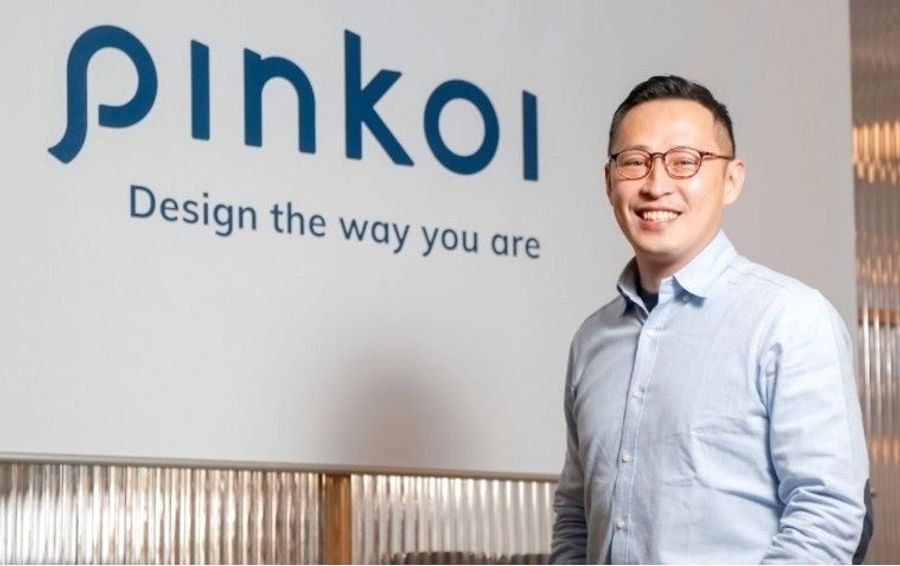
Caption: Portrait of Yen Chun-ting on Pinkoi’s official team page; image hotlink from Pinkoi’s official domain, identity and startup background see official team page. 5
📝 Curator’s Note: Pinkoi’s first product might not have been a product page, but the sense of trust that “I can safely hand my work to the internet.”
“Not Special Enough” Can Be a Business Strategy
In 2018, Business Weekly called Pinkoi’s approach “counter-intuitive management.” At the time, the platform had over 8,000 design studios and 900,000 items, sold to 88 countries globally. But the seller acceptance rate was only about 10%, with applicants undergoing review across multiple items including originality, photo presentation, and sales experience. 6
The significance of the curation system is not just filtering goods for buyers, but also drawing boundaries for the platform: if a product is “familiar,” potentially infringing, or reported by customers after listing, it may be eliminated. A character interview in DFUN also mentioned that Pinkoi guards the line of “originality” through curation, invitation, patrol, and reporting mechanisms. 6 4
This contradicts the intuition of general platforms pursuing supply quantity. Fewer sellers mean fewer items available for immediate listing. But for customers who do not want to buy objects identical to others’, choice itself is value. Business Weekly recorded at the time that Pinkoi’s members were mostly women aged 25–44, and the platform responded to the desire “to not be the same as others” through curation and customization. 6
Curation also brings costs. The platform cannot wait for brands to grow on their own; the early team once drove south weekly to visit designers, taking a year to develop the first 100 designers. The same report also recorded that Pinkoi held workshops teaching photography, packaging, and shipping fee calculation, and hosted physical markets without taking commissions. These practices show that a platform does not end by simply connecting two ends, but must supplement the missing capabilities between them. 6
These intermediate works also changed the role of designers. Designers no longer only needed to create an object, but also had to learn to take photos, calculate shipping fees, explain production methods, answer customization questions, and understand how different markets read their brands. The platform provides tools, but also returns part of the work of “becoming a brand” to the creator. Convenience and burden often appear simultaneously. The workshops recorded by Business Weekly at the time precisely brought this often-ignored labor to light. 6
For consumers, the curation system turns trust into an invisible sorting mechanism. Buyers may not know how a specific brand was selected, but they treat the platform’s name as a preliminary guarantee. Once non-original goods infiltrate, the damage affects not just a single store, but also the taste commitment the platform assumes for all stores. The patrol and reporting mechanisms mentioned in the DFUN interview indicate that this commitment requires continuous maintenance, not just setting it once at launch. 4
From Selling Goods to Managing a Cross-Border Community
Pinkoi launched Pinkoi Experience in 2018, extending design from “buying an item” to life experiences led by brand principals. A CAREhER interview placed this shift in a larger context: consumers not only want to know if a product is good, but also the culture, history, and makers behind the brand. 3
This platform relationship faces three groups simultaneously: consumers, designers, and teams responsible for local services. In an interview, Yen Chun-ting discussed how offline activities allow consumers to meet designers, and allow designers to directly understand consumer preferences. Local teams in Japan, Hong Kong, and Thailand are responsible for turning the cross-border community into a market that is not just translated pages. 3
Caption: Visuals for the 2023 Design Fest event featured on Pinkoi’s official product page; it is not a cross-border logistics flowchart, but the original image of the platform extending from online transactions to offline design events. 7
Cross-border is not merely translating product pages into another language. CAREhER recorded that Pinkoi made mistakes in its early days in the Japanese market: seemingly minor details like logos, fonts, and translations, due to insufficient respect for local culture, were enough to cause consumer distrust. This experience reminds us that the hardest thing to translate in cross-border e-commerce is often not text, but “what looks like a trustworthy brand.” 3
📝 Curator’s Note: The moment a platform truly steps out of its country is not when it can ship goods, but when it is willing to admit it does not know how locals view a word, a logo, or a promise.
Logistics: The Invisible Threshold for Design Goods
A 2024 Vision report stated that Pinkoi’s overseas traffic exceeded 30% for the first time in 2023. Japanese order revenue grew by over 20% annually for three consecutive years, with Taiwan design brands accounting for over 50% of Japan’s cross-border orders. The report also indicated that the platform then possessed 52,000 brands from 77 countries and 2 million design items, sold to 150 countries. These figures belong to the 2024 timepoint in the report and cannot be directly taken as today’s fixed scale. 2
The same report placed Pinkoi’s next step in Taiwan-Japan logistics. The platform invested over 1 billion yen to build services and infrastructure in Taiwan and Japan, inviting 50 Taiwan brands in the first wave to participate in direct shipping, attempting to handle issues such as tariffs, shipping damage, exchange rates, and delivery transparency. For small design brands, being able to make a product does not mean it can be stably delivered to another country. Cross-border logistics is the segment where creativity becomes business. 2
A 2024 strategy report from Digital Times also noted that designers can check “agree to cross-border” in the backend to send goods to markets such as Taiwan, China, Hong Kong, Japan, and Thailand, with the platform assisting in handling the complex processes of payment accounts and logistics providers. The core of this service is not to turn designers into logistics experts, but to take into the platform the work they are least skilled at, yet most likely to stall business. 8
Pinkoi’s differentiation therefore lies not only in the curation visible on the homepage. It also handles returns, packaging, translation, payment, and expectations in local markets. Vision quoted platform data stating Pinkoi’s return rate was 3%, but this is company and platform data in the report; when reading, it should be retained together with its statistical methodology. 2
When Data Begins to Choose Gifts for People
Pinkoi began building AI and data infrastructure in 2015, precisely because design goods do not have a fixed set of specifications like phones, headphones, or washing machines. A Cherubic interview recorded that the team spent years organizing data from mobile phones, desktops, apps, and web pages, handling multi-language contexts including Chinese, Japanese, Thai, and Cantonese. 9
In 2023, Pinkoi publicly launched the “Lifestyle AI Model.” Digital Times reported that the model is built on over 7.2 billion consumer behavior data points, linking product attributes with consumer behavior for personalized malls, ad placement, and cross-border assistance. Pinkoi stated that after the model went live, product click-through rates increased by 1.5 times, browsing time increased by 125%, and it created over 8 times the orders for design brands. These are effectiveness figures presented by the company to the media; the article does not rewrite them into independent research-verified conclusions. 10
Datafication also brings new responsibilities to the platform. Recommendation models can describe products in finer detail, but do not automatically tell us which designers are hard to recommend due to insufficient data. It can see clicks and dwell time, but that is not equivalent to understanding why a person stays on a certain page. The so-called “Lifestyle AI Model” in the article is Pinkoi’s naming and explanation of its own service; a safer reading is to view it as a set of platform tools, rather than a psychological test defining consumers. 10
Caption: Main image of the Pinkoi CEO interview from Meet Global; article content discusses Pinkoi’s cross-border transaction tools, AI translation, designer community, and Japanese market experience. 11
The same model also attempts to solve details of language and classification. The report gave an example: what Taiwan calls a “mountaineering sling bag” might use a different name in Hong Kong. The model can add regional aliases to tags, giving products a better chance to be found by another market. Pinkoi stated that the proportion of effectively tagged products increased from 60% to 98%. 10
Data services are not just for consumers. Pinkoi began offering a Retail Media Network in 2019, allowing design brands to place product, brand, and niche ads within the site. After brands set budgets and products, the system assists in completing placement. Both Cherubic and Digital Times reported that related ads and SaaS services have become part of the platform’s revenue, but since the statistical timepoints and terminology of the two articles differ, this article only retains the common verifiable direction, not adding percentages from different timepoints. 9 10
📝 Curator’s Note: The more precisely Pinkoi makes “recommendations,” the more the platform resembles a clerk familiar with you; but no matter how well a clerk knows you, they should not decide for you what is worth liking.
Crowdfunding: The Platform Moves Before the Product is Born
In 2022, Pinkoi entered crowdfunding from design e-commerce, initially planning 6 projects. Digital Times reported that this was not a transformation abandoning the original e-commerce model, but extending existing logistics, advertising, and data services before the product hits the market. Design brands can first obtain funding through crowdfunding, then connect products to Pinkoi’s existing cross-border markets. 12
This approach continues Pinkoi’s requirement for originality: the crowdfunding platform only accepts 100% original design brands, and brands must first pass Pinkoi’s e-commerce certification. The platform also provides value-added services such as logistics, invoices, and ad placement. 12 It does not guarantee that every idea will succeed, but attempts to bring designers from “having an idea” to “being able to produce, deliver, and sell.”
For the platform, this is also a business model test. Reports indicated that Pinkoi’s in-site advertising launched in 2020, and two years later contributed over 20% of revenue. Crowdfunding is thus viewed as an application of existing AI, logistics, and SaaS infrastructure, not merely adding a new product category. This is the timepoint of 2022 reports and cannot be used to infer today’s revenue structure. 12
The Other Side of the Platform: Turning Choice into Rules
Caption: Photo used in BRIDGE’s 2016 report on the collaboration between Japan’s Iichi and Taiwan’s Pinkoi; it corresponds to the historical paragraph in the article “platform extending cross-border from Taiwan to Asia.” 13
Pinkoi’s curation and recommendations make it easier for users to encounter products “suitable for themselves,” but any filtering simultaneously means exclusion. Originality requires judgment, style needs to be named, markets need to be segmented. When these judgments are written into platform workflows, designers face not just consumers, but an invisible classification system. This is not a problem unique to Pinkoi, but a power that all curatorial platforms must clarify: who decides what is worth seeing? 6 10 9
Another tension lies in the platform’s dual identity. On one hand, it must maintain product quality for consumers; on the other, provide traffic, advertising, logistics, and cross-border services for design brands. When brands purchase RMN ads, the platform is both the market manager and the matchmaker within the market. A Cherubic interview recorded Yen Chun-ting emphasizing that user experience cannot be determined solely by bid amounts. This is a principle proposed by the interviewee; whether it can be maintained under different markets and commercial pressures requires continuous observation. 9
These contradictions will not disappear with the launch of AI. Models can reduce search costs, but cannot answer value questions for the platform like “what is original” or “who should be included.” Pinkoi’s technology investment truly brings not the elimination of curators, but the splitting of curatorial work into tags, workflows, ad placements, and recommendation results, making judgments originally made by humans faster, broader, and more in need of explanation.
From the 2011 e-commerce platform, to 2018’s experience services, to 2022’s crowdfunding, every step Pinkoi took forward was not discarding the previous identity, but pushing forward the problems already handled: how designers are found, how brands are understood, how goods are delivered to another market, how unfinished ideas get their first batch of support. This line makes it look like it is constantly transforming, but actually resembles expanding the same unfinished intermediary work. 12 3 4
Not Competing with Giants on Who Is Bigger
The challenges Pinkoi faces are not small. A 2024 interview listed post-pandemic return of physical consumption, increase in low-priced Chinese goods, and the e-commerce market’s “the big get bigger” as environmental factors the platform needs to face. Cherubic quoted Yen Chun-ting saying Pinkoi chose to place itself in the track of non-standard goods and Asian cross-border capabilities, rather than directly competing in capital with platforms selling standard goods. 9
This choice is not romanticizing the niche. Curation slows supply, customization increases communication costs, cross-border brings logistics and cultural risks, and data models require long-term organization. Pinkoi’s approach simply changed the unit of competition: from “who can deliver fastest at the lowest price” to “who can hand an item that is difficult to describe, difficult to ship, and not necessarily mass-produced, into the hands of those who truly want it.” This is the viewpoint compiled from the above reports by this article, not a single metric claimed by Pinkoi. 2 6 9
Pinkoi’s early “10% acceptance rate,” 1.75 million members in 2018, 4 million members in 2020, and 6.25 million members in 2024 reports cannot be compressed into a growth curve without time markers. They each belong to different articles, different years, and possibly different statistical methodologies. What is certain is that at different stages, the platform placed “how to make design brands seen” before scale numbers. 6 3 2
Beyond a Single Product, What Remains?
Pinkoi’s importance is not how beautifully it says the word “export” for Taiwan design, but how it breaks export into many unpretty details that someone must handle: how to build trust when first inviting designers to list, how to judge originality during curation, how to face fonts and logistics during cross-border, how to use data during recommendations, how to catch a product that is not yet finished during crowdfunding. 6 3 4 12
The platform thus leaves unfinished questions. When member behavior is turned into tags, when ads and recommendations become more precise, do consumers get easier choices, or a room harder to leave their existing preferences? When curation sets a threshold for originality, who has the ability to first invest time, photos, samples, and brand stories, and who might be judged as immature at the door? These questions cannot be brushed over by “design is beautiful,” nor do existing numbers answer them.
But looking back at the three-person team that set out from Taipei in 2011, Pinkoi’s counter-intuition remains clear: it did not treat niche consumption as a market waiting to be educated, but treated the niche itself as a world that needs to be well-served. Whether the platform can continue to keep this commitment depends on whether it is still willing to spend time handling those things that cannot be completed with one click.
Further Reading
To continue understanding Taiwan’s design and platform economy from Pinkoi, one can read it alongside Taiwan’s design media, crowdfunding, and other web platforms. Pinkoi’s uniqueness lies not in representing the entire design industry, but in placing “originality, cross-border, and daily consumption” in the same platform, making designers’ problems also become issues of logistics, data, and community. 8 12 4
References
- About Pinkoi — Pinkoi official About page, explaining founding time, Taipei origin, platform positioning, Lifestyle AI Model, and RMN services.↩2
- Asia’s Largest Design E-commerce Pinkoi, Next Move with 1 Billion Yen Investment — Vision Liao Jun-ya, 2024-07-09; reports on members, brands, overseas traffic, Taiwan-Japan logistics, and platform strategy.↩2345678910
- EP.50 Humility and Self-Awareness, Not Letting Ourselves Become the Team’s Growth Bottleneck — Peter Yen Chun-ting, Co-founder of Asia’s Leading Design Shopping Platform Pinkoi — CAREhER, Sharon, 2020-12-29; Yen Chun-ting discusses brands, community, experience, local teams, and cross-border learning.↩234567
- PINKOI | Founder Yen Chun-ting: Re-imagine! — DFUN Design Fashion Magazine, 2021-07-21; character interview, discussing startup origin, early recruitment, originality curation, and creative economy positioning.↩234567
- Team — Pinkoi official Team page; provides Yen Chun-ting official portrait and co-founder, CEO identity data. Image hotlink: `https://cdn04.pinkoi.com/pinkoi.site/about/crew/peter4.png``.↩
- Asia’s Largest Design Platform! Pinkoi’s “Counter-Intuitive Management”: Seller Acceptance Rate Only 10%, Not Special Enough Means No Selling — Business Weekly Editorial Dept., 2018-05-04; reports on curation system, early designer recruitment, and designer support measures.↩23456789
- 2023 Pinkoi Design Fest in Taipei Crazy Design Festival — Pinkoi official product page; provides official Design Fest event visuals. Image hotlink: `https://cdn01.pinkoi.com/product/qC6YsfkR/0/6/1080x0.jpg``.↩
- Seizing Asia’s 4 Trillion Creative Economy, Why “Gift-Giving” Is the Key Word? Analysis of Taiwan, Japan, and Hong Kong Design Consumption Trends! — Digital Times Lin Zhi-yuan, 2024-03-24; reports on creative economy data, gift searches, Taiwan-Japan markets, and cross-border strategy.↩2
- Not Afraid to Get Hands Dirty, Insisting on Differentiation! Pinkoi’s Two Major Weapons, and Directly Facing Challenges — Cherubic, 2024-01-31; Yen Chun-ting interview and platform AI, RMN, differentiation, and industry challenges.↩23456
- Pinkoi Builds “Consumer MBTI”! How AI Model Uses 7.2 Billion Data Points to Create 8x Orders, 17x Ad ROI? — Digital Times / Startup Gathering, 2023-12-20; reports on Lifestyle AI model, product tags, RMN, and company-provided effectiveness figures.↩2345
- Pinkoi CEO talks e-commerce site's growth on Startup Island Taiwan podcast — Meet Global, 2023-01-13; provides Pinkoi CEO interview content and main image. Image hotlink: `https://image-cdn.learnin.tw/bnextmedia/image/album/2023-01/img-1673430377-93450.jpg?w=900&output=webp``.↩
- Pinkoi Enters Crowdfunding from E-commerce, 4 Key Questions to Understand Why It Does This — Digital Times Chen Jun-yi, 2022-07-27; reports on crowdfunding, originality certification, logistics, and SaaS extension.↩23456
- Japan’s Iichi, Taiwan’s Pinkoi join forces to make handmade marketplaces more vibrant — BRIDGE, 2016-03-23; provides Iichi and Pinkoi Asia collaboration report and accompanying image. Image hotlink: `https://i0.wp.com/thebridge.jp/en/wp-content/uploads/2016/03/kentaro-iinuma-peter-yen.jpg?fit=620%2C390&ssl=1``.↩