
30-second overview: Tsai Pei-huo's life resists being summarized by a single label like "educator" or "political figure." He worked as a schoolteacher, lost his position for joining the Taiwan Association, studied in Tokyo, and became involved with the New People's Society, the press, the Taiwan Cultural Association, and the Taiwan Parliament Establishment Petition. He also promoted written Taiwanese using Romanized script (known as Bopomofo), leaving behind works like Ten Precepts and songs. On the surface, these pursuits span education, literature, and politics, but beneath them lies a shared public issue: if most people cannot read political discourse in a language they understand, who should participate in culture and self-governance?1
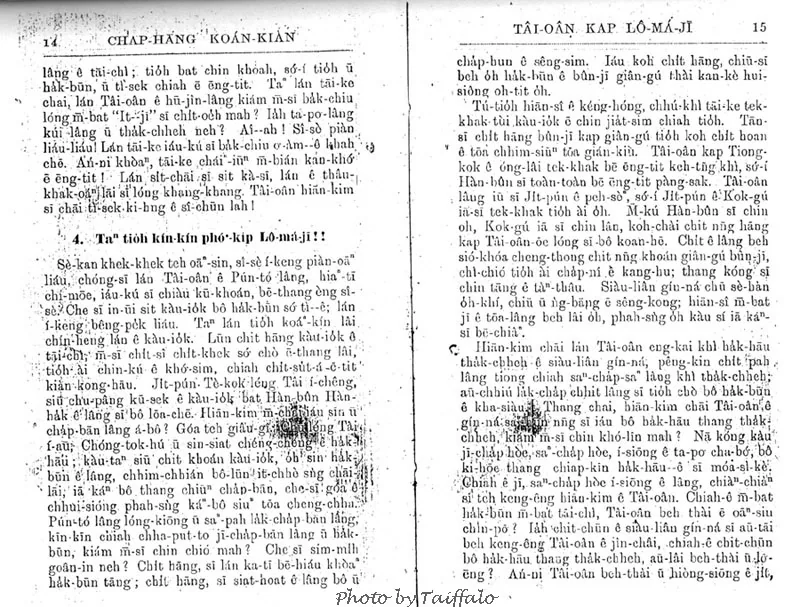
Photo: Portrait of Tsai Pei-huo. Photographer unknown, Wikimedia Commons, marked Public domain; file page.
A Teacher from Beigang, First Confronting the Question of Who Has the Right to Teach
Tsai Pei-huo was born in 1889 in Beigang, Yunlin, with the literary name Fengshan. According to the Taiwan Literature Virtual Museum’s biographical records, he received traditional sinography education and later enrolled in the National Language Normal School under the Taiwan Governor-General Administration, graduating in 1910. He taught successively at the Aogongdian Public School and the Tainan Second Public School. This experience was not merely the beginning of a timeline—it placed Tsai Pei-huo at the threshold of institutional education early on, where he observed how language, schools, and identity shaped each other: teachers had to transmit the "national language" dictated by the colonial government, while students and families lived amid multiple linguistic realities.2
Teachers in the colonies were not simply conveyors of knowledge. What was taught, in what language, and who could advance to higher education all carried imperial order into local communities. Tsai Pei-huo’s later engagement with written Taiwanese and education can be understood as a sustained response to this contradiction, rather than an abrupt shift in direction. He recognized that institutional schools could grant access to new knowledge and careers, but also that if public intellectual discourse remained confined to those educated in the national language, education could easily become a new class barrier.
In 1914, he joined the Taiwan Association. According to the Taiwan Literature Virtual Museum’s chronology, the organization was later ordered to disband, and Tsai Pei-huo was dismissed from his teaching position. This event is often simplified as "losing his job for resisting Japan," but what the available records reliably support is the sequence of participation, dissolution, and dismissal. His inner motivations at each moment cannot be inferred from a single line in a timeline. A more cautious reading suggests that tensions existed between the identity of a teacher and participation in civic organizations; the colonial system demanded that educators serve as enforcers of order, yet Tsai Pei-huo gradually reinterpreted education as a means of organizing society.3
Tokyo Was Not an Escape from Taiwan, But a Way to Gain Another Vocabulary
After losing his teaching position, Tsai Pei-huo studied in Japan with support from friends and family. Records show he entered the Second Science Department of Tokyo Higher Normal School in 1916 and graduated in 1920. Tokyo offered not just a degree, but access to new ideas, publishing technologies, and networks among Taiwanese students abroad. At the heart of the empire, Taiwanese youth carried the constraints of their colonial origins. They could read about democracy, human rights, and national self-determination, yet lacked the same space to speak in Taiwan.4
Tsai Pei-huo joined the New People's Society and was associated with publications such as Taiwan Youth. The significance of these activities went beyond "student activism"—they created a transregional platform for Taiwanese people scattered across schools, churches, and local communities. Articles, letters, translations, and editorial work transformed individual grievances into publicly readable issues. Language here served not only as a vessel for content but as the foundation of organization: without stable publications, readership, and dissemination channels, political positions struggled to escape private conversation.
The academic paper "Tsai Pei-huo and His Political Cultural Anti-Japanese Movement" situates Tsai Pei-huo at the intersection of political and cultural movements, rather than treating him merely as a participant in a petition campaign. This research reminds us that Tsai Pei-huo’s work cannot be divided into unrelated "cultural activities" and "political activities." For him, cultural preservation, language education, and self-governance imagination formed a continuous thread. However, this does not mean every book or song was a direct political manifesto—each work must still be interpreted on its own terms.5
The Challenge of Written Taiwanese: Making Language Visible and Transmissible
One of Tsai Pei-huo’s most recognizable contributions was his sustained promotion of written Taiwanese using Romanized script, commonly referred to as Bopomofo. Bopomofo was not a tool invented by Tsai Pei-huo—it was tied to long-standing missionary education, Bible translations, newspapers, and grassroots literacy efforts. What distinguished Tsai Pei-huo was bringing this writing system into broader social discourse, attempting to ensure that Taiwanese was not limited to oral or domestic use, but could carry social commentary, educational advocacy, and public writing.
Two points must be clarified here. First, writing Taiwanese in Roman script did not mean all Taiwanese people could immediately read it. Alphabet, spelling conventions, phonetics, and dialectal variation all created learning costs. Second, promoting Bopomofo did not equate to rejecting Chinese characters or other languages. Tsai Pei-huo’s actual works addressed topics including Taiwanese society, civilization, women, health, money, and morality, showing his concern was expanding the scope of reading, writing, and discussion—not merely conducting a formal linguistic experiment.
Ten Precepts (Cha̍p-hāng Kuanjian) is a key artifact for understanding this work. The National Taiwan Literature Museum’s collection details list the author and publisher as Tsai Pei-huo, with a publication date of September 14, 1921 (Taisho 14), printed by Xinlou Bookstore in Tainan. The catalog covers themes such as Taiwan, Romanization, social life, Han Chinese character, civilization and barbarism, women, life, benevolence, health, and wealth. These details confirm it was a publication written in Romanized Taiwanese that placed language issues within social discourse—but the table of contents alone should not be used to reconstruct Tsai Pei-huo’s complete ideological system.6
The work database offers another angle. The National Taiwan Literature Museum’s Taiwanese Digital Literature Archive lists Tsai Pei-huo’s works, including the 1914 Ten Precepts serials, the 1930 Lord, Don’t Let Me Fall, and the 1931 Christian Youth Song. The chronology, titles, and genres of these works help us see that Tsai Pei-huo did not briefly use written Taiwanese during a single political episode—language was a recurring method in his work. The list is not a complete reading history, but it turns “Tsai Pei-huo valued Bopomofo” from a biographical footnote into a traceable textual index.7
Songs, Newspapers, and Speeches: Public Language Is Not Just About Papers
Placing Tsai Pei-huo’s linguistic work solely under "script reform" misses the media landscape he faced. For an article to reach readers, it had to go through printing, distribution, public reading, or oral retelling. For a song to become public, someone had to sing it in a church, school, gathering, or home. These media were not just containers for content—they determined who could access the message. Tsai Pei-huo’s use of articles, songs, and speeches across different contexts reflects this media awareness: the same concept of "self-governance" written in a petition, a newspaper article, or a song lyric would speak to different audiences.

Photo: Cover of Ten Precepts. Author: Tsai Pei-huo, Wikimedia Commons, marked Public domain; file page.
Tsai Pei-huo’s publishing practice also reminds us that language politics is not the same as linguistic purification. Roman script could bring spoken language into writing, but it could not replace editing, proofreading, publishing, and reader cultivation. Chinese characters, Japanese, and Roman script were not mutually exclusive boxes—they were practical resources that colonial intellectuals switched between in different institutional settings. Imposing later linguistic classifications onto Tsai Pei-huo would obscure the labor of moving between multiple scripts.
Therefore, Tsai Pei-huo’s surviving texts deserve to be studied alongside their material conditions. The publication date of a book, its printing house, and the identity of its author-publisher show that works were not natural expressions of abstract thought—they emerged through funding, typesetting, paper, and distribution channels. Songs and speeches may seem easier to spread than books, but they too required venues, notation, lead singers, and reusable versions. Placing these conditions into biographical history helps us understand that promoting mother tongue was not just an idea—it was ongoing public labor managing technology, cost, and audience.
Tsai Pei-huo left songs such as Taiwan Self-Governance Song, and participated in newspapers and cultural organizations. The Ministry of Culture’s biographical page groups his songs, education, self-governance, and speech together. The Taiwan Literature Virtual Museum lists related song recordings and works. These materials highlight an often-overlooked point: in societies with low literacy rates, limited educational opportunities, and scarce publishing resources, public thought did not necessarily circulate through lengthy essays. Songs could be memorized, speeches retold, and newspapers could inform distant readers about local events.
Yet we cannot equate "easy to sing" with "everyone can participate." Songs still needed performers, gatherings, churches, or associations. Newspapers required printing costs, editors, and readers. Tsai Pei-huo’s public language thus worked on two levels: lowering barriers while also exposing how barriers persisted. Who had time to read newspapers? Who could afford publications? Who could speak at gatherings? These questions did not disappear simply because Taiwanese or Roman script was used.8
Tsai Pei-huo in the Self-Governance Petition: Not a Sole Leader, but a Collaborative Organizer
The Taiwan Parliament Establishment Petition movement ran from 1921 to 1934—a span of 14 years, submitting 15 petitions to the Japanese Imperial Diet. The Legislative Yuan’s Democratic Governance Park details page lists Lin Hsien-tang, Lin Cheng-lu, Chiang Wei-shui, and Tsai Pei-huo among the main figures, and explains the petition’s opposition to assimilation policies and its demands for colonial self-governance. This page supports the timeline and organizational position of Tsai Pei-huo in the movement, but cannot attribute all petition strategies, signatories, and social responses to him alone.9
The most meaningful aspect of placing Tsai Pei-huo within the petition movement is not to repeat “he also participated,” but to see how his linguistic work complemented political organization. Petitions required representatives, signatures, documents, and legal vocabulary recognizable to the imperial parliament. Cultural movements needed to help local society understand the differences between self-governance, education, and assimilation. The former sent appeals into the system; the latter dealt with whether people had enough concepts and language to discuss those appeals. Tsai Pei-huo’s role fell at the intersection of these two lines—neither identical to the petition movement itself nor replaceable by cultural activities.
After the 1923 Police Affairs Incident, political organizations faced even greater risks. The petition movement continued until a 1934 resolution to stop. The continuity during this period shows that public movements were not sustained by a single speech or charismatic figure, but by documents, fundraising, communication, local support, and constant re-articulation of goals. Reducing Tsai Pei-huo’s contributions to “anti-Japanese” would miss the daily labor of education and media. Labeling him solely as “cultural enlightenment” would obscure the concrete restrictions the colonial system imposed on organization and expression.
Returning to Taiwan After the War: No Departure from History, Just a Shift in Institutional Position
The Taiwan Literature Virtual Museum’s biographical page records that Tsai Pei-huo moved his entire family to Tokyo before the war, returned to Taiwan after the war to take up public office, and continued producing works on language and culture. This transition requires careful handling. Returning to Taiwan after the war did not mean that his ideas and organizational experience from the colonial period could be directly transplanted into a new national system. Language policy, political order, and social expectations had all changed. Becoming a public official did not mean every early advocacy was realized in the new system.
A more reliable interpretation is that Tsai Pei-huo’s life spanned two transitions—from colony to empire, and from colonial rule to nation-state—giving his works and activities both historical testimony and institutional adaptation.

Photo: Historical image related to Tsai Pei-huo. Photographer unknown, Wikimedia Commons, marked Public domain; file page.
He had taught within the colonial education system, and had also lost his position for participating in organizations. He had communicated in Japanese, classical Chinese, and Romanized Taiwanese. He had approached local society through cultural enlightenment, and had addressed the imperial system through petition documents. These seemingly contradictory choices were in fact realistic strategies adopted by a colonial intellectual facing different audiences.
Why Read Tsai Pei-huo Today
Tsai Pei-huo’s importance lies not only in that he “promoted Taiwanese early on,” nor only in that he participated in petitions. What deserves remembrance is that he turned the language issue into a public problem: whether a language can be written determines who can access knowledge. Who can access knowledge determines who can join organizations. Who can join organizations further determines self-governance, education, and political representation.
This chain of reasoning also explains why Tsai Pei-huo resists being molded into a one-dimensional prophet. His works carried ideals, but publishing and education faced real thresholds. His organizational activities were political, but the petition movement was driven by many. His Bopomofo work was creative, but any writing system needed teaching, readers, and long-term use to survive. Preserving these limitations prevents the erasure of his complexity by commemorative language.
Today, reading the collection data of Ten Precepts, the work index of the Taiwanese Digital Literature Archive, the cultural association exhibitions, and the petition movement archives pulls Tsai Pei-huo back from statues and slogans into concrete labor: finding printing houses, arranging publications, writing articles, composing songs, attending meetings, facing bans, and adjusting expressions between different languages and systems. These tasks are less likely to be quoted than famous sayings, yet they are precisely the real cost of forming public culture. Thus, Tsai Pei-huo’s legacy is not just a script system, but a way of thinking that integrates reading, writing, dissemination, and political responsibility.
If we had to give Tsai Pei-huo the simplest positioning, we might say: he tried to make it so that the people of Taiwan were not only educated, but could discuss education in their own language. Not only represented, but capable of organizing and speaking. Not only accepting political terminology, but questioning how those terms entered daily life. This project was incomplete in his era, and perhaps no single line could ever complete it. Yet the questions it left behind remain valid: when a society speaks of self-governance, equality, and cultural dignity, does it also care about the languages people can actually read, speak, and write?
References
Image Sources
This article uses three external images from Wikimedia Commons, embedded directly via stable upload.wikimedia.org URLs without downloading. The first is the Tsai Pei-huo portrait file page, photographer unknown, page marked Public domain; the second is the _Ten Precepts_ cover file page, credited to Tsai Pei-huo, page marked Public domain; the third is the historical image file page related to Tsai Pei-huo, page marked Public domain. Actual licensing should be verified against the latest Licensing section on each file page.
Further Reading
To read more about Tsai Pei-huo, start with the Taiwan Literature Virtual Museum’s biographical page for a chronological overview, then return to the Ten Precepts collection details and the Taiwanese Digital Literature Archive work index, and finally consult the Legislative Yuan’s Democratic Governance Park petition movement page. Biographical data provides a timeline, collection data reveals actual publications, and the work index adds the continuity of language use; together, these three sources allow us to understand his lived experience, textual form, and political organization without compressing a lifetime into a single slogan.
When reading such biographical histories, it is also necessary to examine the gap between "advocacy" and "effect." Tsai Pei-huo could propose a plan for bringing Taiwanese into writing and public discourse, but whether that plan was widely adopted depended on school systems, printing costs, reader capacity, and political censorship. Later generations may affirm his pioneering role, but cannot pour today’s expectations of linguistic equality directly into a supposedly completed past. We must also note that "leaving behind texts" and "changing society" are not the same thing: collections can prove a book was produced, preserved, and catalogued, but cannot alone prove its readership size; biographical pages can list activities, but cannot replace a full investigation of participants, opponents, and the silent. Precisely because his work did not follow a straight path to the present, it is worth asking: how was public language produced with incomplete resources, and how did it leave behind questions that could be reused after systemic change?
- Ministry of Culture: Social Activist | Tsai Pei-huo — Overview confirming Tsai Pei-huo’s birth and death years, identity as teacher and social movement participant, study abroad, cultural activities, self-governance songs, and linguistic work.↩
- Taiwan Literature Virtual Museum: Tsai Pei-huo — Confirming Beigang origin, normal school education, teaching positions, works, and chronology.↩
- Open Museum: Tsai Pei-huo — Cross-referencing Tsai Pei-huo’s early education, Taiwan Association, study in Japan, and New People's Society context; fields not stably displayed on the page are not adopted.↩
- Airiti Library: Tsai Pei-huo and His Political Cultural Anti-Japanese Movement — Only arguments directly supported by the abstract are used; the abstract is not expanded into full-text conclusions.↩
- Taiwan Literature Virtual Museum: Enlightenment's Outstretched Hand (1920–1930) — Confirming the temporal context of 1920s cultural enlightenment: education, press, public speaking, and cultural associations.↩
- National Taiwan Literature Museum Collection: Cha̍p-hāng Kuanjian / Ten Precepts — Confirming author-publisher, publication date, printing house, original material, digitization information, and catalog themes.↩
- National Taiwan Literature Museum Taiwanese Digital Literature Archive: Tsai Pei-huo Work Index — Confirming the title and chronological index of Ten Precepts serials and other Romanized Taiwanese works.↩
- Taiwan Literature Virtual Museum: Cultural Enlightenment and Taiwan Cultural Association Exhibition — Confirming the founding of the cultural association, the scope of cultural enlightenment, political and educational context, and the exhibition narrative of the 1927 split.↩
- Legislative Yuan Democratic Governance Park: Taiwan Parliament Establishment Petition Movement — Confirming the petition movement from 1921–1934, 15 petitions, main participants, and the temporal and organizational background of self-governance appeals.↩