Election Year Note: Lai Jui-lung is a registered candidate for the 2026 Kaohsiung mayoral election. This page is contributed by the community and is currently undergoing verification; it does not constitute an endorsement of any candidate. For election-related information, please refer to official data from the Central Election Commission and other authorities. See 2026 Nine-in-One Elections for details on various candidates.
30-Second Overview: Lai Jui-lung's career features two distinct types of visibility: one is the collective memory of Kaohsiung City Government era events—such as the World Games, concerts, and the "Yellow Duck" craze—and the other is his work on local infrastructure and Economic Committee inquiries during his tenure as a legislator. The key to this trajectory is how professional experience in city branding translates into verifiable public office.
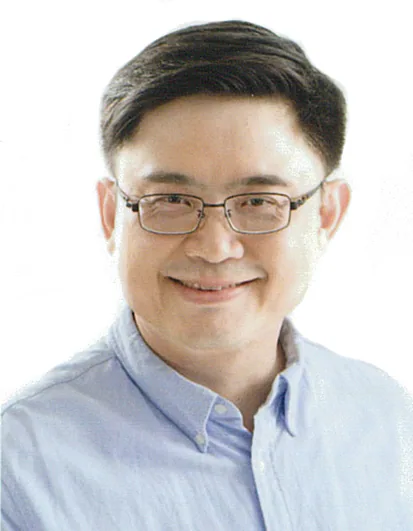
Image caption: Portrait of legislator Lai Jui-lung, uploaded to Wikimedia Commons in December 2019. Image source is the Legislative Yuan, used under an open declaration from the Legislative Yuan government website; usage requires attribution. See Wikimedia Commons file page for file and licensing details.
After large-scale events conclude, what remains most easily in the public memory are stage visuals, participation photos, and city stories, while the coordination and preparation often remain behind the scenes. Lai Jui-lung's public image grew from these memorable scenes: his roles as Secretary to the Director of the Tourism Bureau, Executive Secretary for the 2009 Kaohsiung World Games, and his subsequent reputation as the "Yellow Duck Curator" easily linked him to Kaohsiung's city marketing. His Legislative Yuan resume also lists his previous positions as a specialist in the Kaohsiung City Government Construction Bureau, Secretary to the Director of the Tourism Bureau, and Director of both the Information Bureau and the Marine Resources Bureau. 1
However, "generating buzz through events" and "effective city governance" are not the same thing. The former can create vivid memories through a single concert or exhibition, while the latter requires long-term management of transportation, air pollution, industry, finance, and local resource allocation. Lai Jui-lung's transition from the civil service to the legislature makes this gap a central theme for examining his political career. 1
From City Staff to Visible City Events
Before entering elections, Lai Jui-lung accumulated experience within the administrative branches. Legislative Yuan records show he served as a commissioned secretary in the Executive Yuan's Information Bureau and a commissioner in the Executive Yuan's Council of Labor Affairs. He later joined the Kaohsiung City Government, serving as a specialist in the Construction Bureau, Secretary to the Director of the Tourism Bureau, and Director of both the Information Bureau and the Marine Resources Bureau; he also served as the Executive Secretary for the 2009 Kaohsiung World Games. 1 This resume places him at the intersection of local administration and central government agencies, rather than just a politician whose starting point was purely constituency service.
The World Games, Mayday concerts, and the "Yellow Duck" craze became the event experiences most frequently associated with Lai Jui-lung. An interview by Zhi News reviewed his time at the Tourism Bureau, noting how he facilitated Mayday's performance at the World Games main venue; while such narratives explain how he discusses his own career, they should be viewed as personal recollections and self-narratives within an interview rather than attributing a city's entire branding success to a single staff member. 2 Regarding the "Yellow Duck" phenomenon, his Legislative Yuan resume lists him as the "Yellow Duck Curator." 1
Event management does possess public value: it involves handling venues, traffic, crowds, safety, and inter-agency coordination, and can introduce new audiences and commercial opportunities to a city. However, the success of an event does not automatically prove that long-term public issues have been resolved. While Mayday concerts can turn Kaohsiung into a venue for major performances and the Yellow Ducks can create short-term tourism buzz, whether they bring sustained local industrial benefits, improvements in public space, or balanced development requires longer-term, independent data rather than just relying on the popularity of the moment.
Source: Legislative Yuan, CEC
The organizational capacity required for large events shares commonalities with daily administrative duties: both require managing multiple units, deadlines, and on-site risks within a single framework. After an event ends, participants see the performances, the audience, and the city scenery; meanwhile, those backstage deal with traffic diversion, temporary facilities, inter-departmental coordination, and emergencies. Taking the World Games as an example, while the Legislative Yuan resume confirms Lai Jui-lung served as Executive Secretary, large-scale games involve the organizers, venue construction, international associations, athletes, and the city government team; one cannot simplify complex collective achievements into the personal credit of a single staff member. 1
This is also what makes Lai Jui-lung's career narrative interesting: he first worked in administrative departments and on-site at large events before taking on representative responsibilities within a constituency. The former role tested his ability to deliver plans, while the latter involves voter mandate, parliamentary oversight, and public debate. Both roles require execution, but the chain of responsibility differs. A city government official faces administrative processes and the hierarchy of leadership, whereas a representative must also explain how they choose issues, how they oversee budgets, and where they stand when central policies conflict with local needs.
Between Event Buzz and City Governance
In recent years, Kaohsiung has frequently used concerts, performances, and harbor landscapes to form its city brand; this type of city marketing is not achieved by a single person or a single term alone. Various city bureaus, venue operators, organizing companies, artist teams, residents, and transportation agencies all participate. Personal interviews provide Lai Jui-lung's personal narrative of his behind-the-scenes work and show how he uses large-scale event experience as part of his public resume; however, judging whether a city brand has been established requires looking back at Kaohsiung's long-term venue investment, cultural policies, MRT connectivity, private performance supply, and local community engagement. 12
Constituency Politics: From Visible Events to Local Infrastructure
In 2016, he was first elected in Kaohsiung's 9th constituency with 100,862 votes (60.57%); in 2020, following redistricting, he was re-elected in the 8th constituency with 135,052 votes (57.73%); and in 2024, he was elected again in the same constituency with 121,064 votes (57.75%). 345
The evaluation data from the Citizen Congress Watch (CCW, a civil society group) listed him as an "Outstanding Legislator" for every session from the first session of the 10th Legislative Yuan to the fifth session of the 11th Legislative Yuan, providing indicators such as attendance, interpellation, and bill review. This is data that can be used to observe parliamentary participation, but "Outstanding Legislator" is a CCW evaluation result; many of the construction achievements listed on their website are part of the legislator's personal resume and policy claims, and the two should not be conflated into an independent audit of policy effectiveness. 6
Therefore, Lai Jui-lung's role in the legislature should be read using two separate types of evidence: first, his participation in parliamentary proceedings and evaluation records; second, the local infrastructure projects claimed by him or his service team. The latter involves central budgets, local government execution, engineering progress, and multi-party collaboration; unless there is case-by-case data on budget approval, progress, and results, one cannot attribute engineering outcomes solely to personal political achievement just because a legislator "secured" them. On the other hand, urban construction should not be viewed as purely campaign packaging simply because a politician participates in its promotion. Separating credit from responsibility allows for a clearer view of the respective roles played by local representatives and administrative agencies.
For Lai Jui-lung, this transition is not just about moving from discussing "events" to discussing "infrastructure." He has long participated in the Economic Committee in the legislature. 1 Local voters may simultaneously care about roads, healthcare, water supply, air pollution, and harbor development. While legislator evaluation pages can provide clues regarding work aspects, they cannot replace case-by-case judgments on policy pros and cons, conflicts of interest, and actual resident sentiments. 6
In January 2026, he won the Democratic Progressive Party (DPP) primary for Kaohsiung mayor, 7 and registered his candidacy for Kaohsiung mayor on September 2. 8 For candidate lists and individual entries, see the 2026 Local Elections page.
On October 28, 2026, the Kuomintang (KMT) legislative caucus held a press conference claiming that, according to the Control Yuan's political donation reports, Lai Jui-lung received a total of NT$3 million in political donations from individuals related to the Unum Group and the Yongxin Group during the 2020 legislative election. The caucus also alleged that in 2017, he facilitated the installation of solar panels on the roof of the Legislative Yuan's Zhenjiang Mansion for Unum Energy, subsequently speaking up for photovoltaic operators and promoting related legal amendments; they demanded he explain whether there was a quid pro quo between these donations and the aforementioned actions, and called for an investigation by prosecutors. This press release was published on November 3 on the webpage of Legislator Wang Hung-wei on the Legislative Yuan website; it represents the KMT caucus's claims, not an official document or finding of the Legislative Yuan. 9
On October 29, Lai Jui-lung told Liberty Times that all his political donations were publicly declared in accordance with the Political Donations Act, and that his opponent was merely bringing up matters from six years ago during the election; if there are issues, he welcomes judicial handling. 10 The aforementioned allegations are claims made by the opposing camp, and the sources cited in this article do not mention any findings made by the Control Yuan or prosecutors.
Curator's Note: A city's events can capture attention within days, but governance requires a much longer time to bear results. Lai Jui-lung's career moved from the event sites of the city government into the legislature; the nature of the records left by these two stages of work is different, and they are worth viewing separately when reading.
Lai Jui-lung does not have only one identity as the "Yellow Duck Curator": his Legislative Yuan resume shows he has crossed through both central and local administrative departments, and his election records show he was elected as a legislator three times in 2016, 2020, and 2024. 1345 City events made Kaohsiung visible, while parliamentary inquiries brought local needs into central politics; both experiences have left verifiable records.
Image Sources
- Portrait of legislator Lai Jui-lung: Provided by the Legislative Yuan, used under an open declaration from the Legislative Yuan government website with attribution (Original source: Legislative Yuan Global Information Network). Wikimedia Commons file page
Further Reading
- Chen Chu: To understand the former mayor and political figure frequently mentioned in the context of Kaohsiung municipal administration.
- 2026 Nine-in-One Elections: Links to candidate lists and official data for various counties and cities.
References
- Legislative Yuan Global Information Network: Legislator Lai Jui-lung — Personal educational background and current position data.↩2345678
- Interview 4 | From Mayday's first appearance in Kaohsiung 17 years ago to the arrival of Korean groups! Lai Jui-lung reveals the starting point of Kaohsiung's concert economy — Zhi News, 2026-09-22; interview content is primarily based on the interviewee's recollections.↩2
- Results of the 9th Legislative Yuan Election in 2016 — Central Election Commission election database.↩2
- Votes for each constituency in Kaohsiung City for the 10th Legislative Yuan Election (CEC Election Database) — Central Election Commission election database; 2020 legislative election data for Kaohsiung, Lai Jui-lung elected in the 8th constituency with 135,052 votes (57.73%).↩2
- Results of the 11th Legislative Yuan Election in 2024 — Central Election Commission election database.↩2
- Evaluation data for Legislator Lai Jui-lung — Citizen Congress Watch (civil society group), including session evaluations and parliamentary participation data.↩2
- DPP Kaohsiung Mayoral Primary Poll Results Revealed: Lai Jui-lung narrowly defeats Chiu Yi-ying — PTS News, 2026-01-13.↩
- Summary Table of Candidate Registrations for the 115th Municipal Mayor Election — Central Election Commission; Kaohsiung registration date 115/09/02.↩
- Allegations that Lai Jui-lung received NT$3 million in political donations from Unum: Blue camp calls 'Son of Laborers' a 'Gatekeeper of Congress' — KMT caucus press release, published on Legislator Wang Hung-wei's page on the Legislative Yuan website, published 2026-11-03; this is material presented by the accusing party and is not a ruling.↩
- Blue camp questions political donations; Lai Jui-lung: Bringing up matters from 6 years ago is still smear tactics; if there are issues, handle them through the judiciary — Liberty Times, 2026-10-29; reporting on the subject's response.↩