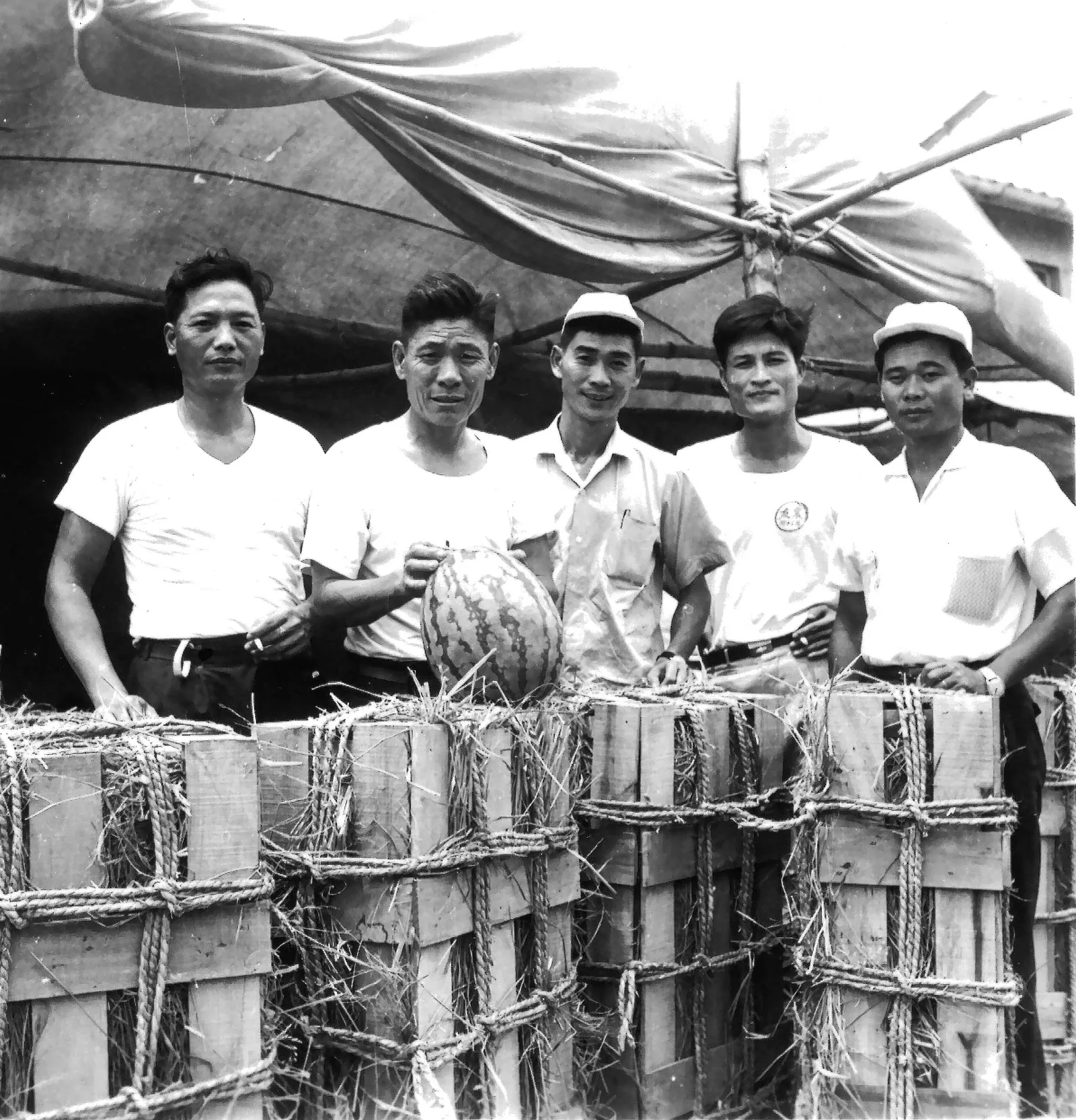
Caption: Chen Wen-yu displaying watermelon with colleagues. Source: Wikimedia Commons, author Uiuc1028, CC BY-SA 3.0; image not modified by this article.1
30-Second Overview: Chen Wen-yu started at the Fengshan Tropical Horticultural Research and Extension Station, bred the "Fengshan No. 1" seedless watermelon, and founded Nongyou Seedlings. His uniqueness lies not just in the number of varieties, but in defining breeding success by whether farmers can exchange better seeds for more stable lives.
In 1925, Chen Wen-yu was born into a farming family in Yongkang, Tainan. In 1962, he bred the "Fengshan No. 1" seedless watermelon. In 1968, he co-founded Nongyou Seedlings with friends. These three years slice a life into three scales: the difficulties seen in the fields, the technical solutions solved in the laboratory, and the path a company later took across borders. 2 3
But what Chen Wen-yu truly left behind is not just the title "King of Watermelons." More worth asking is: Why did a breeder place "letting farmers earn money first" before corporate profit? Seeds are usually too small to appear in news photos, yet Chen Wen-yu treated them as a public commitment—varieties must enter the fields and ultimately translate into harvests farmers can see.
Starting from the Sighs of the Farmland
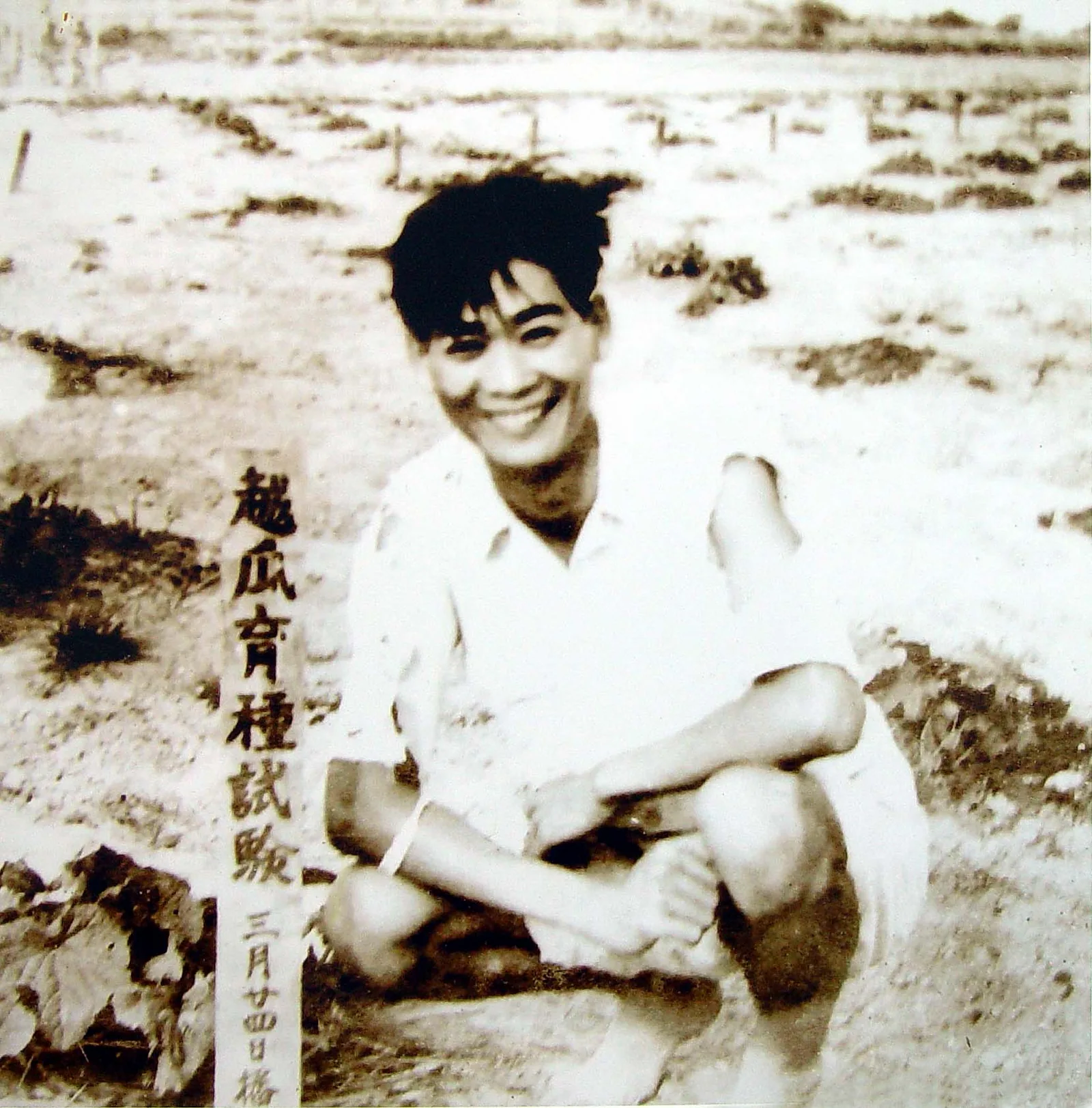
Caption: The Wikimedia Commons file page describes this image as Chen Wen-yu breeding the oriental pickling melon; author Uiuc1028, CC BY-SA 3.0. Image not modified by this article.4
As a youth, Chen Wen-yu helped in the fields, witnessing his parents' helplessness in the face of natural disasters and unstable harvests. After graduating from the Research Department of Hsin Feng Agricultural College, he entered the Fengshan Tropical Horticultural Research and Extension Station, initially working on vegetable breeding before shifting his focus to watermelons. According to Taiwan Panorama, he surveyed soil quality, moisture, climate, and crop suitability from south to north, observing in the fields during the day and compiling reports in the laboratory at night. 2
This experience is crucial because Chen Wen-yu did not start imagining varieties from "what the market lacks," but first asked what the farmers' land could withstand. To him, breeding was not about adding a new color to fruit on paper. It had to simultaneously face diseases, climate, transportation, and whether farmers could afford the seeds.
📝 Curator's Note: Chen Wen-yu's starting point was not to make Taiwan's agriculture more beautiful, but to let farmers bear less of the risk of "planting without knowing if there will be a harvest."
Fengshan No. 1: Technology is Not the End Point
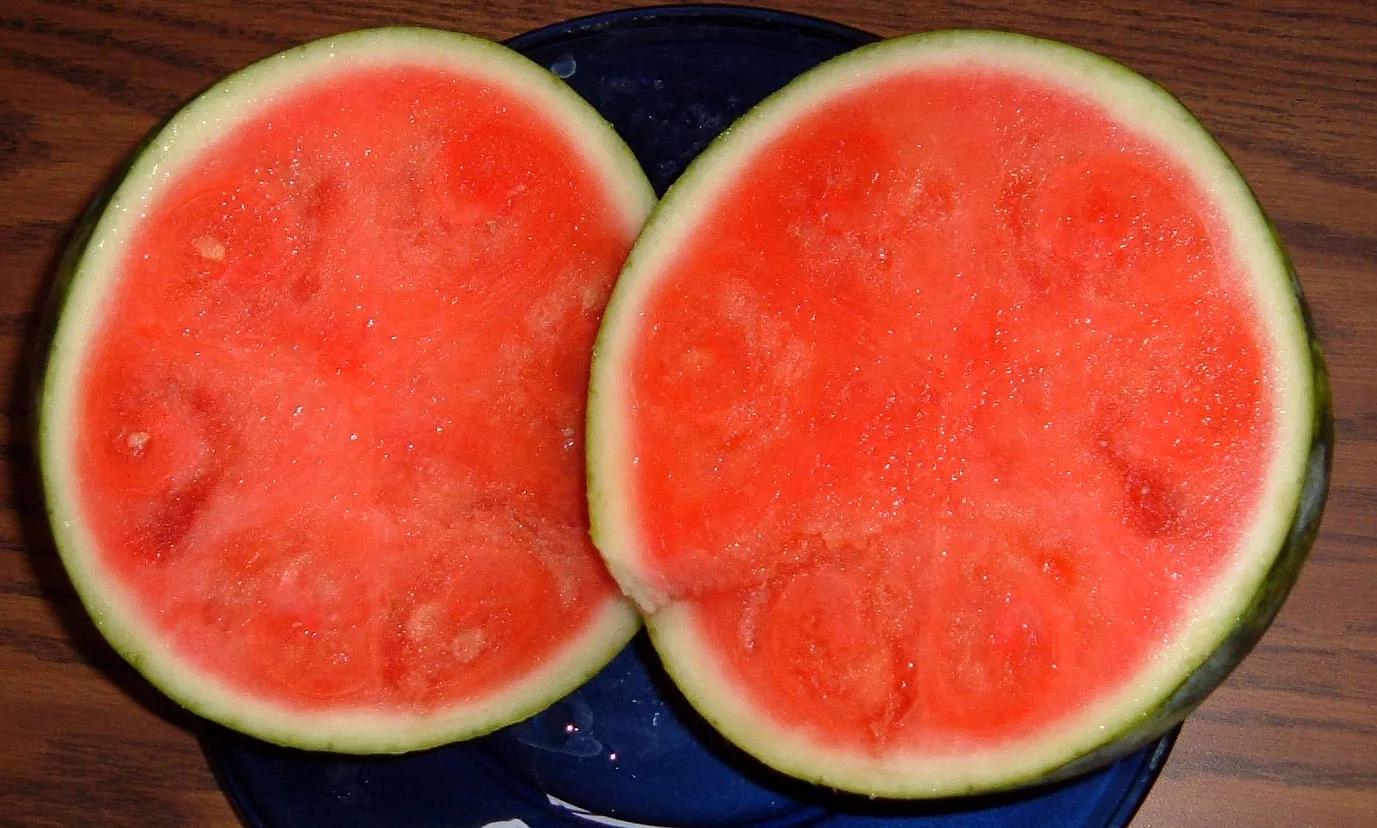
Caption: The Wikimedia Commons file page explicitly labels this as "Seedless watermelon," with original description stating it was purchased in Atlanta, USA, in 2005, product from Nicaragua; author SCEhardt, public domain. This is an illustrative photo of a seedless watermelon, not Fengshan No. 1, nor a historical photo of Chen Wen-yu taken in Taiwan.5
In the 1950s, some watermelon seeds used by Taiwanese farmers encountered issues with disease resistance and reproduction. Chen Wen-yu thus devoted himself to seedless watermelon research. This also explains why "seedless" is not a single laboratory achievement, but an industrial process composed of parent selection, chromosome doubling, hybridization, field pollination, and segregated harvesting. Data from North Carolina State University's Cucurbit Breeding program indicates that growers typically need to configure diploid and tetraploid plants in the field and distinguish between seeded and seedless fruits during harvesting and sales. 6 After about three years of effort, he bred "Fengshan No. 1" in 1962. Reports in Taiwan Panorama describe how he used chromosome doubling and mating to produce offspring that formed seedless watermelons without reproductive capacity. English reports summarize this achievement as the "world's first seedless watermelon." 2 7
Here lies a verification difference that cannot be smoothed over by convenience: different sources have different expressions regarding the "first" in terms of region and global ranking. This article adopts the most conservative statement, directly verifiable by Chinese reports, calling it Taiwan's first seedless watermelon, "Fengshan No. 1." The claim of "world's first" is retained only in the context of quoting English reports, to avoid mistaking media shorthand for an uncontested scientific historical conclusion. 2 7
The story of the seedless watermelon, therefore, should not be written merely as "an invention." From a breeding perspective, modern seedless varieties are usually not magic "without seeds," but the result of tetraploid hybridization: a tetraploid female parent (2n=4x=44) mated with a diploid male parent (2n=2x=22) produces a triploid (2n=3x=33). The three sets of chromosomes make it difficult to distribute evenly during meiosis, causing female and male gametes to lose normal function, so the fruit usually does not form mature seeds. Triploids themselves cannot provide effective pollen; production fields still need to configure diploid plants to stimulate fruiting. 6 The true turning point occurred in Erlun, Yunlin. Based on farmland surveys, Chen Wen-yu judged that the barren sandy fields under the Xiluo Bridge were suitable for planting this cold-sensitive watermelon. He drove north from Fengshan and worked with Wang Liangxiong, a farmers' association officer, to teach farmers how to plant. Farmers worked in the fields during the day and could only study at night. Chen Wen-yu recalled: "Since farmers had to go to the fields during the day, they could only use the night for study. I often had to stay overnight in the farmers' association duty room, but there were so many mosquitoes that I couldn't sleep at all." 2
The barren sandy fields later bore watermelons, which were assisted by agricultural institutions at the time for export to Hong Kong. Farmers found the returns better than rice, giving him the title "King of Watermelons." If this title is placed only at the end of a success story, it looks like a trophy. Placed back in those barren sandy fields, it is actually more like a work ID: Chen Wen-yu had to be present on site, accompanying farmers to turn technology into harvest. 2
A Company That First Learned to Send Seeds into the Fields
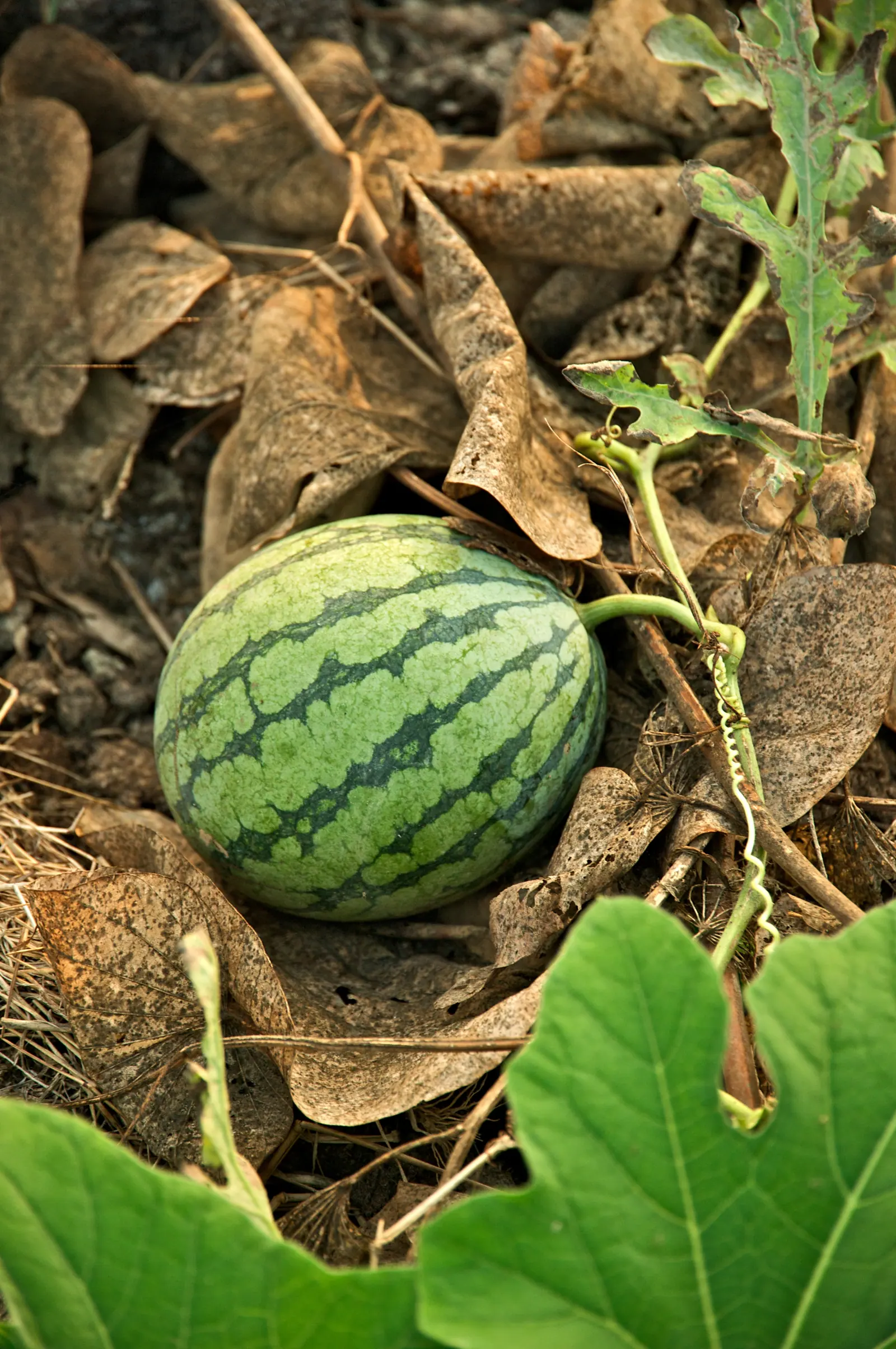
Caption: Watermelon from a small-scale organic farm in Tainan City, Taiwan, photographed in November 2009; author Fred Hsu, CC BY-SA 3.0. It is a scene of Taiwan's agriculture, not a historical photo of Chen Wen-yu at work.8
In 1968, at age 43, Chen Wen-yu left the experimental station and co-founded Nongyou Seedlings with friends. Official materials position him as a pioneer in the development of hybrid vegetable varieties in Taiwan, recording that he published horticulture and seedling publications, established the Nongyou Social Welfare Foundation, and set up a Farmers' Hospital in Myanmar to provide free medical services. 9
Nongyou's official awards page later wrote the company's core value as "One Seed, One Responsibility," and listed Chen Wen-yu's receipt of the Third Class Jingxing Medal from the Republic of China, the Asia-Pacific Seed Association National Seedling Contribution Award, and the Presidential Commendation Order. These awards prove he received institutional recognition, but alone they cannot prove every industrial figure. Figures must still be verified against their respective sources. 10
The Chen Wen-yu and Lin Jun-yi Interview Record published by the Academia Historica provides another important clue: the official book introduction places Chen Wen-yu in the context of Taiwan's agricultural seedling breeding going international, specifically mentioning the "Diana" yellow-skinned watermelon and the AAS Award, as well as Nongyou's global R&D bases, Farmers' Hospital, and Social Welfare Foundation. This is not a summary that can replace the verbatim interviews in the book, but it proves Chen Wen-yu's story is not pieced together solely by later legendary articles. 11
📝 Curator's Note: Taiwan's agricultural soft power is sometimes not a flag, but a seed that can sprout in another climate.
The Corporate View of "Letting Farmers Earn Money First"
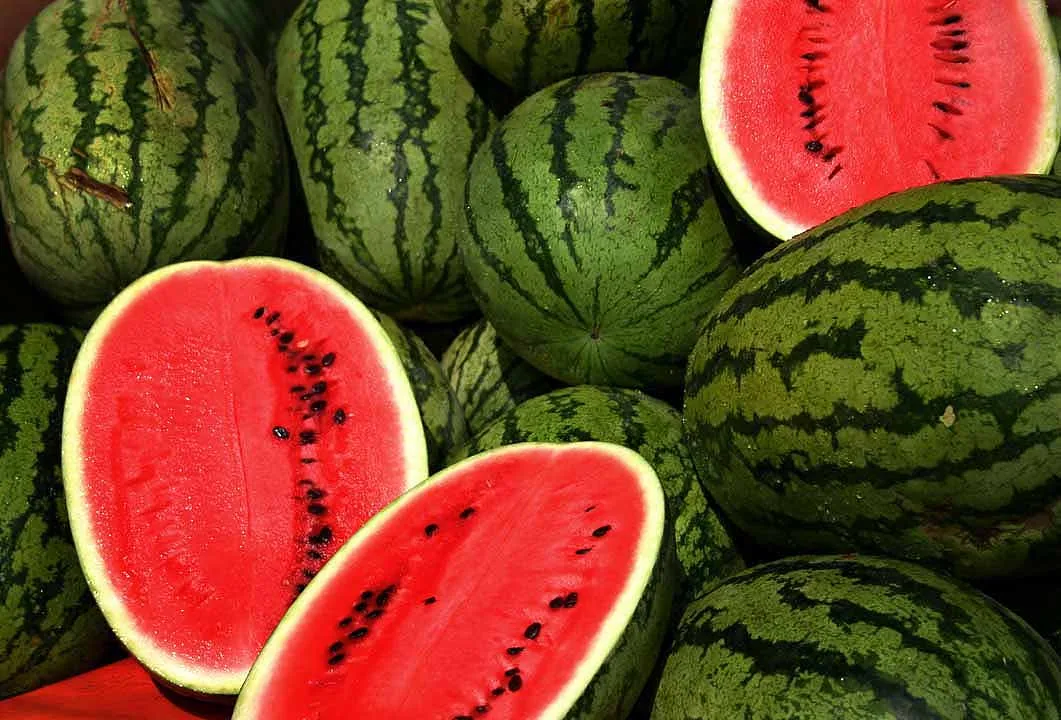
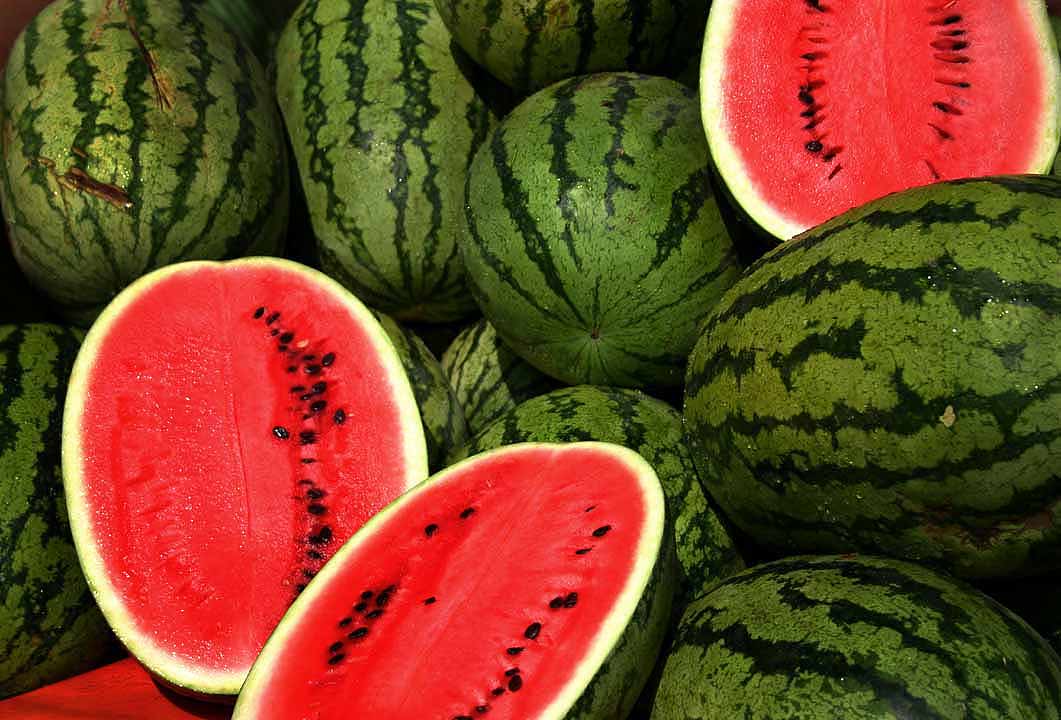
Caption: Mature watermelon, author Steve Evans, Wikimedia Commons, CC BY 2.0; this image is used to present the watermelon crop itself, not a historical photo of Chen Wen-yu or a Taiwanese farm.12
Smiling Taiwan records Chen Wen-yu's interviews in his later years. He distinguished seeds from general consumer goods, saying the "responsibility of a seed" is to "develop good varieties and bring good returns to farmers." In the same report, he also discussed breeding the yellow-skinned, red-fleshed "Diana" watermelon, repeatedly facing green-skinned individuals, but ultimately described that stubborn spirit as "just wanting to be different from others!" 13
Upstream/Downstream places this management philosophy on a larger geographical scale: Nongyou promoted seedlings and cultivation techniques in northern Thailand, China, and India, and established a Farmers' Hospital in Myanmar. The report simultaneously preserves the less attractive parts of agricultural globalization, such as the problem of counterfeiting in the Chinese market and the risks of cross-border operations. These difficulties should not be cut out, because "helping farmers" is not a pretty corporate slogan, but bearing costs in unfamiliar systems, transportation, and markets. 14
The English Taipei Times, in its report on Chen Wen-yu's passing, quoted him saying: "My goal is to create the world’s most delicious watermelon." The same report recorded another sentence closer to his work ethic: "It takes good seedlings to produce good varieties. We provide farmers with good seeds to help them reap better harvests." 7
Looking at the two sentences together, one finds his goals are not contradictory: the most delicious watermelon is the breeder's imagination, but the fact that farmers can have better harvests is the reason this imagination is allowed to exist.
Seeds Go Out, Bringing Limitations Along
Chen Wen-yu's story is often condensed into "Taiwanese seedlings going global." Nongyou's official data and agricultural industry cases show that the company has long invested in research farms in different locations, germplasm management, variety development, and international markets. Agricultural cross-domain integration cases also point out that the cost of the breeding industry is not just land and labor, but also includes parent management, isolated reproduction, storage, and intellectual property management. 10 15
These details make "success" more concrete. Seeds do not simply transplant Taiwan's experience intact overseas. They must reface local soil, climate, pests and diseases, consumer habits, and farmers' cash flow. Cross-border seedlings are therefore both a technical work and a translation work: translating the possibilities of a variety into risks another place is willing to bear.
The Ministry of Agriculture's commendation report after Chen Wen-yu's passing mentioned his contributions to fruit and vegetable breeding, farmer technical guidance, rural economy, and overseas public welfare, and recorded that his life story was included in the national history. This official narrative gave him a national-scale positioning. But returning to the fields, the hardest problem remains small: Can this batch of seeds grow well in this land? 9
Why This Story Is Still Worth Writing Again
Chen Wen-yu's deeds have been reported multiple times; this article does not treat "King of Watermelons" as a new discovery, nor does it pile up all circulating figures again. After re-reading these articles, a more meaningful angle is to put technology, enterprise, and public welfare on the same line: he first understood the problem on the farmland, then brought the research results to the farmers, and finally let the company become a transnational organization.
This line can also explain an easily overlooked phenomenon: the results of agricultural breeding often appear on the dining table under others' names. Consumers remember the sweetness of the watermelon, the flesh color, and whether it has seeds, but do not know how its parents were preserved, how varieties were isolated, and how trials were eliminated. Nongyou's industry case mentions that seed production must face land isolation, labor input, parent management, and intellectual property protection. Behind the "magical variety" is actually a system that is prone to error and must be maintained long-term. 15
This also connects Chen Wen-yu to today's agricultural issues. As climate becomes more unstable, farmers need not just a single "star variety," but germplasm and knowledge that can be adjusted according to different regions, seasons, and markets. The思路 (approach) Chen Wen-yu left behind may not be "finding another watermelon king," but acknowledging that every piece of land has its own problems, and breeders must be willing to spend time to look.
In his later years, he still treated variety selection as on-site work: cutting open, tasting, recording, and then deciding whether to proceed to the next stage. This action looks slow and is somewhat different from the fast, scaled language often used when discussing agricultural technology today. But it is precisely this slowness that makes a variety not just a commodity name, but a promise that farmers can trust.
Deconstructing "Success"
There are several types of success in Chen Wen-yu's story that are often put together but should actually be separated. The first is breeding success: the ability to breed stable varieties under experimental conditions. The second is field success: farmers can grow them in their own soil, climate, and work rhythm. The third is market success: the fruit can be transported and sold, with returns sufficient to make farmers willing to plant again. The fourth is social success: whether technology and returns leave behind longer-term agricultural capacity.
Taiwan Panorama wrote about Nongyou's variety selection, stating that staff must check sugar content, taste, weight, rind hardness, flesh color, and seed status. If any one item fails, it may be eliminated. This selection is not turning nature into a controllable machine, but acknowledging that every variety still needs to undergo on-site negotiation time and again. 2
Official industry cases further point out that every material in the germplasm bank needs to be distinguished, preserved, and tracked. Management errors have consequences not just for the company's loss, but may also cause farmers to receive varieties inconsistent with claims. Breeders are therefore not just creating new things, but maintaining a record chain that prevents errors from flowing into the fields. 15
This is the most suitable place for Chen Wen-yu's story to be placed today. When we say agriculture needs technology, we cannot only think of faster equipment or higher yields; we must also think of who preserved the germplasm, who recorded the parents, and who was willing to try again on a land not看好 (looked down upon). The value of technology lies not only in whether it can be displayed, but more in whether it can be trusted.
From Fengshan to the World is Not a Straight Line
Chen Wen-yu's internationalization did not start with a beautiful map. Early on, Nongyou first undertook commissioned production for foreign entities, then gradually established its own research farms, varieties, and brands. Industry cases mention that the company set up research farms in Fengshan, Tainan, Pingtung, and Chiayi, utilizing soil and climate from different locations for breeding. This dispersion is not decoration for expansion, but a way to let varieties be tested by different environments. 15
Taiwan Panorama wrote that Nongyou's variety selection field once featured watermelons from Brazil, South Africa, Central Asia, and other places. This image explains the essence of breeding work better than "sold to multiple countries": seeds from all over the world are first brought in for observation, then undergo mating, trial planting, and elimination, before finally possibly returning to the farmland of another country. Internationalization is not just sending products out, but also bringing back external differences. 2
Nongyou's awards page records that the company has continuously been recognized as an Outstanding Export Manufacturer by the Ministry of Economic Affairs since 1976, and lists the 2008 Presidential Agricultural Innovation Award. These corporate honors and Chen Wen-yu's personal medals cannot be conflated, but placed together, one can still see that breeding, export, organization, and brand have gradually become the same industrial system. 10
Public welfare is not an extra layer of warmth added to the story. Ministry of Agriculture official data records that Nongyou Social Welfare Foundation's assistance scope expanded overseas, and a Farmers' Hospital was established in Myanmar. Smiling Taiwan presents Chen Wen-yu's reaction when reading patients' letters through interview details. To him, if seeds only allowed enterprises to gain markets, the story was only half complete. The other half is whether those who originally could not access medical care, nutrition, or stable income truly gained an extra path. 9 13
What Is Left for Today is Not a Magical Seed
Chen Wen-yu passed away on December 7, 2012, at the age of 88. Nongyou Seedlings continues to operate based on his philosophy, while Taiwan's agriculture also faces new pressures: climate change, germplasm preservation, variety intellectual property, aging rural populations, and how farmers can obtain stable returns in high-cost environments. 7 10 15
Therefore, the most memorable aspect of Chen Wen-yu may not be how many watermelons he bred, but that he moved the evaluation standard of breeding one step closer to the fields. Sweetness, color, and appearance are certainly important. But if a variety cannot give farmers more choices on their own land, the technology is not yet complete.
He once wrote: "Nongyou (Farmer Friends), these two words are more (to me) preferable than wealth and nobility." 14 The power of this sentence lies not in portraying the entrepreneur as a saint, but in leaving a verifiable promise: seeds must ultimately return between people and land, to places where someone is willing to plant, someone can harvest, and someone can live because of it.
This promise also has its boundaries. Nongyou's corporate data presents the company's own history and values; the official commendation order represents the government's affirmation of Chen Wen-yu. Neither can replace independent farmer income statistics, nor prove that every overseas promotion was equally successful. Therefore, when reading Chen Wen-yu, one neither needs to deify him as a person who changed all agriculture, nor deny the actual traces left by breeding, field guidance, and public welfare facilities just because biographical language carries respect. 9 10 15
What also needs to be preserved is the gap between sources. The 2007 Taiwan Panorama is a Chinese feature report with on-site interviews and photography. The Ministry of Agriculture's commendation order is the government's formal account of the deceased. The Taipei Times organized company and public welfare information in English in its obituary. They each answer different questions; one cannot take the rhetoric of one article directly as the statistics of another. This is also the reason this article does not adopt absolute statements like "Global No. 1" that cannot be verified verbatim from the original text as a single conclusion. 2 7 9
A more reliable understanding is: he made a working method last for a long time. First look at the land, then do breeding. First let varieties pass farmers' trial planting, then talk about the market. First let seeds be verified in different environments, then send them abroad. This method is not romantic, and often very slow, but it makes "Taiwan agriculture going global" not just a slogan, but a path composed of batches of seeds, research records, field teaching, and farmers' reply letters.
Next time we cut open a slice of seedless watermelon, perhaps we do not need to think of it as a monument to a certain genius. A reading closer to Chen Wen-yu is to imagine that behind that flesh lies a series of eliminated tables, pieces of unsuitable land, and a person who is still willing to bring technology back to the fields. Seeds are small. The responsibility they require has never been small. Precisely because of this, Chen Wen-yu's story belongs not only to agricultural history, but also to those who are willing to do one more verification before handing a technology to others. This patience is precisely the work that is most difficult to see but cannot be omitted before seeds truly cross borders. It reminds us that truly reliable innovation often endures long waiting in details, and thus deserves to be re-verified by generation after generation of farmers, and repeatedly reminded by every piece of land that needs to re-adapt, reminding us, and reminding later comers.
Seedlings Are Not an Appendix to Agricultural Products
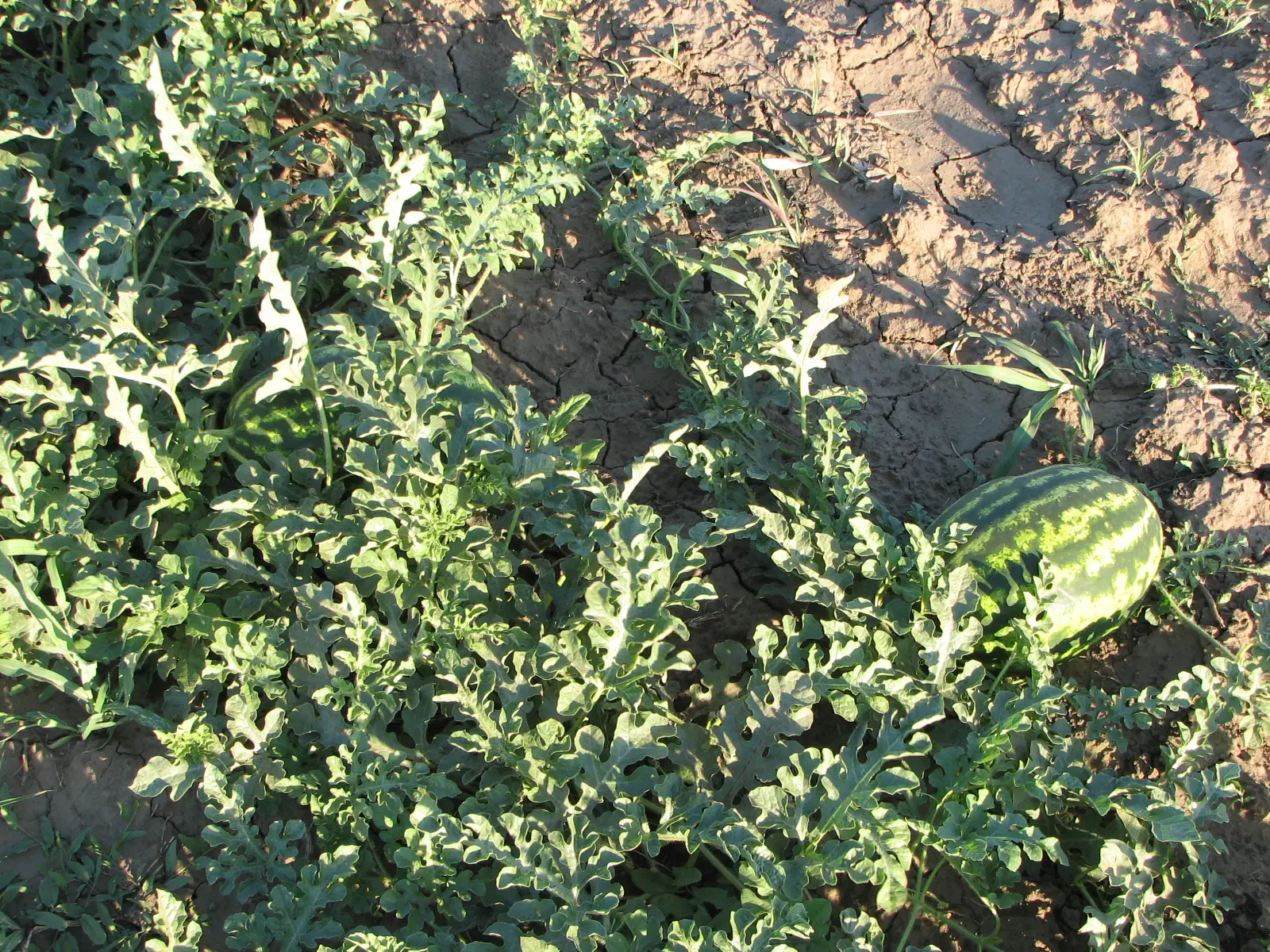
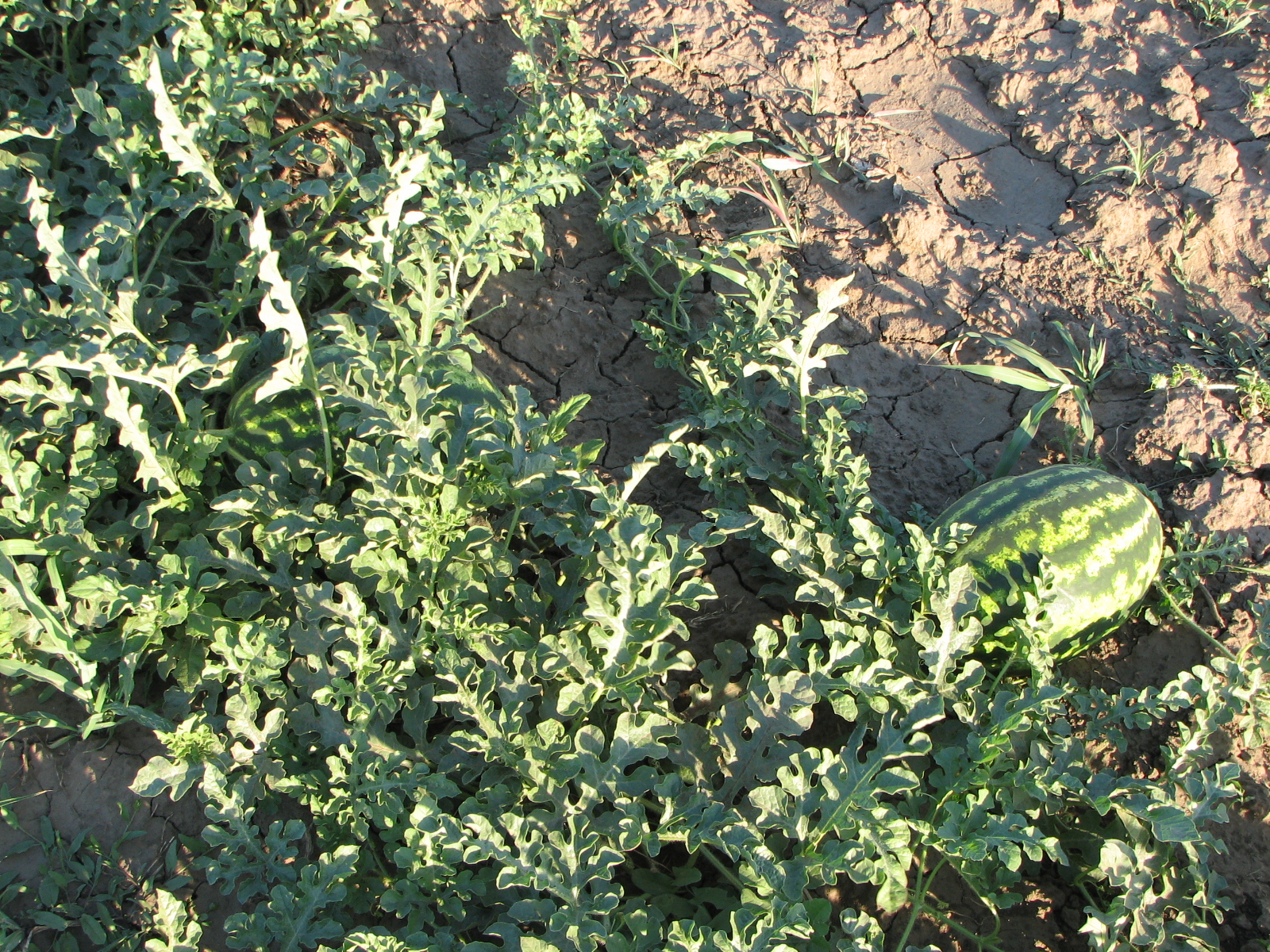
Caption: Watermelon growing in the field, author Mihaib21, Wikimedia Commons, CC BY-SA 3.0; this image is used to present the crop growth stage, not a historical photo of Chen Wen-yu at work.16
Chen Wen-yu's case can also help us re-understand the term "agricultural industry chain," which is often spoken of in vague terms. Farmers see seedlings, leaves, flowers, and fruits in the fields. Seedling companies must handle parents, pollination, isolation, purity, germination rate, packaging, and preservation even earlier. If any one link is off, what farmers receive may not be the expected variety. Agricultural cross-domain integration cases point out that Nongyou later even needed to improve the storage positions and information processes of the germplasm bank, precisely because seed management cannot rely only on memory and paper. 15
This "invisible infrastructure" is also a less discussed side of Chen Wen-yu's story. Taiwan often places agricultural achievements on yield, export, or award-winning varieties, but what truly allows a company to breed long-term is the ability to preserve failed parents, record every hybridization, distinguish different generations, and still find that material years later. For breeding, data is not an administrative burden, but the starting point for the next success.
From Fengshan No. 1 to Today's Triploid Technology
When Chen Wen-yu promoted seedless watermelons in the 1960s, he faced the field conditions and market demands of Taiwanese farmers at the time. Today's breeding research further breaks down triploid production into steps such as chromosome doubling, parent cultivation, pollen configuration, and trait selection. NC State University data reminds us that triploid seedless watermelons are not completely without need for pollination, but require diploid plants to provide pollen to stimulate fruit formation. This detail prevents consumers from misunderstanding "seedless" as not requiring a reproduction process. 6
Therefore, Chen Wen-yu's historical position lies not only in that he once bred a certain famous variety, but also in that he brought a highly specialized breeding problem into a production site that farmers could use. From the experimental station to the Erlun barren sandy fields, and then to Nongyou's overseas research bases, this path transforms abstract genetic and cultivation knowledge into a technology that can be taught, replicated, and tested by the market.
How Images Preserve an Agricultural History
The two photos of Chen Wen-yu selected for this article are both from specific file pages on Wikimedia Commons, and the file pages explicitly state the author and CC BY-SA 3.0 license. The other two are freely licensed photos of Taiwanese farms and general watermelons. They cannot replace interviews or field records, nor can the photo shooting location be directly inferred as every piece of land Chen Wen-yu worked on. What photos can do is return the "colleagues," "fields," and "watermelons" in the text to observable material scenes.
This distinction is important: a photo without a traceable author and license, even if it looks very suitable for the article, should not be directly placed into an open knowledge base. This article retains the file page and license information for each image, and uses hot links to cite the original files, allowing subsequent readers to return to the source pages for self-verification.
Further Reading
One can first read the Ministry of Agriculture's official commendation order report, the Academia Historica publication bibliography, NC State University's seedless watermelon breeding instructions, and Taiwan Panorama's on-site narrative of Erlun's barren sandy fields and Fengshan No. 1, and then cross-reference how English reports describe the "Watermelon King."
Images and Licenses
The six images used in this article have been downloaded and included in the project directory (public/article-images/), citing original files via non-hot links; the first, second, third, and fifth file pages indicate Creative Commons Attribution-ShareAlike 3.0 Unported (CC BY-SA 3.0), the fourth indicates Creative Commons Attribution 2.0 Generic (CC BY 2.0), and the sixth is in the public domain. This article did not crop, composite, or recolor the images. In accordance with license requirements, author names, original file pages, license links, and "not modified" descriptions are retained; if modifying or compositing this article's images into other works, one should share them under the same or compatible license according to the original license terms.
References
- Wikimedia Commons: File:Chen Wen-Yu 1.jpg — File description as Chen Wen-yu with colleagues, author Uiuc1028, original file adopts CC BY-SA 3.0; image file URL is upload.wikimedia.org.↩
- Taiwan Panorama Magazine: Taiwan's Green Fingers — Watermelon King Chen Wen-yu — A 2007 March in-depth feature report, providing specific narratives and personal recollections of Chen Wen-yu's early experiences, Fengshan No. 1, Erlun farmland, and breeding sites.↩23456789
- Nongyou Seedlings: Company Introduction — Nongyou's official company page, explaining the company's establishment in 1968, research into new seedling technologies, and corporate background with "One Seed, One Responsibility" as the core value.↩
- Wikimedia Commons: File:Chen Wen-Yu bred the new species of oriental pickling melon.jpg — File page describes Chen Wen-yu breeding the oriental pickling melon, author Uiuc1028, original file adopts CC BY-SA 3.0; image file URL is upload.wikimedia.org.↩
- Wikimedia Commons: File:Watermelon seedless.jpg — File description explicitly writes "Seedless watermelon," original description states it was purchased in Atlanta, USA, in 2005, product from Nicaragua; author SCEhardt released the work into the public domain; image file URL is upload.wikimedia.org.↩
- NC State University Cucurbit Breeding: Seedless Watermelon Breeding — NC State University Department of Horticultural Science cucurbit breeding data, explaining tetraploid and diploid parents, triploid chromosome composition, pollen requirements, and field configuration.↩23
- Taipei Times: ‘Watermelon King’ dies — A 2012 English obituary, verifying Chen Wen-yu's date of death, age, breeding achievements, company history, and two original English quotes.↩2345
- Wikimedia Commons: File:Taiwan 2009 Tainan City Organic Farm Watermelon FRD 7962.jpg — File description as watermelon from a small-scale organic farm in Tainan City, Taiwan, November 2009, author Fred Hsu, original file adopts CC BY-SA 3.0; image file URL is upload.wikimedia.org.↩
- Ministry of Agriculture: Chairman of the Council of Agriculture Delivers Commendation Order for Watermelon King Mr. Chen Wen-yu on Behalf of the President — Ministry of Agriculture official press release, recording the commendation order, breeding and farmer technical guidance, Nongyou Social Welfare Foundation, Myanmar Farmers' Hospital, and inclusion in national history.↩2345
- Nongyou Seedlings: Nongyou Awards — Company's official awards and history page, listing Chen Wen-yu's National Jingxing Medal, Asia-Pacific Seed Association awards, commendation order, and Nongyou company's core values; primary corporate data.↩2345
- GPI Government Publication Information Network: Chen Wen-yu and Lin Jun-yi Interview Record — Academia Historica bibliography page from the Ministry of Culture's Government Publication Information Network, verifying 2016 publication information, ISBN, book introduction, and Chen Wen-yu's positioning in the internationalization of Taiwan's seedlings.↩
- Wikimedia Commons: File:Watermelons.jpg — Watermelon photo file page, author Steve Evans, original file adopts Creative Commons Attribution 2.0 Generic (CC BY 2.0); image file URL is upload.wikimedia.org.↩
- Smiling Taiwan: Nongyou Seedlings — The Vegetables and Fruits You Eat, He Improved — A 2013 feature report, recording Chen Wen-yu's late-life interviews, Diana watermelon, Myanmar Farmers' Hospital, and original quotes/narratives such as "The Responsibility of a Seed."↩2
- Upstream/Downstream: Altruistic Spirit and Water Buffalo Character — Forever Cherishing the Light of Taiwan Agriculture — Chen Wen-yu — A 2012 agricultural figure special, presenting the overseas context of Chen Wen-yu's philosophy and related quotes from cross-border operations and public welfare cases in Thailand, China, India, and Myanmar.↩2
- Tech-Ag Enterprise Information Network: Nongyou Seedlings Co., Ltd. [107th Year Internationalization Cross-Domain Integration Counseling] — Agricultural industry counseling case, explaining Nongyou's research farms, germplasm management, intellectual property, and internationalization, as well as the actual challenges of the breeding industry in land, labor, and variety management.↩234567
- Wikimedia Commons: File:Growing watermelon.jpg — Photo of watermelon growing in the field, author Mihaib21, original file adopts Creative Commons Attribution-ShareAlike 3.0 Unported (CC BY-SA 3.0); image file URL is upload.wikimedia.org.↩