

30-Second Overview: On August 26, 1999, Fu-ma Music released a peculiar "greatest hits" album: the cover featured a faceless cartoon doll named Hui-er; the music video was animated; the singer herself was 22 years old and did not appear on camera1. The album's lead single, "The Promise," sold 250,000 copies in 45 days2 and over a million across Asia3. That unseen female voice sang this cover of Faye Wong’s song into the karaoke charts of every Taiwanese KTV for the next 25 years4. From five albums in five years at Fu-ma to being tricked by her manager into signing a transfer deal with BMG, where she was shelved for three years, from joining Qunshi in 2009 and Hanyan in 2013 to returning to Qunshi in 2025 to produce the Disco-style album Where X Walk, she has released 12 official studio albums5. Twenty-five years and one year later, on April 25, 2026, she stood on the Taipei Arena stage for the first time. After performing a setlist of 25 songs over three hours, she told the audience at the end: "I don't know if this will be the last time I sing for everyone"6. The doctor told her her vocal cords had atrophied.
Walk into any KTV in Taiwan, select "The Promise," and the moment the intro plays, someone in the booth will hum along, "Two distant worlds, growing ever farther apart"7. Ask again: "Who sang this?" The answers split: some say Faye Wong, some say Fish Leong, some can't say, but all insist, "I definitely heard it."
That is Where Chou’s situation. Her songs walk ahead of her, far ahead of her, for 25 years.
The Female Voice Hidden by the Cartoon Doll
In 1996, Where Chou8, a graduate of the Drama Department at Kaohsiung Private Chung-Hwa Arts School, did not originally intend to be a singer. She took her saved pocket money into a recording studio, recorded 10 songs as a graduation memento, and originally planned to go to the UK to study stage direction. She later said, "Like I said, going to the UK to study was not to become an actor; I wanted to be a director"9. Her attitude toward the record contract was simply, "Let's experience it first; at worst, I'll go back to school if it fails."
The studio owner took that graduation demo to musician Chi Chung-ping. Chi signed Where to Fu-ma Music, releasing her first album, Where Chou's Favorites10, on August 26, 1999.
Calling the first album a "Greatest Hits" was strange in itself: compilations are usually released years after debut. Fu-ma reversed this strategy, using it as a promotional hook, with almost every one of the 10 songs becoming a chart hit10. Even stranger was the cover: a cartoon doll, "Hui-er," replaced her photo. The MV was also animated; Where Chou’s face was not shown to the public at all.
This decision stemmed from Where Chou’s own lack of confidence in her appearance11. Fu-ma’s response was to abstract her completely, drawing her as a cartoon and focusing entirely on her voice. Fu-ma internally called this strategy "capturing the audience with voice first"10.
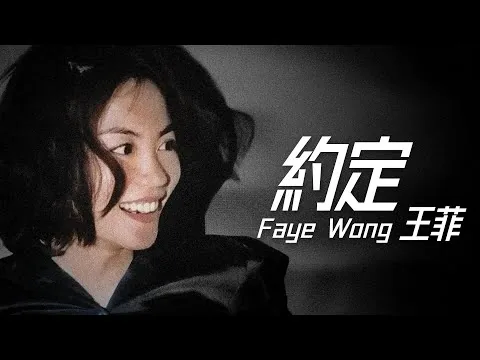
The official 1999 MV for "The Promise" by Where Chou's official channel. The animated doll Hui-er walks through street scenes, transitions, and stands by a window. The singer's face never appears; the entire emotion is entrusted to that 22-year-old voice.
The strategy worked. "The Promise" began to ferment in KTVs in the second half of 1999. In 2000, the second album, Where Chou's Favorites 2: I Really Want to Love You, sold over 250,000 copies in 45 days2. The first album cumulatively reached 500,000 in Taiwan and over a million in Asia3. In an era when people still queued at record stores, this volume was enough to push a 22-year-old newcomer into mainstream charts.
📝 Curator's Note
Behind the four characters "capturing the audience with voice first" lies a reverse logic of packaging Taiwanese female singers. In the late 1990s, Taiwan's idol industry was beginning to mass-produce female singers who were "visual-first," such as Jolin Tsai, Vanessa Chien, and Stefanie Sun, all of whom had strong visual debuts. Fu-ma chose the opposite direction, hiding Where Chou’s face and betting on her voice. They won the bet, but this decision also defined her situation for the next 25 years: the audience remembers the song, but struggles to remember the person.
In 2001, Cherish This Night was released with a real-person cover for the first time5, but sales declined, triggering negative reviews. The contrast between the cartoon doll and the real person reminded people of an impolite truth: for some listeners, they loved that voice, but might not accept that face.
The One Song with a 25-Year Karaoke Rate That Didn't Drop
To understand Where Chou’s position in Taiwan’s music history, one must first clarify the lineage of "The Promise."
Faye Wong's 1997 EP Toy Cantonese version of "The Promise," lyrics by Lin Xi, music by Chen Hsiao-hsia. Fair use editorial commentary on the original work. Source via YouTube.
The original version is by Faye Wong. In 1997, she included "The Promise" in her EP Toy, in Cantonese, with lyrics by Lin Xi and music by Chen Hsiao-hsia12. This version won the Commercial Radio HK叱咤903 Professional Recommendation Song Award in Hong Kong; Lin Xi won the Best Chinese Pop Lyrics Award at the 20th Top Ten Chinese Golden Songs for these lyrics. It was already a great song in the Cantonese circle.
Faye Wong's 1997 Cantonese version of "The Promise," included in the Toy EP. Lyrics by Lin Xi, music by Chen Hsiao-hsia, this is the starting point of the song's original version. Where Chou's 1999 Mandarin version retained all the melody of Faye Wong's version, but the lyrics were rewritten.
Two years later, Fu-ma producers heard Faye Wong’s version and felt this song could be done again. They asked Yao Jue-long to rewrite the Mandarin lyrics, kept Chen Hsiao-hsia’s melody, handed the arrangement to Chen Fei-wu, and had Where Chou interpret it13. In August 1999, the Mandarin version entered Where Chou's Favorites.
This was a re-creation, not simple搬运 (transport). Lin Xi’s original version was introverted and suppressed; the line "separated in the north and south" wrote of a more mature sense of distance. Yao Jue-long’s Mandarin version was directly lyrical; "Two distant worlds, growing ever farther apart" struck the hearts of those in their 20s experiencing romantic setbacks14. Chen Hsiao-hsia’s melody remained unchanged, but the center of gravity of the lyrics shifted. The whole song changed from a suppressed story to one of youthful regret.
More unexpectedly, the Mandarin version’s spread exceeded the Cantonese original. In Taiwanese KTV booths, radio stations, and talent shows, every generation of fans in the next 25 years ordered the same "The Promise," and they ordered Where Chou’s version, not Faye Wong’s4.
💡 Did You Know
From the late 1990s to the early 2000s was the golden age of Taiwan’s KTV culture. When the two chain systems, Gin House and Goodie House, had their highest density on Taipei streets, one had to queue for a number even on weekday afternoons; the karaoke rate was the most immediate indicator for record companies to confirm a song had "really gone viral." "The Promise" entered during this period, catching the tail end of the KTV industry, and thus, after the end of the physical record era, continued to be rediscovered by new generations of listeners through karaoke machines.
Chen Hsiao-hsia herself has a preference for this song. She is one of the most important female composers in Taiwan in the 1980s and 1990s, having written many representative works such as Chang Ching-fang’s "If Flowers Fall from Branches," Su Rui’s "Same Moonlight," and Hsiao Chih-chi’s "Realization"15. This melody was first given to Faye Wong, then to Where Chou. She acknowledges both versions, but the most widely circulated is Where Chou’s.
Five Years at Fu-ma: Five Albums and the Exit of the Cartoon Doll
If one only looks at "The Promise," Where Chou’s Fu-ma period would be reduced to "one cover song made her famous for life." But between 1999 and 2003, she actually released five albums at Fu-ma, each with its own story5.
After Where Chou's Favorites in August 1999, 2000’s Where Chou's Favorites 2: I Really Want to Love You continued the "Greatest Hits" naming strategy. The lead single of the same name, "I Really Want to Love You," broke 250,000 copies in 45 days2. The track on the adjacent album, "Don't Want You to Know," was another dark thread: lyrics by Yao Chien, music by Chen Wen-hua and Zhou Bing-xing16, speaking of the sense of distance of being misunderstood yet unwilling to speak. This song was not as explosive as "The Promise," but in the batch of KTV hits from 1999-2000, it survived quietly and steadily.
Where Chou's 1999 official MV for "Don't Want You to Know." Lyrics by Yao Chien / Music by Chen Wen-hua, Zhou Bing-xing. This song came out on the same album as "The Promise." It didn't chart as hard as "The Promise," but stayed in the KTV playlist for 25 years without dropping.
In 2001, Cherish This Night used a real-person photo for the cover for the first time, but sales did not meet expectations5. In 2002, she released The One Who Loves Me, The One I Love. The songs "Body Temperature" (Lyrics by Wang Yu-tsung / Music by Huang Pin-guan / Arranged by Wu Qing-long17) and "Lonely City" (Lyrics by Yang Li-de / Music by Ye Liang-chun / Arranged by Chung Hsing-min18) became the two most complete samples of her vocal characteristics. "Body Temperature" had rounded articulation; the chorus did not scream forcefully, singing "missing" softly. "Lonely City" put the loneliness of the urban night into string arrangements, a standard template for Taipei female voices in the early 2000s.
Where Chou's 2002 official MV for "Body Temperature." Lyrics by Wang Yu-tsung / Music by Huang Pin-guan / Arranged by Wu Qing-long. If "The Promise" is the high-frequency indicator song on KTV machines, "Body Temperature" is the most complete sample of Where Chou’s vocal characteristics: the chorus does not scream forcefully, singing "missing" softly.
In between, there was an easily overlooked original work: 2000's "Substitute," lyrics and music by Chi Chung-ping (arrangement is Fu-ma internal single-source pending verification19), the theme song for the Hong Kong Astro Chinese TV drama The Thousand-Faced Girl. This song proved she was not just a recipient of covers; the same voice could carry a theme song in an original position. But it did not cross the threshold of KTV karaoke rates, slowly sinking into the tracks of adjacent albums.
2003’s Hui-er Out of Print was the finale of the five-year Fu-ma period; the name itself implied an exit. The cartoon doll Hui-er officially retired from Where Chou’s covers after this5. "Lonely City" had already been steadily on KTV machines for a year.
Where Chou's 2002 official MV for "Lonely City." Lyrics by Yang Li-de / Music by Ye Liang-chun / Arranged by Chung Hsing-min. Putting the loneliness of the urban night into string arrangements, it was a standard template for Taipei female voices in the early 2000s.
Looking back at these five years, Where Chou’s position at Fu-ma is clear: she was not a heavenly queen-level explosive artist, but she was a female singer who steadily made money for the company, relying on song selection, covers, and that non-aggressive yet gripping voice, holding up the tail end of the physical record era.
📝 Curator's Note
Taiwan’s record industry from 1999-2003 was at the last peak before the physical CD sales curve declined. When Where Chou debuted in 1999, it was still an era where "selling 500,000 copies for one album was common." By 2003, when digital downloads began eroding the market, Fu-ma’s female singer roster had already adjusted. Where Chou’s ability to release five albums in these five years, with at least one KTV hit per album, is evidence of commercial success. But because the drama of the next phase (2004-2007 shelving) was too strong, the density of these five years was covered up. Only by looking at the complete discography does one realize: she is not a "one-song singer"; she is a singer who "releases one album a year, with an anchor in every song," but the halo of "The Promise" was so large it overshadowed all other songs.
A Blank Paper Signed Away Three Years
The next part is the most dramatic and awkward part of Where Chou’s story, one she rarely talks about. But some fragments have been repeatedly cited in multiple media outlets and are already publicly verifiable facts.
When she signed with Fu-ma in 1999, Where Chou and Chi Chung-ping simultaneously signed a 5-year management contract. When Fu-ma’s 5-year contract ended in 2004, Chi Chung-ping handed her a piece of paper to sign, telling her, "It's just a simple consent form for going to the mainland to perform"20.
That was not a consent form. It was a "Power of Attorney for Handling Matters," authorizing Chi Chung-ping to transfer her contract from Fu-ma to BMG (later merged into Sony BMG). After signing, Chi Chung-ping took the advance royalties and production fees from the new contract; multiple media reported the figure as 24 million New Taiwan Dollars20, and took the money away.
BMG signed the artist, but could not get money to continue investing, so they shelved Where Chou. From 2004 to 2007, she could not officially release an album for three full years. She later said in an interview that at her most difficult, her monthly income dropped to just over 1,000 NT dollars20.
Around 2007, her father passed away21. BMG finally released the last album, Bloom, before the contract expired. The three-year contract ended this way, and she once again faced a situation of having no agency.
⚠️ Controversial Viewpoint
The narrative of "signing a blank paper contract" is not uncommon in Taiwan’s artist contract history; similar plots emerged successively from the 90s to the 00s. But because contract disputes often end in private settlements and lawsuits are often sealed by confidentiality agreements, the versions the public gets are always from the parties involved / interviews / secondary retellings. Where Chou chose not to sue and not to publicly tear off the face. In a 2024 interview, she said, "I believe no one has a smooth sailing life, because life is inherently imperfect"22. Placed in a news headline, this sounds like motivational chicken soup; but placed in the real situation of 2007, when her monthly income was a thousand dollars, it is a quiet decision.
She was originally placed in the "Four Little Heavenly Queens" list, alongside Jolin Tsai, Stefanie Sun, and Vanessa Chien, with sales supporting this frame23. During the 2004 shelving period, the media replaced her with Fish Leong, and "The Four Little Heavenly Queens" no longer included Where Chou23. In a 2022 interview, she said, "I always regarded these three female singers as my goals"24, referring to Tsai, Chien, and Sun, not including herself.
From Qunshi to Hanyan: The Slow Singer Who Releases One Album Every Few Years
In 2009, after BMG’s three-year contract expired, Where Chou joined Qunshi International, releasing the self-titled album Where Chou, her first since coming out of shelving25. In the next two years, she released Her Own Room in 2011, accumulating two albums during the Qunshi period5. Songs like "Body Temperature," "Favorite," and "Not Loving Is Also a Kind of Love," which she would repeatedly sing at the Taipei Arena, were mostly accumulated during this period. A singer just coming out of shelving pieced herself back together slowly, at a pace of one album every two years.
In 2013, she transferred to Hanyan International, holding the "First Promise" tour and releasing The World I See26. The title track "The World I See" became a permanent fixture in her concerts after 2013, still on the setlist for the 2026 Taipei Arena concert.
Where Chou's 2013 official MV for "The World I See." The title track of the self-titled album during the Hanyan International period. This was the first true song she could use as a theme of "what did I experience in these past few years" after coming out of shelving.
From age 30, Where Chou became another version of a professional singer: no newcomer halo, no heavenly queen position, a singer who releases one album every few years, holds one tour every few years, and walks slowly. The media rarely treats her as a hot topic, but she has new works every two or three years. She didn’t disappear; she was just slow.
In May 2020, HBO Asia’s drama People at Work aired. She played Pei Pei, a domestic violence victim who could sing on a construction site27. This was an actor position she actively stepped into from her singer identity. In the drama, there was a scene of her singing on a construction site, a very rare singer × drama crossover moment. In November of the same year, she held the "Strolling Under the Moonlight" concert in Taipei, which sold out and added a show28. In 2022, she released Unforgettable Times 2, the second installment of her cover tribute project, which will be discussed separately29.
Covers Are Also Re-creation
The label "cover singer" followed Where Chou for 25 years.
Media easily writes her as "made famous for life by one cover song." In fact, her entire discography is a mix of originals and covers. "Substitute," "Body Temperature," "Don't Want You to Know," "Lonely City," and "The World I See" are her originals30; what remembers the most people is still "The Promise." She did not fight this label; instead, she chose to respond to it head-on.
In 2018, she released Unforgettable Times at Hanyan, paying tribute to 1960s-1980s Taiwanese female singers, re-singing representative works by Teresa Teng, Fei Fei, Yao Su-rong, Ouyang Feifei, Chen Ni, Chang Li-min, Huang Ying-ying, Chen Chiu-hsia, Tsai Chin, and Su Rui, ten predecessors31. She said herself that this was the "most difficult work" she had considered since debut. The challenge was not in singing the songs, but in how to reinterpret a song already defined by predecessors with the ears of 2018 without losing respect. Teresa Teng’s "The Moon Represents My Heart," Tsai Chin’s "Unforgettable Times," Su Rui’s "Same Moonlight"—each carries its original era’s background and the original singer’s tone. Doing a cover project is only imitation if it is just mimicry; it equals doing nothing.
Where Chou’s cover of "Unforgettable Times," 2018 official MV, the lead single of the Unforgettable Times album. The original Tsai Chin 1979 self-titled album version is one of the classic templates for Taiwanese female voices. Where Chou’s version transforms Tsai Chin’s low chest voice into a more mid-range breathy treatment, leaving more space for the distance of the original lyrics.
In 2022, she did Unforgettable Times 2, continuing the cover as an independent curation project29. After completing two installments, she effectively circled back, defining herself in the position of "cover singer," this time more as an active choice. From 1999, when she was pushed to the KTV charts by a Faye Wong cover, to 2018/2022, when she actively made covers into a tribute project, her relationship with "covers" changed from passive acceptance to active curation. In a TVBS interview that same year, a reporter asked if she was afraid of being treated as a "cover singer," she replied:
"I need to thank that video about the 'Four Little Heavenly Queens' made before, which gave me the inspiration to bravely try challenging this cover medley in concerts."24
The subtext of this sentence is that she is not afraid. She accepted this label and turned it into her working method.
📝 Curator's Note
Common online narratives downgrade "covers" to a second-class position below originality, but this hierarchy is a product of the commercialization of the Mandopop industry after the 1980s. In the diva era of the 1950s-70s, Teresa Teng, Fei Fei, and Yao Su-rong could all include the same "When Will You Return" in their respective albums; no one thought it was a problem. At that time, the "song" was a public good; the competition among "singers" was in interpretation, not ownership. Where Chou doing the two installments of Unforgettable Times is equivalent to taking back that era’s interpretation logic and doing it again: the same song, a new era has new interpreters, which conflicts with nothing about the original. Treating covers as the opposite of creation is itself an outdated question.
Where X Walk: A 49-Year-Old’s Disco Crossover
In December 2025, Where Chou left Hanyan and returned to Qunshi International, the agency that gave her the opportunity to come out of shelving in 2009, releasing her 12th official studio album, Where X Walk32.
This is essentially an album of Where Chou’s identity transformation: she served as producer for the first time, collaborating with Wang Zhao-quan of the icyball band to lead the entire production, changing from a produced singer to a singer who decides how she is heard. The album includes new works like "Walk," "Emotional Creature," "I Sing Alone," "Misunderstanding Song," and "Not Loving Is Also a Kind of Love." The lead single "Walk" was arranged in a Disco style by Zhao Quan, the leader of icyball. For listeners familiar with Where Chou’s past 26 years of "sad female voice" position, this was an obvious style reset: she wanted to walk out of the KTV ballad karaoke box and try a version that had not yet been defined.
Where Chou's 2025 official MV for "Emotional Creature," included in the Where X Walk album. A 49-year-old Where Chou serves as producer for the first time, crossing into Disco and cross-genre arrangement. The song title "Emotional Creature" is both a self-description and a declaration: loosening the label of "sad female voice" from the past 26 years, allowing herself to become again a person who is still feeling, still evolving.
💡 Did You Know
A 49-year-old female singer crossing genres and serving as producer for the first time is not rare in the Mandopop scene, but placed in the frame of "Where Chou," defined by "The Promise" for 26 years, it is a structural choice. From the 1999 cartoon doll hiding the face, to the 2018 cover tribute project reconciling with the label, to the 2025 self-production and crossing into Disco style, her relationship with "how she is packaged" has蜕 (transformed) every seven years.
The Cross-Strait Main Stage Without Taking Sides
After the 2010s, there was a common route question for medium-sized Taiwanese singers: whether to go to the Chinese market? Where Chou’s answer was vague but concrete: she went, but she never left.
In 2014, she served as a mentor on Zhejiang TV’s The Voice of China Season 333. In 2015, she participated in the mainland version of The Hidden Singer34. On September 18, 2016, she appeared on stage wearing a "Santa Claus's Reindeer Who Isn't at Home" mask on the first broadcast of Jiangsu TV’s Masked Singer Season 1; in the third episode, she was guessed; in the annual gala of the same season, she sang "Wind and Rain of Longing" with Jacky Cheung35. In 2024, she appeared on China’s Time Music Concert36.
These appearances brought her voice to different audiences. But unlike many peers in the same period, she did not move to Beijing or Shanghai to develop; she never left the Taiwan main stage. In November 2020, she held the "Strolling Under the Moonlight" concert in Taipei, which sold out and added a show28; in September 2022, after one postponement, she made up for it at the Kaohsiung Music Center28; in February 2024, she performed with Xiao Chong, Chien Wen-bin, and the National Symphony Orchestra at the Weiwuying Opera Theater for Grand Playhouse 3: Cross-Music Weiwuying Concert37; in May of the same year, she held the 25 25th Anniversary Debut Concert at the Taipei Music Center38. Her concert venue distribution, from medium-sized venues before the Taipei Arena (Taipei International Convention Center, Legacy, Kaohsiung Music Center), to the 2024 cross-music concert at Weiwuying Opera Theater, to the 2026 first attack on the Taipei Arena, is a clear Taiwan music venue ladder, every step of which is in Taiwan.
So the frame "she went to develop in China" is inaccurate. She worked in China, but her work field and life center did not overlap. This is actually not a rare position in Taiwan’s pop music scene from the 2010s-2020s; many singers of the same generation adopted similar "main stage in Taiwan, appearances cross-Strait" working methods, but because it is not dramatic, it is rarely written as the main narrative. Media prefers the binary frames of "going to China to develop" or "sticking to the local," because these two versions are easier to write; but the actual ecology is that most singers live in the gray area between these two poles, and Where Chou is one such sample.
The Saw on April 25 at the Taipei Arena
Saturday night, April 25, 2026, Taipei Arena.
This was Where Chou’s first Taipei Arena concert in her 27 years of debut6. The concert was named I Really Want to Love Where Chou. The stage design was given to Golden Melody/Golden Horse veteran designer Li Shi-qi, adopting a kaleidoscope concept. The whole show was 3 hours, 25 songs39. Tickets went on sale on January 22 at noon under real-name entry; it was a single night40.

April 25, 2026 Taipei Arena I Really Want to Love Where Chou concert. Fair use editorial commentary. Source via TVBS YouTube.
For the first nine songs, Where Chou barely spoke. She rose, moved around, and sang continuously in coordination with stage mechanisms. After the ninth song, she finally spoke to the audience:
"Saying hello to everyone at the Taipei Arena, I have been practicing this sentence for 26 years!"39
"Singing nine songs before speaking, plus moving around various mechanisms and lifts, transforming into a singing and dancing singer, it’s really tiring!"39
"This counts as Where Chou’s moon landing!"39
She sang "I Really Want to Love You," "Meeting Too Early," "Topic," "Curved Moonlight," "I Like," "Lonely City," "Passerby," "Don't Cry," "Don't Want You to Know," "I Want Your Love," "Body Temperature," "The World I See," ending with "The Promise"39. The entire setlist compressed 26 years of career into 3 hours—the representative works of the four record companies (Fu-ma period, Qunshi first time, Hanyan period, Qunshi second time) appeared together on one night.
Then, before the encore, she read a letter written to her fans. In the last paragraph of the letter, she said that at the end of last month, on the eve of her birthday, she caught a severe cold. Afterward, she lost her voice; medical examination revealed her vocal cords had atrophied6. She described her vocal cords now as "like a saw"6. This Taipei Arena concert was supported by medication recommended by the doctor.
"I don't know if this will be the last time I sing for everyone, but as long as I recover, I will continue to sing."6
"I hope we can meet again next time, okay?"6
TVBS News 2026-04-25 reported on Where Chou’s announcement of vocal cord atrophy at the end of her Taipei Arena I Really Want to Love Where Chou concert; including the full on-stage original quote "I don't know if this will be the last time I sing for everyone" live footage.
People in the audience cried. She also cried, but pulled herself back, continuing to sing the last song, "The Promise," the same song that ended the 1999 album that hid the face.
✦ "I don't know if this will be the last time I sing for everyone." Placed in the mouth of any 27-year-old singer, this would be treated as dramatic. Placed in the mouth of a 49-year-old, standing on the Taipei Arena for the first time, having just sung 25 of her own songs, the weight is completely different.
Two Versions of the Same Song
The end of the 1999 Where Chou's Favorites was "The Promise." At that time, the album cover was a cartoon doll, the singer did not show her face, and 22-year-old Where Chou was still trying to see if she could become a singer.
The 2026 Taipei Arena encore was still "The Promise." This time the cover was her own face, 49-year-old Where Chou standing for the first time in the center of the stage she had practiced for 26 years, telling the audience this might be the last time.
Between them lay 26 years, 12 official studio albums, million sales, contract disputes, shelving, comeback, tribute albums, cross-music Weiwuying, self-production, first attack on the Taipei Arena, and a "cover singer" label that always followed her. Her response to this label was to turn it into her working method over 25 years.
When contemporary Taiwan listeners next walk into a KTV, when someone in the booth selects "The Promise," the intro plays, and they hum the first line, remember that this song has two versions existing simultaneously: Faye Wong’s 1997 Cantonese original, and the 1999 Mandarin version with lyrics rewritten by Yao Jue-long, music by Chen Hsiao-hsia, arrangement by Chen Fei-wu, and interpretation by Where Chou. It could hold on in the KTV machine for 25 years without dropping from the charts because there was a voice that continuously existed for it.
Further Reading:
- Zhang Xuan and An Pu — Also a Taiwanese female voice; An Pu answered the question of "which side to take" with two stage names; Where Chou’s choice was not to choose a side.
- Taiwan KTV Culture — The KTV golden age from the late 1990s to the early 2000s was the material basis for "The Promise" to walk for 25 years.
- Taiwan Pop Music — The generation and dissolution of the 1999 "Four Little Heavenly Queens" frame presents a slice of the industrialization of 90s Mandopop.
- Golden Melody Awards — Where Chou has never won the Golden Melody Best Female Artist, but her 25-year career established another longevity indicator outside the Golden Melody system.
Image Sources
This article uses screenshots from 3 public image works, all cached in public/article-images/music/ to avoid hot-linking to source servers. All belong to Fair use editorial commentary on the original work (17 U.S.C. § 107 + Copyright Act § 65, Item 4, non-commercial educational nature, small citation proportion, no substantial market substitution effect):
- Where Chou "The Promise" 1999 Official MV Screenshot — Photo: Fu-ma Music Official MV, 1999 / Mandarin version Where Chou's Favorites lead / Used for hero visual anchor.
- Faye Wong "The Promise" 1997 Cantonese Original — Photo: Faye Wong Toy EP included 1997 / Lin Xi lyrics / Chen Hsiao-hsia music / Used to contrast Where Chou’s Mandarin cover version lineage.
- Where Chou 2026 Taipei Arena _I Really Want to Love Where Chou_ Concert — Photo: TVBS YouTube News footage, 2026-04-25 / Used for closing visual echo.
References
- Chinese Wikipedia: Where Chou — Where Chou entry, recording birth in Kaohsiung on 1977-03-26, graduation from Chung-Hwa Arts School Drama Dept in 1996, Fu-ma debut in 1999, record company transfer timeline, is the SSOT reference source for basic data.↩
- Yahoo News: Where Chou 40th Birthday Interview — Sanli / ETtoday reprinted Where Chou’s 2017 40th birthday interview, mentioning the historical figure of Where Chou's Favorites 2: I Really Want to Love You selling over 250,000 copies in 45 days and the reason for the Hui-er doll cover design.↩23
- Baidu Baike: Where Chou — Baidu Baike Where Chou entry, listing sales records of first album Where Chou's Favorites 500,000 in Taiwan, over a million in Asia, and complete discography, cross-verified with Chinese Wikipedia.↩2
- KKBOX: Where Chou "The Promise" — KKBOX streaming platform Where Chou version "The Promise" song page, as evidence that it is still on playlists for 25 consecutive years.↩2
- Apple Music: Where Chou Complete Discography — Apple Music Where Chou artist page, listing 1999 Where Chou's Favorites → 2000 Where Chou's Favorites 2 → 2001 Cherish This Night → 2002 The One Who Loves Me, The One I Love → 2003 Hui-er Out of Print → 2007 Bloom → 2009 Where Chou → 2011 Her Own Room → 2013 The World I See → 2018 Unforgettable Times → 2022 Unforgettable Times 2 → 2025 Where X Walk complete 12-album timeline, as discography SSOT.↩23456
- Yahoo News: Where Chou Taipei Arena Shocking Vocal Cord Atrophy Announcement — TVBS / Yahoo 2026-04-25 report, quoting Where Chou’s full on-stage original words at the end of the Taipei Arena concert announcing vocal cord atrophy, including three direct quotes: "I don't know if this will be the last time I sing for everyone," "vocal cords like a saw," "hope we can meet again."↩23456
- Mojim Lyrics: Where Chou "The Promise" Lyrics — Mojim Lyrics includes Where Chou’s 1999 Mandarin version "The Promise" complete lyrics, including the chorus "Two distant worlds, growing ever farther apart," a chorus section often sung in unison in KTV booths.↩
- Chinese Wikipedia: Chung-Hwa Arts School — Where Chou’s Wiki entry education field records graduation from "Kaohsiung Private Chung-Hwa Arts School Drama Department" in 1996, consistent with Baidu Baike; ARTICLE-INBOX original hint "Datong High School / Culture University Journalism Dept" was verified as incorrect.↩
- Sina Entertainment: Where Chou Interview — Sina Entertainment 2024 deep interview with Where Chou, quoting Where Chou talking about her initial ambition "to go to the UK to study stage direction" and her "let's experience it first" mindset when accepting the record contract, a key source for understanding her entire career "no anxiety" frame.↩
- Sohu: Chi Chung-ping and Where Chou — Sohu 2024 article on Chi Chung-ping’s music career, including discovering Where Chou in 1996, signing to Fu-ma, 1999 debut Where Chou's Favorites lead strategy, cartoon Hui-er doll cover, "capturing the audience with voice first" design concept details.↩23
- Yahoo News: Where Chou Talks About Hui-er Doll Cover Origin — Sanli / ETtoday reprinted Where Chou’s interview self-reporting lack of confidence in appearance, Fu-ma’s reverse packaging strategy using cartoon doll + animated MV origin.↩
- Baidu Baike: Faye Wong "The Promise" (1997 Cantonese Version) — Faye Wong 1997 EP Toy included "The Promise" Cantonese version entry, verified Lin Xi lyrics, Chen Hsiao-hsia music, Commercial Radio HK叱咤903 Professional Recommendation Song Award, 20th Top Ten Chinese Golden Songs Best Chinese Pop Lyrics Award info.↩
- Baidu Baike: Where Chou "The Promise" (1999 Mandarin Version) — Where Chou 1999 Mandarin version "The Promise" entry, verified Yao Jue-long lyrics, Chen Hsiao-hsia music (retaining Faye Wong melody), Chen Fei-wu arrangement, Where Chou's Favorites lead song info.↩
- YouTube: Where Chou "The Promise" Official MV — Where Chou 1999 Where Chou's Favorites lead "The Promise" official music video YouTube version, as Mandarin version interpretation detail contrast.↩
- Chinese Wikipedia: Chen Hsiao-hsia — Chen Hsiao-hsia composer entry, listing Chang Ching-fang "If Flowers Fall from Branches," Hsiao Chih-chi "Realization," Faye Wong and Where Chou two versions of "The Promise" and other representative works, one of the most important female composers in Taiwan in the 1980s-90s.↩
- KKBOX: Where Chou "Don't Want You to Know" Song Page — KKBOX includes "Don't Want You to Know" song page, verified lyrics Yao Chien / music Chen Wen-hua, Zhou Bing-xing, included in 1999 Where Chou's Favorites.↩
- YouTube: Where Chou "Body Temperature" Official MV — Where Chou Where Chou Official Channel "Body Temperature" Official MV, video description verified lyrics Wang Yu-tsung / music Huang Pin-guan / arrangement Wu Qing-long, 2002 The One Who Loves Me, The One I Love lead.↩
- YouTube: Where Chou "Lonely City" Official MV — Where Chou Where Chou Official Channel "Lonely City" Official MV, video description verified lyrics Yang Li-de / music Ye Liang-chun / arrangement Chung Hsing-min, 2002 The One Who Loves Me, The One I Love lead.↩
- YouTube: Where Chou "Substitute" Official MV — Where Chou Where Chou Official Channel "Substitute" Official MV, 2000 Hong Kong Astro Chinese TV The Thousand-Faced Girl drama theme song; lyrics and music according to online lyrics site are Chi Chung-ping, but Fu-ma Music official song data not directly verified, listed as single-source.↩
- Xia Xiaoqiang World: Where Chou Shelved by Company Full Story — 2024 article retelling Where Chou’s 2004 being tricked by former manager into signing "Power of Attorney for Handling Matters," transferring contract to BMG taking 24 million NT dollars, shelving period monthly income over 1,000 NT dollars event timeline, main secondary source for contract dispute narrative; specific numbers added with hedge quotes.↩23
- Sohu: Where Chou Father's Death and Shelving Period — Sohu article narrates BMG shelving period Where Chou’s father’s death, boyfriend breakup and other specific events, but exact year has three versions 2007/2009/2011 between different sources, this article adopts vague expression "around 2007" to avoid single-source error.↩
- Sina Entertainment: Where Chou Outlook on Life — Sina 2024 interview includes Where Chou’s original words "I believe no one has a smooth sailing life, because life is inherently imperfect" "why should I live under others' eyes" attitude statements reviewing shelving period.↩
- Baidu Baike: Four Little Heavenly Queens — "Four Little Heavenly Queens" noun entry, recording original list as Where Chou, Jolin Tsai, Stefanie Sun, Vanessa Chien, 2004 Where Chou contract dispute shelving period replaced by Fish Leong historical frame evolution.↩2
- TVBS News Network: Where Chou Interview — TVBS 2022-10-25 Where Chou interview, quoting Where Chou "not afraid of being treated as cover singer" and "always regarded these three female singers (Jolin Tsai / Vanessa Chien / Stefanie Sun) as goals" two original quotes.↩2
- Apple Music: Where Chou 2009 Self-Titled Album — Apple Music records Where Chou’s self-titled album Where Chou released after joining Qunshi International in 2009, as anchor for first album coming out of BMG shelving.↩
- Hanyan International: Where Chou Tour Record — Hanyan International official page records Where Chou holding "First Promise" tour after joining Hanyan in 2013, releasing album The World I See.↩
- Chinese Wikipedia: People at Work — People at Work drama Wiki entry, verified 2020-05-10 HBO Asia first broadcast, Where Chou plays Pei Pei (domestic violence victim, construction site singer).↩
- Che Shi Culture: Where Chou Concert Record — Che Shi Culture 2026-04 article reviewing Where Chou 2020-11 Strolling Under the Moonlight Taipei add show, 2022-09 Kaohsiung Music Center make-up concert record.↩23
- Apple Music: Unforgettable Times 2 — Apple Music records Where Chou’s 2022 Unforgettable Times 2 continuing cover tribute project, same frame second installment.↩2
- Blib: Where Chou Unforgettable Times Album Intro — Blib product page carries 2018 Hanyan released Unforgettable Times cover tribute album tracklist, verified tribute to Teresa Teng, Fei Fei, Yao Su-rong, Ouyang Feifei, Chen Ni, Chang Li-min, Huang Ying-ying, Chen Chiu-hsia, Tsai Chin, Su Rui ten 1960-80s Taiwanese female singers.↩
- Hanyan International: Unforgettable Times Official Page — Hanyan International 2018 released Unforgettable Times official album page, providing complete tracklist and tribute object list.↩
- Che Shi Culture: Where X Walk Album Intro — Che Shi Culture 2026-01-06 article introducing Where Chou’s December 2025 released Where X Walk album, verified Where Chou self-produced, collaborating with icyball band Wang Zhao-quan, crossing into Disco style details.↩
- Chinese Wikipedia: The Voice of China Season 3 — Where Chou Wiki entry activity experience section records 2014 Zhejiang TV The Voice of China Season 3 Return to the Peak mentor identity.↩
- Chinese Wikipedia: Where Chou Activity Experience — Where Chou Wiki entry records 2015 participating in mainland version The Hidden Singer Episode 4 appearing as original singer.↩
- Chinese Wikipedia: Masked Singer Season 1 — Jiangsu TV Masked Singer Season 1 Wiki entry, verified Where Chou with "Santa Claus's Reindeer Who Isn't at Home" mask on 2016-09-18 first broadcast, 10-02 Episode 3 guessed, annual gala singing "Wind and Rain of Longing" with Jacky Cheung.↩
- Sina Entertainment: Where Chou Recent Dynamics — Sina interview mentions Where Chou 2024 participating in Time Music Concert China program recording, as supplement source for cross-Strait activity frame.↩
- Chinese Wikipedia: Where Chou — Where Chou Wiki entry activity record section carries 2024-02 Grand Playhouse 3: Xiao Chong & Chien Wen-bin & Where Chou Cross-Music Weiwuying Concert at Weiwuying Opera Theater performance.↩
- Chinese Wikipedia: Where Chou 2024 Concert — Where Chou Wiki entry carries 2024-05 25 25th Anniversary Debut Concert at Taipei Music Center.↩
- Ban Lin Marketing: Where Chou Taipei Arena Concert Review — Ban Lin Marketing 2026-04-26 article completely recording I Really Want to Love Where Chou Taipei Arena concert 3 hours, 25 songs setlist, stage designer Li Shi-qi kaleidoscope concept, Where Chou on-stage "practiced 26 years" "Where Chou moon landing" etc. original quotes.↩2345
- 理財周刊:27 年一首約定 終於唱進小巨蛋《2026 好想好好愛周蕙 台北小巨蛋演唱會》 — 記者會報導:4 月 25 日舉辦、門票 1 月 22 日中午 12 點開賣;中文維基百科〈周蕙〉演唱會表列此場為單一場次。2026-09-18 依讀者回報(issue #1746)更正,原「售罄加開」查無來源。↩