
30-second overview: Hakka food culture is characterized by "salty, fatty, and fragrant," carrying the migration history and life wisdom of the Hakka people. From the aroma of lei cha in Beipu Old Street to the wild ginger flower dumplings in Wufeng, from the rich braised pork with salted cabbage to the simple Hakka stir-fry, every dish tells the deep feelings between the Hakka people and the land.
Why It Matters
Hakka cuisine occupies a unique position in Taiwan's diverse food culture. Throughout the long migration process, the Hakka people developed unique food preservation techniques and cooking methods, which still influence Taiwan's food culture today. The "salty, fragrant, and rich" flavor of Hakka dishes reflects the nutritional needs of laboring people and embodies the Hakka people's philosophy of frugality and making the most of resources.
Overview
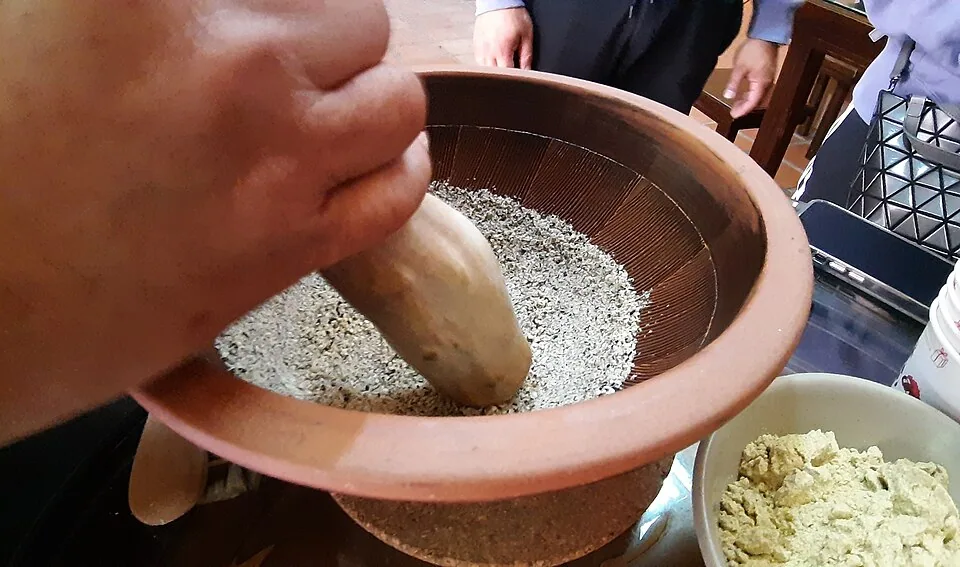
Walking into the old street in Beipu, Hsinchu, the air is always filled with the aroma of lei cha. It is the mellow flavor of sesame, peanuts, and tea leaves ground repeatedly in a stone mortar, as if allowing one to sense the weight of time. An elderly grandmother sits in front of an ancient wooden table, holding a pestle and grinding clockwise, an action that has been passed down for centuries in the Hakka community.
The formation of Hakka food culture is inseparable from the migration history of the Hakka people. During the long process of migration, the Hakka people had to learn how to survive in different environments and how to make the most of limited ingredients. This "living on the mountain by the mountain, living on the water by the water" survival wisdom shaped the basic characteristics of Hakka cuisine: "using local materials" and "making the most of resources."
Classic Dishes
Hakka cuisine is known for several representative dishes, each of which condenses specific historical context and local wisdom.
Lei Cha: A Millennium Heritage of Three-Life Soup
Lei cha, also known as "three-life soup," is said to have originated from the combination of "raw tea, raw ginger, and raw rice" in the Three Kingdoms period1. In the daily life of the Hakka people, lei cha is not only a drink but also a social medium and health-preserving food.
The traditional production of lei cha requires special mortars and pestles. The mortar is usually made of clay, with delicate lines on the inner wall; the pestle is mostly made of breadfruit wood or tea tree trunk, which is hard and has natural fragrance. When making, tea leaves, sesame, peanuts and other raw materials are put into the mortar, and the pestle is used to grind clockwise until all materials are integrated into a fine powder.
The lei cha culture in the Hsinchu area is particularly developed, from Lake Port, Zhudong to Beipu, every town has its own lei cha characteristics. The lei cha in Beipu Old Street is even a must-visit experience for tourists, many shops not only provide ready-made lei cha, but also open to tourists to experience the grinding process. The Hakka Affairs Commission's 2022 survey shows that lei cha has become the core experience item of Hsinchu County's Hakka cultural tourism.
With the changes of the times, lei cha has also had modern changes. After about 2015, Beipu Old Street appeared the innovative "iced lei cha", turning the traditional hot drink into a cool summer drink, and even launching a take-out cup version, letting this ancient drink walk out of the table and into the era of bubble tea.
Nutritional Value and Taboos
Lei cha is rich in protein, vitamin E and unsaturated fatty acids, with good nutritional value. However, since the main ingredients are nuts, the calories are relatively high, diabetic patients and people who are losing weight need to drink in moderation. Traditional lei cha is a hot drink without added sugar, maintaining the natural flavor of the ingredients.
Wild Ginger Flower Dumplings: Fragrant Memories in the Mountains
In the old street of Wufeng, Hsinchu County, there is a special kind of dumpling that is unforgettable - wild ginger flower dumplings. This mountain flavor condenses the dietary wisdom of the Hakka people living in harmony with nature.
Wild ginger (originated in India, introduced to Taiwan and widely naturalized), every summer when it blooms, the whole mountain area is filled with its fresh fragrance. The clever Hakka people discovered that the root of wild ginger, after drying and grinding into powder, not only has a unique fragrance, but also has good preservative effect. So they mixed wild ginger powder with mountain pepper, mountain wild mushrooms, Hakka pickled radish, black pork and glutinous rice to make filling, and then wrapped it with the broad leaves of wild ginger, and after steaming, it became this mountain delicious food.
The production process of wild ginger flower dumplings embodies the environmental protection concept of the Hakka people. The leaves of wild ginger are naturally non-toxic, used as wrapping materials not only environmental protection, but also can add natural fragrance to the dumplings. During the steaming process, the unique fragrance of wild ginger will penetrate into the glutinous rice, forming a unique flavor level.
The preciousness of this food lies in its seasonality and regional characteristics. The harvest season of wild ginger is limited, and it is mainly distributed in the medium and low altitude mountainous areas of Taiwan, which makes wild ginger flower dumplings become a rare delicacy that can only be tasted at a specific time and place.
Hakka Stir-Fry: The Ultimate Presentation of Folk Wisdom
Hakka stir-fry is the most representative home-cooked dish in Hakka cuisine, and it is also the dish that best embodies the Hakka people's concept of "frugality and thrift." The essence of this dish lies in "everything can be stir-fried, nothing is wasted."
Traditional Hakka stir-fry takes pork silk, tofu, celery, leek and bean sprouts as the main ingredients, but in fact, Hakka stir-fry has no fixed recipe. On the Hakka dining table, leftover vegetables, a small amount of meat, and various pickled products can all become the ingredients of stir-fry. This flexible and changeable cooking method embodies the creativity and wisdom of the Hakka people when facing limited resources.
Pickling Culture: The Magician of Time
The pickling techniques of the Hakka people are second to none. Pickled vegetables, salted mustard, salted pork, pickled radish and other pickled products not only extend the shelf life of food, but also create unique flavors.
Pickled vegetables are the product of mustard after pickling and fermentation, with a unique sour and salty taste, and are an indispensable ingredient in many Hakka dishes2. Salted mustard is the result of mustard drying and pickling, with a salty and fragrant taste, and is a classic combination with braised pork. Salted pork is the product of pork after salt curing and air drying, which can be stored for a long time and is an important source of protein for the Hakka people.
The development of these pickling techniques is closely related to the living environment of the Hakka people. In the agricultural society, how to preserve food without refrigeration equipment is an important survival skill. The pickling technology developed by the Hakka people not only solves the problem of preservation, but also creates a rich variety of flavors.
Dietary Philosophy
The Hakka dietary philosophy is not created out of thin air, but is the direct product of migration life and labor environment.
Salty, Fatty, and Fragrant: The Food Password of Laborers
Hakka dishes are known for their "salty, fatty, and fragrant" flavor, which directly stems from the agricultural labor environment of the Hakka people. The Hakka people are mostly engaged in agricultural labor, which requires a lot of physical consumption, so the diet tends to be heavy in taste and high in calories to supplement the salt and calories lost during labor.
"Salty" is to supplement the salt lost during labor; "fatty" is to provide high calories; "fragrant" is to stimulate appetite through various spices and seasonings, so that people can absorb enough nutrition. This dietary feature reflects the practical attitude of the Hakka people and their accurate grasp of physical needs.
Using Local Materials: Living in Harmony with Nature
The migration history of the Hakka people has given them strong adaptability. Whether settling in the mountains, plains or coastal areas, the Hakka people can make full use of local food resources and develop local characteristic dishes.
In the mountains, the Hakka people collect wild vegetables and mushrooms to make mountain dishes; on the plains, they make full use of crops to develop various rice food cultures; in coastal areas, the Hakka people also incorporate seafood elements to create different flavors.
Frugality and Thrift: The Ethics of Non-Wasteful Eating
The frugal character of the Hakka people also deeply affects their food culture. On the Hakka dining table, there is rarely any waste. Leftover dishes can be re-seasoned into another dish, bones can be cooked into soup, and vegetable leaves can be made into pickled vegetables. This "making the most of resources" concept is both a practical choice under economic pressure and a respect for food and natural resources.
Modern Inheritance and Innovation
Hakka food culture faces the dual challenges of inheritance interruption and market transformation in the 21st century.
Dialogue Between Tradition and Modernity
In modern society, Hakka food culture faces the challenges of inheritance and innovation. On the one hand, the younger generation's understanding of traditional Hakka dishes is gradually decreasing; on the other hand, Hakka dishes are also looking for new positioning in the modern catering market.
Many Hakka restaurants have begun to try to modernize traditional Hakka dishes, reduce oil and salt content, improve the appearance and presentation, and even incorporate elements of other cuisines. Although these changes have caused some disputes, they have also opened up new ways for the dissemination of Hakka food culture.
Tourist Culture: A Double-Edged Sword
The commodification of Hakka food culture brings both opportunities and challenges. Like Beipu's lei cha and Wufeng's wild ginger flower dumplings, they have become famous tourist experiences. On the one hand, this development has improved the popularity of Hakka culture; on the other hand, it may also lead to over-commercialization and lose the original cultural connotation.
How to find a balance between commercial development and cultural preservation is an important issue that the modern Hakka food culture development must face.
Cultural Significance and Value
The value of Hakka food culture is far more than the food itself. It is the carrier of the Hakka people's historical memory, the symbol of cultural identity, and the crystallization of traditional wisdom. In the era of globalization, these unique food cultures are even more precious.
The "salty, fragrant, and rich" flavor of Hakka dishes reflects the tenacious character of the Hakka people; the pickling culture embodies the life wisdom of the Hakka people; the lei cha culture shows the social traditions of the Hakka people. These food cultures not only enrich the food map of Taiwan, but also add important colors to Taiwan's diverse culture.
Through tasting Hakka food, we can not only enjoy the satisfaction of taste, but also feel the cultural heritage and life wisdom of an ethnic group. This is exactly the most precious value of Hakka food culture.
Extended Reading
- Taiwan Fermented Foods and Pickling Culture: The science and culture of Taiwan's pickled foods
- Tea Culture: The development context of Taiwan's tea culture
- Taiwan Snacks: Taiwan's diverse snack culture
Image Source
- Hero: Hakka lei cha experience at Minong Folk Village, photographed by WEI, WAN-CHEN, Wikimedia Commons, CC BY-SA 4.0.
References
Taiwan.md Editorial Team | Last updated: 2026-03-19
- National Cultural Memory Database, "Lei Cha Culture Special Topic", https://tcmb.culture.tw/zh-tw/detail?id=334448↩
- Ministry of Agriculture, "Development of Taiwan's Pickled Food Industry" (2025), https://www.moa.gov.tw/↩