
Source: Ministry of Foreign Affairs (2026), Taiwan Panorama official website (2026)
30-Second Overview: Taiwan Panorama is a monthly magazine published by the Ministry of Foreign Affairs, targeting international readers. It was founded in 1976 as Guanghua Pictorial, renamed Guanghua in 1978, and officially renamed Taiwan Panorama in 2006. Over half a century, it has centered on Chinese-English bilingual print editions, gradually expanding to Chinese-Japanese digital versions, Indonesian, Thai, and Vietnamese editions, and a searchable digital database. What it preserves is not just Taiwan’s landscapes and people, but a long-term record of how a society has changed and chosen to explain itself to the outside world. 1 2
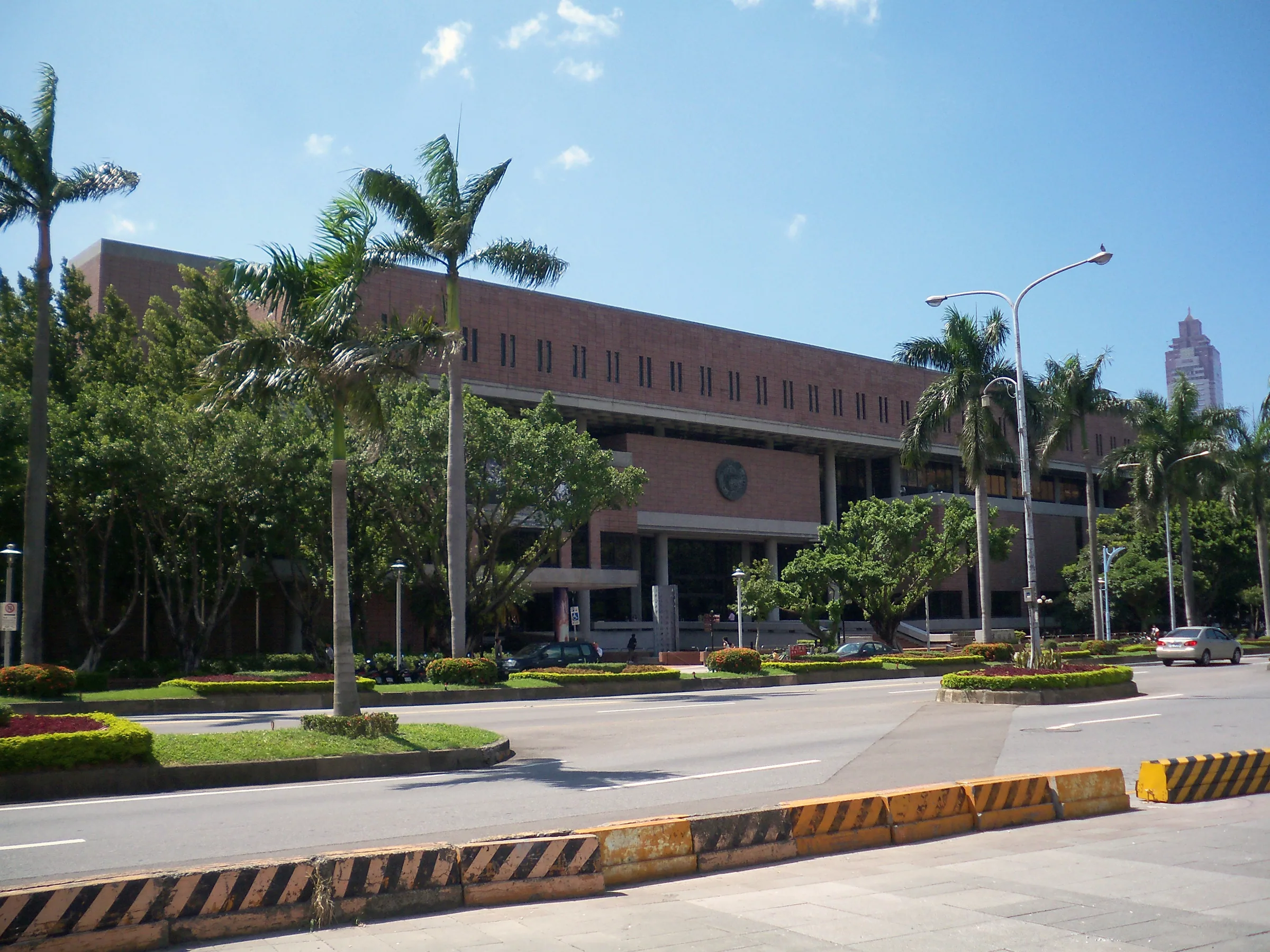
Exterior of the National Central Library. Photo by Xuan Shi-sheng, Wikimedia Commons, CC BY-SA 3.0; embedded via original file hotlink in this article. Image page: Wikimedia Commons.
📝 Curator’s Note
This article does not treat Taiwan Panorama merely as a magazine introducing Taiwan, but reads it through three overlapping roles: a foreign publication of the Ministry of Foreign Affairs, a cross-language medium for Taiwanese narratives, and a searchable archival record for future generations. This arrangement is chosen because official sources best confirm the publishing system and distribution methods, while academic research reminds us to ask how a foreign propaganda publication selects, organizes, and presents “Taiwan’s cultural images.” 3
One Name, Three Transformations
When founded in 1976, Taiwan Panorama was called Guanghua Pictorial. The name itself carried a clear mission: to introduce Taiwan’s national conditions and livelihood to overseas readers through images and text. In its 50th-anniversary review in May 2026, the Ministry of Foreign Affairs organized this history into three nodes: the 1976 founding, the 1978 renaming to Guanghua, and the 2006 official renaming to Taiwan Panorama. The surface of these name changes reflects updates to publishing brands, but deeper down, it reflects the reordering of relationships between readers, Taiwan, and the world. 1
A publication founded during the authoritarian period initially served to transmit messages outward; but as Taiwan experienced industrial changes, social opening, and democratization, simple “introduction” was no longer sufficient to contain the complexity of this island. The official summary of its 50-year history does not write Taiwan as a single upward curve of success, but points out that it simultaneously witnessed Taiwan’s transition from an agricultural society to a tech island, and recorded its transformation from authoritarianism to democracy. 1 Academic research treats Guanghua from 1976 to 2005 as texts of overseas propaganda publications, studying the cultural images of Taiwan they constructed; this provides another reading angle: the magazine not only reflects the times, but also participates in shaping how Taiwan is seen through its topic selection, photos, and translations. 3
| Time | Journal Name or Development | Readable Historical Position |
|---|---|---|
| 1976 | Guanghua Pictorial founded | Conveyed Taiwan’s national conditions and livelihood to overseas via images and text |
| 1978 | Renamed Guanghua | Expanded from pictorial foreign introduction to comprehensive reporting |
| 1984 | Launched first Guanghua series book Facing Contemporary Figures | Transformed magazine reports into publications for long-term preservation and reading |
| 2006 | Officially renamed Taiwan Panorama | More directly marked Taiwan’s subjectivity with the name Taiwan Panorama |
| December 2015 | Launched Indonesian, Thai, and Vietnamese editions | Responded to the needs of Southeast Asian readers and Taiwan’s regional exchanges |
| 2026 | 50th-anniversary review and digital transformation outlook | Moving from half-century archives to AI, new media, and deeper international reach |
Table 1: Compiled from the _Taiwan Panorama official website and Ministry of Foreign Affairs official press releases. 1 2_
“Soft Issues” Are Actually Not Soft
The Taiwan Panorama official website summarizes its content as “soft issues” such as tourism, culture, and local customs, while also listing major issues like environmental protection, care for vulnerable groups, technological development, and government policies. This classification is easily misunderstood as “only writing about the relaxed side of Taiwan,” but in reality, daily life, culture, and local experiences are often where social changes leave the most traces. 2
How a market was rebuilt, how a traditional craft was inherited, how a local festival faced commercialization, how a group of artists found their language on the international stage—these topics do not necessarily appear in the form of policy white papers, but allow readers to see how systems land in daily life. On the other hand, environment, technology, and public policy are not just hard news; they also require figures, scenes, and time to allow readers to understand the weight of abstract decisions on life.
Therefore, the editorial positioning of Taiwan Panorama is closer to a long-exposure photograph. News tracks the occurrence of events; it often pulls the lens back to observe how an issue enters a locality, how a policy changes people’s choices, and how a society adjusts itself amidst controversy. This is why the official website summarizes the journal as “witnessing Taiwan’s history,” rather than positioning it merely as a travel or culture magazine. 2
Bilingualism Is Not Decoration, But an Editorial Method
Taiwan Panorama is currently distributed in Chinese-English bilingual print and Chinese-Japanese bilingual web versions to over a hundred countries and regions; the official English page notes that readers include academic institutions, cultural workers, business people, overseas Taiwanese, and international readers interested in Taiwan. 2 This publishing structure means that articles must face two questions from the start: What do Taiwanese readers already know, and what do overseas readers need to be explained?
Translation is therefore not an add-on project after the article is completed. It inversely affects how the original text explains background, handles proper nouns, and balances between local vocabulary and cross-cultural understanding. For Taiwanese readers, an article can enter directly from shared experience; for overseas readers, the same place name, festival, or system may need historical context added. Bilingual juxtaposition forces editors to re-examine the parts “we thought everyone knew.”
The Indonesian, Thai, and Vietnamese editions launched in December 2015 pushed this cross-language publishing further. Official explanations state that the three versions are published as bimonthly issues and built digitally on the official website; the background relates to Taiwan’s Southward Policy, increasing Southeast Asian countries’ understanding of Taiwan, and presenting the aspects of Southeast Asian people’s lives in Taiwan. 2 The importance here lies not just in adding three languages, but in the changing imagination of readers: Southeast Asia is no longer just “the place where Taiwan needs to be understood,” but also becomes part of the internal stories of Taiwanese society.
| Edition | Format | Official Positioning or Function |
|---|---|---|
| Chinese / English | Monthly, Chinese-English bilingual print | Introducing Taiwan’s development and diverse faces to international readers |
| Chinese / Japanese | Chinese-Japanese bilingual web version | Extending digital reading and reaching Japanese-language readers |
| Indonesian / Thai / Vietnamese | Bimonthly, digital version | Responding to Southeast Asian exchange and reading needs of those living in Taiwan |
Table 2: Compiled from the _Taiwan Panorama official website Chinese and English versions. 2_
How a Magazine Became a Database
The weakness of a magazine is temporality: once published, it is easily covered by the next issue; the strength of a magazine is cumulativity: decades later, when readers look back, the photos, terminology, and interview subjects of that year become historical materials again. Taiwan Panorama tried early on to liberate individual reports from the lifecycle of the journal. The official website records that in 1984, the first series book Facing Contemporary Figures was launched, followed by more than thirty thematic series books covering international Sinology, indigenous culture, Taiwan’s flora and fauna, folklore, and cuisine. 2
The significance of series books lies in reorganization. Journals are organized by month; series books are organized by theme. The former allows readers to move forward with the times; the latter allows readers to find a context again years later. When a series of portrait reports is collected into a book, they are no longer just reading content for a specific month, but may become references for researching Taiwanese society, publishing history, and cultural change.
Digitalization further changed this mode of accumulation. The official English page states that Taiwan Panorama organized 300 issues and tens of millions of words into a digital database named “Treasures of Taiwan,” providing multiple search functions; the official Chinese version notes that users include the National Central Library, Academia Sinica, local cultural bureau libraries, and American universities. 2 The value of this project lies not just in turning print into files readable on screens, but in allowing articles scattered across different eras to be searched, compared, and recombined.
When a database can search for the same place name, industry, or cultural theme from different eras, a magazine is no longer just a product arriving in readers’ hands monthly, but becomes a foundational infrastructure for Taiwan’s memory that can be repeatedly studied.
This also brings an editorial responsibility: the easier data is to search, the more important the source and temporal position become. A report from the 1980s cannot be treated as current conditions without explanation. A term used back then also needs to be understood in its contemporary context. Digital preservation does not eliminate historical distance; rather, it gives editors and readers more opportunities to see that distance.
From Print Covers to Online Entrances
Today’s Taiwan Panorama website is no longer the table of contents page of a print magazine. The homepage and navigation divide content into sections such as “Global Vision,” “Arts and Culture Context,” “Industry Innovation,” “Island Journeys,” “Diverse Ethnic Groups,” and “Image Dialogue,” with additional sections for Cover Stories, Journals, Events, and Gender Equality. 4 This classification method retains the magazine’s curatorial sense, while utilizing the website’s immediacy to allow readers to read by topic, without having to start from a specific issue and flip sequentially.

National Central Library building. Photo by Solomon203, Wikimedia Commons, CC BY 3.0; embedded via original file hotlink in this article. Image page: Wikimedia Commons.
The website also allows “Journals” and “Special Topics” to coexist. Journals preserve the integrity of publishing cycles and cover editing. Columns allow the same topic to extend across issues, forming a continuously updated reading entrance. The 2026 “Guanghua 50 Old Photo Review” is a clear example: the official website looks back at arts and culture reports from different eras through the “Image Dialogue” format, from Orpheus Dance Theater, Cloud Gate Dance Theatre, Contemporary Legend Theater, Timol Gusin Dance Troupe to Ruan Theatre, marking photographers, original publication years, and article titles. 5
This review is not just turning the past into a nostalgic exhibition. It hands back to today’s readers the question of “how it was shot, how it was written, and who was written about” at that time. The dancers, theaters, and artists in the photos are both the cultural scene of that year and evidence of the gradual formation of Taiwan’s arts and culture system. When the official website juxtaposes original publication years with images, readers can see that culture did not appear suddenly, but accumulated through batches of performances, teams, and long-term reporting.
The Distance Between Official Publications and Real Taiwan
The publisher of Taiwan Panorama is the Ministry of Foreign Affairs; this point needs no evasion. The footer of the official website clearly states copyright belongs to the Ministry of Foreign Affairs and Guanghua Pictorial Magazine House. The Ministry of Foreign Affairs and its embassies and consulates also position it as an important window for the international society to understand Taiwan, noting that the Chinese-English bilingual print is distributed to over a hundred countries and regions globally. 1 2 6 This identity gives it an international communication network that other magazines may not possess, while also requiring readers to know: it is not an independent media outlet detached from state institutions.
Acknowledging the publishing background is not equivalent to pre-judging the conclusion of every article. The more important question is how the publication works between the role of official foreign publishing and the complexity of Taiwanese society itself. From the content scope listed by the official site, it presents not just tourism and culture, but also handles environment, vulnerable groups, technology, and government policies. 2 From the existing website sections, it juxtaposes global observation, arts and culture, industry, localities, ethnic groups, and images, allowing Taiwan to appear not just from the single angle of policy or tourist attractions. 4
The website’s architecture simultaneously retains the order of journal publishing and the entrance of online reading. Readers can return to the complete context of a specific issue from “Journals,” or read along topics from sections like “Global Vision” or “Island Journeys”; “Image Dialogue” places photography and historical memory on the same page. For a long-term publication, this design allows the latest articles to retain immediacy, while giving old articles the opportunity to be rediscovered. 4
Source: Taiwan Panorama official website Chinese version About and Homepage (2026)
A publication introducing Taiwan to the world is most prone to the danger of organizing Taiwan into an image without cracks: food, landscapes, technology, democracy—each is true, but if only the demonstrable results remain, readers cannot see how those results were contested, corrected, and paid for. The value of long-term publications lies precisely in the opportunity to put highlights back into time, figures back into systems, and local stories back into larger social changes.
Therefore, the best way to read Taiwan Panorama is not just to ask “what did it say for Taiwan,” but also “where did it choose to start speaking.” A cover, a portrait report, a set of old photos will all reveal what a certain era thought was worth seeing. Half a century later, these choices themselves become part of Taiwan’s history.
The Next Half Century: From Preservation to Re-narration
2026 marks the 50th anniversary of the founding. The Ministry of Foreign Affairs held the “Witnessing Transformation, Sharing the Light of the World” review event at the Taipei International Book Fair, turning past covers, photos, and reports into a walkable timeline of Taiwan. The official press release simultaneously pointed the future direction toward digital transformation, AI technology, new media forms, and deeper international reach. 1 This direction has two layers of meaning. The first layer is technical: how to make existing images, text, video, and databases easier to search, understand, and use. The second layer is narrative: when readers’ methods of acquiring information shift from flipping print to searching, recommending, short videos, and generative AI, how can Taiwan ensure its story is not only seen, but correctly placed in context?
AI can organize tens of millions of words of archives faster, but cannot alone decide which differences need to be preserved. It can help find reports on the same figure across different eras, but cannot replace editors in judging whether a term carried power relations at that time, nor automatically distinguish whether a photo is a news record, a propaganda composition, or a later memory. The true sign of mature digitalization is not that data is moved online, but that the data’s source, time, context, and limitations are preserved together.
For Taiwan Panorama, the most worthy expectation for the next stage may not be putting down the print completely, but allowing the depth of print and the searchability of the website to benefit each other. A magazine can provide the editorial perspective of an era; a database can allow readers to traverse different eras; a multilingual website can bring Taiwan’s stories into more people’s lives. Only together do these three constitute a complete public cultural role.
Half a century ago, Guanghua Pictorial tried to send Taiwan to the world. Today’s Taiwan Panorama is still doing the same thing, only “the world” is no longer just a few overseas distribution points, but search engines, databases, social platforms, academic institutions, and every person currently seeking Taiwan. What it truly preserves is not just how Taiwan is introduced, but how Taiwan, in every renaming, edition change, translation, and digital turn, re-decides what face it wants to be understood by.
Article Data Sheet
| Item | Verifiable Data Used in This Article |
|---|---|
| Publishing Background | Published by the Ministry of Foreign Affairs; footer lists Ministry of Foreign Affairs and Guanghua Pictorial Magazine House |
| Founding and Renaming | 1976 Guanghua Pictorial; 1978 Guanghua; 2006 Taiwan Panorama |
| Print and Digital | Chinese-English bilingual print, Chinese-Japanese bilingual web. Also Indonesian, Thai, Vietnamese digital editions |
| Content Scope | Tourism, culture, local customs, environmental protection, care for vulnerable groups, technology, government policies, etc. |
| Digital Assets | 300 issues, tens of millions of words established “Treasures of Taiwan” database |
| Current Website Sections | Global Vision, Arts and Culture Context, Industry Innovation, Island Journeys, Diverse Ethnic Groups, Image Dialogue, etc. |
| 50th Anniversary Node | 2026 official review exhibition and digital transformation outlook |
Further Reading
- Taiwan Panorama Official Website: Browse current sections, journals, and multilingual entrances.
- Guanghua 50 Old Photo Review — Arts and Culture Section: Look back at half a century of arts and culture reports through images and original publication info.
- Taiwan Academic Journals Integrated Database: _Cultural Images of Taiwan in Overseas Propaganda Publications_: Understand how Guanghua became a text for overseas propaganda and cultural image research.
Image Sources
- Hero: National Central Library exterior, free license image hotlink, photo by Xuan Shi-sheng, Wikimedia Commons, CC BY-SA 3.0.
References
Data verification date: 2026-08-27. Images in this article are directly hotlinked via original remote URLs of Wikimedia Commons free license files, without re-hosting.
- Ministry of Foreign Affairs: Minister Lin Chia-lung Attends Taiwan Panorama 50th Anniversary Celebration “Witnessing Transformation, Sharing the Light of the World” — MOFA 2026 official press release, verifying 1976 founding, 1978 renaming to Guanghua, 2006 renaming to Taiwan Panorama, and explaining the journal’s recording of Taiwan’s social transformation and future digitalization direction.↩23456
- Taiwan Panorama: About Guanghua — Taiwan Panorama official Chinese version introduction, explaining content scope, print and web versions, three Southeast Asian language editions, Guanghua series books, and digital database publishing info.↩234567891011
- National Central Library Taiwan Academic Journals Integrated Database: Hsiu-fen Lin Cultural Images of Taiwan in Overseas Propaganda Publications—Focusing on the Guanghua Magazine (1976-2005) — Master’s thesis from the Department of History, National Taiwan Normal University, published 2011, 252 pages; using Guanghua from 1976 to 2005 as research text, supplementing official evolution data from the perspective of overseas propaganda and cultural images.↩2
- Taiwan Panorama Official Website Homepage — Current official website homepage, presenting cover stories, journals, events section, gender equality section, and six exploration sections website info architecture, also listing Chinese, English, Japanese, Indonesian, Thai, and Vietnamese language entrances.↩23
- Guanghua 50 Old Photo Review — Arts and Culture Section — Official 50th anniversary image review special article, marking photographers, original publication years, and article titles of past arts and culture reports, concretely presenting how magazine archives are re-curated on the website.↩
- Taipei Economic and Cultural Office in Atlanta: Recognizing Taiwan: Taiwan Panorama Magazine — Official introduction from the Ministry of Foreign Affairs’ overseas offices, verifying founding in ROC Year 65 (1976), Chinese-English bilingual print, distribution to over a hundred countries and regions globally, and free electronic journal reading on the official website.↩