
30-second overview: In November 2011, Cheng Wen-chi launched an online writing project in Taipei called "No Man's Land." It had no print edition, no advertising, and no subscription fee. Twelve years later, it had accumulated 56 themed issues, 384 articles, 31 podcast episodes, and 10 volumes of the Nusantara Archive1. Among Chinese-language art-criticism platforms of the same period with the same three conditions, "no print-media parent body + no physical space + driven by an individual editor-in-chief," there is no comparable case that survived across the same period. It endured through the precise layering of three forms of quiet infrastructure: ET@T and the Digital Art Foundation absorbed hosting and legal-person status, public-sector bodies such as the National Culture and Arts Foundation punctuatedly filled issue-based project content, and Cheng Wen-chi personally covered the remaining gap over 12 years. Many invisible things in Taiwan's art world are sustained this way.
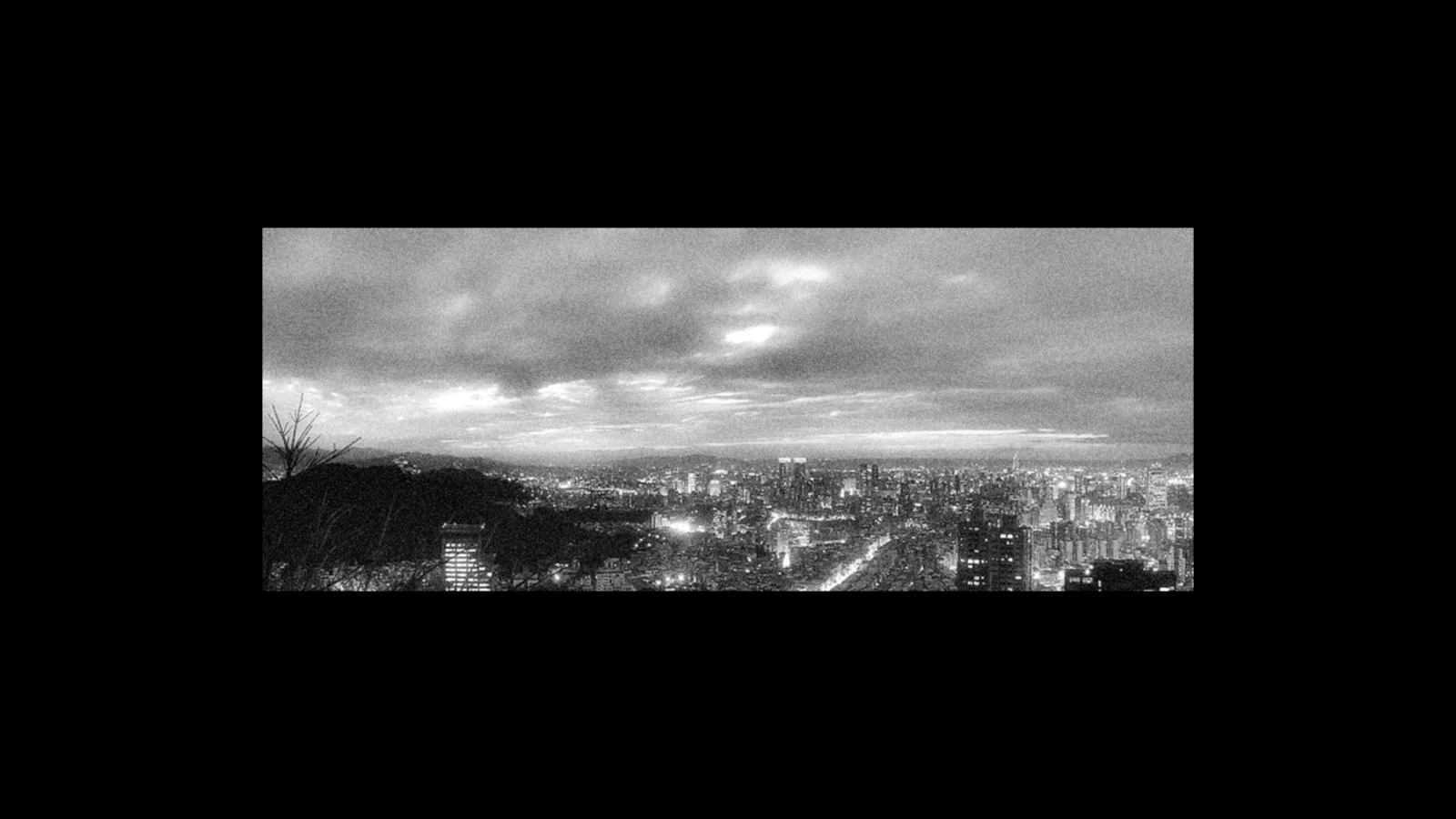
In November 2011, the cover of No Man's Land's trial issue "Ocular Bonds." Cover design: Huang Wen-hao, chair of the Digital Art Foundation and executive director of the Taipei Digital Art Center since 2008. Fair use editorial commentary on the operation of the No Man's Land platform. Source: heath.tw.
A Magazine No One Paid to Buy
In November 2011, in the studio of an old-media institution in Taipei called "ET@T," Cheng Wen-chi released the trial issue2. The cover was a black-ground, white-text digital grid. Its subtitle was "Ocular Bonds"; the masthead designer was Huang Wen-hao, with Wu Chia-hsuan as assisting editor3. The trial issue included six articles. The first was Cheng Wen-chi's own interview with the British art group Blast Theory. The second was Wang Po-wei's "A Body Without a Soul" on Pierre Huyghe. The third was Chiu Chih-yung's parsing of the "Trans-" exhibition at that year's Taipei Digital Art Festival4.
This trial issue had no printed copies, no advertising slots, no subscription fee, and no membership system. It was simply a WordPress site at heath.tw. "Heath" came from Cheng Wen-chi's English name, Rikey Tēnn, recomposed from Hanyu Pinyin5. A small line at the bottom of the website read: "No Man's Land © maintained by ET@T, 2011-2020." ET@T was responsible for hosting and domain maintenance2.
Cheng was not a newcomer at the time. Since 2007, he had written criticism and translated international discourse for print magazines such as Artco Monthly, Artist, and Artitude, and had served as Chinese-language editor-in-chief of the National Taiwan Museum of Fine Arts' "Taiwan Digital Art Knowledge and Creation Circulation Platform"6. In other words, when he founded No Man's Land in 2011, he had already stood firmly within mainstream print media for four years. A person already established in the mainstream for four years choosing to leave that mainstream structure to build a new platform is completely different from the situation of an "outside writer looking for an outlet."
📝 Curator's Note
To see whether an online platform with no business model can survive, one has to ask whose shoulders it stands on, rather than looking at traffic or advertising. NML stood on three sets of shoulders: ET@T, founded in 1995; the Digital Art Foundation, founded in 2008; and the Taipei Digital Art Center, founded in 2009. All three are institutions within the genealogy of Taiwanese new media art led by Huang Wen-hao7. NML was therefore always an extension of this genealogy into the "discourse-production layer"; it was never an isolated personal blog. Only by understanding this genealogical structure can one understand why it survived, but also why it was "peripheral."
Three Layers of Quiet Infrastructure
NML's 12-year survival was built from three stacked subsidy structures. Remove any one layer and it would collapse.
First layer: the institutional parent body. The Digital Art Foundation was established on 2008-09-18, with Huang Wen-hao as chair; the Taipei City Department of Cultural Affairs commissioned the foundation to operate the Taipei Digital Art Center, or DAC, beginning in 20097. DAF was also one of the three bottom partners listed in the footer of NML's trial issue2. The concrete division of labor was this: ET@T handled NML website hosting and domain maintenance; the Digital Art Foundation, or DAF, provided legal-person status as the application window for public-sector subsidies; and the Taipei Digital Art Center, or DAC, later became the co-publishing unit for the independent publication of the Nusantara Archive8. This triangular structure resolved three legal and administrative problems that would have blocked an ordinary blog writer: how an online platform issues invoices, who serves as the applicant for subsidy cases, and which unit publishes physical books.
Second layer: punctuated public-sector project subsidies. The National Culture and Arts Foundation's subsidy-results archive leaves two pieces of quantifiable evidence. In the first year of the Nusantara Archive, from 2017-05 to 2018-04, NT$350,000 was awarded; the applicant was the Digital Art Foundation, under the 2017 Regular First Period "Arts and Cultural Environment and Development" category, in the "Arts and Cultural Think-Tank Application Project" item9. In the second year, from 2018-05 to 2019-04, NT$400,000 was awarded; the applicant was again DAF, under the 2018 Regular Second Period "Arts and Cultural Environment and Development" category, in the "Professional Service Platform" item10. The two years totaled NT$750,000. Set against NML's 12-year accumulation of 384 articles, this averages to less than NT$2,000 per article as an "allocated subsidy." This figure matters: it proves that the subsidy was punctuated funding, that is, single-issue project content funding, rather than a sustained operating budget. In other words, subsidies could only cover the costs of a single themed issue and invited residencies. They could not cover the fact that "someone edited every month for 12 years."
Third layer: the editor's personal labor over 12 years. From statistics on the full NML corpus, one can see that among 384 articles, Cheng Wen-chi wrote 44 himself, but edited 310, or 88%1. Another 31 articles have no editor field, being early articles; the remaining 12% were divided among guest editors such as Takamori Nobuo, with 10 articles; Hsu Fang-tze, with 7; Hsu Shih-yu, with 5; and Wu Ting-kuan, with 411. An 88% concentration of editing means that over 12 years, the fact-checking, finalization, upload, pushing authors to send final drafts, collaboration with translators, and selection of cover images behind almost every article were all absorbed by Cheng alone. This layer cannot be covered by subsidies, because NCAF subsidies are awarded for "single-issue themes," not for "12 years of editor-in-chief labor hours."
NML could not have survived without any of these layers: without the first layer, the institutional parent body, it could not have issued invoices, applied for subsidies, or published physical books; without the second layer, public-sector funding, there would have been no one to pay for residencies, commissions, and translation costs for each themed issue; without the third layer, the editor's personal labor, there would have been no one every afternoon fixing authors' footnotes and running SEO.
Why "Peripheral" Is a Choice of Position, Not a Passive Condition
In its ABOUT statement, NML wrote a sentence that remained unchanged for 12 years: "at the peripheral zone of contemporary art, technology, performance, narrative, and imagination"12. Beneath it, it added a methodological definition: "the creative connection and circulation among the internet, texts, and communities" as its mode of practice.
The word "peripheral" deserves to be unpacked. It is not a complaint that "I have been marginalized," but a highly conscious choice of position. Against Taiwan's art mainstream, meaning biennials, the National Taiwan Museum of Fine Arts, and commercial galleries, NML stood at the periphery. Against the international art mainstream, meaning New York, Berlin, and Paris, Taiwan itself was already peripheral. Against the mainstream of Southeast Asian discourse, meaning Singapore and Indonesia, Taiwan was a periphery at the northeastern end of the Malay Archipelago13. Periphery is NML's concrete posture of simultaneously refusing three centers.
This choice of position structurally affects the question of "why it survived": the cost of survival at a peripheral position is lower than at a central one. A platform that does not compete for mainstream subsidies, does not mount large exhibitions, does not publish a physical print magazine, and does not rely on commercial advertising can have a very low annual spending floor. The cost per article is only editorial time, translators' fees, and occasional residency-invitation travel. When it competes with other centralized platforms for the same pool of readers' attention, it may end up losing; but compared with competitors in the same position, the threshold for survival is "whether one is willing to keep going," not "whether one can make money."
💡 Did you know?
Among Chinese-language art-criticism platforms from the same period operating with all three conditions, "purely online + driven by an individual editor-in-chief + no commercial parent body," there is no comparable case that survived across the same period. Commercial platforms such as ARTouch by Artco, artouch.com, are sustained by a 30-year print-media parent body, including multiple print magazines such as Artco Monthly and Art & Collection, plus a bookstore e-commerce business14. Collectively founded platforms such as VT Artsalon, founded in 2006, relied on rotating multiple people and a physical space, but dissolved in 2023 after a #MeToo incident15. Veteran alternative spaces such as ET@T, founded in 1995, saw their pure-content production shrink after 2000; archive.etat.com remains online, but no longer produces new criticism16. NML is the lone case that combined all three conditions, "no print media + no physical space + individual editor-in-chief," and still lasted 12 years.
The Line from Taipei to Kuala Lumpur
The earliest concrete instantiation of NML's choice of a "peripheral" position was Issue 12, "Twinning the Wastelands," in November 2013. Curated by Cheng Wen-chi, with a masthead by the German artist Lars Hayer and assistance from the Kuala Lumpur art collective R.A.P., or Rumah Air Panas, "House of Hot Water," the issue included two interviews with Malaysian artists, Yap Sau Bin and Tan Wei Kheng, written by the Malaysian Chinese critic Chai Chang Hwang17.
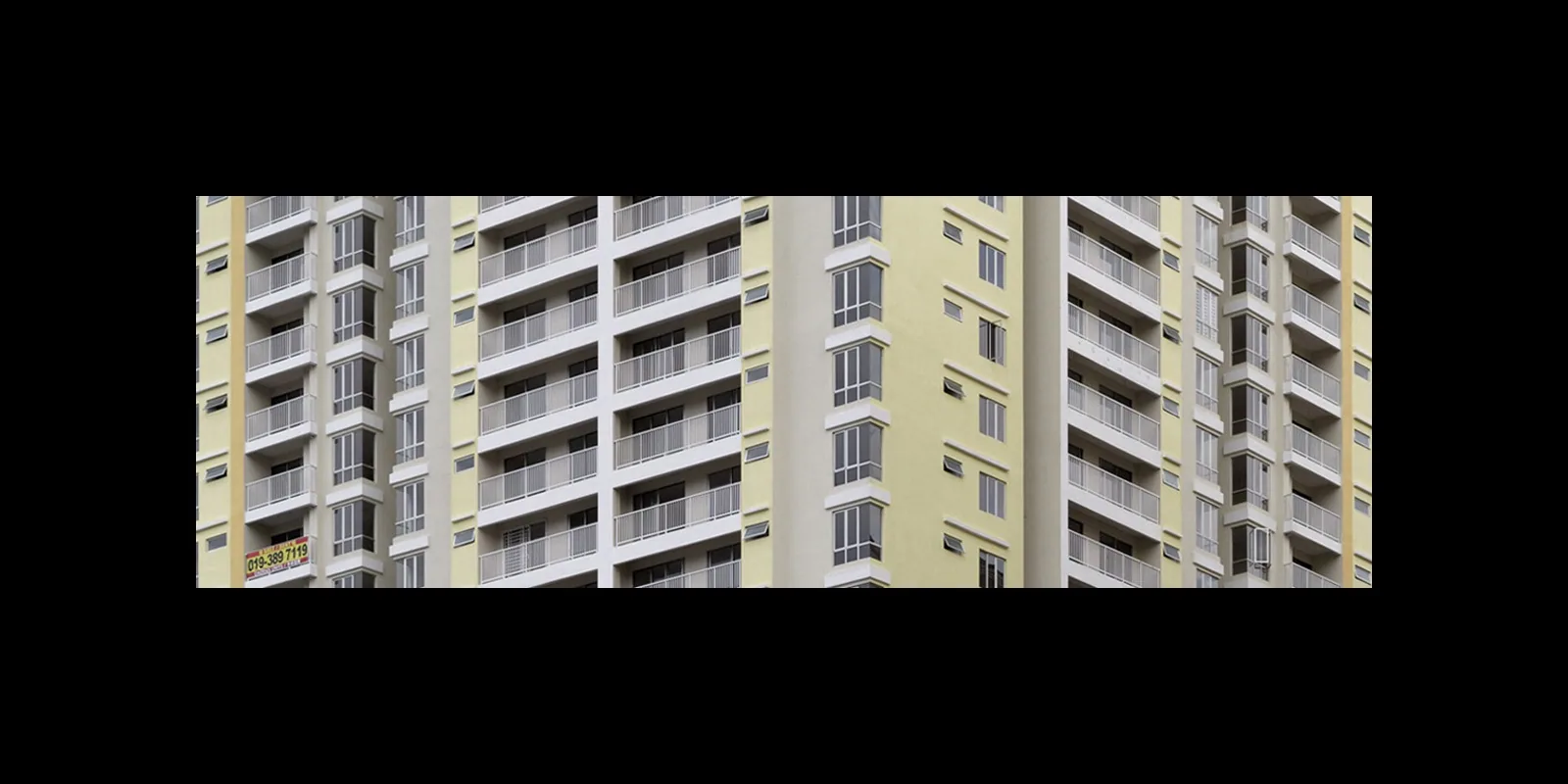
In November 2013, No Man's Land Issue 12, "Twinning the Wastelands," in dialogue with the Wasteland Twinning Network project of the Kuala Lumpur art collective R.A.P. Cover design: Lars Hayer. Fair use editorial commentary. Source: heath.tw.
R.A.P. began as an independent Kuala Lumpur space in 1997. Yap Sau Bin and Chai Chang Hwang were founding members; it later shifted into a project-oriented art collective18. The editor's preface to "Twinning the Wastelands" is circuitous but precise:
"This issue's special topic, 'Twinning the Wastelands,' is less a claim or proposition about art than an online action; it is like a naming ritual that attempts to bridge two 'wastelands.' On one side of the bridge is an online medium often in a state of flux... On the other side is a group of artists wandering over ruins."17
This was NML's first formal dialogue with Malaysia, a full four years before the Nusantara Archive in 2017.
⚠️ A Blind Spot in the Common Account
Many readers in the art world directly link NML's "Southern perspective" to the Nusantara Archive in 2017, seeing that as NML's moment of "turning." But this account reverses the causality. NML had already been moving in Malaysia since "Twinning the Wastelands" in 2013. The Nusantara Archive was in fact a discursive naming after six years of accumulation. In his editor's note for Issue 34, "Hermeneutics of Nusantara," in September 2017, Cheng himself described Nusantara through a "meta-textual vision":
"Although 'Nusantara' is a proposal composed of the 'island' (nusa) centered on medieval Java and the 'other' (antara)... it can be said to embody a 'meta' textual vision like that of 'No Man's Land.'"19
The sentence is somewhat circuitous. But it is a sentence that could only be spoken by a curator after six years of work.
In 2014, NML did another thing: together with the Philippine curator Dayang Yraola, it launched "Project Glocal: Asian City Streaming," inviting three Southeast Asian artists from the Philippines, Malaysia, and Indonesia to Taipei for a one-month residency. In June, it held a forum in Taipei, where Cheng Wen-chi, the Philippine artist Mannet Villariba, and Dayang Yraola appeared in conversation. The organizers were listed as NML + Artitude Magazine20. At that time, NML had not yet launched the Nusantara Archive imprint, but the seeds of transnational residencies had already been planted.
From 49 to 5: A Curve of Contraction
From the curve of NML's annual article output, one can see a very clear arc:
2011:  11  ████
2012:  43  ███████████████      ← launch phase
2013:  39  ██████████████
2014:  30  ███████████
2015:  29  ██████████
2016:  49  █████████████████    ← Project Glocal internationalization peak
2017:  41  ██████████████       ← first year of the Nusantara Archive begins
2018:  29  ██████████
2019:  28  ██████████
2020:  31  ███████████          ← pandemic period begins second podcast production line
2021:  28  ██████████
2022:  21  ████████             ← 14 articles merged into podcast
2023: 5 ██ ← major contractionThis curve says three things:
1. The two peaks correspond to two shifts in identity. The 43 articles in 2012 were the burst in which NML expanded from trial issue into main publication. The 49 articles in 2016 were the maturation of NML's transnational streaming network after three years of Project Glocal accumulation. The 41 articles in 2017 were the discursive burst when the first year of the Nusantara Archive began. All three peaks correspond to the evolution of NML's own structure.
2. The 31 articles in 2020 are inflated. During the pandemic that year, NML launched a second production line, the Nanyang Radio podcast, and from 2020 onward NML accumulated 31 podcast episodes1. Editorial focus began to move from articles to audio. The fall to 21 articles in 2022 corresponds exactly to the signal that podcasting had taken over.
3. The 5 articles in 2023 are signal, not noise. That year, NML editor-in-chief Cheng Wen-chi shifted his work focus to the independent publication of the Nusantara Archive, which from 2017 to 2024 had cumulatively issued 10 imprint volumes containing more than 40 bilingual Chinese-English documents10. At the same time, he developed a lecture series around Volume DAO, blockchain, and the "Global South"22. In other words, the contraction of NML articles did not occur because no one was reading the platform, but because the editor-in-chief's personal energy was diverted to the imprint and cross-platform lectures.
📝 Curator's Note
An 88% concentration of editing is a double-edged sword. One side is that over 12 years, it produced an extremely consistent discursive depth: the four frameworks of Nusantara, periphery, decolonization, and circum-Pacific functioned like stable base vectors. The other side is the ceiling of a single perspective: the voices of younger-generation women curators were relatively few, and Indigenous issues were basically absent. When a platform's editorial philosophy comes entirely from one person, its mature phase synchronizes with that person's maturation, but its phase of fatigue also synchronizes. As NML entered its 13th year, Cheng Wen-chi's personal energy shifted toward the imprint and new themes, and the article production line contracted with it. This is in fact a concrete instantiation of the structural fact that "a curatorial platform with an individual style synchronizes with that person's life cycle."
What the Name "Digital Wasteland" Is Actually Saying
NML's trial issue preserved a self-description in its permanent footer:
"The wasteland concerns the temporality of online clustering, roaming, fissuring, and mutability. Everything that takes place on the digital wasteland is precisely the reality and unreality witnessed in the era of meta-media."2
Unpacked, this passage says: "wasteland," or no man's land, is a spatial metaphor, an intermediate zone occupied by no one, passed through by those in motion, and not properly named by any power. "Digital" is the temporal framework: in the era of meta-media, images, information, and discourse all circulate through fissure and mutability. "Online clustering" is the mode of gathering: not through official venues and not through commercial e-commerce, but through the provisional assembly of dispersed online link nodes.
This self-description resembles something else. It resembles the temperament of the "g0v" civic-tech community, which a group of Taiwanese netizens assembled on PTT in August of the same year, 2011[^23]: neither applied to official authorities, nor wrote documents to supervisory agencies, nor issued press releases, but connected things through person-to-person links of "I do this, you do that." The difference is that g0v worked on open government data, while NML worked on contemporary-art discourse. Structurally, however, both are different instantiations of "that wave of Taiwanese civic online clustering in 2011." Beyond its function as art criticism, NML is also the art-world version of the cultural temperament in 2010s Taiwanese online communities that "things can be assembled without organization."
From Cheng Wen-chi's early writing history, this temperament can be traced. Beginning in 2007, he wrote criticism for print magazines such as Artco Monthly and Artist, but his decision to build a new platform in 2011 was not because print media would not accept him. It was because the editorial frame of print media could not hold what he wanted to do. The editorial logic of the print magazine Artco Monthly was "a theme for each issue + fixed deadlines + fixed page length + a defined readership + advertising ROI." NML's editorial logic was "decide each issue's theme oneself + flexible deadlines + no word-count ceiling + not knowing who the readers are + no advertising." The latter gave up commercial constraints, but it could hold what print media could not: writing as circuitously as one liked, citing as obscure a body of Southeast Asian Malaysian Chinese literature as one liked, and linking to as distant an art collective as one liked in Kuala Lumpur.
In other words, NML's choice of a "peripheral" position was not an abstract posture, but a concrete evasion of the commercial constraints of print media. The cost was that it could never make money on its own. The reward was that over 12 years, it wrote 384 articles that print media could not have written.
The Magazine No One Paid to Buy 18 Years Earlier
To understand why NML could exist, one can look back to another magazine no one paid to buy, 18 years earlier.
In 1993, when Wang Fujui was still in university, he founded Taiwan's first experimental-music label and publication, "NOISE." It had not only articles, but also cassettes and CDs, and released a series of compilations called Noisenet that connected Taiwanese and international noise creators23. NOISE magazine continued until its final issue in 1997. In that issue, Wang went to California in the United States to interview experimental-music creators, personally visiting their studios for interviews24.
In 2000, Wang Fujui, Huang Wen-hao, Ku Shih-yung, and Chang Tzu-fu jointly founded ET@T's "Media Lab," the subunit of what would later become NML's hosting institution25. In other words, from Wang Fujui's NOISE magazine in 1993 to Cheng Wen-chi's No Man's Land in 2011, there is a bloodline: Wang's NOISE was the print-media prototype of "individual editor-in-chief + outside the system + purely niche discourse," and ET@T, which he later joined, was NML's hosting parent body. What NML was doing was the online expanded version of the NOISE model 18 years later: the same core temperament, individual editor-in-chief, outside the system, niche discourse, running at WordPress scale.
This bloodline explains one thing: why Taiwan's art world could grow a platform like NML. Before NML appeared in 2011, the genes of "alternative media + niche discourse" had already accumulated from ET@T in 1995 and Wang Fujui's NOISE in 1993. In 2011, they encountered WordPress, Web 2.0, NCAF arts-and-cultural-environment subsidies, and Cheng Wen-chi, an editor willing to spend 12 years doing this work. The ignition happened at precisely that point.
✦ Closing Warning
A platform with no business model can survive for 12 years through the precise layering of three forms of quiet infrastructure: an institutional parent body absorbing basic costs, public-sector projects filling issue-based content, and the editor's own 12 years of labor covering the remaining gap. Remove any one of the three legs and it collapses.
Many invisible things in Taiwan's art world are sustained this way: by some university student publishing the first issue of NOISE in his own room in 1993, then that group of people founding ET@T in 1995, then that foundation being established in 2008, then that trial issue being released in 2011. No step was loudly announced, but connected together they form 30 years of soft infrastructure.
As it entered its 13th year, it began to contract. The reason was not the platform's aging, but that when a platform's soul comes entirely from one person, and that person starts to grow tired and to want to do other things, the platform turns with him. This does not count as failure; it is a concrete instantiation of "a curatorial platform with an individual style synchronizes with that person's life cycle."
The next time you read an old article from 2013 on heath.tw, remember that behind it are three layers of institutional parent body, two public-sector subsidies, and one editor's unchanged morning shift for 12 years. It was sustained by quiet infrastructure, not by miracle.
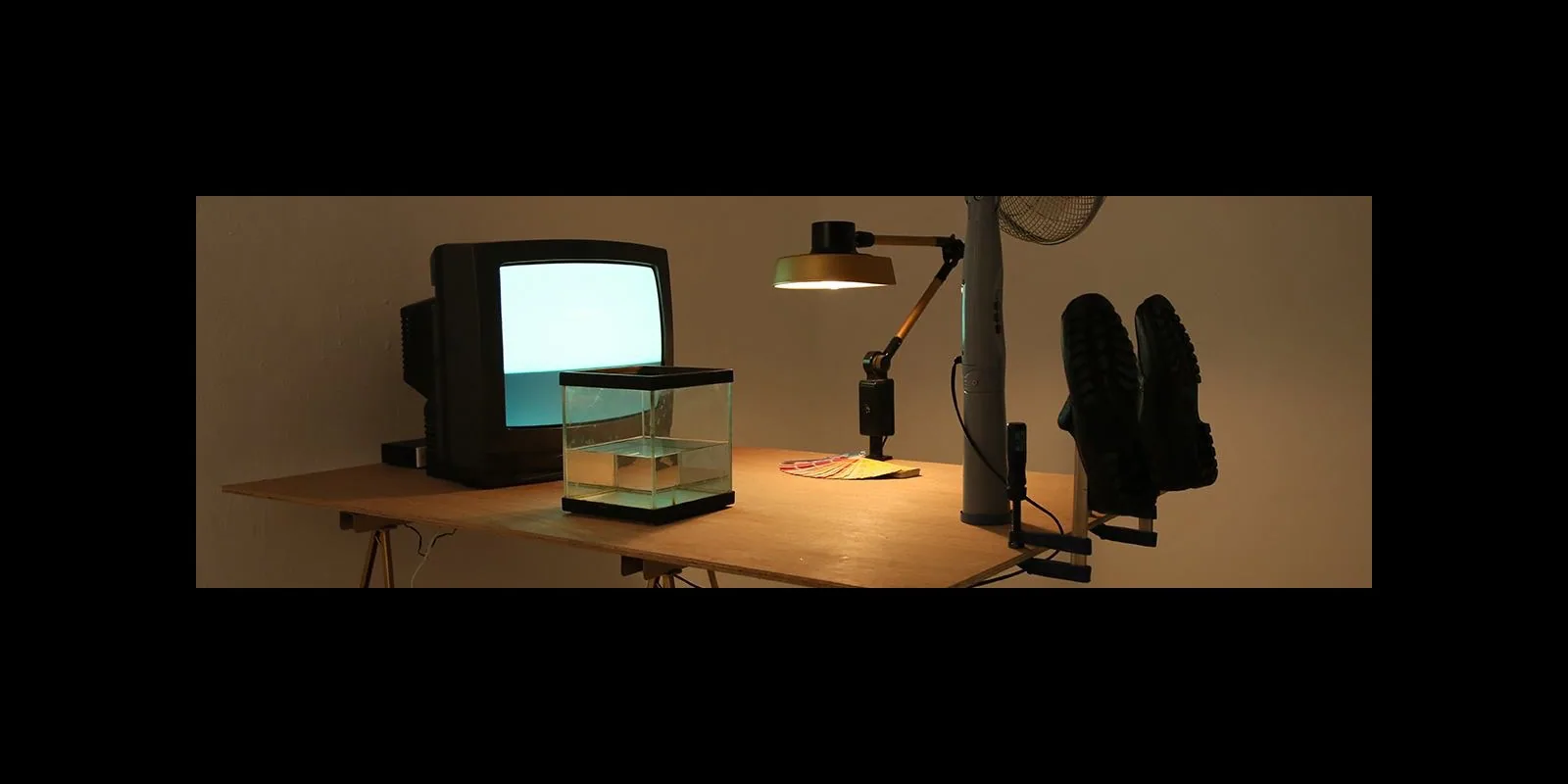
In September 2017, No Man's Land Issue 34, "Hermeneutics of Nusantara," a first-year review of the Nusantara Archive. Fair use editorial commentary. Source: heath.tw.
Further Reading
- Cheng Wen-chi — the No Man's Land editor-in-chief's 12-year Nusantara practice: from Artco contributing writer to initiator of the Nusantara Archive
- Contemporary Art — a map of Taiwanese contemporary-art discourse, and No Man's Land's position as a curatorial platform with a Southern perspective
- Taiwanese New Media Art — Taiwan's new media genealogy from ET@T, founded in 1995, to the Digital Art Foundation, founded in 2008
- Wang Fujui — founder of NOISE magazine in 1993, the print-media prototype editor of Taiwanese experimental music, connected by bloodline to No Man's Land's hosting parent body
- Taiwanese Curators and the Construction of Art and Culture — a genealogy of Taiwanese curators, with Cheng Wen-chi as a case of a "transnational residency curatorial network"
Image Sources
This article uses 3 NML issue cover images cited within the scope of fair use editorial commentary, all cached at public/article-images/art/ to avoid hotlinking to source servers. It cites cover images from 3 issues among the 384 articles accumulated by the NML platform over 12 years, less than 0.8%, for the purpose of "editorial commentary on the NML platform's 12-year operation." Licensing basis: 17 U.S.C. § 107 + Article 65 of Taiwan's Copyright Act, the four factors of fair use: noncommercial educational nature, published works, small proportion cited, and no substantial substitution effect on the market.
- Trial Issue: Ocular Bonds cover — 2011-11, cover design: Huang Wen-hao, chair of DAF. Fair use editorial commentary on the No Man's Land platform / nml-trial-issue-hero-2011.jpg, padded to 1600×900 from the 1023×399 original to fit the hero aspect ratio
- Issue 12: Twinning the Wastelands cover — 2013-11, cover design: Lars Hayer. Fair use editorial commentary / nml-twinning-wastelands-inline-2013.jpg, padded to 1600×800 from the 1200×400 original
- Issue 34: Hermeneutics of Nusantara cover — 2017-09. Fair use editorial commentary / nml-hermeneutics-nusantara-inline-2017.jpg, padded to 1600×800 from the 1200×400 original
References
- No Man's Land 數位荒原 corpus statistics — canonical scale of the full corpus: 56 ISSUEs / 384 ARTICLEs / 31 PODCAST episodes / 74 ANNOUNCEMENTs / 3 NAVIGATOR entries / 7 landing pages, for a total of 555 items. The corpus statistics in this article come from Taiwan.md's complete 2026-05-04 ingestion (
data/NML/raw/manifest.json+articles-meta.json). NML licensing terms: "Users may freely share articles included on this site according to this principle, while indicating the author's name, the reprint source 'No Man's Land,' and the direct link to the webpage."↩23 - No Man's Land 數位荒原 Trial Issue: Ocular Bonds trial issue (2011-11) — the trial-issue page, including the "No Man's Land © maintained by ET@T, 2011-2020" footer + three bottom partners, ET@T etat.com, Digital Art Foundation dac.tw, and Project Glocal projectglocal.heath.tw + the permanent self-description: "The wasteland concerns the temporality of online clustering, roaming, fissuring, and mutability."↩234
- Editorial team of the No Man's Land trial issue — planning: Cheng Wen-chi / masthead: Huang Wen-hao / assistance: Wu Chia-hsuan. The trial issue's subtitle "Ocular Bonds 網膜連線" opens with: "Between us and the world lies a thin retina, or a screen."↩
- List of 6 articles included in the No Man's Land trial issue — includes Cheng Wen-chi's "Can Games Change the World? An Interview with Blast Theory's Nick Tandavanitj" (2011-11-21), Wang Po-wei's "There Is No Safe Zone Anymore: The Question of the Soul in Huyghe et al.'s A Body Without a Soul" (2011-11-06), Chiu Chih-yung's "The Predicaments and Contradictions of Taiwan's Development of Digital Art as Seen from the 2011 Digital Art Festival" (2011-11-06), Wu Yi-hua's "On Blast Theory's A Machine to See With" (2011-11-06), Wang Sheng-hung's "Micro-City in Motion: On Ryota Kuwakubo's The Tenth Sentiment" (2011-11-06), and a Chinese translation from Hito Steyerl's writings, "Selected Translation from Hito Steyerl: In Defense of the Poor Image" (later added on 2012-11-15).↩
- Cheng Wen-chi - Open Contemporary Art Center profile — Cheng Wen-chi's English name "Rikey Tēnn Bun-Ki" / "Tenn Bun-ki" uses Taiwanese Romanization; "heath" is the source of his English username. Open Contemporary Art Center provides a profile of him as a collaborating artist.↩
- Cheng Wen-chi | Artco ARTouch author page — since 2007, Cheng Wen-chi has written criticism and translated international discourse for print media such as Artco Monthly, Artist, and Artitude, and served as Chinese-language editor-in-chief of the National Taiwan Museum of Fine Arts' "Taiwan Digital Art Knowledge and Creation Circulation Platform." Artco ARTouch is the digital-platform extension of Artco Monthly.↩
- Digital Art Foundation - Taiwan Legal Person Registry — DAF, the Digital Art Foundation, was established on 2008-09-18, with Huang Wen-hao as its first chair. Supplemented by Artco ARTouch interview with Huang Wen-hao, "A Position Neither Too Large Nor Too Small, But Right": Huang became chair of DAF in 2008 and concurrently executive director of the Taipei Digital Art Center, DAC, in 2009; DAC was commissioned by the Taipei City Department of Cultural Affairs and operated by DAF.↩2
- Nusantara Archive 01: Wu Chi-Yu - Taipei Digital Art Center — the Nusantara Archive imprint is issued by the Taipei Digital Art Center, with Cheng Wen-chi as editor-in-chief. This confirms that DAC is NML's main imprint publishing unit and the cooperative relationship between NML and DAC.↩
- No Man's Land Residency and Nusantara Archive Project (First Year) | National Culture and Arts Foundation Subsidy Results Archive — NCAF archive: subsidy amount NT$350,000 / annual period 2017 Regular First Period / subsidy category Arts and Cultural Environment and Development (Arts and Cultural Think-Tank Application Project) / applicant Digital Art Foundation. Excerpt from implementation results: "using art residency, cultural interpretation, and co-production as the three main working principles... the first year focused on the bilingual database creation phase... five volumes have currently been cumulatively issued, covering Wu Chi-Yu, Zikri Rahman, Au Sow Yee, Foo Fang Jun, and KUNCI Cultural Studies Center."↩
- No Man's Land Residency and Nusantara Archive Project (Second Year) | National Culture and Arts Foundation Subsidy Results Archive — NCAF archive: subsidy amount NT$400,000 / annual period 2018 Regular Second Period / subsidy category Arts and Cultural Environment and Development (Professional Service Platform) / applicant Digital Art Foundation. Excerpt from implementation results: "from 2017 to the present, the project has cumulatively covered writing and translation on artists from the Malay Archipelago, issued 10 volumes of the Nusantara Archive, and included more than 40 bilingual Chinese-English documents."↩2
- Distribution of editor fields across 384 No Man's Land articles — statistics from Taiwan.md 2026-05-04 ingestion
data/NML/raw/articles-meta.json: top editor Cheng Wen-chi 310 articles (88%), Takamori Nobuo 10, Hsu Fang-tze 7, Hsu Shih-yu 5, Wu Ting-kuan 4, Wang Kuan-ting 4, Wu Chi-Yu 4, Au Sow Yee 4, Hsieh Chen-yi 2. 31 early articles have no editor field. Top authors: Cheng Wen-chi 44 / Wang Po-wei 19 / Takamori Nobuo 10 / Inka 9 / Chai Chang Hwang 9 / Chiang Ling-ching 9.↩ - No Man's Land ABOUT page — the platform's ABOUT self-declaration: "at the peripheral zone of contemporary art, technology, performance, narrative, and imagination, and using the creative connection and circulation among the internet, texts, and communities as its mode of practice." It has not changed since 2011.↩
- Taiwan.md NML No Man's Land × Taiwan.md Curatorial Analysis Report Part 2(../../reports/NML-semiont-analysis-2026-05-04.md)— a corpus-level curatorial analysis at PEER-INGESTION-PIPELINE Stage 4 conducted by Taiwan.md Semiont on 2026-05-04 of the complete NML corpus, 56 issues + 384 articles + 31 podcasts + 74 announcements. The report includes NML's four parallel "perspective vectors," Nusantara / periphery / decolonization / pirate-radio isolation zone, plus one methodology, decentralized media operation. Note: the original report incorrectly wrote "Nusantara Archive 2021 second issue Twinning Archipelago." Twinning the Wastelands was in fact Issue 12 (2013-11), in dialogue with R.A.P., rather than a 2021 second issue; this article has corrected it.↩
- Artco ARTouch.com homepage — founded by the "Artco Family," with 30 years of art-media experience, and since 2018 dedicated to providing comprehensive professional art content. Its holdings include multiple print magazines, such as Artco Monthly & Investment, Art & Collection, Yishu, and ARTCO Kids, plus the ARTouch online platform and bookstore. This model is completely different from NML's purely online, purely Cheng Wen-chi individual-style, no-print-media-parent model.↩
- VT Artsalon official website — VT Artsalon was founded in 2006 by eight curators/artists: Yao Jui-chung, Chen Wen-chi, Tu Wei-cheng, Chen Jun-hon, Hu Chao-sheng, Wu Ta-kang, Su Hui-yu, and Ho Meng-chuan. Compared with NML, VT relied on rotating multiple people + a physical space; in 2023, it announced the dissolution of the space due to a #MeToo incident. See Artco ARTouch report: VT Artsalon announces dissolution of space.↩
- ETAT ET@T Audio-Visual Archive — ET@T was founded by Huang Wen-hao in 1995 as "Taiwan's first new media group focused on developing Taiwan's avant-garde art and technological culture." After the 2000s, its pure-content production contracted, as the "ET@T TV" online-program model before YouTube's popularization was displaced; archive.etat.com continues to maintain historical archives, but no longer produces new criticism. Supplemented by Facebook ETAT1995 for historical context.↩
- No Man's Land Issue 12: Twinning the Wastelands (2013-11) — planning: Cheng Wen-chi / masthead: Lars Hayer / assistance: RAP (Rumah Air Panas). Editor's preface: "a naming ritual bridging two 'wastelands'... the No Man's Land online medium, the interview series by Malaysian Chinese art writer Chai Chang Hwang, and the Wasteland Twinning Network, W.T.N., project of the Kuala Lumpur art collective Rumah Air Panas, R.A.P." This issue includes two interviews with Malaysian artists Yap Sau Bin and Tan Wei Kheng written by Chai Chang Hwang.↩2
- R.A.P. (Rumah Air Panas) Kuala Lumpur art-space profile — "R.A.P. translates literally as 'House of Hot Water.' It is an independent art platform dedicated to exploring the integration of visual art and other cultural practices through collaboration and discussion. It began as an independent space in 1997, and today works as a project-oriented art collective that regularly curates exchanges; Yap Sau Bin and Chai Chang Hwang are founding members." Quoted from the NML Issue 12 editor's note.↩
- No Man's Land Issue 34: Hermeneutics of Nusantara (2017-09) — planning: Cheng Wen-chi. This issue is a first-year results review issue for the "Nusantara Archive" project. In his editor's note, Cheng mentions that Nusantara is "a proposal composed of the 'island' (nusa) centered on medieval Java and the 'other' (antara)," and embodies a "'meta' textual vision like that of 'No Man's Land.'"↩
- Project Glocal Taipei: A Stationary Point — initiated by the Philippine curator Dayang Yraola. In March 2014, it invited three Southeast Asian artists from the Philippines, Malaysia, and Indonesia to Taipei for a one-month residency, and held a forum in Taipei in June. Participants in the same conversation: Cheng Wen-chi, NML editor-in-chief; Philippine artist Mannet Villariba; and Dayang Yraola. Organized under NML + Artitude Magazine. Supplemented by Dayang Yraola's personal website to verify the curator's identity.↩
- No Man's Land annual article-output curve — statistics from Taiwan.md 2026-05-04 ingestion
articles-meta.json: 2011:11 / 2012:43 / 2013:39 / 2014:30 / 2015:29 / 2016:49 / 2017:41 / 2018:29 / 2019:28 / 2020:31 / 2021:28 / 2022:21 / 2023:5. The ingestion report appears in reports/NML-semiont-analysis-2026-05-04.md Part 1.2.↩ - Understanding the "Global South" through Historical Geography and On-Chain Communities: Notes on Cheng Wen-chi and Luo Shih-tung's "Art Communities and the Global South" Lecture | Artco ARTouch.com — in 2023, Cheng Wen-chi's work focus shifted to blockchain + "Global South" themed lecture series. Supplemented by Cheng Wen-chi - Open Contemporary Art Center profile: in 2020, he co-planned the "Future Archipelagos Workshop" with Singapore's soft/WALL/studs, and in 2022 collaborated with Wu Chi-Yu on A Guidebook for Survival in the Southern Universe: Travels, Future Writing, and the Colony.↩
- Wang Fujui Founds NOISE | soundtraces.tw — in 1993, Wang Fujui founded Taiwan's first experimental-music label and publication, "NOISE," which had not only articles but also cassettes and CDs. It issued the Noisenet compilation series connecting Taiwanese and international noise creators.↩
- Wang Fujui interview, "How Should One Listen to Experimental and Noise Music?" | The Art Press Asia — Wang Fujui's 2020 interview, reviewing the founding history of NOISE magazine from 1993 to 1997. For the final issue of NOISE in 1997, Wang personally visited the studios of experimental-music creators in California, United States, to conduct interviews.↩
- Wang Fujui - TNUA NMA — in 2000, Wang Fujui, Huang Wen-hao, Ku Shih-yung, and Chang Tzu-fu jointly founded ET@T's "Media Lab." From NOISE magazine in 1993 to joining ET@T in 2000, Wang's personal trajectory is connected by bloodline to NML's later hosting parent body. Taipei National University of the Arts Department of New Media Art faculty page.↩