
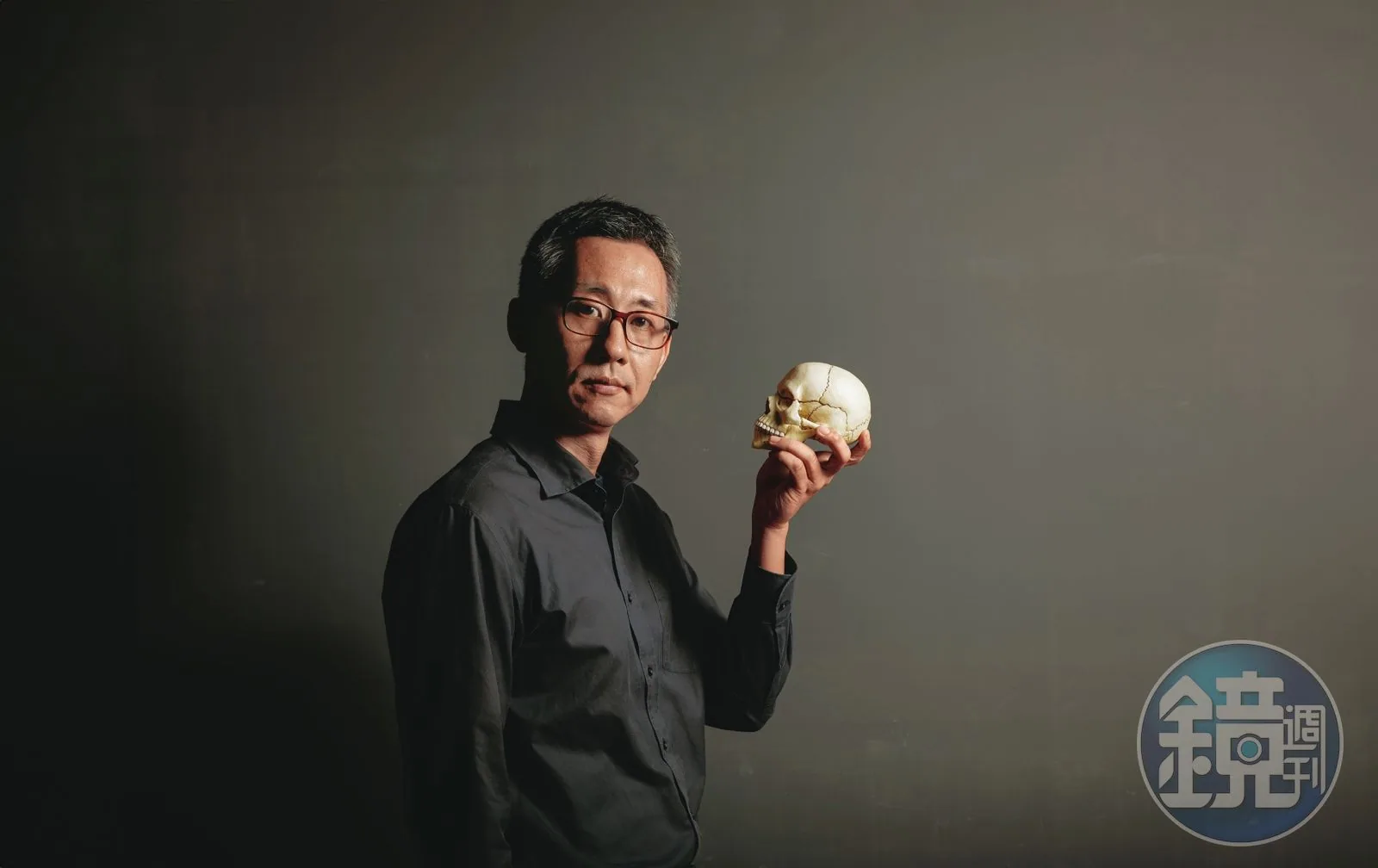
30-second overview: PanSci is a Taiwanese science website and community founded in 2011. It grew out of a canceled project at the Association of Digital Culture Taiwan. In its early years, Cheng Kuo-wei and Hsu Ting-yao kept it alive by visiting science bloggers, commissioning articles, and cultivating a community; by 2013 it already had more than 80 science bloggers and over 2,780 articles. Later communication studies placed PanSci within Taiwan’s democratization of science communication, public engagement on social media, and cross-strait comparisons of popular science websites. By the 2020s, PanSci had linked articles, PanSci Academy, Science Student, video, advertising projects, e-commerce, and a YouTube MCN into a knowledge services network. Its core tension is clear: for science to remain in public discussion, the platform must first survive inside commercial projects and algorithms.
The Canceled Project
In 2014, when Cheng Kuo-wei looked back on PanSci’s beginnings, he did not write it as a startup myth. He wrote about a website left behind after a failed project.
At the time, he had joined the Association of Digital Culture Taiwan. Hsu Ting-yao, in order to support one more staff member at the association, took on a project that would use the internet to promote Taiwan’s achievements in bioscience and medicine. Cheng built it according to his own imagination. Only when he remembered that he needed to report progress to the client did he discover that the direction did not match the client’s needs. The project was cut, the source of his salary disappeared, but PanSci was born. 1
This opening matters because nearly all of PanSci’s later choices can be read from it: its roots were not in universities, government agencies, or research institutes, but in blogs, citizen journalism, and online communities. That group of people discovered that Taiwan’s public discussion lacked a place that could put science back into social issues.
Cheng Kuo-wei did not have a science degree. In 2014, he called himself “an incompetent editor-in-chief without a science background,” and at first the editorial department consisted of only him. PanSci’s earliest work was painstakingly improvised: visiting Taiwan’s small but enthusiastic circle of science bloggers and inviting them to become columnists. 1
The real challenge was how to design the room: could scientists, educators, readers, and editors correct one another in the same place?
Science News Was a Large Black Hole
In 2013, when Business Next wrote about PanSci, it offered a very early and very precise diagnosis: Taiwan’s mainstream media lacked science news. Cheng Kuo-wei summarized the problem at the time in a bleak sentence: “Science news is a large black hole.” 2
That sentence pointed to a very concrete public problem. The Fourth Nuclear Power Plant, U.S. beef, ractopamine, avian flu: every public controversy in the early 2010s involved questions of science, risk, statistics, institutions, and trust. When mainstream media lacked stable science reporters, science entered public discussion as translated wire copy, expert quotations, short political commentary, or online rumors.
PanSci’s first position was therefore more like a neglected mediating layer within public issues. In March 2013, the “Popular Science and New Media” forum attracted more than 300 young people, with talks ranging from the physics of archery in films to the psychology of breakups. The same report also noted that PanSci’s readers were mainly high school and university students, making it a source of scientific knowledge for students. 2
This early scene is crucial: before the short-video era, PanSci already treated “readers being willing to pause” as a precondition for science entering public life.
A Room of 80 Science Bloggers
By 2013, PanSci no longer looked like a small website.
A Taiwan Science Forum report that year noted that PanSci had accumulated more than 80 science bloggers and over 2,780 articles, with more than 20,000 daily visitors and more than 130,000 monthly visitors. 3 For Taiwan’s internet in the early 2010s, these numbers represented a kind of community density: a group of people willing to translate professional knowledge into public language began to have a fixed point of entry.
In 2014, Cheng Kuo-wei provided another set of early figures: in PanSci’s first year, it had only one full-time editor; he was delighted if an article received 2,000 to 3,000 views, and monthly traffic averaged only twenty to thirty thousand views. Four years later, monthly views had surpassed 2.5 million, and Facebook likes exceeded 170,000. 1
These numbers show that Taiwanese society did in fact have a demand for science reading. It is just that this demand did not necessarily resemble school textbooks, nor did it necessarily resemble research papers. The opening PanSci found was to turn science from an “answer” into a “method of discussion.”
The homepage banner of PanSci’s official website. The slogan “Make our science PanScience” compresses the core proposition from its 2011 founding into one word: “Pan” (for everyone, cross-disciplinary, opening science so that all can enter). Fair use editorial commentary on PanSci's brand identity.
The official About Us page states its mission directly: PanSci invites researchers, educators, enthusiasts, and people affected by science to discuss science together, to put scientific development back into Taiwan’s public forum, and to use rational thought to examine the scientific dimensions of social issues. 4
PanSci’s most frequently quoted sentence is also here:
“Science is too important to be left only to scientists.” 4
This sentence is easy to read as a slogan, but its real difficulty lies in the second half: if science is to be opened to more people for shared discussion, then to whom should it be entrusted? Entrust it to media, and it encounters headlines and clicks; to communities, and it encounters emotion and echo chambers; to schools, and it encounters curricula and examinations; to companies, and it encounters sponsorship and trust.
For fifteen years, PanSci has in fact been shifting gears among these answers.
How Researchers Later Viewed It
PanSci also entered the case libraries of communication researchers.
In 2016, National Chengchi University’s academic repository included Shih Tsung-jen’s “Social Networking Sites and Public Engagement: A User Study of the Pansci Facebook Page.” Taking PanSci, Taiwan’s largest science community, as its subject and using an online survey with N = 1,160, the study found that Pansci use had positive effects on both informational participation and civic participation; among usage motivations, social motivation was related to both kinds of participation, while entertainment, self-positioning, and information motivations were related to civic participation. 5
In other words, PanSci’s Facebook page was simultaneously circulating articles and training some users to connect science content to participation in public issues.
In 2017, Communication & Society published “A Preliminary Study on the Characteristics and Communication Effects of Popular Science Websites Across the Strait,” which conducted a content analysis comparing China’s Guokr and Taiwan’s PanSci. The study found that both websites paid attention to diverse scientific topics, but Guokr leaned more toward biomedicine and earth science, while PanSci placed more emphasis on physics, information science, and mathematics; PanSci’s articles and headlines were more vivid and also paid more attention to diverse opinions from different sources. 6
This comparison placed PanSci within the differences between civil societies across the Taiwan Strait: even when both are popular science platforms, how articles are written, how sources are arranged, and how interaction is designed all reflect political and social environments.
In 2020, the Taiwan chapter in ANU Press’s Communicating Science: A Global Perspective wrote the science blogging project PanSci, which began in 2011, into the history of science communication in Taiwan. The chapter described PanSci as one of Taiwan’s largest and most important knowledge communities of science communicators, and placed PanMedia’s transformation into a for-profit company within the context of “building a knowledge ecosystem.” 7
Taken together, these three research perspectives make PanSci’s position clear: as Taiwan moved from “experts teaching the public” toward “citizens discussing science together,” PanSci commercialized early and was also observed early by researchers.
Advertising, Courses, and E-commerce Are All Part of Science Communication
PanSci’s official page does not hide its business model. It explicitly lists advertising projects, video production, event partnerships, e-commerce, and online course publishing. 4
This makes it very different from The Reporter. The Reporter places “freedom from interference by advertising and pageviews” within the ethical commitments of nonprofit investigative journalism; PanSci, by contrast, looked more like a knowledge community company from the beginning. It wants to conduct public discussion, but it also takes projects, sells courses, runs events, produces video, and sells products.
In 2014, when PanSci was preparing to become independent as Pan Knowledge, Cheng Kuo-wei called it a social enterprise. The problem he wanted to address was the “ecological crisis of knowledge”: the creation, transformation, dissemination, and application of knowledge had all gone wrong. 1 This framing is much larger than “popular science website,” and much more dangerous, because it pushes PanSci into the gray zone among media, education, and industry.
In 2018, TechNews reported that Pan Knowledge had invested in the crowdfunding platform flyingV, describing Pan Knowledge as having started from PanSci and then gradually expanded into multiple vertical media, events, education, and offline spaces. 8 In 2026, not every brand mentioned in that report can still be treated as equally active, but it revealed Pan Knowledge’s ambition: to turn knowledge content into services, products, and platforms.
The 104 job bank company page is even more direct. Pan Knowledge places itself in the digital content industry, with capital of NT$30 million and 50 employees. Its main products and services include new media content, video production, integrated marketing for digital advertising, data analysis for video platforms, online courses, e-commerce, and subscription-based learning platforms. The company page also says it obtained YouTube MCN status in 2023. 9
Pan Knowledge’s 2022 media kit puts the commercial language even more plainly. The presentation says PanSci averages more than 3 million monthly views, has a Facebook readership of 450,000, a YouTube readership of 220,000, and an Instagram readership of 84,000, and describes its services as brand translation, information verification, information visualization, and multi-channel marketing. 10
This presentation is a sales document, and that is precisely why it is useful. It lets readers see what PanSci sells externally: research, reporting, book excerpts, experiments, animation, social posts, and KOL partnerships, packaged as knowledge marketing services that brands can purchase.
It is too quick to describe this as “popular science being contaminated by commerce.” More precisely, PanSci treats commercialization as a survival problem for science communication: without revenue, public scientific discussion can only burn on enthusiasm; once revenue depends on companies and platforms, trust becomes something that must be proven again every day.
The Video About Lin Feng Ying Ranch
In 2016, this trust problem erupted in concentrated form.
PanSci accepted sponsorship from Wei Chuan and planned “PanSci Investigation Corps,” taking editors and investigators to Wei Chuan’s factories, Lin Feng Ying Ranch, and its central research institute for observation, then producing a video about the production process for Lin Feng Ying fresh milk. At the time, Ting Hsin / Wei Chuan was under intense scrutiny because of food safety scandals and boycott campaigns. After the video went online, many internet users criticized PanSci for accepting sponsorship from a controversial company and helping whitewash it. 11
The Central News Agency reported at the time that when Cheng Kuo-wei responded to the question “Should Ting Hsin be boycotted?” he said his answer was: “I don’t know.” His meaning was closer to a methodology: before one has sufficiently understood the matter, collected information one considers credible, and found the most original sources, one cannot pretend to know. 12
Science media encountered a problem of public trust here. When the funder is also the subject under discussion, readers care about test data, but they will also ask: were the questions asked, the interview site, the acquisition of materials, the video editing, and the timing of publication shaped by the client’s interests?
When The News Lens organized the controversy at the time, it placed it within the difficulties of media survival and native advertising: without money, media struggle to produce in-depth content; but whose money is accepted, how it is disclosed, and whether the possibility of counterevidence can be preserved directly affect trust. 11
This incident deserves a place in any entry on PanSci because it made PanSci’s core contradiction visible: when you say you use “rationality and evidence to discuss the scientific dimensions of social issues,” readers will in turn demand that you use the same standards to examine your own commercial conditions.
From Popular Science Articles to Classroom Question Sets
PanSci later did not remain only a media outlet.
The official page of PanSci Academy positions it as an online course platform under the Pan Knowledge media group, using diverse learning channels, interdisciplinary talent, and applicable topics to disseminate knowledge more effectively. 13 This is the first layer of PanSci’s shift from “readers” toward “learners.”
Another product closer to school settings is “Science Student.” In 2020, Pan Knowledge, Nan I Book Enterprise, and Science Monthly jointly launched a popular science reading platform, using 10,000 popular science articles on PanSci and the 50-year database of Science Monthly, then having teachers rewrite them into short texts and questions suitable for junior and senior high school students. 14
The transformation here is interesting. PanSci’s early articles were often written for adults and readers at university level or above. By the time of Science Student, they had to be rewritten into materials of about 400 Chinese characters, aligned with course progress, and usable by teachers for morning reading or literacy-oriented question sets. 14
Once a science website enters the classroom, its readers become “people caught between the curriculum, examinations, reading ability, and teachers’ lesson preparation time.” This gives PanSci’s publicness a different setting: from an online public forum to science reading inside schools.
This also allows it to be viewed alongside the Encyclopedia of Taiwan. The Encyclopedia of Taiwan was a state project to establish a definitive body of knowledge; PanSci is a private platform that breaks scientific knowledge into articles, question sets, courses, videos, and services. The former asks “who has the authority to define Taiwanese knowledge,” while the latter asks “how knowledge can be seen, read through, transformed, and kept in use.”
Wednesday Morning Recording Day
In 2026, PanSci’s most visible form may no longer be on its website, but in short videos.
This direction has a history. In 2022, PeoPo Citizen Journalism reported that a PanSci explainer video on monkeypox / mpox had received more than 2.2 million YouTube views; the channel at the time had accumulated more than 400 videos and nearly 400,000 subscribers. 1516
From the official channel’s explanation of Webb telescope images in the same year to PanSci NEWS EP46 in 2026, one can see PanSci’s video turn testing formats across astronomy, medicine, everyday science, and science news. 1718
A Mirror Media profile wrote that Cheng Kuo-wei, facing a traffic bottleneck, began producing daily short videos on science news. On recording days, colleagues select science news from sources such as Nature, Science, and Science Alert; Cheng requires scripts to check both the paper itself and reports by other high-quality science media, then uses AI tools to help digest papers and examine the strengths and weaknesses of script versions. 19
This workflow compresses fifteen years of PanSci’s changes into one place: at first there were blogs and articles, later social media, events, courses, and e-commerce, and now it must also face short-video platforms. Science communicators have to research, understand research methods, and write scripts, but also understand pacing, cameras, memes, algorithms, and audience retention.
Mirror Media wrote that Cheng Kuo-wei uses about 1,200 Chinese characters in three minutes to explain a scientific paper, and tries to explain the research method so viewers can critique whether the research stands. 19 This is in fact PanSci’s oldest ideal translated into a new format: viewers receive a conclusion, but also see “why you are allowed to question this conclusion.”
But short video also makes the pressure more naked. In the interview, Cheng discussed traffic anxiety and said that if science had not moved far away from society, there would be no need to enter the battlefield of traffic anxiety. 19 That sentence can almost serve as a footnote to PanSci in the 2020s: science communicators enter algorithms because social discussion is already taking place there.
This also connects PanSci to Taiwan’s YouTuber Industry and Culture. Once knowledge content enters YouTube and short video, it must face update frequency, audience habits, platform rules, and commercial conversion just like entertainment creators; scientific content carries another layer of pressure, because the cost of error falls on public understanding.
From Website to Knowledge Industry
PanSci’s logo, 2024 version. The slogan “Be curious about everything!” corresponds to its growth from a “popular science website” into a “knowledge content supply chain.” Fair use editorial commentary on PanSci's brand identity.
PanSci’s parent company, Pan Knowledge, also increasingly came to resemble a knowledge industry service provider.
The 104 company page says that, based on its content production experience, it introduced data analysis, content production, and advertising monetization systems, with the goal of building a future-oriented digital content industry. 9 PanMedia’s official website, meanwhile, announced the MARMOT system in 2024, describing it as a multi-channel analytics, revenue optimization, and precise targeting tool designed for explanatory news media and content creators. Its partners include explanatory news media such as FoodNext and the Plain Law Movement. 20
This step took PanSci beyond its own popular science operations, turning its accumulated capabilities in data, video, monetization, and creator management into systems other knowledge media could also use.
Its difference from the Thinking Taiwan Forum lies here as well. Thinking Taiwan is more like an article platform for political and democratic dialogue; PanSci grew from a platform for science articles into a knowledge content supply chain. It is at once a media outlet, a course company, a video team, a data tool, a creator network, and an advertising service provider.
This transformation carries risks. The more a platform understands how to help content monetize, the more easily it will be suspected of allowing monetization logic to determine content in reverse. But it also has practical significance: if public knowledge content cannot learn to survive in the platform economy, algorithms will not automatically keep good knowledge at the front.
At the end of 2024, PanSci’s main YouTube channel surpassed one million subscribers. In its year-end review video, Cheng Kuo-wei named the breakout topics of 2024 one by one (Jensen Huang, AlphaFold, Bill Gates’s fourth-generation nuclear power), and joked about “whether to open a fried chicken shop after reaching one million subscribers.” But underneath was a serious question: the algorithm is making choices for you; which video was disliked the most, and should the platform keep moving in that direction?
PanSci’s official channel: 2024 year-end review video. It works backward from breakout topics to “what the algorithm chose for you,” then further back to “why this topic exploded” -- this is the most recent year’s self-interview on the trajectory “from website to knowledge industry.”
Admitting That One Does Not Know
At its best, PanSci makes “not knowing” into a state in which public work can be done, refusing to package science as an unassailable answer.
In a 2022 LIS interview, Cheng Kuo-wei’s declaration of scientific literacy was: “admit that you do not know many things.” 21 This sentence can be linked back to the 2016 Lin Feng Ying incident, and also to the 2026 short-video workflow. The task of science communication is to train society to withstand uncertainty: when information is insufficient, evidence conflicts, and interests are entangled, people are still willing to slow down, investigate more, and admit that they may be wrong.
The story of PanSci’s fifteen years does not have a clean success line. It includes failed projects, community enthusiasm, commercial expansion, sponsorship controversy, educational products, short-video anxiety, and an attempt to turn knowledge into industry services.
If The Reporter uses nonprofit investigative journalism to answer the question “how should public truth be funded,” PanSci answers another question: how can public science survive among commercial platforms, school settings, and social algorithms?
As of 2026, the answer remains unstable. But the question PanSci leaves behind is clear: science is too important and needs more people to participate; it is also too fragile, and if handed to algorithms, it will lose the depth of public discussion.
Further Reading:
- The Reporter — Also concerned with the publicness of Taiwan’s new media, but The Reporter builds trust through nonprofit investigative journalism, forming a contrast with PanSci’s route as a commercial knowledge platform.
- CommonWealth Magazine — A Taiwanese financial media outlet born thirty years before PanSci, also navigating survival between "public service" and "market viability" — but via corporate rankings and paid subscriptions as an authoritative route.
- Thinking Taiwan Forum — Also a platform for public discussion, Thinking Taiwan turns political and democratic dialogue into a container for commentary, while PanSci turns scientific discussion into a knowledge industry.
- Encyclopedia of Taiwan — A contrast between a national knowledge project and a private popular science community: one side pursues an authoritative reference work, while the other pursues readability, circulation, and transformation.
- Taiwan’s YouTuber Industry and Culture — The larger platform ecosystem PanSci must face after entering short video, MCNs, and the creator economy.
Image Sources
This article uses three images, all cached in public/article-images/society/ to avoid hotlinking source servers. All fall within the scope of fair use editorial commentary -- visual identification references to PanSci as the subject under discussion, consistent with 17 U.S.C. § 107 + Copyright Act § 65 four-factor fair use (noncommercial educational purpose / published works / small proportion quoted / no substantial market substitution effect):
- One-Shot Interview / The Angry Young Man Is Middle-Aged: PanSci Co-founder Cheng Kuo-wei (hero) — Photo: Chen Chang-yuan / Mirror Media, interview published 2026-04-12. Fair use editorial commentary on PanSci founder reference photo.
- PanSci homepage banner — PanSci official brand material (banner1.jpg), fair use editorial commentary on PanSci's brand identity.
- PanSci logo — PanSci official logo, fair use editorial commentary on PanSci's brand identity.
References
- Cheng Kuo-wei: To Every Partner at PanSci: We Are Taking the Next Step — A 2014 first-person account explaining the project’s origins, early scale, the independent founding of Pan Knowledge, and its social enterprise positioning.↩
- Business Next reprint: Independent Media: Growing the Field of Popular Science, PanSci Spreads Cool Knowledge with Heat — An early 2013 interview recording the “science news black hole,” the forum of more than 300 people, and PanSci’s still-immature business model.↩
- Life: 2013 Taiwan Science Forum report — Records the scale at the time: more than 80 science bloggers, over 2,780 articles, and average daily and monthly visitors.↩
- PanSci: About Us — Official page documenting its 2011 founding, status as Taiwan’s largest science website and community, content sources, and business model.↩
- NCCU Academic Hub: Social Networking Sites and Public Engagement: A User Study of the “Pansci” Facebook Page — A 2016 communication study, N = 1,160, analyzing the relationship between PanSci use and informational participation and civic participation.↩
- Airiti Library: A Preliminary Study on the Characteristics and Communication Effects of Popular Science Websites Across the Strait — A 2017 content analysis comparing Guokr and PanSci on topics, vividness, interactivity, and credibility.↩
- ANU Press / ResearchGate: TAIWAN: From nationalising science to democratising science — A 2020 chapter on the history of science communication in Taiwan, placing PanSci within the context of science communication democratization and knowledge communities.↩
- TechNews: Pan Knowledge Officially Invests in the flyingV Crowdfunding Platform — A 2018 report on a strategic alliance, providing context for Pan Knowledge’s expansion into a knowledge services group.↩
- 104 Job Bank: Pan Knowledge Co., Ltd. — Company capital, employee count, products and services, digital content industry positioning, and YouTube MCN status.↩
- Pan Knowledge Media Kit 2022 — A 2022 sales presentation disclosing monthly pageviews, social readership, and brand content service items.↩
- The News Lens: How Should We View the Popular Science Website PanSci Accepting Wei Chuan Sponsorship for an Investigation? — Organizes the incident background, online criticism, and discussions of sponsorship and media survival.↩
- Central News Agency: Should Ting Hsin Be Boycotted? PanSci Editor-in-Chief: I Don’t Know — The 2016 Lin Feng Ying / Wei Chuan sponsorship controversy and Cheng Kuo-wei’s response.↩
- PanSci Academy: About the Academy — Official positioning and service information for PanSci Academy.↩
- PanSci: PanSci, Nan I, and Science Monthly Launch “Science Student” — Sources for the Science Student platform, teacher needs, 10,000 PanSci articles, and the 50-year Science Monthly database.↩
- PeoPo Citizen Journalism: From Monkeypox to the Universe, PanSci Uses Video to Popularize Knowledge — A 2022 student report recording more than 2.2 million views for the monkeypox video, more than 400 videos, and about 400,000 subscribers.↩
- PanSci YouTube: Taiwan’s Local Monkeypox / Mpox Has Arrived! — Official channel video from 2022-06-20; retrieved with yt-dlp on 2026-05-07, showing uploader as PanSci and view count above 2.33 million.↩
- PanSci YouTube: Full Explanation of the Latest Images! What Makes the Webb Telescope So Powerful? — Official channel video from 2022-07-14; retrieved with yt-dlp on 2026-05-07, showing uploader as PanSci and view count above 1.03 million.↩
- PanSci YouTube: PanSci NEWS EP46: Is This Okay? Replacing Exercise with Medicine! The True Face of Plant Toxins — Official channel video from 2026-02-13, used as a case of the 2026 science news video format.↩
- Mirror Media: One-Shot Interview / The Angry Young Man Is Middle-Aged: PanSci Co-founder Cheng Kuo-wei — A 2026 profile describing the short-video transition, science news script workflow, and traffic anxiety.↩
- PanMedia: Taking News Digital to the Next Level: PanMedia Partners with YouTube to Launch the MARMOT System — PanMedia’s 2024 explanation of the MARMOT system, positioned as a tool for explanatory news video creators.↩
- PanSci reprint of LIS interview: PanSci Co-founder Cheng Kuo-wei: The First Step of Scientific Literacy Is Bravely Admitting That You Do Not Know — Cheng Kuo-wei on scientific literacy and “admitting that one does not know.”↩