
Taiwanese Breakfast Culture
At 6:30 a.m., Taiwanese streets already smell like sizzling danbing (蛋餅), golden youtiao (油條), and freshly ground soy milk. Office workers order “danbing with cheese, iced soy milk,” while students clutch coins for shaobing‑youtiao (燒餅油條). This is not just a meal—it is Taiwan’s daily ritual and one of the most diverse breakfast cultures in the world.
Taiwanese breakfast is special not only because of variety but because it merges Chinese traditions, Japanese influence, and local invention. From wheat‑based northern dishes to rice‑based southern ones, Taiwan learned to absorb, remix, and make the morning its own. Breakfast shops became neighborhood landmarks, economic micro‑engines, and an everyday expression of Taiwan’s hospitality.
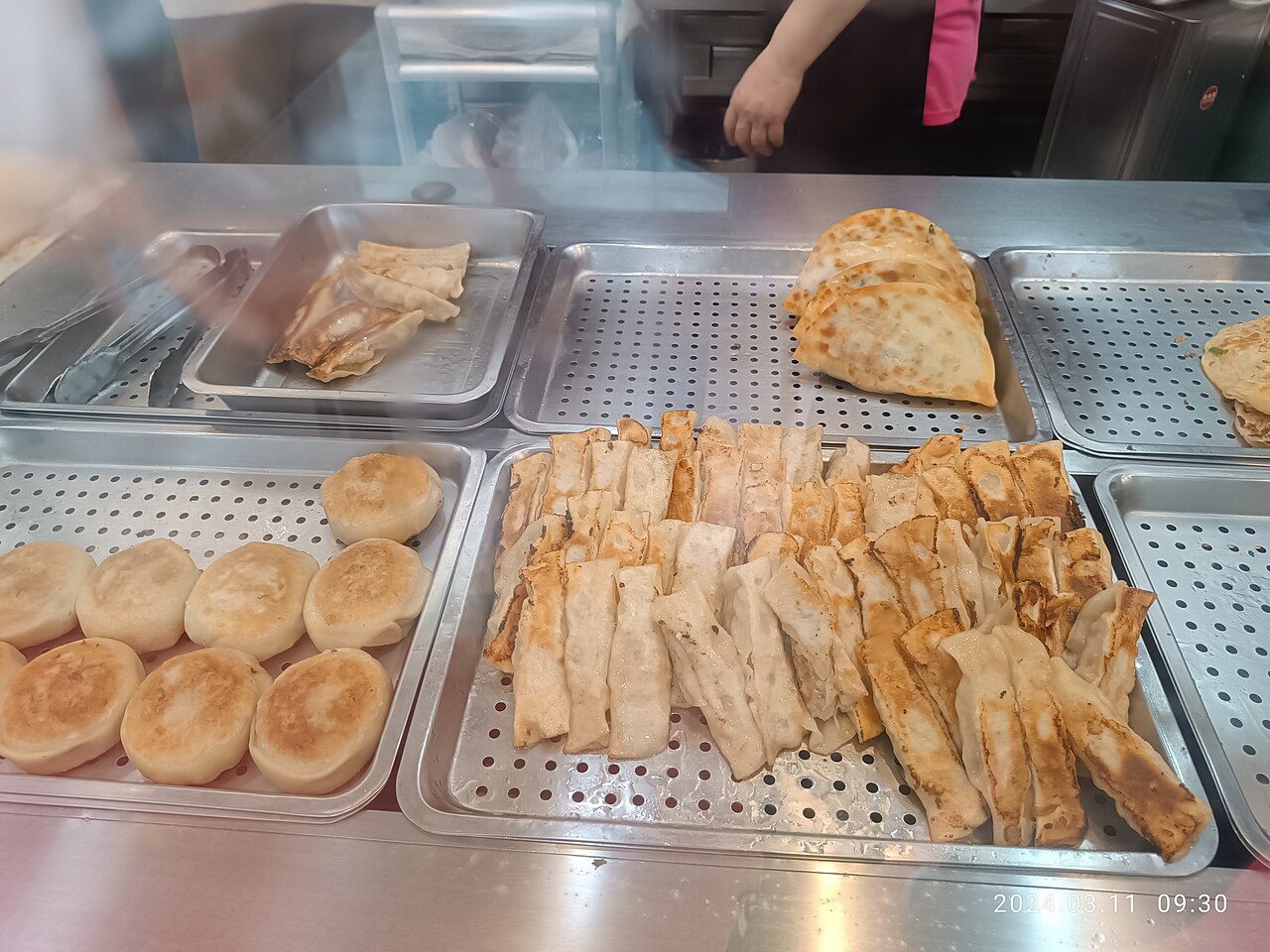
Image source: a typical Taiwanese breakfast shop with danbing, burgers, and soy milk
From “no breakfast” to a breakfast nation
In traditional agrarian Taiwan, people did not eat a defined “breakfast.” Farmers started work at dawn and ate their first major meal around 10 a.m. The Japanese colonial period introduced more regimented meals and urban schedules. As cities grew and factories required fixed hours, breakfast became necessary.
After 1949, large waves of mainland Chinese migrants brought northern wheat‑based techniques: steaming, dough fermentation, and soy processing. Taiwan then layered in local ingredients and tastes. The result is a hybrid breakfast landscape.
Northern influences:
- Shaobing‑youtiao (燒餅油條): baked sesame flatbread + fried dough stick
- Soy milk (豆漿): a classic protein drink
- Baozi and mantou (包子、饅頭): steamed buns
Local adaptations:
- Rice milk (米漿): a Taiwanese rice‑based drink
- Fan‑tuan (飯糰): a localized rice roll
- Taiwanese danbing (粉漿蛋餅): a batter‑based crepe unique to Taiwan
The iconic dishes
Danbing (蛋餅) — the soul of Taiwanese breakfast
Danbing is the flagship of Taiwan’s breakfast identity. Its appeal is flexibility: it can be simple or endlessly customized.
How it’s made:
- Thin batter or flatbread on a griddle
- Beaten egg layered on top
- Rolled and sliced
- Finished with sweet chili sauce or soy paste
Common upgrades: cheese, ham, bacon, corn, vegetables. Its speed and affordability match Taiwan’s fast urban rhythms.
Shaobing‑youtiao (燒餅油條) — traditional, still beloved
This pair is a classic. The shaobing is flaky and layered, often baked in a clay oven; the youtiao is airy and crisp. When sandwiched together, it’s a texture contrast that defines old‑school breakfast.
“Making shaobing and youtiao is all about the hands—flour ratios, fermentation timing, and heat control. Miss one, and the flavor is gone.” — a veteran breakfast baker
Soy milk (豆漿) and rice milk (米漿)
Soy milk is not just a drink; it’s an emblem of Chinese culinary tradition. In Taiwan it appears in multiple forms:
- Sweet soy milk: smooth and mild
- Savory soy milk (鹹豆漿): curdled with vinegar and topped with dried shrimp, pickles, and scallions
- Rice milk (米漿): a Taiwanese addition, creamy and fragrant
Fan‑tuan (飯糰) — the commuter’s breakfast
Taiwan’s rice roll evolved from Japanese onigiri into a filled, portable meal:
- Classic fillings: pork floss, pickled mustard greens, peanuts
- Modern additions: egg, ham, cheese, spicy flavors
It is the ultimate “eat‑on‑the‑go” breakfast for students and commuters.
Yonghe Soy Milk (永和豆漿): Taiwan’s breakfast goes global
The most successful international symbol of Taiwanese breakfast is Yonghe Soy Milk. It began in 1955 as a small shop in Yonghe (永和), selling shaobing, youtiao, and soy milk. The brand expanded across Taipei in the 1980s, and by the 1990s reached overseas Chinese communities.
Why it worked:
- Standardized recipes for consistent taste
- Localized adaptation for different markets
- Strong brand identity tied to Taiwanese comfort food
- Cultural export—selling a lifestyle, not just food
Today, Yonghe Soy Milk is a global shorthand for “Taiwanese breakfast.”
The Mei & Mei phenomenon (美而美)
Mei & Mei (美而美) was a pioneer of breakfast franchising. Founded in 1983, it professionalized the industry through standardized menus, clean interiors, and a franchise model that made small‑business ownership accessible.
Its impact:
- Raised hygiene and service expectations
- Encouraged central kitchens and consistent supply chains
- Inspired dozens of later breakfast chains
Taiwanese breakfast became a structured industry, not just a neighborhood craft.
The role of the “Breakfast Auntie” (早餐店阿姨)
In Taiwan, the breakfast shop auntie is a social institution. She remembers your order, your schedule, sometimes your story. Breakfast shops are community intelligence hubs—where local news, small talk, and kindness circulate daily.
Her roles include:
- Social glue: familiar greetings and personalized orders
- Economic engine: women‑led micro‑entrepreneurship
- Cultural continuity: passing down hands‑on techniques
“She doesn’t just remember your order. She remembers your life.”
Modern shifts: health, tech, and delivery
Health‑conscious breakfast
- Whole‑grain toast and brown‑rice rolls
- Lower‑oil cooking methods
- Fresh salads and protein options
- Reduced sugar and salt
Digital convenience
- App ordering and pre‑payments
- Food delivery platforms like foodpanda and Uber Eats
- Data‑driven menu optimization
Taiwan seeks balance: efficiency without losing warmth.
Why it endures
Taiwanese breakfast expresses the island’s deeper values:
- Cultural blending: Chinese, Japanese, and local creativity in one menu
- Pragmatic innovation: quick, flexible, affordable
- Human warmth: the breakfast shop is a daily neighborhood ritual
The future of Taiwan’s morning ritual
The next chapter likely includes greener packaging, stronger local sourcing, and wider international expansion. But the heart remains the same: a warm griddle, a familiar face, and the feeling that the day is starting together.
Taiwanese breakfast is more than food. It’s a daily cultural performance—reassuring, efficient, and full of small acts of care. If you want to understand Taiwan, arrive early, find a humble breakfast shop, and order like a local.
Further Reading
- night-market-culture — another key food landscape
- taiwanese-street-food — more local classics
- convenience-store-culture — modern everyday eating
- tea-culture — Taiwan’s signature drink tradition