
30-second overview: In 1990, a group of college students crouched around Guanghua Computer Market hunting for technical manuals, sharing a single computer, and built the first Chinese-language wuxia RPG: Xuan-Yuan Sword. Five years later, a 26-year-old poured his heartbreak into the ending of The Legend of Sword and Fairy, and the first print run of 10,000 copies sold out on day one. These two games became known as the "Softstar Twin Classics," spanning thirty years, spawning TV dramas and films, and selling over a million copies combined. In September 2024, Softstar sold the Twin Classics IPs for NT$500 million. In June 2025, the Xuan-Yuan Sword IP changed hands again, from Huandong to Chengdu Xingyuechenshi. On November 3, 2025, the parent company renamed itself Star Fusion Group, with semiconductors accounting for 65% of revenue. But for an entire generation of players, that afternoon you first cried in front of a DOS window — that is not for sale.
The Boys of Guanghua Computer Market

Guanghua Computer Market, Taipei, photographed in 2007. The heart of Taiwan's information industry in the 1990s. Photo: pacificmorningpost via Flickr. CC BY 2.0 via Wikimedia Commons.
In October 1990, Taipei. A game called Xuan-Yuan Sword appeared on the shelves of software shops.
Its creator, Tsai Ming-hung, was still a student at the time. He gathered a few classmates and friends interested in games — "even neighbors from next door were recruited to help with development." This scrappy team later acquired a name: the DOMO Group.1
It was an era when you had to do everything yourself. "When making a game, no matter what you were doing, you had to figure it out on your own — how to control the mouse, how to handle the keyboard, how to deal with resolution. You had to solve everything yourself." Tsai Ming-hung recalled during the development process. He would crouch in Guanghua Computer Market flipping through technical materials, and the development team shared a single computer. (From a Mirror Media interview)2
Tsai's idea was simple: "Five thousand years of Chinese culture has so many incredible stories. If they could serve as the foundation for a game, the experience should feel more immersive." In an era when Final Fantasy and Dragon Quest monopolized the RPG market, telling your own myths in Chinese was itself a statement.
Xuan-Yuan Sword's graphics were rough and its controls clumsy, but it was the first role-playing game in a Chinese-language environment in history.3 A sword, forged from the stacks of books at Guanghua Computer Market.
The Man Who Wrote Heartbreak Into an Ending
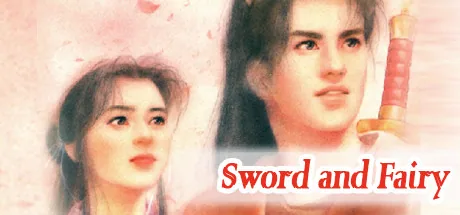
The Legend of Sword and Fairy Steam page cover, published by SOFTSTAR ENTERTAINMENT. Photo: Official SOFTSTAR Steam store image, used as fair use editorial commentary on the 30-year IP history.
Five years later, the second sword was unsheathed.
On July 7, 1995, The Legend of Sword and Fairy launched in Taiwan — 320×200 resolution, 256 colors, 28MB of installation space. The producer, Yao Zhuangxian, was 26 years old at the time, leading a team under Softstar's "Madfellows Creation Group."4
Yao had begun conceptualizing the world of Sword and Fairy as early as 1991 while developing Richman 2. The initial setting was a historical wuxia tale set during the An Lushan Rebellion, but the script kept growing and was revised multiple times until the historical backdrop was stripped away, leaving behind something far more dangerous: humanity.5
The game's ending sparked fierce internal debate within the development team. Yao insisted that the female lead, Zhao Ling'er, had to die. Both planner Xie Chonghui and artist Lin Jiawen objected. In the end, Ling'er used her Nüwa clan powers to perish together with the Water Demon Beast; Li Xiaoyao arrived at the top of the Demon-Locking Tower only to watch the Demon-Sealing Staff slowly drift down from the sky. Together with Lin Yue-ru, who had died in his arms earlier when the tower collapsed, both female leads' tragic ends became the most iconic scenes in the Sword and Fairy series.6
A rumor spread online that Yao wrote this ending because of a breakup. He later clarified multiple times that he was not going through a breakup during development, but admitted that Zhao Ling'er's prototype was based on a female classmate who sat next to him in college.7 Whatever the truth, that ending struck the hearts of millions.
The first-day run of 10,000 copies sold out. Cumulative sales across all versions exceeded one million copies. In the Chinese magazine Popular Software's reader polls, Sword and Fairy held a top-three ranking for six consecutive years.8
📝 Curator's Note
In 1995 Taiwan, Windows 95 had just launched, and most home computers were still running DOS. In an era without Steam and without YouTube let's-plays, a game's reputation spread through only one channel: someone who had finished it telling someone who hadn't, "You have to play this." That was how Sword and Fairy spread.
Two Swords, Two Paths

Xuan-Yuan Sword VII (2020) Steam page cover, developed by Softstar's DOMO Group. Photo: Official SOFTSTAR Steam store image, fair use editorial commentary on the 30-year IP history.
Both Sword and Fairy and Xuan-Yuan Sword were forged at Softstar, but they traveled very different paths.
Xuan-Yuan Sword follows history. Tsai Ming-hung's DOMO Group wove Chinese mythology and real history together. The 1999 title Xuan-Yuan Sword III: Beyond the Clouds and Mountains moved the story to the Silk Road between Tang Dynasty China and Europe, letting players control the young swordsman Seth as he travels eastward from the Frankish Kingdom, across the Arab Empire, all the way to Tang China — the perspective looking toward China from Europe, not the other way around. The 2000 standalone expansion Scar of Sky, set in the late Sui and early Tang dynasties, became the highest-rated entry in the series.9
Xuan-Yuan Sword's most distinctive design is the "Demon Refining Pot" (煉妖壺). Starting from Xuan-Yuan Sword II, released on February 8, 1994, players could capture defeated monsters in the pot and refine them into items or new companions. This mechanic was rooted in the worldview of Investiture of the Gods (Fengshen Yanyi) and Classic of Mountains and Seas (Shanhai Jing), turning settings familiar to Chinese mythology readers directly into game rules. At a time when Japanese RPGs had not yet developed a complete commercial "monster-capturing" system (Pokémon Red and Green didn't launch until February 27, 1996 — two years after the Demon Refining Pot), this was an original creation.10
Sword and Fairy follows romance. Yao Zhuangxian's Madfellows Creation Group blended wuxia and love, using an "everyone-is-tragic" narrative that broke the RPG convention of happy endings. What Yao wanted to write at the core was helplessness: the people you care about, you cannot save; no sword, however powerful, can hold back the drift of fate. This tone positioned Sword and Fairy closer to a novel or a film within the Chinese-language gaming world.
Both swords shared one belief: stories from the Chinese-speaking world deserve to be taken seriously.
The Music: Something That Outlived the Graphics
If you ask anyone who played the original Sword and Fairy what they remember most, the answer is almost always the music (while the graphics have long since faded from memory along with the pixels).
"Butterfly's Love" (Die Lian) is one of the 12 tracks in the original Sword and Fairy soundtrack, playing during the scene where the butterfly spirit Caiyi sacrifices her life to save her husband Liu Jinyuan. The piece uses only simple MIDI tones, yet its melody is so mournful that players found their fingers frozen over the DOS window, unable to press Enter to advance to the next dialogue box.11
Thirty years later, in February 2026, the original composer Lin Kunsin rearranged "Butterterfly's Love" at a fan-organized Sword and Fairy New Year gathering. The audience was made up of adults in their thirties and forties, and their eyes were red.12
Xuan-Yuan Sword's soundtrack is equally iconic. Beyond the Clouds and Mountains won Best Music at the 1999 PC Player magazine Game Awards — the moment Taiwanese game music received formal recognition.13
✦ A game's graphics become outdated, its systems get replaced, but the music endures. Thirty years from now, when you hear the first four notes of "Butterfly's Love," your memory will pull you straight back to that afternoon in front of the DOS window.
From the Screen Into the Living Room
In 2005, Sword and Fairy achieved something unprecedented in Taiwanese gaming history: it became a TV drama.
Produced by Tangren Media and directed by Lee Kwok-lap, the The Legend of Sword and Fairy TV series cast then-unknown Hu Ge as Li Xiaoyao and Liu Yifei as Zhao Ling'er. After airing on local Chinese channels, it achieved an average viewership rating of 11.3%, and Hu Ge became a national idol overnight.14
"Xiao Yao Tan" (逍遙嘆), interlude from the 2005 Sword and Fairy TV drama, performed by Hu Ge. B'in Music distributed The Legend of Sword and Fairy TV drama original soundtrack. Hu Ge became Li Xiaoyao overnight, and later went on to star in Nirvana in Fire and The Disguiser.
The show's influence extended far beyond gaming circles. It directly ignited the entire "xianxia drama" (仙俠劇, immortal hero romance) genre in the Chinese television market. For the next twenty years, from The Journey of Flower to Love Between Fairy and Devil, the origins of every Chinese xianxia drama can be traced back to that 2005 image of Hu Ge standing on Fairy Spirit Island.15
Xuan-Yuan Sword also had its attempt at screen adaptation. The 2012 TV drama Xuan-Yuan Sword: Scar of Sky, starring Hu Ge and Liu Shishi, did not receive reviews as favorable as Sword and Fairy. When it comes to game-to-screen adaptations, Sword and Fairy is a rare success story.
💡 Did You Know?
Hu Ge had almost no name recognition before filming the Sword and Fairy TV drama. He later became one of China's top-tier leading men, starring in phenomenon-level works such as Nirvana in Fire and The Disguiser. And the nickname his fans have always used for him remains "Li Xiaoyao."
That Board Meeting: The Two Announcements That Sold the Twin Classics
On May 14, 2024, the Softstar board of directors passed a resolution authorizing the chairman to dispose of the The Legend of Sword and Fairy (worldwide except mainland China) and Xuan-Yuan Sword (worldwide) IPs.16 Ten days later, the father of Xuan-Yuan Sword and former Softstar general manager Tsai Ming-hung resigned from the company where he had spent thirty-six years. He had been invited into Softstar right out of high school in 1988 by founder Lee Yung-chin, with employee number 004 — meaning he was there from day one.17 Ten days after Tsai's departure, vice general manager Chen Yaotian was promoted to general manager.
On September 11, 2024, Softstar made it official: the Xuan-Yuan Sword global IP was transferred to Huandong (Hong Kong) Technology Co., Ltd. for US$10.45 million (approximately NT$300 million); the The Legend of Sword and Fairy IP for all regions outside mainland China was transferred to SuperNova Overseas, a wholly owned subsidiary of CMGE Group, for RMB 18.3 million plus 38 million shares (approximately NT$200 million).16
Two swords, NT$500 million total.
Why sell? Chen Yaotian was blunt: "We can no longer spend five to eight years grinding a sword without knowing whether it will even work."18 The Legend of Sword and Fairy VII, developed on Unreal Engine, sold 1.04 million copies across all platforms, but only broke even after moving over 500,000 units. Xuan-Yuan Sword VII, also built on a top-tier engine and billed as "the first next-gen engine AAA title in the Chinese-language market," was a critical and commercial disaster. Softstar had invested NT$850 million in internal R&D over the previous six years, of which only the horror game The Bridge Curse, made on a budget of just NT$25 million, broke even by selling 150,000 copies.19
Chairman Tu Chuang-kuang published a thousand-word Facebook post on the same day as the announcement. He admitted that when he took over Softstar in 2014, "the two classic IPs had already been in decline for a long time" and that he had "never seen the so-called 'Twin Classics glory days.'" Facing the backlash, he wrote:
"Yes, you're right. You're the real players."
"We're still making games, and we still want to make games."
"For the 500 employees under the company, everyone has a life to carry. If I don't make a change, can I face the colleagues who want to make good games, and those young people who are still passionate about games?"19
The post was shared over 1,400 times. Discussion threads on Bahamut and PTT instantly flooded. Some cursed Softstar for selling the family heirlooms; others said it was long overdue; most people simply posted a screenshot of the original Sword and Fairy with a single caption: "Tears of an era."
⚠️ Controversy
When Tu Chuang-kuang published his thousand-word post, Tsai Ming-hung had just left ten days prior. A person who had been there since day one in 1988 and a person who took over in 2014 carry different weight when it comes to the word "Softstar." Tu's thousand-word post was a CEO's message of responsibility to shareholders and employees; the player community's anger about "selling the family heirlooms" came from players for whom the swords were proof of youth. Both sides are right, but they are not talking about the same thing.
After the Twin Classics Were Sold: A Second IP Transfer and Softstar's Corporate Renaming
The NT$500 million sale was only the beginning of the drift.
On June 24, 2025, at a press conference in Chengdu, Huandong (Hong Kong) Technology — having owned Xuan-Yuan Sword for only nine months — transferred the Xuan-Yuan Sword global permanent IP to Chengdu Xingyuechenshi Cultural Development Co., Ltd. Also announced that same day: the first project would be an animated series adaptation of Xuan-Yuan Sword III: Beyond the Clouds and Mountains, with an investment of RMB 100 million; an animated feature film directed by Lu Yang and written by Yu Yang, planned for release in China in late 2027.20 Selling the IP again after just nine months — this was no plot point any of the buyers from September 2024 had telegraphed.
Nine months. A NT$300 million IP changed hands once more.
On the Sword and Fairy side, CMGE launched the public beta of Sword and Fairy World on February 19, 2025: RMB 300 million in development costs, a 384-square-kilometer seamless open world, the "Full Sky Star" studio with 240 people, and over 10 million pre-registrations.21 The world is set in "the time loop after the destruction of the world in the 33rd year of the Sword and Fairy calendar during the Earth Tribulation" — this time, even the world itself dies. But CMGE Group's full-year 2025 revenue fell 27.98%, with a net loss of RMB 1.477 billion, and its headcount shrank from 710 to 260. Sword and Fairy World's returns fell short of expectations.22
The deeper turn happened at the parent company level.
On November 3, 2025, the Softstar board approved a name change: Star Fusion Group Co., Ltd. (光聚晶電聯合股份有限公司). Semiconductor operations account for 65% of revenue, and Softstar Information became a subsidiary under the same name. The Ministry of Economic Affairs formally approved the change on January 7, 2026.23 The renamed group encompasses 11 subsidiaries, 30 sub-subsidiaries, and 3,600 employees, with businesses spanning semiconductors (Taiwan Mask, Guanghuan, ALi), energy (Hezheng, Sanjiang), cybersecurity (Anrui, Anyao), and content (Softstar, Xingyu).
Tu Chuang-kuang told Mirror Media in a December 2025 interview:
"It was only after entering semiconductors that I realized how different it really is from the gaming industry."23
Counting from 1988, when Lee Yung-chin founded Softstar in an eighth-floor office on Chongqing North Road in Taipei with three employees and NT$1 million in capital — thirty-seven years. Softstar Information, as a company whose core was games, ceased to exist as the parent entity on November 3, 2025.
"Ling'er Must Die" and "It Will Absolutely Not Be a Tragic Ending"
One afternoon in 2025, 56-year-old Yao Zhuangxian sat at a CMGE Sword and Fairy World player meetup. A player asked about the direction of new Sword and Fairy titles. He said one thing:
"It will absolutely not be a tragic ending."24
Placed against his personal history, this was a complete reversal.
In 1995, 26-year-old Yao Zhuangxian sat in the Madfellows Creation Group office, insisting that the female lead Zhao Ling'er had to die. He proposed that Ling'er perish together with the Water Demon Beast, her physical body destroyed, her spirit attached to Yue Ru's body. Planner Xie Chonghui and artist Lin Jiawen both objected, but Yao held firm on this design.7
The consequences of that afternoon: Sword and Fairy launched on July 7, 1995, and 10,000 copies sold out the same day. The Chinese-speaking world collectively shed tears over the death of a virtual character for the first time. Many players called the development company to protest Zhao Ling'er's death, and this collective memory led to a hidden ending being added in the 2001 New Legend of Sword and Fairy — but "no matter which ending, Zhao Ling'er and Lin Yue-ru can still only have one survivor."25
In 2018, Yao clarified the breakup rumor that had circulated for two decades:
"No, no, no — it was an unrequited crush, not a breakup. I want to emphasize this. Everyone has been getting it wrong. It's unfair to the girl; she never had a relationship with me in the first place."7
He personally corrected the record: unrequited crush, not breakup. That 26-year-old who insisted on a tragic ending, thirty years later at a CMGE player meetup, declared that future Sword and Fairy games would never make anyone cry again.
📝 Curator's Note
The same person, thirty years apart, making completely opposite decisions. In between happened the NT$500 million sale, Tsai Ming-hung's resignation, CMGE's RMB 1.477 billion loss, Xuan-Yuan Sword IP passing from Huandong to Chengdu, and Softstar's parent company renaming itself Star Fusion Group. None of these were Yao Zhuangxian's responsibility. But that tragic ending he personally wrote has already happened — those 10,000 afternoons of July 7, 1995, already changed an entire generation's understanding of "characters in the Chinese-speaking world can die." All that remains for him to decide is: don't repeat that blade.
Butterfly's Love: A 50-Year-Old Looking Back at His 19-Year-Old Self
On February 21, 2026, at the Sword and Fairy fan New Year gathering, Lin Kunsin sat down and played "Butterfly's Love."
Lin Kunsin was 19 in 1995 when he composed all 12 tracks for The Legend of Sword and Fairy. Constrained by the YM3812 sound chip, he used broken chords to articulate details beyond the main structure.12 "Butterfly's Love" — lyrics by Xiao Peng (Zhang Jinpeng), composed by Lin Kunsin, performed by Zhou Lijing (Candy) — not the Liu Yifei version that had been misattributed online for years.26
Fifty-year-old Lin Kunsin wrote a passage for this rearrangement:
"I once asked myself at nineteen: if it were the me of back then, how would I want it to be reinterpreted?"12
He chose not to alter the melodic structure significantly, instead "enriching the details of the original" — "like looking back on the past through memory, letting the melody whisper, speaking softly." The video was edited by his wife, with particular focus on the Caiyi storyline — the butterfly spirit Caiyi sacrificing her thousand years of cultivation and her life to save her husband Liu Jinyuan. The scene that made players cry through MIDI tones thirty years ago sounded once again in February 2026.
"Butterfly's Love" from The Legend of Sword and Fairy 1 (1995) original soundtrack, composed by Lin Kunsin. The MIDI tones were limited by the YM3812 chip, but the melody itself defined an entire generation's imagination of "what Chinese-language game music could be."
What Was Left Behind
The deepest legacy of the Softstar Twin Classics does not lie in sales figures or IP valuations, but in something far less quantifiable: they taught an entire generation of players that Chinese could tell a good story.
Before Sword and Fairy, Chinese-speaking gamers had only two choices: play Japanese games (in translation or wrestling with raw Japanese) or play Western games. "Tell a story in Chinese that can make you cry" — it sounds simple, but before 1995, no one had done it. Sword and Fairy did it. Xuan-Yuan Sword turned history from exam material into an adventure site.
Later, Red Candle Games made Detention, writing the White Terror into a horror game; Rayark made DEEMO, telling a silent story through piano keys. In the DNA of these works runs a gene left behind by the Softstar Twin Classics: Taiwan can make games with soul.27
In February 2026, after Lin Kunsin finished playing "Butterfly's Love" at the New Year gathering, a man in a hoodie in the audience quietly wiped the corner of his eye. He was probably thirty-seven or thirty-eight. In 1995 he would have been about ten — just the right age to come home from school and turn on the computer.
That shared computer is long gone. Those 10,000 copies stacked in a warehouse on July 6, 1995, waiting to go on sale the next day, are now, at most, nearly impossible to find on the secondary market. The Madfellows office where the argument over "Ling'er must die" took place has been torn down. Tsai Ming-hung left Softstar in May 2024. On November 3, 2025, Softstar Information as a company whose core was games ceased to exist — it became a subsidiary under Star Fusion Group, with semiconductors at 65%. Even Yao Zhuangxian, thirty years later, decided he would never again make a player cry over Ling'er.
That DOS window closed thirty years ago. But that afternoon is still here.
Further Reading
- Taiwan's Gaming Industry and Digital Entertainment — From licensing to original creation, a panoramic view of Taiwan's gaming industry
- Taiwan's Open Source Spirit — Another Taiwan story of "passion achieving beyond scale"
- 不入地窖焉能睡覺 — Taiwan's gaming community of the same era, growing from BBS into a 6-million-member platform
- 台灣玩家的瘋狂時刻 — After the Softstar Twin Classics, the collective frenzy history that Taiwanese players continued to write
- Rayark — The next generation of Taiwanese game companies that, like Softstar, built on aesthetics but took a completely different path
Image Credits
This article uses 1 CC-licensed image + 2 fair use editorial commentary images, all cached in public/article-images/technology/ to avoid hotlinking source servers:
- Guanghua Computer Market, 2007 — Photo: pacificmorningpost via Flickr, 2007-10-15, CC BY 2.0
- The Legend of Sword and Fairy Steam page cover — Photo: Official SOFTSTAR ENTERTAINMENT Steam store image, fair use editorial commentary on 30-year cultural IP retrospective
- Xuan-Yuan Sword VII Steam page cover — Photo: Official SOFTSTAR ENTERTAINMENT Steam store image, fair use editorial commentary on 30-year cultural IP retrospective
References
- Mirror Media: Xuan-Yuan Sword at Half a Century (1) — The Struggle of Developing the First Chinese Wuxia Game — Tsai Ming-hung recalls the early days of the DOMO Group↩
- Mirror Media: Xuan-Yuan Sword at Half a Century (1) — Tsai Ming-hung on Guanghua Computer Market, shared computers, and self-taught technical skills↩
- Wikipedia: Xuan-Yuan Sword (game) — First Chinese wuxia RPG released in October 1990↩
- Wikipedia: The Legend of Sword and Fairy (game) — Released July 7, 1995; technical specifications↩
- Wikipedia: The Legend of Sword and Fairy (game) — Script evolution from the An Lushan Rebellion to themes of humanity↩
- Wikipedia: The Legend of Sword and Fairy (game) — Ending controversy: Yao Zhuangxian vs. Xie Chonghui and Lin Jiawen↩
- Wikipedia: Zhao Ling'er — Breakup rumor clarified; character prototype based on a college female classmate↩23
- Techbang: 20 Years of Sword and Fairy — How Does Yao Zhuangxian Evaluate This Past? — First-day 10,000 copies, cumulative over one million, six consecutive years in top-three reader polls↩
- Wikipedia: Xuan-Yuan Sword III: Beyond the Clouds and Mountains — Released 1999; protagonist Seth departs from Venice, traversing Eurasia eastward to Tang China↩
- Xuan-Yuan Sword Wiki: Demon Refining Pot — The refining system began with Xuan-Yuan Sword II↩
- Newton Baike: Butterfly's Love — Track description, scene context, fan adaptations↩
- Bahamut: "Butterfly's Love" 2026 Rearrangement — Lin Kunsin rearranges the piece at the February 2026 fan New Year gathering↩23
- Wikipedia: Xuan-Yuan Sword III: Beyond the Clouds and Mountains — 1999 PC Player magazine Game Awards Best Music↩
- UDN Time: 2005 Sword and Fairy TV Drama Sparked the Xianxia Craze and Made Hu Ge a Star — 11.3% viewership rating, origin of the xianxia drama genre↩
- UDN Time: 2005 Sword and Fairy TV Drama — Hailed as the best video game adaptation in Taiwanese television↩
- Bahamut: Softstar Twin Classics IPs Sold for NT$500 Million; Two Buyers Revealed — September 11, 2024 transaction announcement, amounts, and buyers↩2
- UDN Games: Complete Record of Tsai Ming-hung's Resignation — Tsai Ming-hung invited into Softstar by Lee Yung-chin right out of high school in 1988, employee number 004, promoted to general manager in 2017, resignation timeline in 2024. Quotes: "If the job is done well you can go home; if not, you work until it's done" and "The players' passion has always been the main driving force keeping me fighting in the game industry."↩
- BNext: Pivoting to Mobile Games! Softstar Chairman Reveals "NT$800 Million Spent Over 6 Years" R&D Journey — Sword and Fairy VII barely broke even at 500,000 units; Xuan-Yuan Sword VII a major failure; hundreds of millions in annual R&D↩
- The News Lens: Softstar's Sale of Family Heirlooms Shocks the Market — How Did the Twin Classics Decline? — Player reactions, Tu Chuang-kuang's thousand-word post shared 1,400 times↩2
- Bahamut GNN: Xingyuechenshi Announces Acquisition of Xuan-Yuan Sword Global Permanent IP — June 24, 2025 Chengdu Xingyuechenshi press conference announcing acquisition of Xuan-Yuan Sword global IP from Huandong Hong Kong; first animated series with RMB 100 million investment; animated film directed by Lu Yang, written by Yu Yang, planned for late 2027 release.↩
- 17173: Sword and Fairy World 2025 Public Beta Complete File — CMGE Sword and Fairy World public beta on February 19, 2025; RMB 300 million development; 384 sq km open world; Full Sky Star studio 240-person team; over 10 million pre-registrations; world setting "time loop after the destruction of the world in the 33rd year of the Sword and Fairy calendar during the Earth Tribulation."↩
- NetEase: CMGE 2025 Financial Report — CMGE 2025 revenue down 27.98%, net loss of RMB 1.477 billion, headcount reduced from 710 to 260, "Sword and Fairy World returns fell short of expectations" official statement.↩
- BNext: Softstar Information Renamed Star Fusion Group — November 3, 2025 Softstar board approves renaming to Star Fusion Group; January 7, 2026 Ministry of Economic Affairs approval; 11 subsidiaries, 30 sub-subsidiaries, 3,600 employees; semiconductor business at 65%; Tu Chuang-kuang verbatim quote: "It was only after entering semiconductors that I realized how different it really is from the gaming industry."↩2
- UDN Games: Yao Zhuangxian at 2025 Sword and Fairy World Player Meetup — 56-year-old Yao Zhuangxian on future Sword and Fairy direction: "It will absolutely not be a tragic ending," "Remake of Sword and Fairy 1 or new story — pick one," "Sword and Fairy VII was making the game while writing the story," "I hope that after CMGE took over the Sword and Fairy global IP, they can integrate the production technology of console, mobile, and online games" — verbatim quotes.↩
- Wikipedia: New Legend of Sword and Fairy — 2001 New Legend of Sword and Fairy added a hidden ending in response to collective player protests. But "no matter which ending, Zhao Ling'er and Lin Yue-ru can still only have one survivor."↩
- Chinese Baike: Butterfly's Love — "Butterfly's Love" lyrics by Xiao Peng (Zhang Jinpeng), composed by Lin Kunsin, performed by Candy (Zhou Lijing); the long-circulating online misattribution of a "Liu Yifei version" was clarified by lyricist Zhang Jinpeng and netizens. Scene: butterfly spirit Caiyi sacrifices herself to save her husband Liu Jinyuan.↩
- BNext: Softstar's "Twin Classics" Officially Sold — Who Took Over Sword and Fairy and Xuan-Yuan Sword? — Softstar's transformation strategy and the historical positioning of the Twin Classics↩