
"Social collective memory and history are different." — Chen Zixuan, 20151
30-second overview: Taiwan's national highway toll stations operated for thirty-nine years (1974-2013), and what most people remember is just the three seconds of reaching out to receive numbered tickets. But that gesture itself later became a measuring stick. On the very day the Taishan station opened in 1974, it was announced that all toll collectors would be female—four years earlier than the "policy shift after the 1978 Zhongzheng Bridge scandal" that later became popular lore. What decided toll collection was the Executive Yuan's 1,134th cabinet meeting, and a bold financial gamble to build toll roads when the nationwide car ownership rate was under 1%, which had no direct causal relationship with the oil crisis that erupted the same year. In 1985, the official precise measurement of passing-through time was set at 3.7 seconds; in 2013, at dawn, the entire system was compressed to zero, resulting in 947 toll collectors reaching a confidential settlement after an eleven-year struggle spanning two political parties. Today, three ticket booths remain alongside the highway: Taishan, Dajia, and Tianliu—"worth seeing, but not worth lingering."
The Three Seconds of Handing Over the Toll Ticket
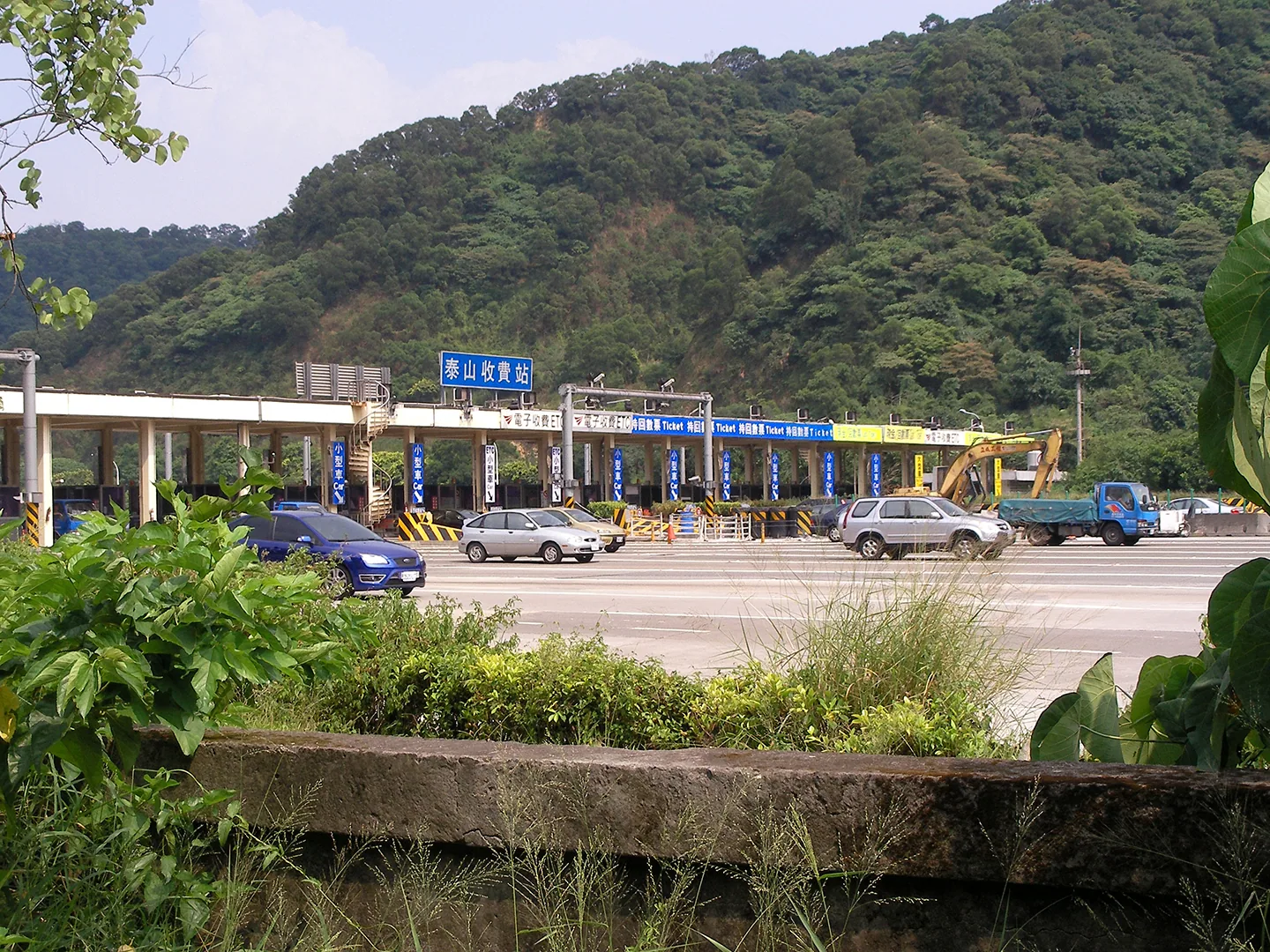
On the noon of July 30, 1974, the Zhongshan Expressway opened to traffic between Sanzhong and Zhongli, and the Taishan Toll Station was also inaugurated on the same day, becoming the first highway toll station in Taiwan2. On the opening day, the minimum fare was NT$15 per trip for small vehicles, and within two days, over 600 people came to apply for toll collector positions3.
For the next thirty-nine years after that, all drivers across Taiwan's highways went through the same action: slowing down, extending their right hand, handing the toll ticket to the toll collector, and within less than three seconds of fingertip contact, the car would drive away. After the full implementation of toll ticket-exclusive lanes on December 1, 1985, the authorities precisely measured this action as "the average time for each vehicle to pay the toll using a ticket was reduced to approximately 3.7 seconds"4.
The toll tickets themselves were paper, with 10 tickets per book. Small vehicles cost NT$400, large passenger and freight vehicles NT$500, and articulated trucks NT$650. They could be purchased at service areas, post offices, and gas stations. In 1983, a bulk discount was added—100 tickets per book at 95% of the original price, sold to freight operators5. As for the romantic-sounding term "the 'touch hands' era," it originated in 2023 when someone shared old photos of toll stations on a Facebook group, and netizens commented, "Back then, whenever my husband touched a female toll collector's hand, I was super jealous." The media later compiled and named it retrospectively. It was not a term used by the toll collectors themselves, nor an official or common designation during the toll station's operation, and it came into being a full ten years after the events themselves6.
Compared to "the 'touch hands' era," the toll collectors themselves remembered the scenes more directly. Former Taishan Toll Station toll collector Huang Yansheng, in an interview at a 2019 retrospective exhibition, said that inside the small toll booth, there was a mix of gasoline smell, dust, and exhaust fumes, and they had to stand for 8 hours a day. During his shift, "every 5 seconds, they had to greet a passerby," and the actions were "repeatedly handing out tickets, making change, and checking for counterfeit money and tickets." Taishan Toll Station had 22 toll booths lined up in a long row, and "between booths 2 to 5, there was a staircase connecting to an underground passage"7.
——The three seconds it took to hand over the toll ticket, and the three seconds of standing continuously for 8 hours in the toll booth, are two sides of the same moment. This moment is worth looking back on and clarifying: whose hand it was, how long it could pause, and how many seconds it took to hand over—all of these were precisely decided by someone behind the scenes.
All Female Hires: A Policy, Two Wrongly Linked Years
A commonly misremembered version is that in 1978, the Zhongzheng Bridge toll station in Taipei had a forged payment certificate scandal, leading the government to decide that all future highway toll collectors would be female. This causal link sounds plausible (women are more meticulous, less prone to corruption), so it has been passed down for a long time. But when you look at the timeline, the dates don’t add up.
The June 15, 1974 edition of the United Daily News carried a headline that still sounds a bit shocking today: “Taishan Station on the Highway Hires Female Toll Collectors.” The report quoted the then-director of the Ministry of Transportation’s Highway Bureau, Hu Meichung, who said women are “more meticulous,” “more flexible with computer equipment,” and mentioned that in the past, when the Provincial Highway Bureau was run by men, “embezzlement by toll collectors was rampant.” As a result, Taishan Station “broke with tradition” and decided to “hire all female toll collectors”8. In other words, the policy of hiring all females was announced when Taishan Station opened in July 1974, four years earlier than the 1978 Zhongzheng Bridge scandal.
Moreover, Zhongzheng Bridge is not part of the highway system. It is City Road 111, spanning the Xindian River and connecting Taipei City’s Zhongzheng District and New Taipei City’s Yonghe District. Administratively, it falls under the Taipei City Government’s Public Works Department / New Taipei City Government, not the Ministry of Transportation’s Highway Bureau. The direct consequence of the 1978 scandal was “replacing all toll collectors at Zhongzheng Bridge,” installing computer anti-fraud systems, and “removing the bridge tolls in advance.” This urban connector bridge was shut down by its own internal corruption case, which had no direct relation to the female recruitment policy that was already running four years earlier on the highway system9. The official records of the Highway Bureau from 1974 to 1996 do not mention “1978,” “Zhongzheng Bridge,” “scandal,” or “gender policy shift”4.
Furthermore, the phrase “all female” is not entirely accurate. As mentioned earlier, Huang Yansheng is male and worked at the Taishan toll station, which announced the all-female recruitment in 1974, for 8 years7. This indicates that regardless of the original intent of the policy, the “founding station” was not entirely female throughout its 39 years of operation. Additionally, the quote from the director citing “male toll collectors embezzling” as the basis for the policy is only from the 1974 report, with no further primary documents to verify. Even when writing, some room for doubt should be retained. What is certain is that the causal direction has been wrong for a long time: a recruitment policy decided in 1974 cannot be the “result” of a scandal that occurred four years later.
Huang Yansheng’s recollection of the ticket booth daily routine is more precise than the widely exaggerated version. Officially, the toll station is divided into day shift, night shift, and late-night shift, with 8-hour rotations, 30-minute breaks every 2 hours, and about 6.5 hours of actual duty in the booth10. He said in an interview that although the job was hard, “during holidays or cold winter nights, when truck drivers give warm drinks, it makes people feel warm”7.
—The policy decided whether this hand should extend or not, and also decided how often this hand should extend every 5 seconds, how long each time, and how many years.
Fifteen Yuan: A Gamble on an Entire Highway
Taiwan was not collecting road fees for the first time. On January 29, 1953, the day the Xiluo Bridge opened, "the bridge had a toll station," and all passing cars, buses, military vehicles, police cars, and various trains had to pay an "engineering benefit fee" to repay U.S. aid loans and strengthen road construction. This continued until 197711. Twenty years later, the highway itself took this same approach, but with greater scale and ambition.
The process of the highway taking this step is well documented by official records. The Ministry of Transportation commissioned the American consulting firm Dewhurst International to produce the "Feasibility Study Report for the North-South Expressway," which initially recommended that the road be free of charge. However, the government considered that "this highway project runs parallel to the existing provincial Western Trunk Line, and if it were free, it would attract a massive influx of traffic." Additionally, since the early stages of expressway construction relied on borrowing, "both construction and maintenance require significant funding." To achieve financial self-sufficiency, the Executive Yuan resolved in its 1,134th meeting to adopt the "user-pays principle" and designate the North-South Expressway as a toll road12.
Interestingly, the original decision text does not mention the "oil crisis" at all. The decision logic had only two points: preventing traffic imbalance caused by parallel provincial highways, and the need for financial self-sufficiency due to debt-financed construction. Moreover, the timeline does not align. The Highway Bureau was established on June 8, 1970, broke ground on August 14, 1971, and began collecting fees at Taishan Station for the Taichung to Zhongli section in July 197413. The first global oil crisis erupted in October 1973, three years after the Highway Bureau's establishment, two years after construction began, and even later than the toll decision. The commonly cited simplified narrative that "the 1970s oil crisis drove the toll policy" does not hold up under the official first-hand account. A more reasonable role for the oil crisis was as a background factor in Chiang Ching-kuo's subsequent (November 1973) announcement to expand the Ten Major Construction Projects, not as the origin of the toll station policy itself.
It is worth pausing to consider that at the time this decision was made, Taiwan's car ownership rate was still below 1%. The government had borrowed a large sum of money with national effort to build a highway that most people could not yet drive on, intending to repay the debt through future road users. On opening day, small cars paid 15 yuan per trip, while large passenger and freight trucks had different rates. This was betting the fate of an entire road on a prediction that "the age of driving would eventually arrive." In hindsight, this bet paid off, but for those who made the decision in 1970, they were gambling on a future they could not see—forty years ahead.
The moment a highway user first rolled down their window and handed over 15 yuan was the first pause this road set for itself, and the first installment payment of this grand gamble.
3.7 Seconds, and the Lawsuit Behind the ETC Project
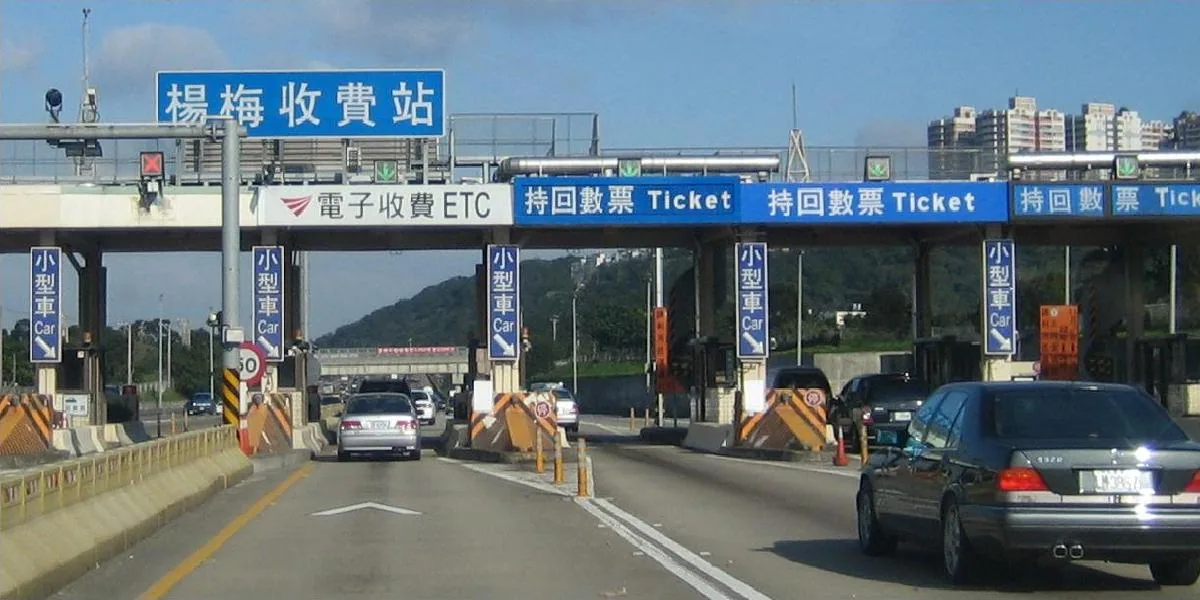
If the three seconds that began when toll stations opened in 1974 were a vague everyday impression, then from 1978 onward, those three seconds officially entered an era of scientific management and steadily shrinking duration. On the surface, this history seems like nothing more than "efficiency getting better and better," but tracing it further reveals cracks in the progress narrative itself.
In 1978, small vehicle lanes without change were set up across the line. On December 1, 1985, return ticket lanes were fully implemented. The official chronicle recorded it clearly: "The average time for each vehicle using a return ticket to pay at a toll station was shortened to approximately 3.7 seconds"4. 3.7 seconds—this is the most famous number on this highway, and likely the only daily action in all of Taiwan measured precisely to one decimal place by the state. It gave the initially fuzzy "touch-and-go" impression a tangible measurement result: a scientifically managed, precisely compressed 3.7-second number.
The initial direction was to shorten the pause. On February 10, 1995, manually operated electronic toll collection (ETC) lanes were launched, with manual and electronic systems running in parallel4. On February 10, 2006, the DSRC on-board ETC system went live—fifteen days later, the story developed a crack. On February 25, 2006, Taipei High Administrative Court ruled to revoke the Directorate General of Highways' designation of Far Eastern Union as the "most preferred applicant" for the ETC project, citing reasons including Far Eastern's phased payment plan and the fact that the Directorate had not discussed on-board unit prices and modification fees during the contract negotiations14. The revocation ruling came 15 days after the ETC system had actually gone live, but the government promptly allowed Far Eastern to continue operations. When the second-stage tender was relaunched the following year, Far Eastern won the bid again. At the same time, Song Naiyu, the chief of staff to Minister of Transportation Lin Ling-san, was found to have leaked the ETC evaluation committee member list to specific vendors in exchange for bribes. He was sentenced to 12 years in the first instance, with the Supreme Court upholding 11 years and deprivation of political rights for 8 years, a final ruling15. Lin Ling-san himself was not prosecuted due to insufficient evidence15.
Then, at 30 minutes past midnight on December 30, 2013, the system was compressed to zero all at once. Toll booths across Taiwan simultaneously shut down, switching to multi-lane free-flow distance-based charging. There was no longer a single physical toll station anywhere along the entire expressway where drivers had to stop and hand over a ticket16. From 3.7 seconds to 0 seconds—this is a path Taiwan completed while others were still walking slowly. Japan's Tokyo Metropolitan Expressway had an ETC usage rate of 98.7% as of November 2025, yet still expects to complete unmanned toll stations only in the spring of 2028, limited to a single metropolitan area network—15 years behind Taiwan's one-time nationwide conversion17.
—But wrapping all of this up into a "Taiwan leads Asia" achievement story doesn't entirely hold up either. Taiwanese media and corporate publications repeatedly mention Far Eastern Electronic's 2016 GRAA Global Road Achievement Award in the Intelligent Transportation category18, but the current public records on the International Road Federation (IRF) website only go back to 2020, with no 2016 list in sight. This doesn't necessarily mean the award was fake—it may simply be that past years were not archived—but according to the principle of downgrading any "first/earliest/only" claims, this achievement should be labeled as "reported by multiple sources" rather than stated as a direct assertion. Even the claim of being "the world's first fully electronic multi-lane free-flow toll collection system," when traced back to its earliest citation, originates from the Taiwan Ministry of Transportation's Directorate General of Highways in 2015, cited by English Wikipedia and international trade media, rather than being actively certified by any independent international standards organization19.
3.7 seconds, measured to one decimal place, compressed to zero. During the same period, a transportation minister's secretary served 11 years in prison, a system whose qualification had been revoked still went live, and a shiny trophy to this day cannot be found on the host's official list. This is the complete arc of the efficiency story—and also the two sides of this highway that it is willing and unwilling to tell.
947 People, and a Mediation Eleven Years Later
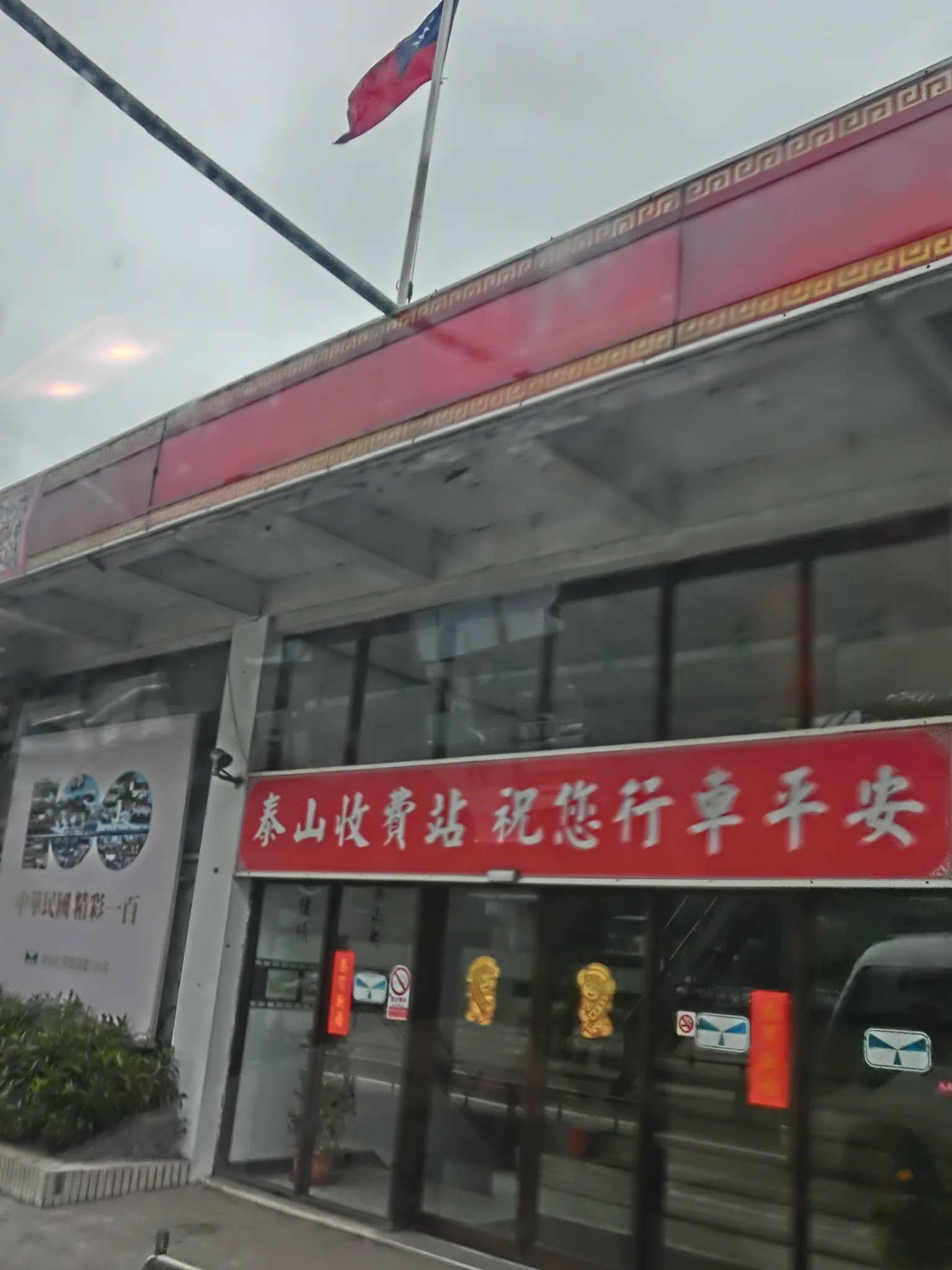
Standing on the street and listening, beyond this system there is another kind of pause entirely out of proportion — a human one.
At 12:30 a.m. on December 30, 2013, as all manual toll stations across Taiwan shut down simultaneously, the 947 toll collectors employed by the Directorate General of Highways were all laid off in one sweep. The last 132 employees in northern, central, and southern Taiwan collected the final manual toll ticket during their shift20. Most of these 947 people were contract employees, with tenure ranging from 12 to 29 years, and nearly 80% were middle-aged women21. They were not covered by the Labor Standards Act's severance pay provisions, and their departure package was a gratuity-based scheme of "severance savings or severance pay, plus an additional or supplemental 7 months' salary"20.
This layoff sparked an eleven-year protest movement. The demonstrators knelt every six steps on their march from the Ministry of Transportation to the Executive Yuan, went on a hunger strike for two hundred hours, and climbed onto the East Lake ETC toll gantry — painting their faces blue in a parade, the very color of the electronic sensing lights that replaced their jobs22.
In 2016, after standing outside the DPP headquarters for over thirty hours, they finally reached an agreement with the new government — only to see it scaled back. On December 19, 2019, the Taipei High Administrative Court ruled against them in the first instance. Sun Xiulan, chairperson of the Self-Help Association, choked up on the spot, saying, "I really can't accept this result," accusing the court of "trampling government integrity underfoot"23.
They appealed to the Supreme Administrative Court, which remanded for retrial. Finally, on December 30, 2024 — exactly eleven years to the day from the layoff — a mediation settlement was reached, and on February 15, 2025, a banquet of twenty tables was held in Kaohsiung to celebrate the end of the protest24. This complete eleven-year timeline has already been thoroughly documented in the sister article National Highway System. Readers can go straight there for the full account of the kneeling marches, the blue-face parades, and the climb onto the ETC gantry, as well as the analysis of "political promises being broken and whether that constitutes an administrative contract are two separate issues."
Sun Xiulan, chairperson of the Self-Help Association, said it more clearly than any outsider's summary: "Throwing away toll collectors after using them up — this is unfair and unreasonable treatment of workers."25
Three seconds and eleven years — two kinds of pause drawn by the same system, entirely out of proportion.
Three Toll Booths Preserved
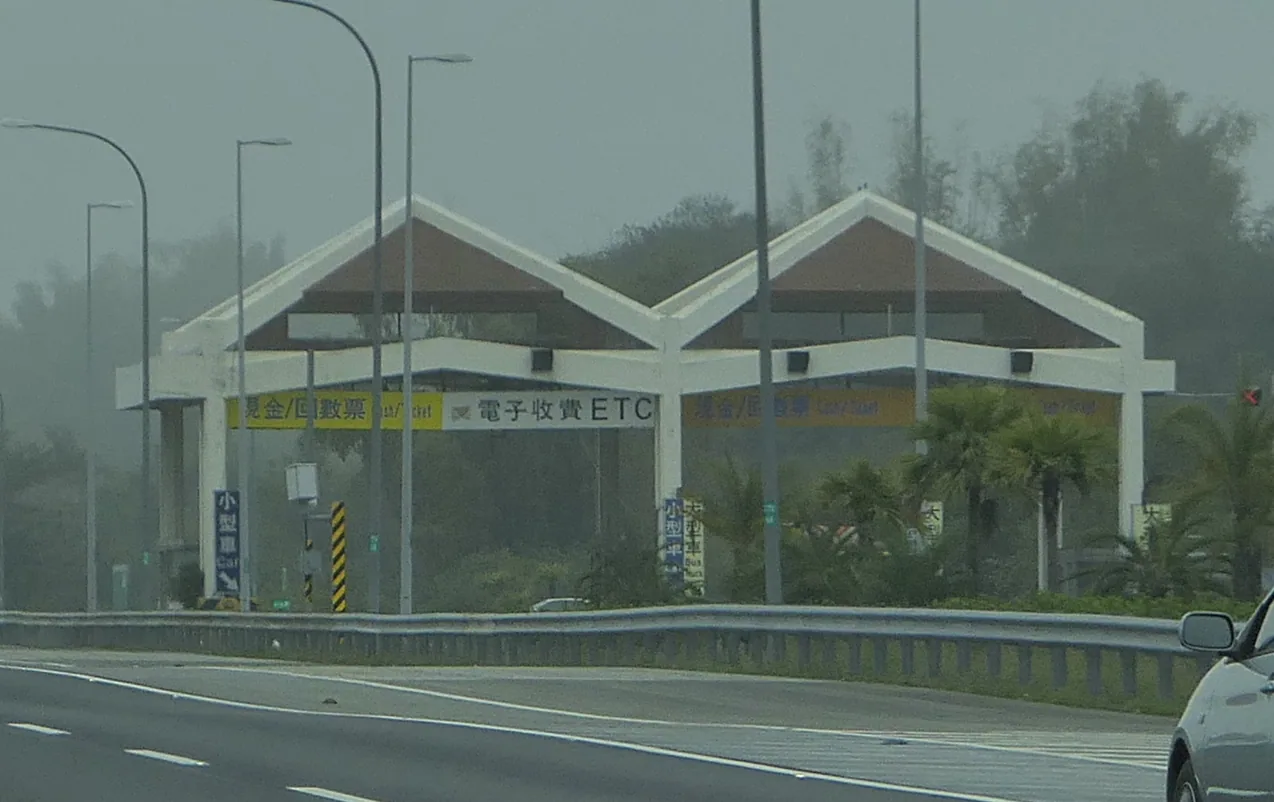
Looking at today's highway map, all toll stations have been demolished, with only three ticket booths specially retained: Taishan, Dajia, and Tianliao, representing the northern, central, and southern maintenance engineering offices respectively26. This is a rare instance of the state voluntarily preserving buildings it has demolished itself.
Taishan Station was the earliest of all toll stations, and thus the only one originally built with an underground tunnel — because it was constructed first, the tunnel was added later as reinforcement. The later-built stations along Highway 3, however, had underground passages built into their design from the planning stage27. The relic display room offers one tour per day, Monday through Friday, each accommodating ten to thirty people, and reservations must be made in advance. The underground passage stretches 180 meters, with "every door in the passage connecting to an escalator leading to the ticket booths" — an entire subterranean world where toll collectors once carried heavy bags of equipment up to one of the 22 ticket booths28.
Dajia Station was only opened in 2003, belonging to Highway 3. The official description is extremely restrained: "The old site of the former Dajia Toll Station, located near the Dajia urban area, features architectural elements resembling temples."29 Media reports often use architectural commentary such as "the shape of the three temple gates," "a deformed Sancha roof," and "red glazed bricks without glaze" to fill in the gaps left by official silence30. Incidentally, the so-called "escape tunnel" mentioned in local folklore was actually a service corridor originally used by toll collectors and highway police. Starting in 2011, the Ministry of Transportation gradually closed approximately 40 similar service corridors across Taiwan, with violators subject to a fine of NT$3,60030.
Tianliao Station represents the youngest architectural image among the three. Completed in December 1999, it was the first toll station to open along the southern section of Highway 3. The official explanation of its design concept is detailed: "Incorporating nearby Shoushan Mountain and the Moon World scenic area, the station adopts a mountain-shaped roof design. The white horizontal stripes beneath the roof are designed with a slight wave pattern, and the station nameplate features a pointed pentagonal shape."31 The preserved area includes not only the mountain-shaped roof but also "the spiral staircase for toll collectors to ascend and descend the ticket booths and the underground passage." However, at the very end of the same official text, an honest note was added: "Due to the unsuitability of highways for prolonged parking and lingering, the site is currently not being developed for tourism and leisure purposes."31
The state is willing to let buildings be memorialized, but has no intention of letting people actually approach them.
The three ticket booths are lined up along the highway: visible, but not meant for stopping. When driving past, that fleeting glimpse of a mountain-shaped roof or temple pagoda stirs something within you, yet remains elusive — they sit right beside the road, but the very logic of this road does not allow you to stop.
Further Reading
- National Highway System — Power and Speed Over Fifty Years of Taiwan's Highways, including the full account of the toll collectors' eleven-year struggle for an "unpublicizable settlement"
- Taiwan Transportation System — The overall transportation network from highways, high-speed rail, metro to local roads
Image Sources
| File | Description | Source | License |
|---|---|---|---|
taishan-toll-station-2008.webp (hero) |
Exterior of Taishan Toll Station, five years before closure | MiNe (Flickr), via Wikimedia Commons | CC BY 2.0 |
taiwan-expressway-etc-lane-2007.webp |
ETC lanes and manual toll booths coexisting at a Taiwan expressway toll station (2007) | Stkhomepage, via Wikimedia Commons | CC BY-SA 3.0 |
taishan-toll-station-2013-closing.webp |
Taishan Toll Station about ten months before closure (February 2013) | Ompaneyui, via Wikimedia Commons | CC BY-SA 3.0 |
tianliao-toll-station-preserved-2022.webp |
Preserved portion of Tianliao Toll Station (National Highway 3, 2022) | Pbdragonwang, via Wikimedia Commons | CC BY-SA 4.0 |
References
- Where Is the Border? KANO and Collective Memory — A commentary by Chen Zixuan published in Mingren Tang, pointing out that social collective memory and history often diverge, forming a critical framework for understanding nostalgic internet narratives such as 'holding hands'.↩
- Chronology of Highway Toll Collection — Official chronology by the Ministry of Transportation's Freeway Administration Bureau, listing major toll-related milestones from 1974 to 2013; noting that 'on July 30, 1974, Taishan Toll Station began collecting fees in conjunction with the opening of the Sanzhong Zhongli section, becoming the first toll station to collect fees'.↩
- Report Time: Taishan Highway Station Hires Female Toll Collectors — United Daily News Digital Archives 'Report Time,' reprinting the original June 15, 1974 United Daily News article, including recruitment criteria at the time of opening and Director Hu Meixiong's remarks.↩
- Chronology of Highway Toll Collection — Ministry of Transportation Freeway Administration Bureau, with verbatim records of 'in 1978, small vehicle lanes without change were set up along the entire line,' 'on December 1, 1985, dedicated lanes for return tickets were fully implemented, reducing average toll payment time per vehicle to about 3.7 seconds,' 'ETC lanes opened on February 10, 1995,' and 'on December 30, 2013, it switched to distance-based electronic toll collection'.↩234
- Return Ticket (Wikipedia) — Entry states that the main specifications were 'small vehicles at NT$400 for 10 tickets per book; large buses and trucks at NT$500 for 10 tickets per book; articulated vehicles at NT$650 for 10 tickets per book'; 'additionally, bulk discounts of 100 tickets per book at 95% of face value' were added in 1983.↩
- You Know You're Old When You've Seen 'This Place'! The Must-Pass Checkpoint on the Highway: Millions of Memories from the 'Hold Hands' Era — TVBS News Network report from September 16, 2023, explaining that the term 'Hold Hands Era' originated from netizens sharing old photos of toll stations in a Facebook group, with the media summarizing netizen comments, and is not an official term used by toll collectors or during operations.↩
- Taishan Highway Toll Station Reappears: Toll Collector's Secret Path Revealed — China Times report from December 10, 2019, covering the 2019 Taishan Toll Station retrospective exhibition, including former toll collector Huang Yansheng's verbatim testimony: 'Every day we had to stand for 8 hours on a tiny ticket booth mixed with gasoline smell, dust, and exhaust fumes'; 'Taishan Toll Station had 22 ticket booths, spaced quite far apart, so there were stairs between every 2 to 5 booths connecting to underground passages'; 'on average, every 5 seconds we had to greet a passerby'; 'although the work was hard, when truck drivers gave us warm drinks during holidays or cold winter nights, it made us feel warm' (the last two sentences are corroborated by three independent media sources: Wind Media, ETtoday).↩23
- Report Time: Highway Taishan Station Hires Female Toll Collectors — United Daily News 'Report Time' reprint, June 15, 1974, original United Daily News report: Taishan Station 'broke tradition' by 'hiring all female toll collectors.' Director Hu Meilong said women are 'more careful' and 'more flexible with computer equipment,' and noted that 'in the past, the provincial highway bureau had male toll collectors,' where 'cases of toll collectors embezzling funds were rampant among the few unscrupulous ones.'↩
- Historical Investigation of the Zhongzheng Bridge Toll Station Scandal — Free Epoch column, reporting on the Criminal Police Bureau's crackdown in 1978 on the Zhongzheng Bridge toll collectors who forged payment receipts to embezzle funds; measures taken were 'replacing all toll collectors at Zhongzheng Bridge,' 'installing computers to prevent fraud,' and 'preemptively suspending toll collection on two bridges.' Zhongzheng Bridge is on Provincial Highway 111, spanning the Xindian River and connecting Taipei City's Zhongzheng District with New Taipei City's Yonghe District, and is administratively unrelated to the expressway system (see also Wikipedia 'Zhongzheng Bridge' (https://zh.wikipedia.org/zh-tw/%E4%B8%AD%E6%AD%A3%E6%A9%8B)).↩
- Recollecting the Evolution of Expressway Toll Collection (2340) — Ministry of Transportation Digital Transportation Museum, documenting the three-shift system at toll stations: 'day shift 08:00-16:00; night shift 16:00-24:00; late night shift 24:00-08:00, with an average 30-minute break every 2 hours.' Additionally, according to United News Network 'Report Time' (https://time.udn.com/udntime/story/122835/8095722), it is supplemented that 'during shift rotations there is 20 to 45 minutes of rest time, with actual booth duty lasting about six and a half hours.'↩
- Xiluo Bridge: The First Large Bridge in the Far East in Taiwan — National Development Council Archives Administration Office researcher Xu Fengyuan's article, recording that Xiluo Bridge began collecting 'engineering benefit fees' on January 29, 1953; all types of trains and motor vehicles were required to pay, 'through the mechanism of using roads to maintain roads, the fees were used to repay U.S. aid loans and strengthen road construction,' and toll collection was stopped in 1977.↩
- Origin of Charging - Beginnings — Ministry of Transportation Digital Transportation Museum official page, clearly stating that the feasibility study originally recommended no tolls, but the government considered two reasons: 'to divert traffic from provincial highways and to ensure financial self-reliance for construction through borrowing.' The Executive Yuan decided at its 1134th meeting: 'adopting the user-pays principle, designating the north-south expressways as 'toll roads'—the entire page does not mention 'oil crisis.'↩
- Zhongyang Expressway (Wikipedia) — The entry states: 'In 1970 (Republic of China Year 59), then Chairman of the Executive Yuan's National Development Council Chiang Ching-kuo pushed through the north-south expressway construction plan against opposition. On June 8 of the same year, the Ministry of Communications of the Republic of China established the Taiwan Area Expressway Engineering Bureau.' 'On August 14, 1971 (ROC Year 60), construction of the north-south expressway began.' 'On July 29, 1974 (ROC Year 63), the section from Damingli Interchange to Neiwei Interchange was completed and opened to traffic'—both the establishment of the engineering bureau and the start of construction occurred before the first oil crisis in October 1973.↩
- Taipei High Administrative Court Revokes Far Eastern's Status as Most Preferred ETC Applicant — Epoch Times, February 25, 2006, real-time report, carrying the Taipei High Administrative Court's ruling on the same day: Far Eastern's plan called for phased toll collection, but the Bureau of Expressways did not discuss vehicle-mounted pricing and modification costs during the contract negotiations; the ruling occurred 15 days after the ETC system actually went into operation (February 10).↩
- ETC Bribery Case: Song Naiyu's Verdict — SETN News reported that Lin Lingsan, the chief secretary of the Ministry of Transportation's ETC selection committee, leaked the list of selection committee members to a specific vendor in exchange for bribes. He was sentenced to 12 years in the first instance, and the Supreme Court upheld an 11-year sentence with 8 years of political rights deprivation. Lin Lingsan himself was not prosecuted due to insufficient evidence.↩2
- History of Highway Toll Collection — Directorate General of Highways, Ministry of Transportation, December 30, 2013 entry: 'Changing the billing method from fixed-rate per-trip charging to seamless conversion to electronic per-mile charging.'↩
- Taipei Highway Company ETC Exclusive News Release — Taipei Highway Company official website reported that ETC usage rate reached 98.7% in November 2025; there are currently 35 ETC-exclusive toll stations, with plans to add up to 90 by 2025, aiming to complete ETC exclusivity at all mainline toll stations by spring 2028.↩
- Far Eastern New Century Wins 2016 GRAA Global Road Achievement Award — Business Times reported on November 1, 2016; the organizing body's International Road Federation IRF official GRAA page currently only has publicly available award records dating back to 2020, missing the 2016 list. This does not mean the award is fake, but it is difficult to independently verify.↩
- Electronic Toll Collection (Taiwan) (English Wikipedia) — The article claims 'Taiwan was the first country to switch from manual tolling to all-electronic, multi-lane free-flow tolling on all of its freeways,' citing 'Taiwan National Freeway Bureau (June 5, 2015)'—the Ministry of Transportation's own statement, not an independent international certification.↩
- Process of Toll Collector Reassignment — Directorate General of Highways, Ministry of Transportation official website reported that all 947 toll collectors were reduced, with the date set as December 30, 2013; the severance payment method was 'severance pay or retirement benefits, plus an additional 7 months' salary'; the last 132 laid-off workers' unemployment is also mentioned in SETN News.↩2
- Sun Xiulan on the Protest Marathon — Cheap Labor Network reported on November 3, 2019, quoting Self-Help Association chairman Sun Xiulan discussing the tenure range of 'shortest 12 years, longest 29 years,' with nearly 900 employees, 'about 80% being middle-aged women'; the same article quoted Political Commissioner Lin Wanzhi later claiming 'the agreement only represents personal views, not the government.'↩
- Timeline of National Highway Toll Collector Protests — Focus on Events Social Movement Database records each event: first street protest on January 3, 2014, first six-step-one-kneel on October 25, 2014, hunger strike and climbing onto the Donghu ETC toll booth on November 28, 2014, 200 people doing six-step-one-kneel carrying eggs in a self-mortification march on March 22, 2015, and reaching an agreement with the DPP external office sit-in on August 15-16, 2016; details of the blue parade are available in New Bloom Magazine.↩
- Scene at the Judgment on Decision Day 1219 — Cheap Labor Network reported live on December 19, 2019, covering the Taipei High Administrative Court's first-instance judgment in Case No. 1125 of 2017 ('dismissing the plaintiff's lawsuit') (see also Judicial Yuan Press Release); Sun Xiulan choked up on the spot saying 'really can't accept this result,' accusing the court of 'trampling government integrity underfoot'; protesters shouted 'Tsai Ing-wen ruins laborers, Tsai Ing-wen deceives achievements'; the Self-Help Association sought compensation of NT$310 million.↩
- National Highway Toll Collectors' 11-Year Protest Reaches Mediation Settlement — Focus on Events reported on February 19, 2025, stating 'After 11 years of protests, the National Highway Toll Collectors Self-Help Association reached a mediation settlement with the government on December 30, 2024'—exactly 11 years apart from the layoff date of December 30, 2013, on the same calendar date; a banquet was held in Kaohsiung on February 15 to celebrate the end of the protest with 20 tables.↩
- Sun Xiulan on the Protest Marathon — Cheap Labor Network reported on November 3, 2019, with Sun Xiulan's exact words on the day: 'Using toll collectors up and throwing them away is unfair and unreasonable to workers.'↩
- Dajia Station Cultural Exhibition Hall — Central Maintenance Engineering Office, Directorate General of Highways, Ministry of Transportation; also reported by Liberty Times that the Directorate General of Highways decided to 'preserve one toll station as a memorial in each of the northern, central, and southern regions of Taiwan.'↩
- Beijing Workers Pioneer Online Historical Archive Exhibition — Northern Maintenance Engineering Office, Directorate General of Highways, Ministry of Transportation, noting that Taishan Station is the only one among the original 23 toll stations with an underground passage, because it was the earliest constructed station; later-built National Highway No. 3 stations all had underground passages built-in from the design stage.↩
- Ms. Taipei's Life of Struggle: A Guide to the Taishan Toll Station Cultural Museum — Blog word-for-word recording of the Taishan Cultural Museum guide: 'This underground passage is 180 meters long, and every door in the passage connects to an escalator leading to the toll booth'; also reported by Ministry of Transportation Digital Transportation Museum that toll collectors 'carried heavy duty bags, walked out of the toll booth, went down the escalator through the underground corridor.'↩
- Dajia Station Cultural Exhibition Hall (Official Page) — Central Maintenance Engineering Office, Directorate General of Highways, Ministry of Transportation: 'The old site of the original Dajia Toll Station is near the Dajia urban area, with architectural exterior features resembling temple imagery'—the official description of the architectural features is only these dozen or so words, without using specific terms like 'Sanchuan Hall.'↩
- Dajia Toll Station: Architectural Details and the Alleged Escape Tunnel — United Daily News 'Childhood Nostalgia in the Countryside' column, featuring Dajia Station's 'red unglazed ceramic tiles', 'the form of the three temple gate tower buildings', and 'the deformation of the peak'; and clarifying that the so-called 'escape tunnel' is actually a 'service corridor used by highway toll collectors and highway police in the past'; after 2011, the Freeway Bureau successively closed about 40 similar service corridors nationwide, with violators subject to a fine of NT$3,600.↩2
- Sandy Ridge Roof: Tianliao Toll Station Partially Preserved — Ministry of Transportation's Freeway Bureau Southern Maintenance Engineering Division, verbatim design concept: 'incorporating nearby large and small hills, the Moon World scenic area, adopting a sandy ridge roof style, the white horizontal banner under the roof designed as a slight wave shape, the station nameplate in a pointed pentagonal shape'; at the end of the same section, the Southern Engineering Office self-states 'since highways are not suitable for long-term parking, the station building is currently not being developed in the direction of tourism and leisure'; [Liberty Times, January 1, 2014 report] (https://news.ltn.com.tw/news/local/paper/743295) supplemented that the reserved scope, in addition to the sandy ridge roof, 'the escalator of the toll collector's ticket booth and the underground passage will also be preserved together.'↩2