
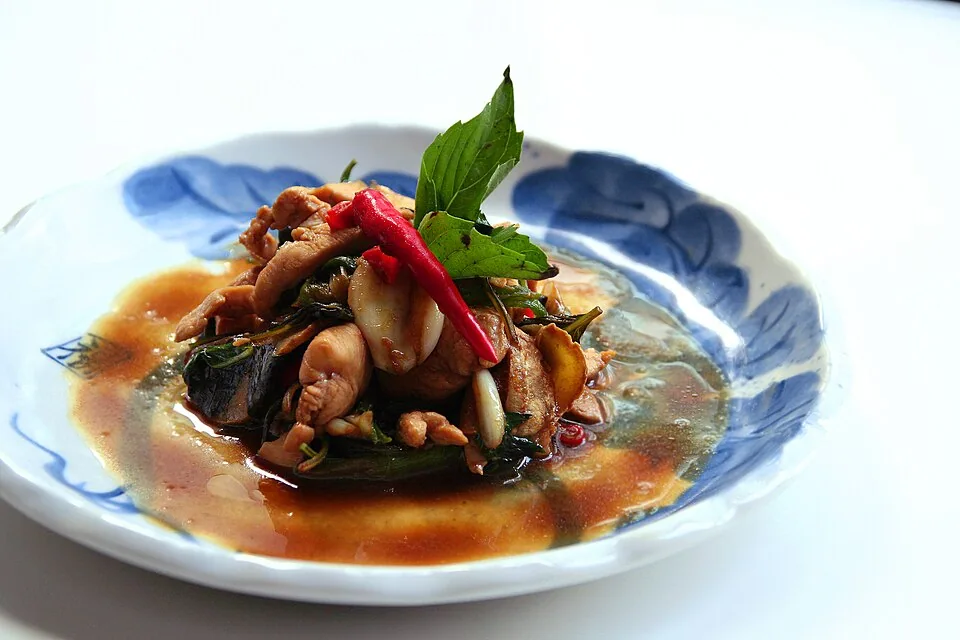
Handmade Taiwanese cuisine (台語 tshiú-lōo-tshài) means "signature dishes." In Neimen, Kaohsiung, the white chalk soil grows nothing, yet produces Taiwan's highest density of total-pu-shi (總鋪師,banquet caterers) — 25,000 tables annually in golden years, peak revenue NT$12 million. A pot of caiwei tang (菜尾湯,leftover soup) takes four to eight hours to prepare; whether it harmonizes well or not becomes known to the whole village the next day.
30-Second Overview
Handmade cuisine (手路菜) is Taiwanese for "signature dishes," referring to those requiring real skill, no standard recipes, passed down through master-apprentice oral tradition. Its most concentrated display ground is pān-toh (辦桌) — roadside tents, on-site cooking, Taiwan's banquet tradition. Kaohsiung Neimen, due to infertile land, unexpectedly became Taiwan's total-pu-shi density champion; in golden years, one banquet company hosts 25,000 tables. But from wedding banquets to COVID-19, banquet orders shrank 90% in two decades, taking not just food flavors but "hai caiwei" (還菜尾,returning leftover soup) neighborhood mutual aid.
Spring 2020, Kaohsiung Neimen Zizhu Temple courtyard raised several brand new flags, featuring braised pork, fish maw soup, eight-treasure balls — not banquet ads, but total-pu-shi roadside stalls. 48-year-old Xue Meng-hui stir-fried "ants climbing trees" while explaining to The Reporter: "Now there's no banquet, people still need to survive!" 1
The Xue family is Neimen's total-pu-shi dynasty. Xue Meng-hui started following his father Xue Qing-ji since high school, two generations accumulating 50+ years experience. Opening his father's work calendar, entire farmer's almanac filled — 25,000 tables annually, major days 10+ venues in one day, chefs leaving at dawn, noon then evening shifts, not knowing if getting four hours sleep 1.
But 2020 pandemic froze all this. Catering and group meal contracting industry revenue dropped 32.3% year-on-year 2, banquet orders shrank 90%. Xue Meng-hui's农历二、三月 (lunar second and third months) cancelled 500+ tables, had to work at friend's bento shop.
This isn't banquet industry's first crisis, but possibly the last.
Pān-toh: Roadside Is the Banquet Hall
Pān-toh (辦桌) is Hokkien culture's banquet tradition, brought to Taiwan with immigrants, recorded since Qing dynasty 3. Weddings, funerals, temple festivals, moon celebrations — hosts invite total-pu-shi to temple courtyards, school playgrounds, road sides to set up tents, on-site stoves, from chopping to serving seamless. Unlike restaurants, pān-toh has strict rituals: dish choices, serving order, seat arrangements all讲究.
General pān-toh about 12 dishes,讲究 "起承轉合" (opening, development, climax, conclusion): cold plates opening allow guests to sit, soups warming stomach, middle section featuring heavyweight main dishes — red crab rice cake, steamed grouper, Buddha jumps over the wall — finale with chicken soup, desserts, fruits symbolizing completeness. Each dish is handmade: red crab rice cake controlling steaming time letting crab roe penetrate rice grains; Buddha jumps over the wall 20+ ingredients separately processed then sealed pot stewing; braised pork fat-leanness even, melting entrance but not falling apart.
📝 Curator's Note: Often people describe restaurants as "civilian field," pān-toh as "martial field." Total-pu-shi's test not just culinary skill — regardless of strong wind rain, bridge broken, road collapsed, as long as host doesn't cancel, must complete mission.
Taiwan senior total-pu-shi Wang Yi-yong once hosted 120 tables at Kaohsiung school auditorium, evening five o'clock heavy rain arrived, water rising to calves, stoves extinguished, pots floating on water, even trout preparing to enter pot swam away 10+ fish. Wang Yi-yong immediately cut canvas tent draining water, moved kitchen to eaves, rolled up sleeves catching fish first. Finally missing one trout, made up with reserve table ingredients, all guests ate 1.
Neimen: Total-Pu-Shi Hometown on Infertile Land
Kaohsiung Neimen surrounded by mountains, soil alkaline white chalk, unfavorable for farming, only drought-resistant thorny bamboo surviving. Before 1960s, residents lived making bamboo baskets supplying Qishan banana farmer packaging; low-cost paper boxes抢市後,bamboo weaving industry declined 1.
But exactly in that era, Taiwan economy took off, banquet demand exploded. Neimen people whose land grew nothing found new path — cooking others' banquets.
Neimen temple dense,阵頭 (阵頭) momentum grand, every festival had dining demand, letting total-pu-shi business long prosperous. Xue Meng-hui's father Xue Qing-ji with apprentices, chicken vendors, pig vendors each invested 20,000 NT$ forming "four-in-one" company, providing ingredient supply, cooking, table chair rental一条龙 service 1. Second/third cooks after accumulating experience going independent, Neimen's banquet energy like rolling snowball growing, becoming Taiwan's total-pu-shi density highest township, called "total-pu-shi hometown" 4.
Golden years approximately 1988 to 2000. Xue Meng-hui recalled, Lee Deng-hui presidency period, not just traditional "eight celebrations one funeral" needing pān-toh, children earning doctorate, pigeon racing winning money had reasons for banquets. Farmer's almanac red good days, temple mouth and road sides all "Heisong Grand Hotel" — early banquet canvas tents provided by beverage merchants, printed Heisong soda ads, became pān-toh synonym 1.
Caiwei Tang: Total-Pu-Shi's Final Exam
Among all pān-toh handmade dishes, highest status not Buddha jumps over the wall, not red crab rice cake — last dish "caiwei tang."
Many think caiwei means leftover dishes, Taiwan cuisine matriarch Huang Wan-ling spent 30 years clarifying this misunderstanding. "As name suggests, chef's last dish, the one they can leave after finishing, called caiwei. Sixty years ago, no one questioned caiwei tang as leftovers; it even tested master skill great dish." 5
Authentic caiwei tang requires reserving seven classic banquet dishes partial ingredients beforehand: braised soup, five-willow branches, braised pork, bamboo shoot-sauerkraut-pork rib soup, flatfish-bai白菜 stew, white radish-pork stomach soup, fish ball soup 6. From guests eating first dish, total-pu-shi silently calculating — how much reserving, when entering pot, ratio grasping.
Taiyu "结" (kat) means harmonizing, blending. Caiwei结 takes four to eight hours, constantly stirring, tasting, adjusting, temperature, humidity, fire level, ingredient status all instant judgment. Huang Wan-ling independently attempted once, spent six days 5.
💡 Did You Know? "Hai caiwei" (還菜尾) is pān-toh's most human-warm segment. After banquet ends, host family sending strong arms carrying caiwei tang door-to-door giving helping neighbors. "Hai" pronounced third tone, carrying bowing gratitude. Neighbors receiving then cooking again, adding cabbage making two pots. Caiwei结 not well, whole village knew next day, total-pu-shi next year business directly affected 7.
Huang Wan-ling said: "Taiwan almost all dishes carry immigrant color,唯独 caiwei tang not, it's this land 300+ years adapting to local conditions dish, Taiwan's root." 5
Twenty Years Decline
Banquet industry crisis didn't start with pandemic. Chiayi City Catering Industry Union Secretary Zhong Yue-chun used three disasters marking scale: "921 hurt a bit, SARS hurt more than half, this year's pandemic, may let pān-toh become declining industry." 1
More fundamental reason lifestyle change. Hotel wedding banquets replaced roadside pān-toh, young unwilling learning physical pān-toh skills, processing export zone SMEs following industry westward closing — Xue Meng-hui said, old clients two years not finding him hosting year-end party, asked already closed 1.
"We worry not just this year, more worry everyone not inviting (pān-toh) becoming habit." — Taichung pān-toh operator Cai Yufeng 1
This sentence revealed pān-toh industry's deepest fear. Pān-toh disappearing not just business, but entire social operation method: temple festivals driving dining demand, total-pu-shi supporting water脚 (水腳,assistants) and suppliers, "hai caiwei" maintaining neighborhood relations. When this cycle broke, breaking not just industry chain.
Those Saving
Someone desperately keeping these flavors.
Huang Wan-ling initially wanted to be interview writer, following elderly total-pu-shi interviewing wanting stories. Result old master looking at her hand-no-binding-fortitude appearance, suddenly shed tears — because no one willing learning. That tear changed her life direction: starting from water脚,following multiple total-pu-shi 100+ banquets, training heavy lifting supporting physical strength 5. Since 2011, she sequentially published "Total-Pu-Shi Pān-toh," "Grandmother's Kitchen," "Old Taiwan Cuisine," "Century Taiwan Ancient Flavor," "Taiwan Cuisine Original Flavor," leaving old Taiwan cuisine methods and terroir stories in text 8.
Another saving is commercial transformation. Neimen's Along Shi making braised pork, Buddha jumps over the wall frozen vacuum packs for e-commerce 9; some total-pu-shi transforming to祭祀供品 (祭祀供品,sacrificial offerings), because even without large activities, worshiping won't decrease 1. But roadside tent, on-site cooking, 12-dish起承轉合 pān-toh experience, frozen packaging can't replicate.
Handmade cuisine's cruelest point here: it's living craft, passed person-to-person. Salt grabbing handful exactly how many grams, high fire turning low fire timing, "color right" what color — these mnemonics exist only in master's hands and eyes. Person not existing, dish not existing.
Xue Meng-hui flipping father's filled farmer's almanac, script marks industry golden year scale. He doesn't know that journal recording not just menu and table counts — it recording one entire era's Taiwanese how celebrating, how thanking, how connecting whole village with one pot of soup.
Image Sources
- Archon6812 / Wikimedia Commons — CC BY-SA 3.0.
- 總舖師與水腳最漫長的寒冬——報導者 — Report on the decline of roadside banquet businesses during COVID-19. (2020)↩2345678910
- 經濟部統計——外燴及團膳承包業營業額 — Ministry of Economic Affairs statistics on catering revenue. (2020)↩
- 辦桌 — 維基百科 — Encyclopedia overview of Taiwanese roadside banquets.↩
- 一家辦桌萬家香 — 內門辦桌傳奇 — Account of the roadside banquet tradition in Neimen.↩
- 黃婉玲《台菜本味》讓瀕臨失傳的經典「菜尾湯」續飄香 — 500 輯 — Feature on Huang Wan-ling and the preservation of classic Taiwanese dishes. (2021)↩234
- 菜尾≠剩菜 — 台菜教母教煮經典好味「菜尾湯」 — 聯合報橘世代 — Explanation of the Taiwanese dish known as cai-wei soup. (2021)↩
- 經典「菜尾湯」不是剩菜!7 道獨立菜色食材熬上 4 小時 — ETtoday — Report describing the ingredients and preparation of cai-wei soup. (2021)↩
- 台灣英雄 — 台菜教母黃婉玲 — 自由時報 — Video feature introducing Taiwanese food researcher Huang Wan-ling. (2022)↩
- 內門阿隆師辦桌 — Rakuten — Commercial listing for the Neimen banquet business cited in the article.↩