
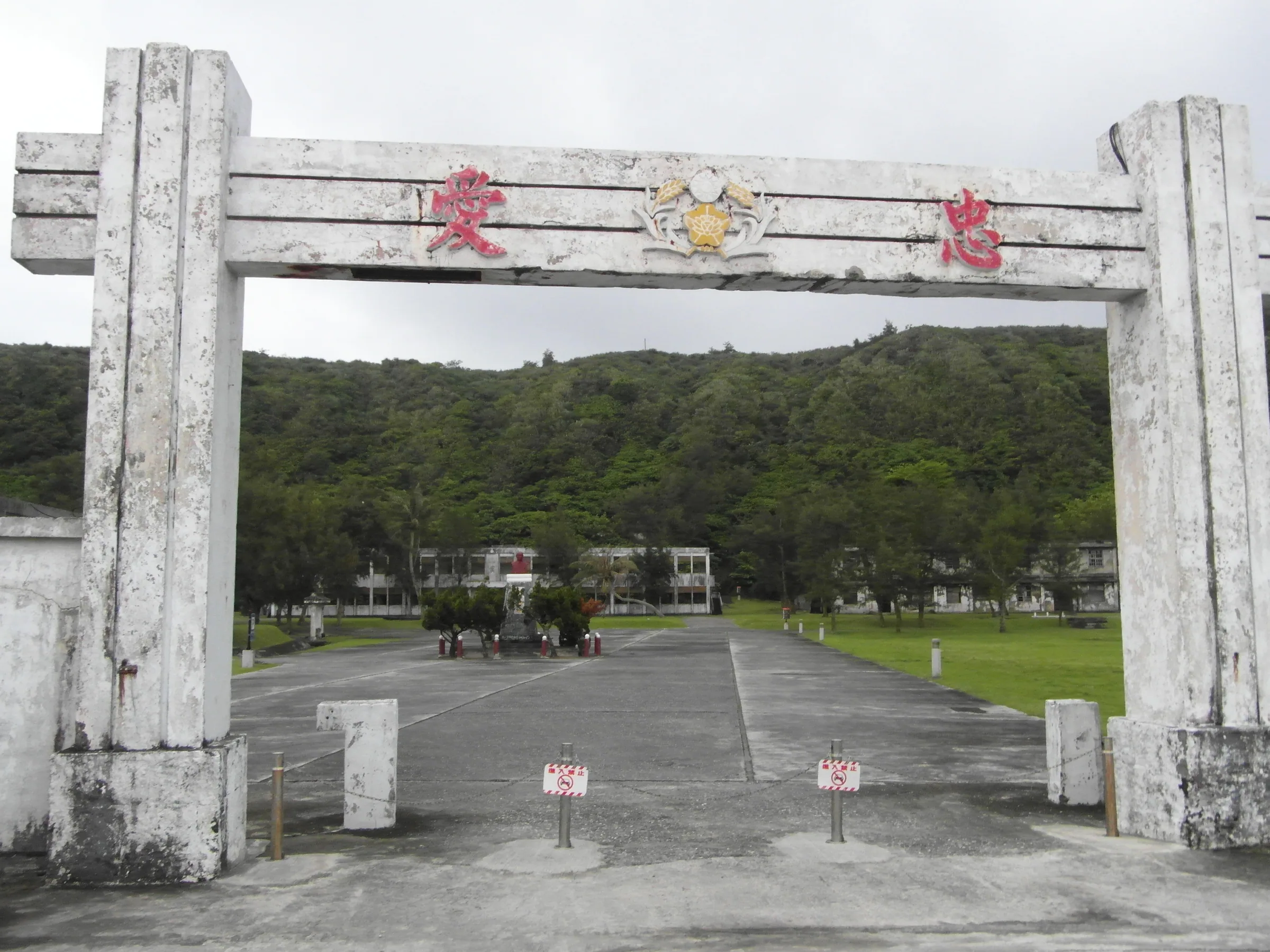
30-Second Overview: Green Island, a Solitary Isle Layered with Memory
Green Island, a seemingly scenic Pacific island, holds layers of memory buried deep in its history. It was not only the "Fire Island" (火燒島) of the White Terror era, where political prisoners were sent, but also the "homeland" of underworld big brothers.12 From political prisoners building the very walls that confined them with their own hands,3 to washing clothes and passing secret messages along Liúmagōu Creek;4 from the selfless dedication of the "strongest infirmary"5 to the artistic redemption of the "Violin of Hope";6 from the nameless graves of the "Thirteenth Squadron" cemetery7 to a single word of contempt from Shih Ming-teh,8 the story of Green Island Prison is the most complex microcosm of Taiwanese society's confrontation with authoritarianism, freedom, and the transformation of memory.
Prologue: Whispers in the Sea Breeze — Green Island, a Palimpsest of Memory
The sea breeze brushes over Green Island's coral reefs, carrying a salty, damp breath and whispering secrets from the island's depths. On May 17, 1951, the first group of political prisoners was sent to this remote island. They faced not ready-made cells, but barren land. They were ordered to quarry stones at the shore and transport them, building the walls and barracks that would imprison themselves from coral limestone.3 This was an absurd beginning, and the prelude to the story of Green Island Prison. The "New Life Training Center" of that era is today the "Green Island White Terror Memorial Park,"1 while the adjacent "Chongde New Village" houses violent criminals from across Taiwan, earning it the nickname "the Homeland of Big Brothers."2 How many different memories does this island carry?
📝 Curator's Note: The history of Green Island Prison is the most complex microcosm of Taiwanese society's confrontation with authoritarianism, freedom, and the transformation of memory. Through specific scenes and figures, we attempt to reveal the complexity and multiple dimensions of this history, rather than offering a single, flat narrative.
Prison Portraits: Three Institutions, Three Interwoven Histories
Three major incarceration-related institutions once existed on Green Island. They played different roles in different periods, yet are often lumped together by the public as "Green Island Prison," creating confusion in collective memory:
New Life Training Center: The Contradiction Between Ideological Remolding and Human Dignity
This was the first political prisoner concentration camp established by the Nationalist government on Green Island in the early White Terror period. Its purpose was not merely imprisonment, but more importantly, the "ideological remolding" of political prisoners.9 Many dissidents arrested at the time underwent labor reform and political education here. Political prisoners were even forced into the "tattoo movement,"10 having anti-Communist slogans tattooed on their bodies as marks of ideological remolding. Yet these prisoners, regarded as "new lives" (新生), brought unexpected contributions to Green Island. Among them were no shortage of intellectuals and professionals. For instance, among the first group of political prisoners transferred to Green Island were several physicians who, in an environment of severe scarcity, formed the "strongest infirmary,"5 providing medical care not only to fellow prisoners but also treating appendicitis and handling difficult births for local residents, forging a unique bond with the islanders.11 Even more remarkably, the prisoners crafted violins from improvised materials — one of which is said to have been the first violin of internationally renowned violinist Nai-Yuan Hu. This "Violin of Hope"6 became a symbol of the pursuit of art and freedom in the depths of despair.
Liúmagōu (流麻溝) was the shared household registration address for political prisoners during the New Life Training Center era: "No. 15, Liúmagōu."4 This sole source of fresh water on the island was not only where prisoners labored and washed clothes, but also where they passed secret messages and even had brief encounters with local residents — carrying countless untold stories. The cemetery near Swallow Cave, privately called the "Thirteenth Squadron" (第十三中隊) by survivors,7 holds the remains of countless victims who died of illness, suicide, or abuse, whose families were unable to claim their bodies. Their spirits are believed to remain forever with their fellow prisoners.
Exhibition area of the New Life Training Center's Third Brigade at the Green Island White Terror Memorial Park, with walls displaying photographs of political prisoners, photographed in 2016. Photo: Outlookxp. CC BY-SA 4.0 via Wikimedia Commons.
Oasis Villa: Killing Severity Behind High Walls and the Will to Resist
In 1970, the "Tayuan Incident" occurred at Taitung Tayuan Prison, in which political prisoners attempted an armed seizure of power.12 After the incident failed, the government rushed to build a high-security facility on Green Island — the Ministry of National Defense's Green Island Reform and Training Prison, nicknamed "Oasis Villa" (綠洲山莊).13 This prison was known for its high walls and octagonal (八卦樓-style) design. Its cross-shaped radial architectural structure was intended to facilitate management and surveillance, compressing the political prisoners' freedom to the absolute minimum.14 Many prominent political prisoners, including Bo Yang, Shih Ming-teh, and Chen Ying-chen, were once held here.15 The walls of Oasis Villa were once painted with patriotic slogans such as "Firmly Anti-Communist" and "The Sea of Suffering Has No Shore," forming a stark contrast with its closed nature.16
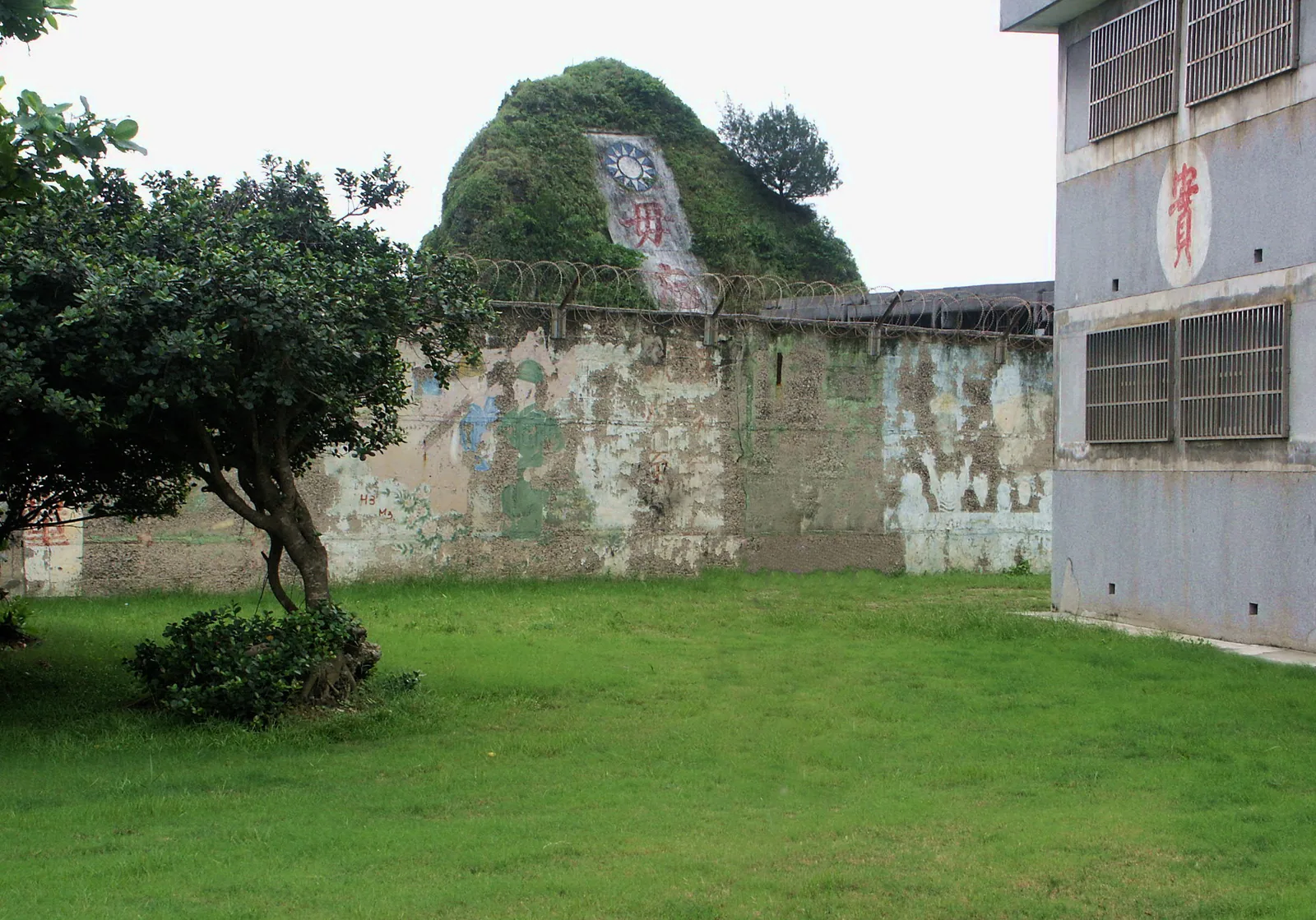
The high walls of the Green Island White Terror Memorial Park (formerly the Ministry of National Defense's Green Island Reform and Training Prison, "Oasis Villa"), photographed in 2003. Photo: lienyuan lee. CC BY 3.0 via Wikimedia Commons.
Chongde New Village: The Homeland of Big Brothers and the Routine of a Modern Prison
Completed in the same year as Oasis Villa, "Chongde New Village" is what we know today as the "Green Island Prison, Agency of Corrections, Ministry of Justice." The construction process itself was marked by the imprint of its era. Preparations began on July 1, 1970. Due to Green Island's remote transportation and the difficulty of shipping building materials, the government selected 80 inmates with construction skills from prisons across Taiwan to form an outside work crew to build it themselves. After great difficulty and an expenditure of over NT$8 million, the first phase was completed and the facility opened in September 1972.17 Chongde New Village primarily housed the most unruly violent criminals and underworld "big brothers" from prisons across Taiwan, earning it the nickname "the Homeland of Big Brothers."2
Humanity Within the High Walls: Absurdity, Resilience, and the Glimmer of Freedom
Within the high walls, there was not only the blood and tears of political prisoners, but also the absurdity and resilience of human nature. Writer Bo Yang was imprisoned on Green Island for nearly nine years. He witnessed the harshness of the environment in prison and later left a famous inscription on the Human Rights Monument: "In that era, how many mothers wept through long nights for their children imprisoned on this island."18 These words captured the grief of countless families under the White Terror.
Former Democratic Progressive Party chairman Shih Ming-teh spent five and a half years in Green Island Prison, during which he went on hunger strikes to protest the authorities. In an environment of extreme scarcity, he once used old underwear as toilet paper and even bathed in thin rice porridge.19 During a visit, when threatened by the deputy warden with termination of the meeting, Shih responded with only one word: "Joke."8 This demonstrated an unyielding will and spiritual freedom under the oppression of totalitarianism. He once said: "I spent thirty years in prison so that your next generation of young people would no longer need to sacrifice for politics…"20
📝 Curator's Note: In extreme environments, the brilliance and dignity of human nature often shine through even more. Shih Ming-teh's "joke" was not only contempt for the oppressor, but also a firm affirmation of his own beliefs. The vitality and creativity the prisoners displayed in prison — such as the medical team's contributions and the crafting of violins — proved that even in the darkest corners, the light of human nature is difficult to extinguish entirely.
Inmates at Green Island Prison also participated in bonito (katsuobushi) production. Green Island has a long history of bonito processing, once a key local industry. The prison's bonito workshop allowed inmates to learn a trade. However, according to accounts from former prisoners, the bonito flakes produced in prison were "very coarse and large — if regular bonito flakes are as thin as rice paper, then theirs were…"21 This also reflected the gap between prison production and outside quality. Even in 2025, an inmate named Wang Tian-you, imprisoned on drug charges, escaped for eight hours before crawling back to the prison dormitory on his own, driven by hunger and cold. When discovered, he said only: "It was too cold. I regret it."22 This seemingly flippant remark also spoke to the harshness of Green Island's environment and the vast psychological gap between modern inmates and political prisoners of the past.
The Transformation of Memory: Tourism, Consumption, and the Weight of History
As the times have changed, the historical significance of Green Island Prison has continued to transform. Oasis Villa has been repurposed as the "Green Island White Terror Memorial Park," becoming a place for reflecting on history and commemorating victims. Yet when Green Island Prison is packaged by the tourism industry as "the Homeland of Big Brothers," and shops sell souvenirs themed around "Big Brother's Story,"23 this phenomenon of commodification has also sparked discussions about the appropriation of historical memory. When the Green Island Township chief was selecting a site for the prison's construction, he earnestly told residents: "Green Island must have an institution stationed here in order to bring in population."24 Viewed today, this statement appears all the more complex and ironic. The existence of the prison did indeed bring population and economic benefits to Green Island, but it also left an indelible historical scar.
Green Island Prison, this solitary island in the Pacific, carries the heaviest memories of Taiwanese society. From the blood and tears of political prisoners to the legends of underworld big brothers, its story is a microcosm of Taiwan's history, reminding us that in the pursuit of economic development and tourism revenue, we must never forget the souls who once paid the price for freedom and democracy.
Further Reading:
- National Human Rights Museum — The national institution overseeing the Green Island park, from the New Life Training Center to the process of institutionalization as a museum
- Taiwan White Terror — The full picture of political cases under 38 years of martial law, with Green Island as a central site of detention and ideological remolding
- Martial Law Period — The legal framework of 1949–1987
- Taiwan Transitional Justice — The unfinished work of overturning verdicts and holding perpetrators accountable
Image Sources
This article uses 3 CC-licensed images, all cached under public/article-images/history/ to avoid hotlinking source servers:
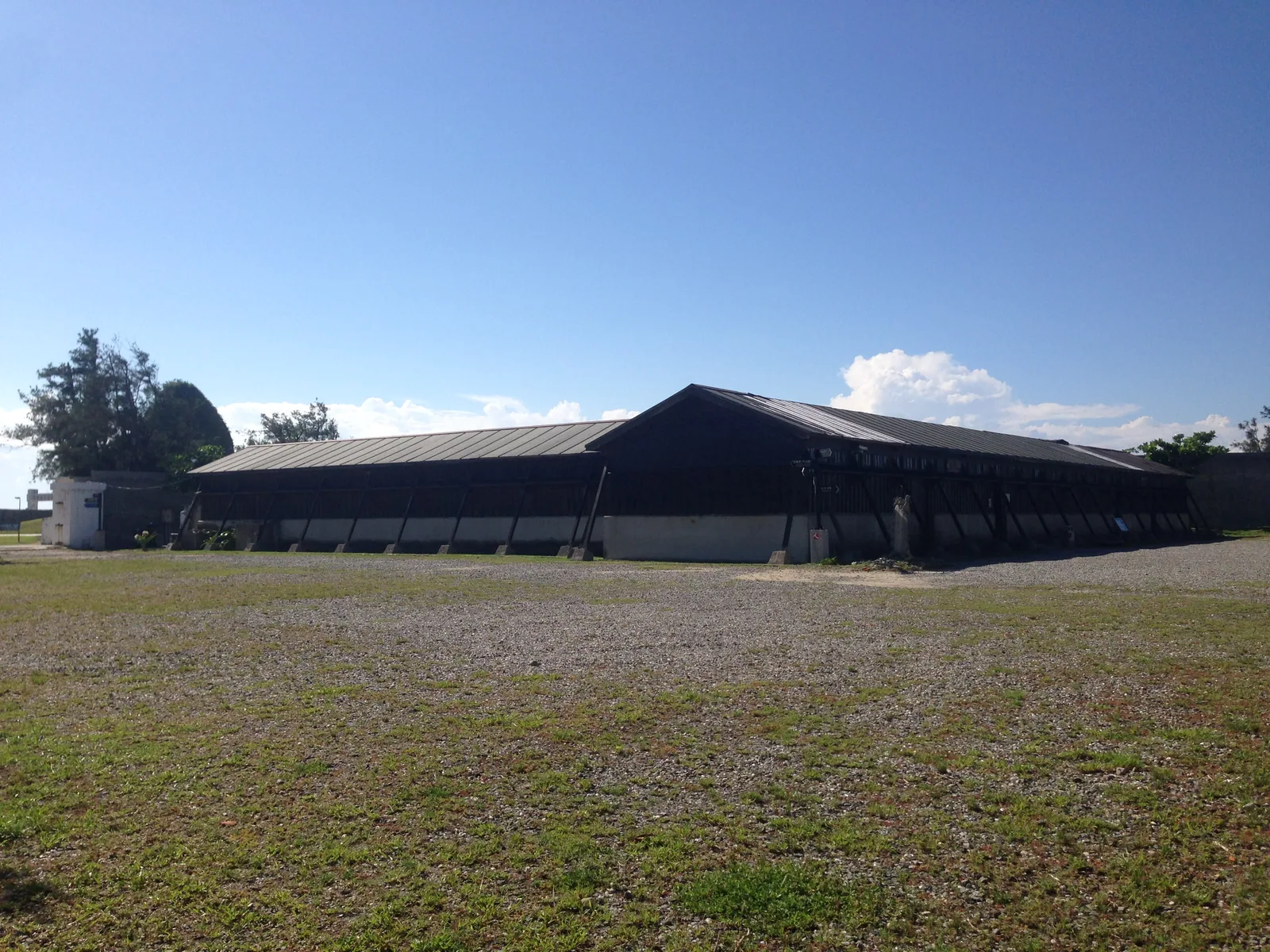
- Old prison buildings at the Green Island Human Rights Memorial Park — Photo: Naplee12, 2016, CC BY-SA 4.0
- New Life Training Center Third Brigade exhibition area — Photo: Outlookxp, 2016, CC BY-SA 4.0
- High walls of the Green Island White Terror Memorial Park — Photo: lienyuan lee, 2003, CC BY 3.0
References
- https://www.nhrm.gov.tw/ — See original link for additional details↩2
- https://www.youtube.com/watch?v=3uVdiNs2g3M — YouTube documentary↩23
- Facebook watchout.tw: 71st Anniversary of the First Political Prisoners Transferred to Green Island — Building the Prison That Would Confine Them — Historical account of the first political prisoners arriving on Green Island in 1951 and building their own prison walls from coral limestone↩2
- BIOS Monthly: No. 15, Liúmagōu — True Stories from a Household Registration Address — Historical and narrative account of Liúmagōu No. 15, the shared household registration address of New Life Training Center political prisoners↩2
- https://memory.nhrm.gov.tw/NormalNode/Detail/14?MenuNode=25 — See original link for additional details↩2
- https://2011greenisland.wordpress.com/2016/04/27/%E7%B6%A0%E5%B3%B6%E9%84%89%E8%AA%8C-%E7%9B%A3%E7%8… — See original link for additional details↩2
- CNA: Green Island's "Thirteenth Squadron" — Untold Suffering and Countless Historical Scars — Historical background on the cemetery near Swallow Cave, privately called the "Thirteenth Squadron" by survivors↩2
- https://www.facebook.com/100044613550476/posts/4784522378226005/ — Facebook public post↩2
- Threads post: I Am from Green Island — A Descendant of the White Terror Complicity Structure — Reflection by a Green Island local descendant on the White Terror complicity structure and the history of ideological remolding↩
- [Threads. (2026, February 22). Fire Island — Forcing political prisoners into the "tattoo movement." Retrieved from ) — See original link for additional details↩
- https://issues.ptsplus.tv/articles/10641/ — See original link for additional details↩
- https://zh.wikipedia.org/zh-tw/%E7%B6%A0%E5%B3%B6%E7%8D%84%E4%B8%AD%E7%B5%84%E7%B9%94%E6%A1%88 — Wikipedia entry↩
- https://memory.nhrm.gov.tw/NormalNode/Detail/149?MenuNode=12 — See original link for additional details↩
- https://hre.pro.edu.tw/storage/files/114%E5%B9%B44%E6%9C%8824%E8%87%B326%E6%97%A5%E3%80%8C%E7%B6%A0%… — See original link for additional details↩
- https://memory.nhrm.gov.tw/TopicExploration/LocationSpace/Detail/87 — See original link for additional details↩
- https://taitunglocale.com.tw/newsditial2.php?bID=1429&id=1429&action=hit — See original link for additional details↩
- https://www.gip.moj.gov.tw/289577/289578/289579/539693/ — See original link for additional details↩
- [Threads. (2026, February 22). Renowned writer Bo Yang was imprisoned in 1968 and held on Green Island for approximately 9 years. Retrieved from ) — See original link for additional details↩
- https://www.gvm.com.tw/article/3156 — See original link for additional details↩
- Threads post: Shih Ming-teh tearfully tells hunger-striking Cheng Li-wen — Original quote from 30 years ago: Shih Ming-teh told hunger-striking Cheng Li-wen, "I spent thirty years in prison so that your next generation of young people would no longer need to sacrifice for politics."↩
- vocus: My Story, My Legend (Green Island Prison, Part 24) — The Dirt-Eating Meals of Green Island — Firsthand inmate account of the quality gap between prison-produced bonito and outside products↩
- Yahoo News: Green Island Inmate's Escape Reason Revealed — "Too Cold, I Regret It" — 2025 news report on Wang Tian-you's 8-hour escape and voluntary return due to hunger and cold↩
- Big Brother's Story official website — Green Island souvenir shop themed around "big brothers," reflecting the commodification of historical memory↩
- more-news: The Warden's Gaze — The Weeping Island Series (Part 3): Oasis Villa — Historical account of the Green Island Township chief telling residents that the island needed an institution to bring in population↩