
30-Second Overview: In 1992, Acer founder Stan Shih drew an upward-opening "Smiling Curve," telling Taiwan’s manufacturing sector not to get stuck in the lowest value-added assembly middle, but to climb toward R&D and branding at both ends. This phrase became a strategic mantra for Taiwan’s industry for thirty years. Yet the man who drew the line fell three times on his path to the branding end—in 2000, a clash between brand and contract manufacturing forced Taiwan’s electronics industry’s first "Great Split"; in 2011, after reaching second place globally, European warehouses overflowed and stock prices halved; in 2013, a one-year loss of NT$20.5 billion marked Acer’s worst year in thirty-eight years, forcing the founder, who had retired for nearly a decade, to return and save the day. The most ironic ending was revealed twenty years later: Wistron, the contract manufacturing "little brother" he spun off and which everyone underestimated, climbed to the top of the Smiling Curve in the era of AI servers.
In 1992, Acer Chairman Stan Shih drew an upward-opening curve inside the company. He told his colleagues that assembly "had become the part with the lowest value-added in the computer industry" 1. The middle of this line (manufacturing) was the lowest, while the two ends (R&D on the left, brand marketing on the right) were the highest. People should climb toward the two ends and not get trapped in the middle.
This diagram, later known as the "Smiling Curve," became a phrase Taiwan’s manufacturing sector listened to for thirty years. It taught an entire generation of bosses: don’t just do contract manufacturing; move upward.
He never expected that in the next thirty years, this line would act like a mirror, reflecting three falls of the company he built while chasing the brand.
The First "Little Professor" Grown by the "Gardener of Microprocessors"
Acer’s starting point had little to do with branding, or even with making money. Its initial positioning was to teach people to use something that was still very unfamiliar to Taiwan at the time.
In 1976, Stan Shih and five others pooled NT$1 million in Taipei to open a small company called "Multitech" 2. Among these five people, besides Stan Shih, was his wife, Yeh Tzu-hua. She managed finance and internal operations, being the key figure who kept the company from running out of food in its first few years of extremely thin capital, though later narratives of "Stan Shih’s solo entrepreneurship" often omitted her 3. The other three were Tai Chung-chung, Lin Chia-hsia, and Huang Shao-hua. Huang Shao-hua had followed Stan Shih since he led the R&D team at Rongtai Electronics and would later be a long-term executive in the Acer Group.
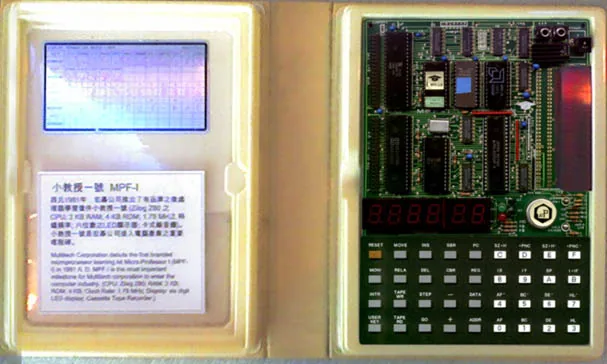
Little Professor No. 1 (MPF-I), Acer’s first product to carry its own brand for export in 1981, packaged to look like a book. Photo: Toytoy. CC BY-SA 2.0 via Wikimedia Commons.
The company’s self-positioning was quite literary: "Gardener of Microprocessors." At that time, microprocessors were like a foreign language to Taiwanese. Multitech aimed to introduce this technology and teach it out. In 1980, they launched the "Tianlong Chinese Computer," Taiwan’s and the world’s first self-designed Chinese terminal, winning the Premier’s Award, the highest honor in product design competitions 4. The following year, in 1981, the product that truly pushed the company toward branding appeared: Little Professor No. 1 (MPF-I), a teaching single-board computer packaged in the shape of a book, with a Z80 processor, selling for only $70. It was the first microcomputer Taiwanese exported under their own brand 5. The name was clever: Micro-Professor (Micro-Professor) differed from Micro-processor (Microprocessor) by only one letter, and even rhymed. In 1982, they launched Little Professor No. 2 (MPF-II), Taiwan’s and the world’s first Chinese home computer, and one of the earliest Apple II compatible machines 6.
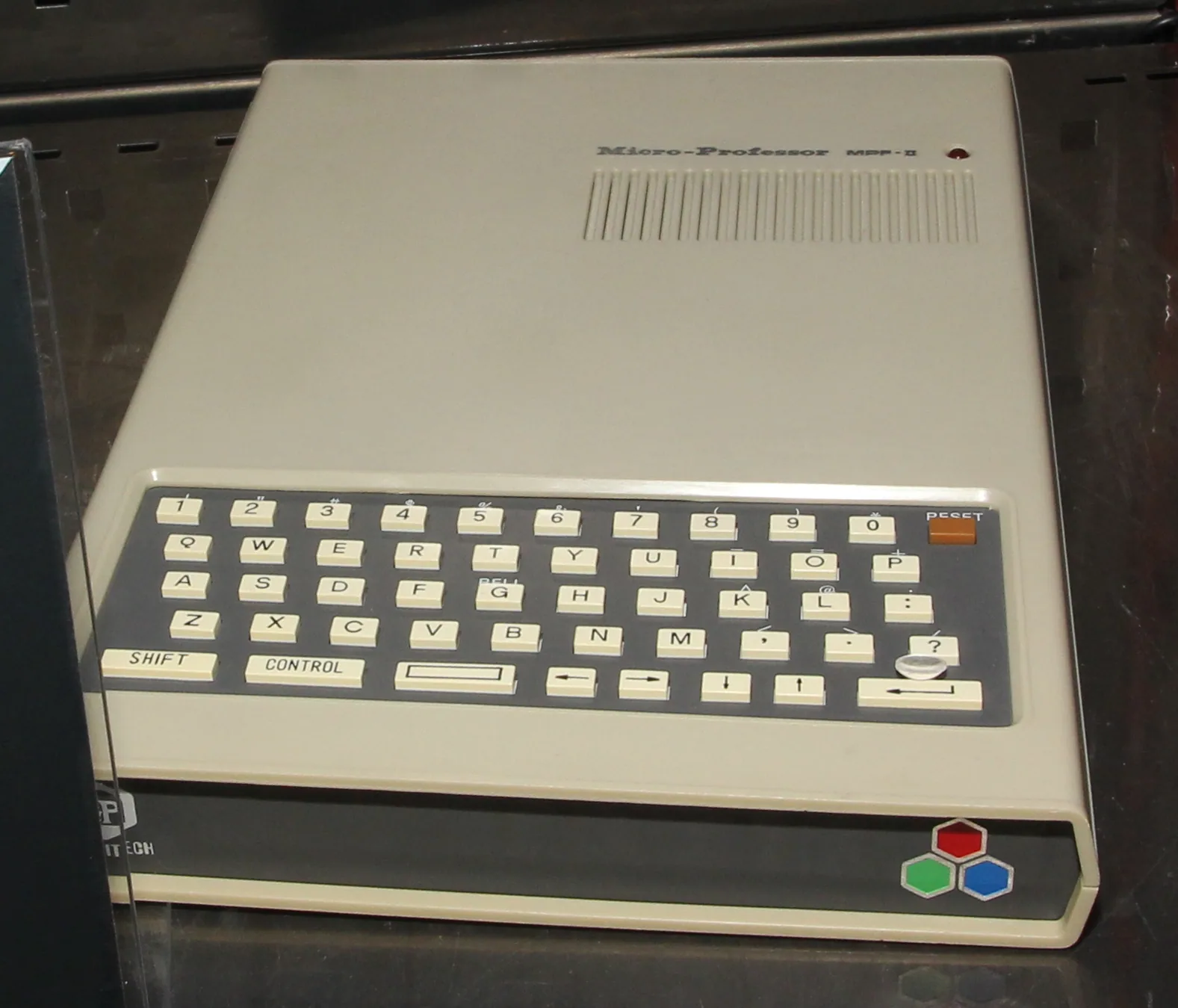
_From single-board teaching machines to home computers: Little Professor No. 2 (MPF-II), 1982. Photo: MKFI/Ubcule. Public domain via Wikimedia Commons._
💡 Did You Know
Taiwan’s tech industry has an entire generation of companies ending in "碁" (qí) or "基" (jī)—Acer, BenQ (formerly Mingqi), Wistron (before its name change), and many others with the same root. "碁" is the ancient character for "棋" (qí), meaning chess (Go). Stan Shih was fascinated by Go, treating management as a layout, emphasizing "qi chang" (living long, waiting for the right moment) and "making living eyes" (creating sustainable structures). This Go philosophy is listed alongside the Smiling Curve in his later book, Rebuilding Acer. Acer’s English name, acer, is Latin, meaning "bright, lively, insightful, sharp, energetic"—in 1987, Stan Shih defied public opinion, abandoning the old Multitech brand, valued at $20 million, for this new name 7.
Abandoning a brand worth $20 million and starting over, simply because the old name was too long and clashed with a US modem manufacturer’s trademark. This event itself foreshadowed the story to come: the obsession with branding began the moment the name was changed.
In 1988, Acer Computer listed on the Taiwan Stock Exchange, stock code 2306 8. Here, we must preempt a common misunderstanding: Acer listed today with code "2353" is actually the code used by its subsidiary Acer Technology when it listed in 1996, not the original 1988 code. After several reorganizations in the group, the code ownership swapped places.
A Diagram Teaching All of Taiwan to Escape the Bottom of the Smile
By the early 1990s, Acer faced its first life-or-death crisis.
This was its "First Rebuilding." Starting in 1989, Stan Shih first reorganized the structure into independent profit centers, calling out visions like "Technology Island" and "Global Citizens." The core transformation came in 1992, with two concepts introduced together: one called the "Fast Food Store Model"—Taiwan acts as a central kitchen, centrally producing long-life standard parts like motherboards and monitors, then shipping them to business units worldwide for local assembly, selling computers like burgers, using the freshest ingredients locally, and saving on freight and tariffs; the other called the "Master-Slave Architecture," letting regional business groups stand on the front line as "masters," fighting local market battles, while headquarters retreated to the second line as "slaves" to provide support 9.
The Smiling Curve was drawn to persuade colleagues to accept this change. It was an internal communication diagram, more like a battle order than an academic theory: it aimed to persuade Acer people to abandon low-value assembly in Taiwan and concentrate efforts on R&D and branding at both ends. Stan Shih stated clearly: "R&D on the left side of the curve is global competition; marketing on the right is regional competition." 10 R&D must compete globally; branding can be deeply rooted locally: this is the second layer of meaning hidden in the Smiling Curve.
Source: Stan Shih, *Rebuilding Acer*, Commonweal Books, 1996; Chiunglin Foundation, "1992 Smiling Curve"
It is worth remembering that Stan Shih never said "don’t do manufacturing." He repeatedly emphasized "do not misunderstand the Smiling Curve as abandoning manufacturing," because although manufacturing has low unit value-added, its large scale means accumulation still yields benefits 11. This nuance is crucial, because in the next thirty years, many simplified the Smiling Curve into "telling everyone to flee manufacturing," while the person who drew the picture did not think so: indeed, just a few years before proposing the Smiling Curve, in 1989, he bet NT$5 billion into Winbond Electronics, personally touching the lowest value-added manufacturing section right in the middle of the curve 12. Knowing the ends are good, yet still being pulled by the middle—this contradiction grew into Acer from the start.
The results of the First Rebuilding were impressive. By 1995, Acer produced about four million computers a year, with sales reaching $5 billion, becoming the world’s seventh-largest PC company 13. That same year, it launched the "Aspire" home computer, with a slanted design, charcoal gray paired with deep green, positioning it as a multimedia appliance for the living room to watch TV and listen to music. This was Acer’s flagship attempt to bring computers into ordinary homes 14. In those years, Stan Shih was successively selected by World Manager Abstract and Business Week into the list of the world’s most outstanding entrepreneurs. Climbing toward the two ends seemed to work.
"Then, Let’s Split It Up"
The first fall was onto himself.
Entering 2000, Acer fell into losses, exposing a structural contradiction: it did both its own brand and contract manufacturing for other brands, while contract manufacturing clients were themselves brand manufacturers, increasingly unwilling to place orders with an Acer that was "also a competitor" 15. The brand had long been unprofitable, sustained by contract manufacturing profits; but the contract manufacturing business was losing orders precisely because of the brand’s existence. This was a dead knot tying itself.
The person who untied the knot was General Manager Lin Hsien-ming. He thought for a long time and proposed an unheard-of idea in the tech industry at the time to Stan Shih: split the brand and contract manufacturing into two different companies. The Industrial Technology Research Institute later recorded the scene: Lin Hsien-ming suddenly spoke in Taiwanese: "Then, let’s split it up." 16 Stan Shih breathed a sigh of relief, blurring out: "So you think the same way!" 17 This bold split was actually something he had thought about in his heart.
✦ "Then, let’s split it up."
Thus came the first brand and contract manufacturing split in Taiwan’s electronics industry. On December 26, 2000, Acer announced externally; on May 30, 2001, the contract manufacturing business was spun off to establish Wistron Information, with Lin Hsien-ming taking about 8,400 employees 18. The remaining Acer entity focused solely on branding. After the split, the Pan-Acer Group was renamed the "ABW Family"—Acer (Stan Shih, Brand), BenQ (Kun-Yao Lee), Wistron (Lin Hsien-ming, Pure Contract Manufacturing). Stan Shih’s explanation was "Brothers climbing mountains, each striving on their own."
Source: Stan Shih Wikipedia; Commonweal Magazine, ITRI
The three brothers later faced three different fates. The one least expected was pure contract manufacturing Wistron: no brand, only doing others’ orders, looking the most hopeless. Instead, the one chasing branding most fiercely fell the hardest.
The one chasing most fiercely was BenQ. On November 5, 2001, BenQ held a press conference in Suzhou, taking off the green Acer uniform and putting on the purple BenQ new outfit, officially revealing its brand. The leader, Kun-Yao Lee, said proudly at the time: "I am doing the biggest adventure of my life." 19 This adventure peaked in 2005: BenQ took over Siemens’ mobile phone division for nearly zero cost, becoming the world’s fourth-largest mobile phone maker for a moment. But within less than a year, they abandoned it, burning about NT$35 billion in the past year, falling into one of Taiwan’s corporate history’s most tragic M&A failures 20. This loss must be attributed clearly: it was burned by the independent "BenQ Corporation" (later the parent company renamed Qisda), led by Kun-Yao Lee, unrelated to Acer’s core entity or Stan Shih. ABW were from the same school, not the same company; the meaning of the split was precisely to let the three brothers go out and闯 (闯) on their own, bearing their own risks.
The split was considered a success at the time. In the following years, the combined revenue of the Pan-Acer three groups grew year by year, and Acer’s core entity joined the top five PC brands globally in 2004. This "Brand-Contract Manufacturing Split" model was later repeatedly emulated: D-Link spun off Mitac in 2003, ASUS spun off Quanta in 2008, and even Wistron itself later spun off Wistron Nebula, repeating the same logic of "splitting when client interests conflict" 21. That Taiwanese phrase "Then, let’s split it up" split out three companies, and also split out the path Taiwan’s electronics industry would walk repeatedly for the next twenty years.
The Sweetness of Second Place, The Poison of Stuffing Inventory
The second fall was at the peak of chasing the brand.
In late 2004, Stan Shih retired and passed the baton to J.T. Wang (Wang Chen-tang). The following year, an Italian named Gianfranco Lanci succeeded as General Manager, Acer’s first foreign CEO. Lanci had a nickname: "Lenovo Killer"—early on, Lenovo tried to acquire Packard Bell to enter Europe; Lanci preemptively had Acer’s Gateway acquire Packard Bell, blocking Lenovo out of Europe 22. In 2007, Acer acquired the US’s fourth-largest PC brand, Gateway, for $710 million. Wang Chen-tang called this Acer’s "biggest acquisition in thirty years" 23. Four brands (Acer, Gateway, Packard Bell, eMachines) fought together, and Acer once surged to second place globally, surpassing Dell, losing only to HP.
Lanci’s engine was called "Volume Rush." He pushed a new distributor model with profit sharing, actively acquired, and fought for market share, treating shipment volume as the highest guiding principle. A retired Acer senior executive described his style: "Don’t talk to him about long-term, vision; he wants now, immediately, profit." 24 Revenue surged from $318 billion in 2005 to $629 billion in 2010, doubling in five years 25. At the 2010 year-end party in February, Lanci made a bold vow: "After fourth place is third, after third is second, but after Acer takes second place, you only have one possibility left: becoming number one in the world." 26
At the same time, Acer dominated with netbooks: Aspire One once captured about 45% of the global market share in this category in 2009, the biggest winner 27.
Then came the iPad.
⚠️ The Arithmetic of Volume Rush
In January 2010, Apple launched the iPad, selling 4.5 million units in 80 days. Jobs declared the "Post-PC Era" had arrived. Consumers shifted from cheap netbooks to tablets, and Acer’s strongest growth engine suddenly stalled. The volume rush strategy hid a fatal arithmetic: IDC analyst Eszter Morvay pointed out that Acer needed at least 20% quarterly shipment growth to be profitable 28. When shipments stopped growing, inventory stuffed into channels became unexploded ordnance: to push shipment numbers, goods were massively stuffed to distributors, and export revenue was recognized immediately, with over 80% of annual sales being related-party transactions 29. The surface second place hid an inventory mountain ready to collapse.
The "Post-PC Era" ignited by the iPad tore open a rift in the route. Lanci wanted to continue rushing netbook volume, while Wang Chen-tang believed the company should turn toward phones and tablets. The two could not agree. On March 28, 2011, the two talked in a hotel for two hours, ending in a breakdown 30. Three days later, on March 31, 2011, the board voted 5-2 to remove Lanci as CEO, with Wang Chen-tang taking over personally. The cost of the breakup was high: Lanci received NT$1.284 billion in severance, setting a record for senior executives in the PC industry 31. When replaced, Acer’s gross margin had already dropped to about 10%, losing to ASUS’s 15% 30. More embarrassing was the truth laid bare in the sunlight: Acer recognized a $150 million loss at once to clear old netbooks, about three million units, stuck in Europe; using another accounting cut, this year also wrote off NT$4.3 billion in accounts receivable and inventory write-downs 32.
That inventory mountain, piled up under the halo of second place globally, finally collapsed.
The 68-Year-Old Man Enters the Fire for the Second Time
The third fall hit the valley bottom.
Acer after Lanci left was like a stalled car. Between 2011 and 2013, revenue nearly halved, lost money for three consecutive years, and market share dropped from second globally to fourth. Commonweal Magazine calculated the time from removing Lanci to Wang Chen-tang stepping down as "The Fatal 1,000 Days"—precisely 944 days 33.
2013 was the most painful year. An annual loss of NT$20.5 billion, a loss of NT$7.56 per share, was Acer’s worst year in thirty-eight years since its founding in 1976 34. In the third quarter, it recognized nearly NT$10 billion in intangible asset impairment, mainly the value of the Gateway brand bought back with huge sums that year 35. On November 21, Wang Chen-tang, who had been at Acer for thirty-two years, and Weng Chien-jen both resigned.
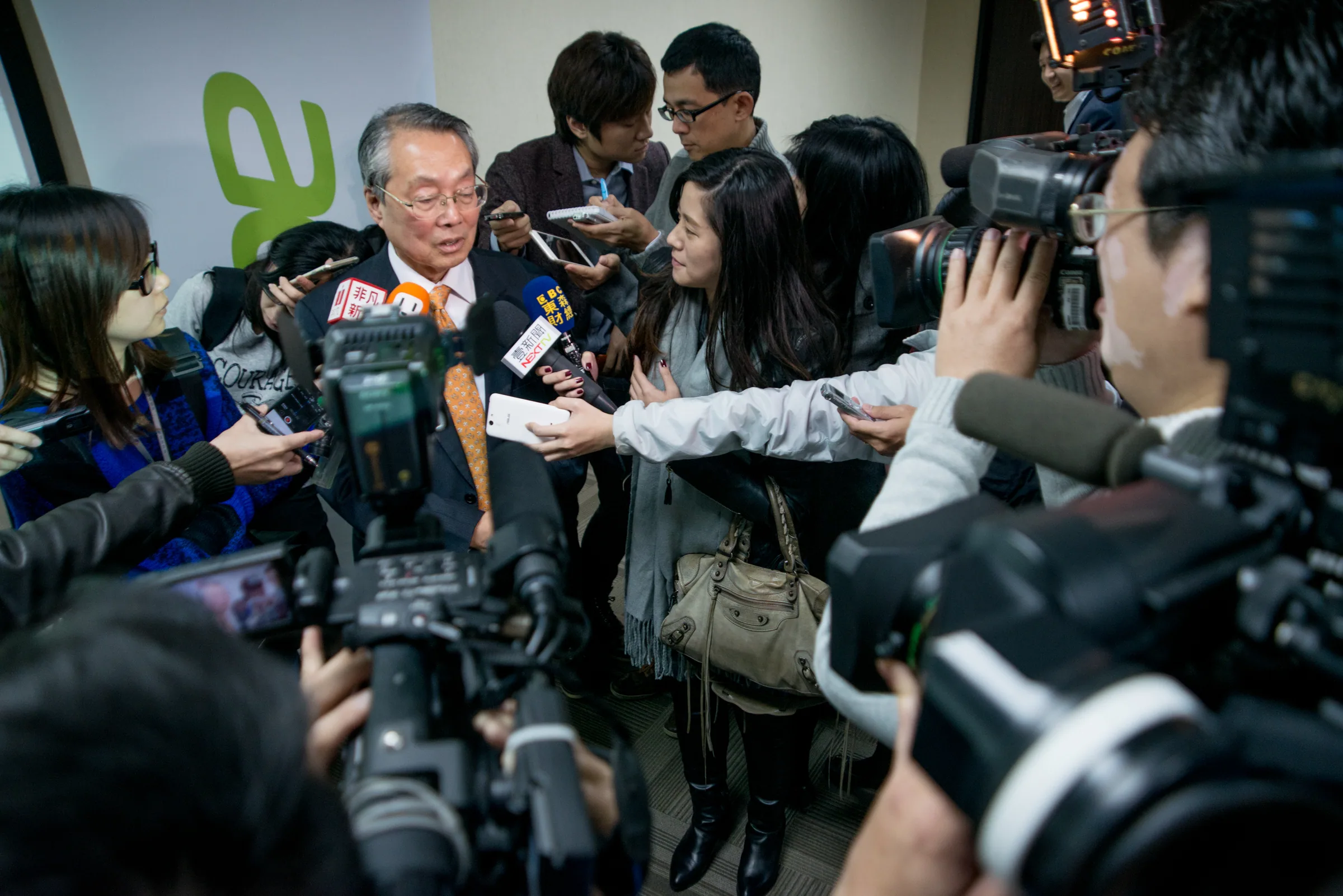
Filling this hole was an old man who had retired for nearly a decade. Stan Shih handed over the baton and retired in 2004, when he was sixty. Nine years later, at sixty-eight, he returned to succeed as Chairman and convenor of the Transformation Committee, launching the Third Rebuilding. He自嘲 (self-deprecated) to reporters: "I’ve been retired for almost 10 years, now I only focus on social welfare." 36 There was helplessness in the words, and a sense of resignation: this company had nearly died three times, and twice required him to personally return and take over.
📝 Curator’s Note
The sharpest contrast in 2013 was not inside Acer, but at the other end of the same year. Lanci, whom Acer hired away, went to Lenovo after leaving. In the year Acer hit rock bottom and Stan Shih returned to save the fire, Lanci realized his vow made at Acer’s year-end party at Lenovo—putting Lenovo on the throne as the world’s largest PC maker. The same volume-rush tactic exploded in one company and peaked in another. This was the same bet, yielding completely opposite results on different timelines and balance sheets. Acer’s fall was not of the strategy itself, but of the侥幸 (luck/chance) of betting the whole company on a single person and a single growth method.
Stan Shih did not let his son succeed him. In his forties, he declared "Merit over Bloodline," wanting to make succession a system 37. This time, he made a call to someone on leave from TSMC, asking if he wanted to come to Acer to "jump into the fire pit."
Turning a Side Business into a Little Golden Chicken
That person on the phone was Chen Chun-sheng, from TSMC, who had served as Senior Vice President of Global Business and Marketing. In December 2013, Acer announced he would succeed as CEO; he took office in January 2014, turning Acer from loss to profit that year 38.
Chen Chun-sheng understood one thing: the label Acer stuck to in the market was "Acer? Lowest Price in Store"—high awareness, but no high value 39. Chasing branding for thirty years, only to arrive at the word "cheap," was the hardest image to reverse upon his arrival. His first arrow was Esports: in 2015, he rebuilt the Predator Esports brand, using high-end, high-margin products to prop up Acer’s brand value, breaking the lowest-price impression 40.
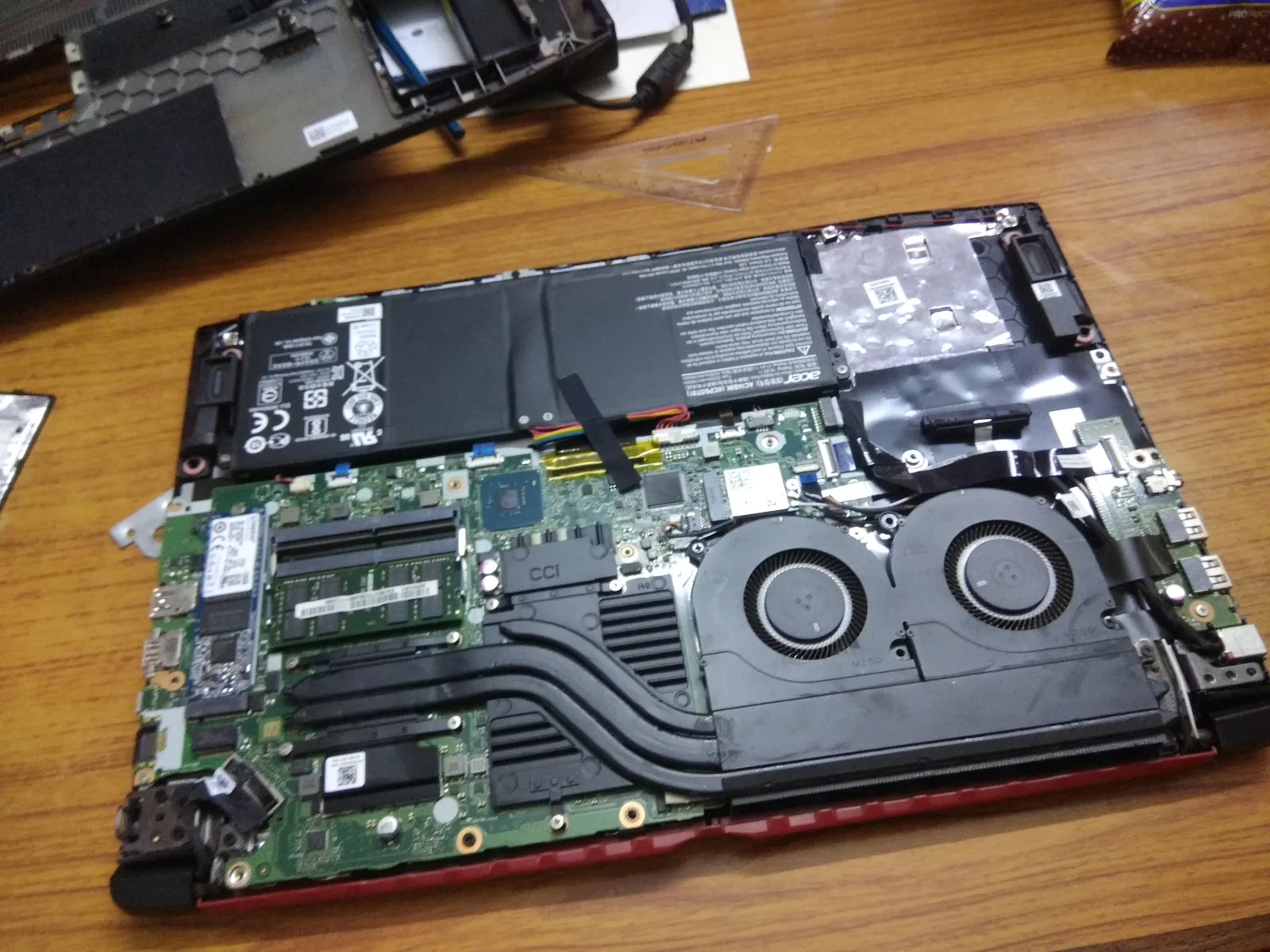
Predator Helios Esports Laptop (image is Helios 300). Using high-end, high-margin products to pull Acer out of the "Lowest Price in Store" impression. Photo: Vjdeep. CC BY 3.0 via Wikimedia Commons.
But what he truly touched the core of the Smiling Curve with was another move.
Acer Group had naturally grown a pile of software, security, and IT service businesses. These had much higher margins than hardware, but were trapped inside a hardware company. Chen Chun-sheng explained his logic to Commonweal Magazine: "Netbook margins are at most ten-something percent; in comparison, software and security businesses mostly have high margins. Doing software inside a hardware brand company is easily seen as a side business, getting no resources." 41 So he spun these "side businesses" out one by one to list independently. By the end of 2023, Acer had twelve listed subsidiaries in Taiwan 42.
The financial abacus of the spin-offs laid out is straightforward. Acer’s core, being a low-margin hardware company, had a P/E ratio of only about eight times for a long time; while the spun-off security subsidiary, Acer Security, had a P/E of about twenty-three times, and the IT service subsidiary, Acer Information, about twenty-six times 43. The same profit, listed under the hardware parent, the market only valued at eight times; spun out and listed separately, it could get twenty-something times. This was a financial engineering to "unlock" undervalued high-value businesses.
Source: Commonweal Magazine, Acer Group Subsidiary P/E Comparison
The right end of the Smiling Curve: software, services, these high value-added positions: Acer finally stood on them using "spin-offs." But what stood up was the subsidiary, not the core.
And this spin-off was not a total victory. TechNews found in late 2024 that this was already Acer’s eleventh listed subsidiary in Taiwan; in less than five years after 2020, nine listed, but among these subsidiaries, only Acer Security and Acer Smart Health had outstanding margins; the rest were similar to the parent company’s. Volume was even worse: the nine subsidiaries’ average daily volume was less than one hundred shares, with six under twenty 44. This report directly questioned: "If value becomes 1+1>2 after splitting, and enjoying high P/E in the stock market benefits shareholders, then reviewing all Acer Group subsidiaries, two obvious problems appear: the parent’s spin-off game may not benefit shareholders." By August 2025, Acer even reversed, simplifying its structure and merging several cloud subsidiaries 45. After the spin-off frenzy came contraction, indicating this was an ongoing turnaround, not a completed one.
The Dropped Section Climbed to the Top
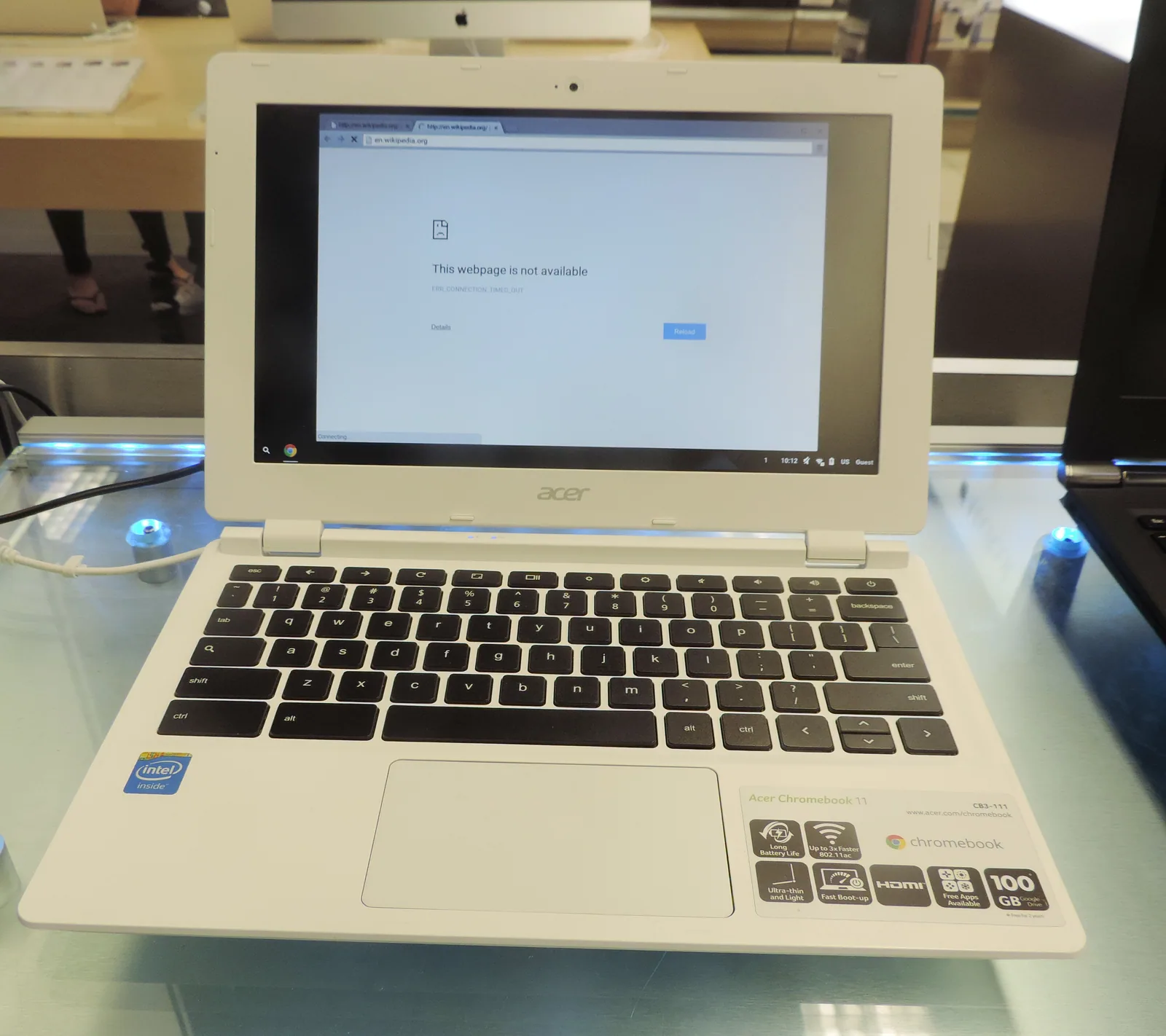
Acer Chromebook: In 2022, it took first place in the global education market share, one of the few "firsts" Acer sat on. Photo: Jim.henderson. CC0 via Wikimedia Commons.
As for Acer’s core, it stood firm, but did not return to the peak. In 2024, Acer’s consolidated revenue was NT$264.6 billion, up 9.7% YoY, earning NT$1.84 per share, an improvement over the previous year 46. It nurtured new businesses beyond computers and displays; these businesses contributed 42.8% of the group’s "operating income" in 2023—this is profit share, not revenue share (converted to revenue share, it was 28.3% in 2024) 47. Chromebook took first place in the global education market share in 2022; new businesses also crossed into AI electric bicycles ebii 48. But in the global PC ranking, Acer floated between fifth and sixth; in Q1 2026, it was even overtaken by its own Taiwanese brother ASUS, falling to sixth 49. As of June 2026, ASUS’s market cap was about 4.4 times that of Acer 50. Chasing the branding end for thirty years, falling three times, Acer survived, but never stood at the peak of the curve it drew.
📝 Curator’s Note
ASUS split seven years later than Acer. Acer spun off contract manufacturing to Wistron in 2000; ASUS did not split contract manufacturing into Quanta until 2008. Looking back at ASUS’s market cap surpassing, it’s easy to conclude "early split loses, late split wins"—but this conclusion is too smooth. ASUS Chairman Shih Chung-tang first publicly revealed the split内幕 (insider details) in 2015, saying he handed Quanta to Tong Tsu-hsien was "not a broken boat," but a company with NT$470 billion revenue and NT$4-5 billion pre-tax profit; the cost was ASUS sending out 2,200 of its 4,000 R&D engineers, dropping net assets from NT$140 billion to NT$58 billion 51. Acer split early, ASUS split late, DLink split but didn’t achieve benefits; placing these three cases together, what truly decided high or low was whether that contract manufacturing "little brother" after the split could catch up, and whether the successor could bring it to a new wave. Wistron caught the AI server; Quanta turned to iPhone. The fate-deciding factor was not the cut, but the twenty years after the cut.
The true turnaround was on another person.
In late 2004, during the Great Split, Lin Hsien-ming, assigned to the "least expected Wistron," held a pure contract manufacturing company with a market cap of less than NT$15 billion: less than one-seventh of Acer’s core (over NT$100 billion) 52. Stan Shih himself felt Wistron was "harder" at the time.
Twenty years later, this dropped contract manufacturing "little brother," plus Wistron Nebula it later spun off, exploded in the AI server wave. As of December 2025, Wistron plus Wistron Nebula’s combined market cap broke NT$1.2543 trillion; Wistron Nebula alone squeezed into Taiwan’s top eleven largest market caps 53. Financial writer Hsieh Chin-ho calculated a harsher bill: Acer’s first eleven months’ revenue was NT$247.1 billion, Qisda NT$189.2 billion, while Wistron alone in November had NT$280.6 billion: Qisda and Acer struggled for a full year’s revenue, yet不及 (could not match) Wistron’s one month 54.
Hsieh Chin-ho’s comment was: "This is probably what Stan Shih did not expect back then." 54 According to Liberty Times Net, Stan Shih once said: Acer’s DNA is deepest in Wistron 55.
The low-value middle section, judged by the Smiling Curve as "should flee," in the AI era, climbed to the top. This does not mean Stan Shih was wrong in 1992—that line was drawn for the PC industry; encountering the 2023 AI server variable, the middle section’s value was redefined. In fact, Stan Shih himself personally changed the original to the "New Smiling Curve" in 2017, admitting the 1992 version was too simplified 56. An idea influencing Taiwan for thirty years, the inventor himself walked the hardest path and corrected it most honestly and repeatedly.
In late 2004, Wistron’s spun-off market cap was less than one-seventh of Acer’s. Twenty years later, Wistron plus Wistron Nebula’s market cap exceeded NT$1.25 trillion. The "low-value middle section" Stan Shih drew in 1992, telling everyone to flee, climbed to the top of the smile in the AI era. The two ends of the Smiling Curve, the person who drew them could hardly stand on; while the section he let go and dropped out arrived first.
TEDxTaipei Official Channel, 2012: Stan Shih "On Kingly Way and Co-creation." Acer, which could survive after nearly dying three times, relied not on being always right, but on this founder’s lifelong practice of "Kingly Way"—losing gracefully, climbing back up, passing it on.
Further Reading:
- Stan Shih — The Acer founder who drew the Smiling Curve and returned twice to save the fire, from tech godfather to focusing solely on social welfare
- Taiwan Enterprise: Wistron Information — The contract manufacturing "little brother" least expected during the Great Split, the one that climbed to the top of the Smiling Curve in the AI era
- Taiwan Enterprise: ASUS — Spun off Quanta in 2008, a control group on another split path, now with market cap surpassing Acer
- Computex: Three Major International Computer Shows Closed Two, The Remaining One Grew in Taipei — The same stage of Acer’s thirty-year ups and downs, and Taiwan manufacturing’s annual main field
- Taiwan Industrial Transformation and Upgrading — Climbing from the contract manufacturing middle to the two ends, is it the only path? The entire grand proposition after the Smiling Curve
Image Sources
This article uses 5 CC / Public Domain licensed images, all cached in public/article-images/economy/ to avoid hotlinking source servers:
- Stan Shih 2014 Taipei Info Tech Expo Portrait — Photo: Tony Tseng, 2014-12-05, CC BY 2.0
- Little Professor No. 1 MPF-I Computer — Photo: Toytoy, photographed at National Chiao Tung University, CC BY-SA 2.0
- Little Professor No. 2 MPF-II Computer — Photo: MKFI/Ubcule, photographed at Helsinki Computer Museum, Public domain
- Predator Helios 300 Esports Laptop — Photo: Vjdeep, CC BY 3.0
- Acer Chromebook CB3-111 — Photo: Jim.henderson, CC0
References
- Chiunglin Foundation "1992 Smiling Curve" — Stan Shih’s own foundation, recording the original definition of the Smiling Curve and Stan Shih’s verbatim statements, including "Assembly has become the part with the lowest value-added in the computer industry."↩
- Wikipedia: Stan Shih — Records Stan Shih co-founding Acer (then named Multitech) with his wife Yeh Tzu-hua and Tai Chung-chung, Lin Chia-hsia, Huang Shao-hua in 1976; initial registered capital NT$1 million.↩
- National Yang Ming Chiao Tung University Distinguished Alumni Stan Shih — Official NJCU first-hand data, recording Stan Shih served as Vice President of Rongtai Electronics (Sept 1972 to Sept 1976), Acer Group Chairman (from Sept 1976); he led R&D at Rongtai, establishing the microprocessor team, not the founder of Rongtai.↩
- Wikipedia: Acer — Records "In 1980, Acer launched Taiwan’s and the world’s first self-designed Tianlong Chinese terminal," which won the Premier’s Award, the highest honor in product design competitions.↩
- Wikipedia: Little Professor No. 1 — / Report Time: Stan Shih Built First Self-Made Computer 'Little Professor No. 1' in 1981 — Wiki records Little Professor No. 1 (MPF I) launched in 1981, Acer’s (then Multitech) first branded computer product, using Z80 processor; Report Time (United Daily News System) records its launch at $70 low price, the first microcomputer Taiwanese exported under their own brand↩
- Wikipedia: Little Professor No. 2 — Records Little Professor No. 2 (MPF-II) launched in 1982, Acer’s second branded computer product, Taiwan’s and the world’s first Chinese home computer, and one of the earliest Apple II compatible machines (using MOS 6502 processor, not fully compatible with Apple II).↩
- Wikipedia: Acer — Records 1987 name change to Acer because "Multitech" was too long and prone to trademark conflicts (with US modem maker Multi-Tech Systems); acer originates from Latin, meaning "bright, lively, insightful, sharp, energetic." Stan Shih abandoned the then-valued-at-$20-million Multitech brand, a move defying public opinion.↩
- Wikipedia: Acer — Records "In 1988, Acer Computer listed on the Taiwan Stock Exchange, stock code 2306"; also records "In 1996... its subsidiary Acer Technology listed on the Taiwan Stock Exchange in September, stock code 2353," two different times, two different companies.↩
- MBA Knowledge Base: Smiling Curve Theory — Records Stan Shih proposed the Smiling Curve in 1992 for "Rebuilding Acer"; Fast Food Store Model (central kitchen centrally producing standard parts, overseas local assembly) and Master-Slave Architecture (regional business groups RBU as master, headquarters as auxiliary) were the core business model changes of the First Rebuilding.↩
- Chiunglin Foundation "1992 Smiling Curve" — Records Stan Shih’s verbatim: "R&D on the left side of the curve is global competition; marketing on the right is regional competition."↩
- Chiunglin Foundation "1992 Smiling Curve" — Records Stan Shih’s verbatim "Do not misunderstand the Smiling Curve as abandoning manufacturing," and explains that although manufacturing value-added is relatively low, its large scale means accumulation still yields benefits.↩
- Wikipedia: Stan Shih — Records Stan Shih invested in founding Winbond Electronics in 1989, entering memory manufacturing (later merged in 1999, exiting DRAM business). Chronologically, it was the prelude to proposing the Smiling Curve.↩
- Wikipedia: Acer Inc. — Records Acer produced about four million personal computers in 1995, sales reached $5 billion, becoming the world’s seventh-largest PC company.↩
- Wikipedia: Acer Inc. — Records Aspire (Desire) home computer launched in September 1995, designed by Frog Design, positioning charcoal gray and deep green dual colors, multimedia appliance positioning.↩
- iCreat Technology / ITRI: Lin Hsien-ming Turns Crisis into Opportunity — ITRI first-hand records "In 2000, Acer faced the dilemma of brand and contract manufacturing businesses conflicting, new customers became fewer, the company fell into crisis," explaining the structural contradiction where brand and contract manufacturing coexistence led to contract manufacturing clients unwilling to order.↩
- 104 Career Power: Stan Shih and Acer’s Three Reforms — Records Lin Hsien-ming proposing the split to Stan Shih "suddenly spoke in Taiwanese": "Then, let’s split it up."↩
- iCreat Technology / ITRI: Lin Hsien-ming Turns Crisis into Opportunity — Records when Lin Hsien-ming proposed the unheard-of idea of splitting, Stan Shih exclaimed "So you think the same way!"↩
- Wikipedia: Acer — Records December 26, 2000 Acer announced brand and manufacturing split; May 30, 2001 contract manufacturing business spun off to establish Wistron Information; ITRI also records Lin Hsien-ming taking about 8,400 employees.↩
- Digital Era: Kun-Yao Lee Says Goodbye to Acer — Records November 5, 2001 BenQ press conference in Suzhou "took off green Acer uniform, put on purple BenQ new outfit" to officially reveal brand, and records Kun-Yao Lee’s verbatim "I am doing the biggest adventure of my life."↩
- GQ Magazine: BenQ Siemens M&A Lesson — Records BenQ Corporation took over Siemens mobile phone division in October 2005, becoming world’s fourth-largest mobile phone maker for a moment; abandoned on September 28, 2006; past year loss about €800 million, about NT$35 billion, average daily loss NT$100 million; this is the event of the independent BenQ Corporation (later parent company renamed Qisda), led by Kun-Yao Lee, unrelated to Acer’s core.↩
- 104 Career Power: Stan Shih and Acer’s Three Reforms — Records Wistron Information created the precedent for Taiwan’s contract manufacturing and brand split; D-Link and ASUS later followed this model; Wistron later also spun off Wistron Nebula due to client interest conflicts, serving cloud clients.↩
- Commercial Times: Lenovo Killer Lanci — Records Lanci "Lenovo Killer" nickname origin: when serving as Europe region head, he preemptively had Gateway acquire Packard Bell, blocking Lenovo’s entry into Europe; before leaving Acer, Lanci always harbored the idea of surpassing HP, later realized at Lenovo.↩
- InfoWorld: Acer to acquire Gateway for $710 million — English first-hand, records Acer acquired Gateway for $710 million ($1.90 per share) in August 2007; Wang Chen-tang called "This is the biggest acquisition in Acer's 30 year history." "After this acquisition, we are solidly number three in the global PC market." (Post-M&A PC global third, notebook second).↩
- Commonweal Magazine: CEO Lanci Flashes Resignation — A retired Acer senior executive described Lanci’s style "Don’t talk to him about long-term, vision; he wants now, immediately, profit" (according to Commonweal Magazine report).↩
- The Epoch Times: Volume Strategy Fails, Acer Peaks and Declines — Records Lanci era revenue trajectory: 2005 NT$318 billion (up 41.36% YoY); 2010 surged to NT$629 billion (doubled in five years); volume rush, price killing, stuffing inventory model failed after iPad and mobile devices rose.↩
- GQ Magazine: Lanci’s Death and Sky-High Severance — Records Lanci’s verbatim declaration at Acer’s year-end party on February 6, 2010: "After fourth place is third, after third is second, but after Acer takes second place, you only have one possibility left: becoming number one in the world."↩
- PCWorld: Acer's Aspire One leads netbook market — English first-hand, records Aspire One’s leading position in 2009 netbook market (quarterly share over 30%, annual once about 45%), Acer the biggest winner in netbook category.↩
- The Register: Acer stock woes — English first-hand, records IDC analyst Eszter Morvay’s words "Acer requires volume growth of at least 20 per cent each quarter to make a profit."; also records writing off about $150 million cost for three million old netbooks flowing into Europe.↩
- Corporate Governance Blog "Company Character": Taking Acer as Example — Records Acer stuffing inventory into channel partners (channel stuffing) to push shipment volume, recognizing revenue on export, with over 80% of annual sales being related-party transactions, finally recognizing $150 million loss to help channel partners solve inventory.↩
- Cool3c: Stan Shih Ousting Lanci Insider Details — Records March 31, 2011 board voted 5-2 to reject Lanci’s retention, removing him as CEO; March 28 hotel negotiations broke down after two hours; when replaced, Acer’s gross margin was only about 10%, losing to ASUS’s 15%.↩2
- GQ Magazine: Lanci’s Death and Sky-High Severance — Records Lanci’s severance was NT$1.284 billion, setting a record for senior executives in the PC industry.↩
- The Register: Acer stock woes — English first-hand, records one-time recognition of $150 million (clearing about three million old European netbooks); also according to multiple Chinese reports, Acer simultaneously wrote off accounts receivable and inventory write-downs totaling about NT$4.3 billion using different accounting cuts.↩
- ETtoday (Reprinting Commonweal Magazine): Fatal 1,000 Days — Records from removing Lanci on March 31, 2011 to Wang Chen-tang stepping down in November 2013, total 944 days; during this period, revenue nearly halved, lost money for three consecutive years, market share dropped from second globally to fourth.↩
- Vision Magazine: 20.5 Billion Black Hole — Records Acer’s 2013 full-year loss about NT$20.5 billion (loss of NT$7.56 per share), Acer’s largest loss in thirty-eight years since founding in 1976.↩
- TechNews: Acer Q3 Huge Loss — Records Acer’s Q3 2013 recognized NT$9.943 billion in intangible asset impairment (trademark rights and goodwill, mainly Gateway, second Packard Bell etc.), single quarter net loss NT$13.12 billion.↩
- ETtoday (Reprinting Commonweal Magazine): Fatal 1,000 Days — Records Stan Shih self-deprecated upon return "I’ve been retired for almost 10 years, now I only focus on social welfare"; he retired in late 2004, November 21, 2013 resumed Chairman and served as Transformation Committee convenor.↩
- Taiwan Kuanghua Magazine: Merit over Bloodline — Records Stan Shih declared "Merit over Bloodline" in his forties, advocating making succession a system; several months after returning to save the fire in 2013, he again stepped down as Chairman, handing to Huang Shao-hua as transition, with Chen Chun-sheng as CEO.↩
- Commonweal Magazine: Stan Shih Willing to Wait Ten Years, Chen Chun-sheng Enters Stage — Records Acer December 23, 2013 board announced TSMC Global Business and Marketing Senior VP Chen Chun-sheng would succeed as CEO; took office January 1, 2014, turning loss to profit that year; Stan Shih invited Chen Chun-sheng with "jump into fire pit" call.↩
- Manager: Acer is More Than PC — Records Chen Chun-sheng’s arrival in 2014, Acer’s first impression in the market was "Acer? Lowest Price in Store," high awareness but lacking high value, reversing this image was his hardest task (this is Manager describing market impression retelling).↩
- Digital Era: Acer 10-Year Tiger Plan 12 IPOs — Records Acer Esports brand Predator born in 2015 (modern Esports brand); invested in Esports education from 2017; developed Esports competitions in 2018; Chen Chun-sheng’s first phase strategy used Esports to raise brand value, breaking lowest-price impression.↩
- Commonweal Magazine: Chen Chun-sheng’s Little Tiger Team Strategy — Records Chen Chun-sheng’s verbatim: "Netbook margins are at most ten-something percent; in comparison, software and security businesses mostly have high margins. Doing software inside a hardware brand company is easily seen as a side business, getting no resources."↩
- Acer Official Press Release: FY2023 Financial Report — Official first-hand, records three subsidiaries listed in 2023, total twelve listed subsidiaries by year end: "Three subsidiaries went public during 2023 to reach a total of 12 public subsidiaries by year end."↩
- Commonweal Magazine: Chen Chun-sheng’s Little Tiger Team Strategy — Records Acer core P/E ratio about eight times, while subsidiary Acer Security about twenty-three times, Acer Information about twenty-six times, explaining the P/E ratio arbitrage logic of spin-off listing.↩
- TechNews: Acer Subsidiary Spin-off Listing, Why Margins Weak, Volume Low? — Records this was already Acer Group’s eleventh listed subsidiary in Taiwan; in less than five years after 2020, nine listed; among subsidiaries, only Acer Security, Acer Smart Health had outstanding margins, rest similar to parent; average single-day volume nine under one hundred, six under twenty; and questioned "Parent’s spin-off game, may not benefit shareholders."↩
- Wangde Fu: Acer Simplifies Investment Structure, Merges Cloud Subsidiaries — Records Acer in August 2025 reversedly simplified investment structure, merging cloud technology subsidiaries to optimize operational efficiency, a contraction signal after spin-off frenzy.↩
- TechNews: Acer 2024 Revenue Up 10%, Earnings NT$1.84 Per Share — Records Acer 2024 full-year consolidated revenue NT$264.682 billion (up 9.7% YoY), gross margin 10.6%, net profit after tax NT$5.539 billion, EPS NT$1.84 (2023 was NT$1.64).↩
- Acer Official Press Release: FY2023 Financial Report — Official first-hand, records "Businesses other than computers and displays contributed 42.8% of the operating income in 2023." (Contributed 42.8% operating income, not revenue); TechNews also records 2024 non-computer and display businesses contributed 37.4% operating profit, 28.3% revenue, two different metrics.↩
- TechNews: Acer Launches AI Electric Assist Bicycle ebii — Records Acer launched AI electric assist bicycle ebii (max speed 25km/h, range 110km) on March 20, 2023, e-mobility micro-mobility new business, not electric car; also according to IDC/CNA, Acer Chromebook 2022 jumped to first place in education market with 22% global share.↩
- Gartner: Worldwide PC shipments Q1 2026 — Official first-hand, records Q1 2026 global PC ranking ASUS overtook Acer rising to fifth, Acer fell to sixth; 2024 Acer floated between fifth and sixth (IDC and Canalys metrics differ, swapping closely with ASUS).↩
- Goodinfo Taiwan Stock Market Info Net: Acer (2353) / ASUS (2357) Market Cap — Records as of June 2026, ASUS market cap about NT$522.16 billion (6/30), Acer market cap about NT$118.56 billion (6/17), about 4.4 times (different data source market cap times slightly differ, multiplier about 4-5 times).↩
- GQ Magazine: Shih Chung-tang Reveals ASUS Split Insider Details — Records Shih Chung-tang first publicly revealed ASUS 2008 split insider details in 2015, saying he handed Quanta to Tong Tsu-hsien was "not a broken boat" (revenue about NT$470 billion, pre-tax profit NT$4-5 billion), ASUS sent out 2,200 of about 4,000 R&D engineers to Quanta, net assets dropped from NT$140 billion to NT$58 billion.↩
- Liberty Times Net: Acer Split 20 Years, Little Brother Wistron Emerges — Records late 2004 split Wistron market cap under NT$15 billion (Acer core over NT$100 billion, BenQ NT$84.4 billion); Stan Shih 2004 words "BenQ is stable, Acer is also stable, Wistron although harder, at least initially already struggled to transform over."↩
- GQ Magazine (Reprinting Hsieh Chin-ho): Wistron Wistron Nebula Market Cap Breaks Trillion — Records as of December 2025, Wistron and Wistron Nebula combined market cap about NT$1.2543 trillion, Wistron Nebula single company squeezed into Taiwan’s top eleven largest market caps.↩
- GQ Magazine (Reprinting Hsieh Chin-ho): Wistron Wistron Nebula Market Cap Breaks Trillion — Records Hsieh Chin-ho December 2025 named post: Acer first eleven months revenue about NT$247.1 billion, Qisda about NT$189.2 billion, while Wistron alone November revenue reached NT$280.6 billion; and commented "This is probably what Stan Shih did not expect back then" (this is Hsieh Chin-ho comment, not Stan Shih self-statement).↩2
- Liberty Times Net: Acer Split 20 Years, Little Brother Wistron Emerges — According to Liberty Times Net August 2023 report retelling, Stan Shih once stated "Acer’s DNA is deepest in Wistron" (no original speech verbatim and exact occasion, so added reservation words).↩
- Digital Era: Smiling Curve Theory 26 Years Old, Why Does Stan Shih Say Change? — Records Stan Shih proposed "New Smiling Curve" between 2017-2018, adding dimension like domain, admitting 1992 original version was too simplified to discuss latest industry value-added structure.↩
🧬 What Semiont was thinking while writing this