
Resumen en 30 segundos: La tarde del 23 de agosto de 2025, se contabilizaron los votos del referéndum sobre la extensión de la planta nuclear Nucles 3: 4,34 millones de votos a favor (74 %), pero con una participación del 29,53 %, quedando a 650.000 votos de alcanzar el umbral legal. Al día siguiente, Lai Ching-te anunció los tres principios de «seguridad nuclear garantizada, solución para los residuos nucleares y consenso social». Siete meses después, el 27 de marzo de 2026, Taipower presentó la solicitud de reactivación ante el Consejo de Seguridad Nuclear, con una posible reapertura en 202812. Aunque el referéndum no prosperó, Taipower retoma el camino hacia la energía nuclear; esta es la contradicción más profunda de una isla que depende en un 98 % de importaciones energéticas y ha prometido invertir 9 billones de TWD para alcanzar el cero neto en 20503. En cuanto a la geotermia, el objetivo gubernamental para 2030 es de 200 MW, pero a finales de 2025 la capacidad comercial real era de solo 7,4 MW (una diferencia de 27 veces); mientras tanto, el depósito de Lanyu, inaugurado en 1982 con 97.672 barriles de residuos nucleares, ha incumplido cuatro veces su fecha límite de traslado45. El problema energético es un problema de límites físicos.
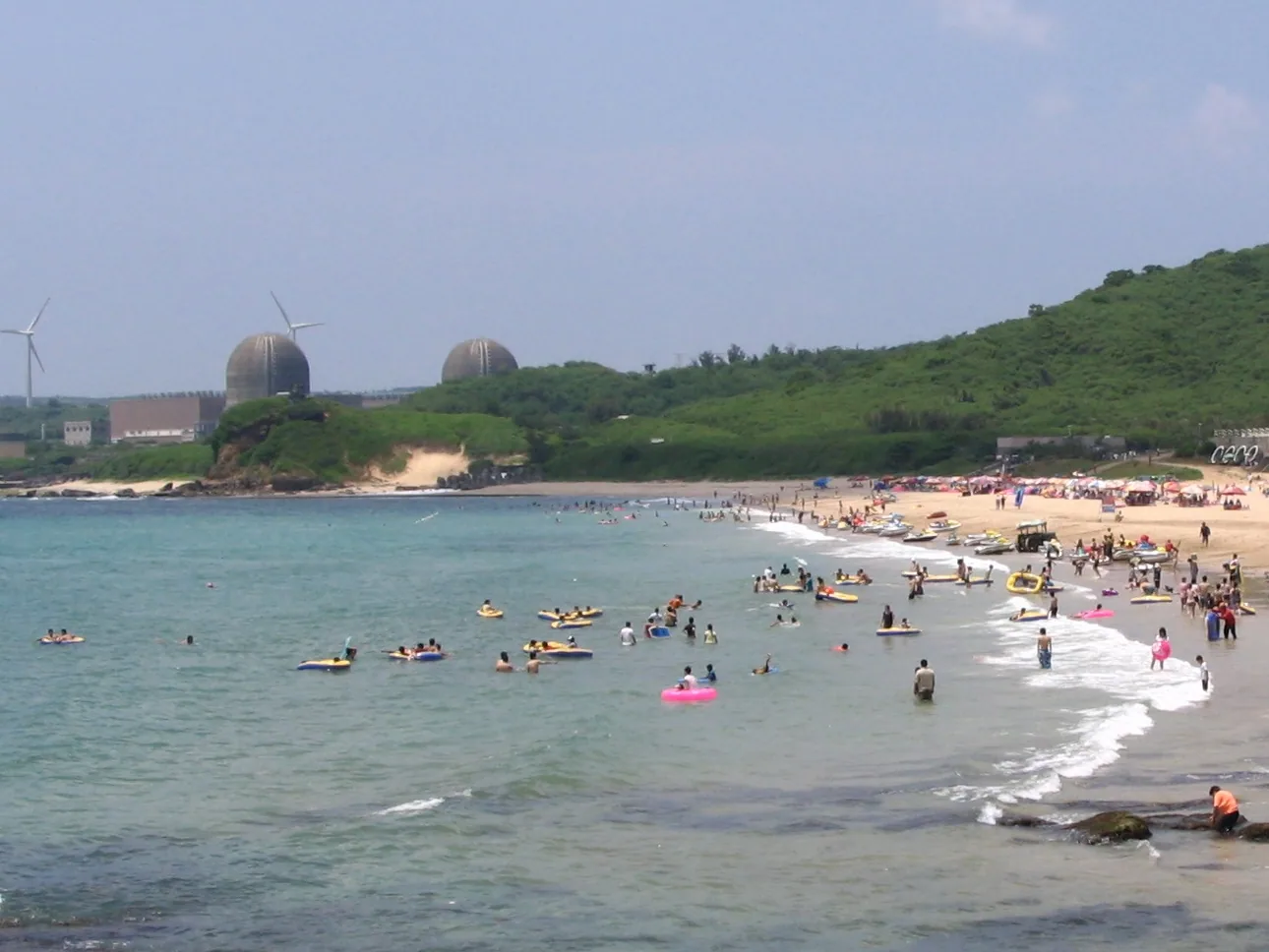
La planta nuclear Nucles 3 (Planta Nuclear de Maanshan), situada en la costa de Nanwan en Hengchun, Pingtung. La unidad 1 cesó operaciones el 1 de enero de 2025 y la unidad 2 el 17 de mayo. Imagen: M. Weitzel, CC BY-SA 3.0, vía Wikimedia Commons
El día del referéndum de Nucles 3
La tarde del 23 de agosto de 2025, tras el recuento en las 22 ciudades y condados de Taiwán, se conocieron los resultados del referéndum sobre la extensión de Nucles 3: 4.342.206 votos a favor frente a 1.511.693 en contra (74,17 % de apoyo). Sin embargo, la participación fue de solo el 29,53 %. Según la ley de referéndums, se requiere que vote al menos una cuarta parte del censo electoral (5.000.523 votos), por lo que faltaron 658.317 votos a favor para alcanzar el umbral1. A pesar de que los partidarios superaban en más del doble a los opositores, el referéndum no fue aprobado.
📝 Nota del curador: La interpretación común es que «el 74 % a favor = apoyo ciudadano claro a la energía nuclear», pero este argumento invierte la causalidad. El diseño de la ley de referéndums no busca ver quién tiene más votos, sino exigir un umbral de movilización para demostrar que el asunto «le importa a suficiente gente». Una participación del 29,53 % significa que más del 70 % de los electores prefirieron no salir de casa. Esta es una tercera señal, más incómoda: mucha gente no tiene una opinión sobre la energía lo suficientemente fuerte como para acudir a las urnas.
Dos días después, el 25 de agosto, el presidente Lai Ching-te convocó una rueda de prensa y respondió que, para reiniciar la energía nuclear, se deben superar tres filtros: «seguridad nuclear garantizada, solución para los residuos nucleares y consenso social»2. Suena razonable, pero cada uno de estos puntos es un problema que no se ha podido resolver en 50 años.
Y entonces llegamos al 27 de marzo de 2026. Taipower envió el plan de solicitud de reactivación de Nucles 3 al Consejo de Seguridad Nuclear, iniciando los procedimientos de inspección de seguridad tras la parada de la unidad 1. Se estima que el proceso de inspección durará unos 18 meses, con una posible reapertura en 20281. Esto es un retroceso.
Desde el recuento del referéndum hasta la presentación de la solicitud pasaron exactamente siete meses. En ese tiempo nada cambió: los residuos nucleares siguen en Lanyu, no se ha elegido un sitio para el repositorio final y el consenso social sigue fragmentado. Pero el proceso administrativo avanzó. Esta es la pregunta que intenta responder este artículo: cuando una votación democrática rechaza algo, pero el departamento administrativo lo impulsa simultáneamente, ¿quién decide realmente la política energética de Taiwán?
De Lanyu 1982 a 2057
Para entender la historia de Nucles 3, primero hay que entender la historia de Lanyu.
En 1982, Taipower inauguró un depósito de residuos radiactivos de baja actividad en la costa sur de Longmen, en Lanyu. En aquel momento, se dijo a los residentes del pueblo Tao (達悟族) que se trataba de una «fábrica de conservas de pescado», una afirmación que se ha convertido en uno de los casos de engaño más citados en la historia de la justicia ambiental de Taiwán6. En 1988, el pueblo Tao inició la primera protesta a gran escala, utilizando rituales tradicionales para «expulsar a los espíritus malignos» como forma de rechazo a los residuos nucleares, marcando el inicio del movimiento ambientalista de los pueblos indígenas en Taiwán.
En los siguientes 38 años, las promesas de traslado se incumplieron cuatro veces: en 1996 el gobierno prometió el traslado para 2002 (primer incumplimiento); luego ocurrió lo mismo en 2016, 2019 y 2023. Hasta 2024, el depósito de Lanyu acumulaba 97.672 barriles de residuos radiactivos de baja actividad. El Consejo de Energía Nuclear exigió a Taipower completar el traslado para 2029, pero el destino final sigue sin definirse4.
Si en 2029 se vuelve a incumplir la promesa (algo que la industria prevé), los residuos nucleares de Lanyu habrán permanecido allí desde 1982 hasta 2057, un total de 75 años. Una isla con una población de 4.000 personas ha soportado los subproductos del funcionamiento de cuatro plantas nucleares nacionales durante un tiempo superior a la esperanza de vida de la mayoría de los taiwaneses.
⚠️ Punto controvertido: Los defensores de la energía nuclear suelen decir que «el problema de los residuos es técnicamente soluble, el obstáculo es político». Pero el problema de los residuos nucleares reside en la dimensión temporal. Lanyu lleva ya 44 años desde 1982 y las promesas nunca se han cumplido. En el escenario más optimista, el traslado ocurriría en 2029; pero ¿qué pasa después de «salir de Lanyu»? La elección del sitio para el repositorio final sigue bloqueada, y la resistencia local en el municipio de Daren, condado de Taitung, no se ha resuelto. Lo técnicamente viable $\neq$ lo políticamente viable $\neq$ lo éticamente viable. Lanyu es donde estas tres brechas se materializan.
Un informe de PanSci señala que las barras de combustible nuclear mantienen altas temperaturas y radiaciones tras el cierre del reactor, por lo que deben enfriarse en las piscinas del reactor durante al menos 5 años antes de poder ser trasladadas. Sin embargo, la cuestión del terreno para las instalaciones de almacenamiento en seco de las plantas Nucles 1 y 2 lleva bloqueada más de 11 años; el gobierno de Nuevo Taipéi se ha negado a autorizar estas instalaciones, lo que provoca que el combustible gastado siga en las piscinas, superando ya la capacidad original de diseño78. «El mayor obstáculo para extender la vida útil de la energía nuclear es el destino del combustible nuclear gastado», afirma PanSci citando el consenso industrial, una frase que sirve de incómodo ruido de fondo para la solicitud de reactivación de Nucles 38.
El límite físico de los residuos nucleares
Desplacemos la mirada hacia la isla de Olkiluoto, al sur de Finlandia.
A 500 metros bajo tierra, en capas de granito, se ha excavado un túnel de 5 kilómetros de largo. Al final del túnel se encuentra Onkalo, el primer repositorio final de residuos nucleares de alta actividad que ha obtenido oficialmente un permiso de funcionamiento experimental. En agosto de 2024, la autoridad de seguridad nuclear finlandesa STUK emitió la licencia; este proyecto, planificado desde la década de 1970, ha tardado casi medio siglo9.
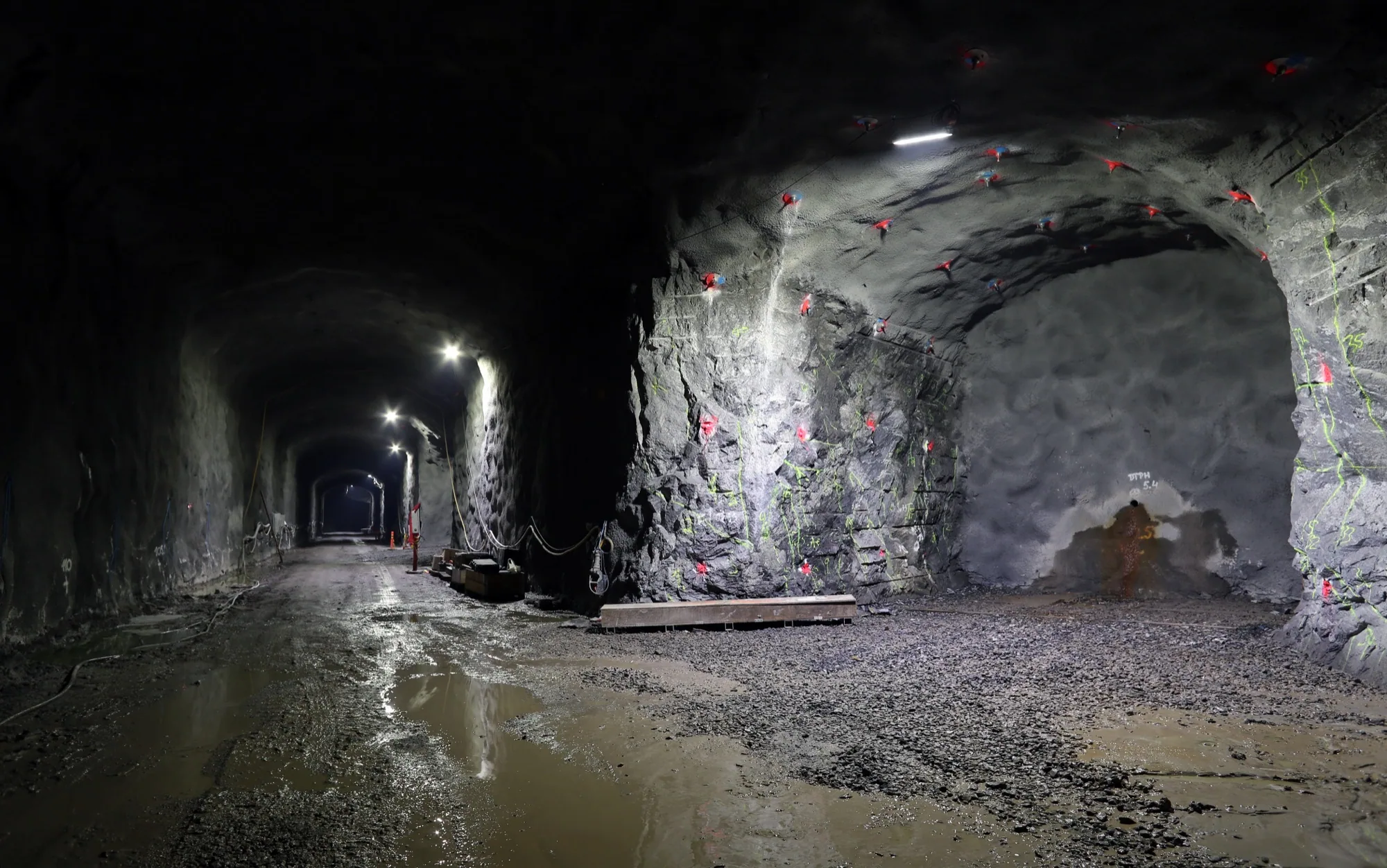
Entrada al repositorio final de residuos nucleares de alta actividad Onkalo en Finlandia. Capas de granito a 500 metros bajo tierra; licencia de funcionamiento experimental obtenida en 2024. Imagen: kallerna, CC BY-SA 4.0, vía Wikimedia Commons
El objetivo de diseño de Onkalo es aislar los residuos nucleares durante más de 100.000 años. ¿Qué tan exagerada es esta escala temporal? La civilización humana tiene unos 10.000 años, las pirámides más antiguas tienen 4.500 y hace 100.000 años nuestros ancestros aún no habían salido de África10.
💡 ¿Sabías que...?: El tiempo de aislamiento necesario para un repositorio final es tan largo que llega al «final de la memoria humana». El equipo de diseño de Onkalo pasó varios años debatiendo cómo hacer que los humanos de dentro de 100.000 años sepan que «no deben excavar aquí», ya que para entonces no quedará ningún idioma, símbolo, gobierno o religión actual. La solución final consiste en usar símbolos de advertencia nuclear junto con avisos en múltiples idiomas, aunque los diseñadores admiten que esto es solo un «mensaje para los próximos 1.000 años». Nadie sabe qué pasará después de ese milenio.
¿Y el repositorio final de Taiwán? El sitio candidato para los residuos de baja actividad es el municipio de Daren en el condado de Taitung, pero el proceso de selección está estancado debido a la resistencia política local11. En cuanto al repositorio de alta actividad, ni siquiera se ha iniciado el proceso de selección del sitio. Finlandia tardó 50 años en llegar al funcionamiento experimental; Taiwán lleva cero años.
El informe de PanSci también menciona otra «solución al límite físico» que fue discutida seriamente: la eliminación de residuos nucleares en el espacio. «La idea de eliminar los residuos nucleares en el espacio es físicamente viable, pero requiere cohetes extremadamente estables y seguros; de lo contrario, un fallo en el lanzamiento provocaría una contaminación radiactiva en la Tierra difícil de calcular»12. La tasa de fallos del Falcon 9 de SpaceX es de aproximadamente el 1 %, lo que significa que, de cada 100 lanzamientos, uno podría hacer explotar residuos de alta actividad en la atmósfera. Es físicamente viable y, a la vez, físicamente inviable.
Este es el límite físico detrás de las palabras «solución para los residuos nucleares». Su escala temporal es más larga que toda la civilización humana.
El arcoíris del hidrógeno: verde, azul, gris y blanco/oro
Si la energía nuclear es demasiado pesada, ¿podemos evitarla?
En los últimos cinco años, el hidrógeno ha sido visto como la próxima ola de la transición energética. El problema es que el hidrógeno es un vector energético y no una fuente primaria: primero hay que usar otra energía para «fabricar» el hidrógeno y luego usarlo para generar electricidad o como combustible. Su origen determina si es realmente «limpio».
PanSci clasifica el hidrógeno por colores según su método de producción: «Los códigos de color del hidrógeno corresponden a diferentes métodos de producción: hidrógeno gris (SMR de gas natural, emite $\text{CO}_2$), hidrógeno azul (gris + CCS), hidrógeno verde (electrólisis del agua con electricidad renovable) e hidrógeno azul-verde (pirólisis de metano, captura carbono sólido sin emitir $\text{CO}_2$). Desde la perspectiva de las emisiones, el verde es el ideal, pero el más costoso»13.
| Color del Hidrógeno | Método de Producción | Emisiones de Carbono | Coste | Situación en Taiwán |
|---|---|---|---|---|
| Gris | Reformado con vapor de gas natural (SMR) | Altas (emite $\text{CO}_2$) | Bajo | El más usado industrialmente |
| Azul | Hidrógeno gris + Captura y almacenamiento de carbono (CCS) | Medias (reducidas por CCS) | Medio-Alto | Sin operación comercial |
| Verde | Electrólisis del agua con energía renovable | Cero | Alto | En planificación por CPC Corp. |
| Azul-Verde | Pirólisis de metano (descarbonización) | Cero (produce carbono sólido) | Medio | Pruebas en planta Xingda |
| Blanco / Oro | Formación natural subterránea | Cero (no requiere fabricación) | Pendiente de exploración | Ninguno |
El punto de prueba del hidrógeno en Taiwán se encuentra en la planta eléctrica de Xingda, en Kaohsiung. Taipower y la Academia Sinica colaboran en el testeo de la tecnología de «combustión de hidrógeno descarbonizado»: descomponer el gas natural (metano) a altas temperaturas en hidrógeno y carbono sólido; el proceso no genera dióxido de carbono y el carbono sólido puede usarse como materia prima industrial13. El atractivo de esta tecnología es que permite aprovechar la infraestructura existente de gas natural, sin tener que reconstruir todo el sistema energético.
Pero el hidrógeno tiene sus propios límites físicos. «Aunque el hidrógeno es una energía limpia, su efecto como gas de efecto invernadero es 11,6 veces superior al del dióxido de carbono ($\text{GWP}_{100}$); si hay fugas durante la producción, transporte o uso, podría agravar el calentamiento global»14. La molécula de hidrógeno es la más pequeña del universo y su tasa de fuga es intrínsecamente alta; este es un límite físico de la ciencia de materiales que no puede superarse totalmente solo con esfuerzo ingenieril.
También hay nuevos protagonistas: el hidrógeno blanco / oro. Un estudio del Servicio Geológico de Estados Unidos (USGS) de 2023 estima que las reservas de hidrógeno natural formadas por movimientos tectónicos podrían alcanzar «decenas de miles de millones de toneladas», suficientes para cubrir la demanda energética humana durante siglos1415. Francia y Mali ya realizan exploraciones comerciales. Taiwán, con sus límites de placas activos, tiene potencial teórico, pero actualmente no existen planes de exploración; es la opción energética más alejada de la realidad.
📝 Nota del curador: El núcleo central que el lector debe recordar sobre la clasificación del hidrógeno es que, detrás del término «energía limpia», siempre hay que preguntar «de dónde viene la energía». El hidrógeno verde solo es rentable cuando sobra electricidad renovable y no hay dónde venderla, una situación a la que Taiwán aún no ha llegado. Hasta entonces, el hidrógeno es, en realidad, una vitrina para otro tipo de combustibles fósiles.
Geotermia en Taiwán: potencial de 33 GW frente a realidad de 7,4 MW
Si el hidrógeno es una «lucha de vectores», la geotermia es una «lucha de profundidad».
Taiwán debería ser una potencia geotérmica. Situada en la intersección de las placas Euroasiática y del Mar de Filipinas, posee un reservorio natural de recursos geotérmicos compuesto por volcanes, aguas termales y cinturones sísmicos. En 1981 se construyó una unidad experimental de 3 MW en Qingshui, Yilan, la primera planta geotérmica de Taiwán. Sin embargo, cerró en 1993 debido a problemas técnicos como incrustaciones en los pozos y corrosión por ácidos.
Durante los siguientes 30 años, la geotermia quedó en silencio en Taiwán. No fue hasta 2020 cuando una unidad de 4,2 MW en Qingshui, con inversión privada, retomó la operación comercial, devolviendo el tema al debate público. En 2024 comenzó la construcción de un proyecto de 5,4 MW en Tucheng, Yilan, previsto para iniciar en principios de 2026. A finales de 2025, la capacidad geotérmica comercial total en Taiwán es de 7,4 MW16.
¿Y los objetivos oficiales del gobierno? 200 MW para 2030 y 6 GW (6.000 MW) para 2050. De 7,4 MW a 200 MW hay una diferencia de 27 veces; hasta los 6 GW, la diferencia es de 810 veces. Estos son plazos de 5 y 25 años.
Un informe de PanSci citando investigaciones de la Universidad Nacional de Taiwán (NTU) señala que «los recursos geotérmicos en Taiwán están ampliamente distribuidos; según la NTU, el potencial de generación de la geotermia profunda (más de 5 km de profundidad) alcanza los 33.640 MW, equivalente a unas 12 plantas nucleares de tipo Nucles 4»17. Pero esto es un valor teórico. El desarrollo de la geotermia profunda requiere tecnología EGS (Enhanced Geothermal System), que implica perforar varios kilómetros y crear capas de intercambio térmico mediante inyección artificial de agua. Actualmente solo existen unos pocos proyectos piloto en el mundo y la tecnología no se ha comercializado.
Por otro lado, «el potencial de desarrollo de la geotermia superficial en Taiwán (menos de 3 km de profundidad) se estima que no supera los 1.000 MW; actualmente hay algunos proyectos experimentales en Qingshui, Yilan y en el área del monte Datun, Taipéi»17. Incluso si se explotara toda la geotermia superficial, solo cubriría aproximadamente el 3 % de la demanda eléctrica total de Taiwán.
La ventaja de la geotermia es su estabilidad. «A diferencia de la eólica o la solar, la geotermia no depende del clima; es una fuente de energía de base que genera electricidad de forma estable las 24 horas, lo que le otorga un valor único en el mix energético»18. Hay pocas energías renovables capaces de sustituir la función de carga base de la nuclear, y la geotermia es una de ellas, siempre que realmente se pueda construir.
⚠️ Punto controvertido: El lento desarrollo de la geotermia en Taiwán suele atribuirse a la «inmadurez tecnológica». Pero PanSci llegó a una conclusión diferente tras entrevistar al sector: el verdadero cuello de botella es la incertidumbre subterránea + la dificultad para obtener préstamos. Antes de perforar un pozo, nadie puede garantizar que saldrá agua, qué temperatura tendrá o cuánto durará. Los bancos no prestan dinero y los empresarios no se atreven a invertir. Japón y Nueva Zelanda enfrentaron dilemas similares, pero ambos cuentan con fondos gubernamentales para compartir el riesgo. En Taiwán, los desarrolladores geotérmicos solo pueden usar el modelo de financiación de la energía solar: la solar genera electricidad en cuanto se instala; la geotermia no. Copiar ese marco financiero condena al proyecto al bloqueo.
El programa Nuestra Isla (我們的島) de la televisión pública PTS dedicó dos episodios en marzo de 2023 a la «generación eléctrica por calor», acompañando al equipo nacional en el monte Datun, Yilan y comunidades de Taitung, documentando exhaustivamente tanto la exploración técnica como la negociación con las comunidades:
Canal oficial de PTS «Nuestra Isla»: Ep. 1195 «El equipo nacional de exploración geotérmica en acción» (2023-03-06). En el monte Datun y Jiaoxi, Yilan, siguen al equipo de exploración del Instituto de Geología del Ministerio de Economía, el Instituto de Investigación de Taipower y el ITRI para ver cómo se reconstruye la pista del «hongo geotérmico» a partir de ondas sísmicas, muestras de roca y gradientes de temperatura. Aquí comienza la respuesta concreta sobre cuánto calor hay bajo el suelo de Taiwán.
Canal oficial de PTS «Nuestra Isla»: Ep. 1196 «Generación geotérmica en las comunidades» (2023-03-13). Presenta simultáneamente los niveles de «transición energética vs. justicia local», mostrando dónde se encuentran las negociaciones comunitarias en Lize (Yilan), Hongye (Taitung) y Zhonglun (Chiayi). Los problemas técnicos son una cosa; la posibilidad sociológica de entrar en el territorio es otra completamente distinta.
Energía oceánica: fase experimental de los 9,4 GW de la Corriente Negra
Después del subsuelo, sigue el mar.
La Corriente Negra (Kuroshio), frente a la costa este de Taiwán, es una de las corrientes marinas más fuertes del mundo. Con una velocidad de 1,5-2,5 m/s y un ancho de unos 100 km, fluye constantemente hacia el norte. Teóricamente, es un río energético inagotable. En 2021, la Academia Sinica completó las pruebas marinas de una unidad experimental de 100 kW, un hito en el desarrollo de la energía oceánica en Taiwán19.
PanSci cita la estimación de la Academia Sinica: «El potencial de energías renovables en las aguas circundantes a Taiwán es enorme; se estima que el potencial teórico de la energía oceánica (incluyendo corrientes, olas y gradientes térmicos) alcanza los 9,4 GW. La Corriente Negra, al pasar por la costa este, es la fuente de energía de corrientes con mayor potencial de desarrollo»19.
Otra dirección es la OTEC (Ocean Thermal Energy Conversion): utilizar la diferencia de temperatura entre el agua superficial cálida (25-28 °C) y el agua profunda fría (5 °C) para accionar un generador. Debido a la gran diferencia de profundidad en las aguas del este, Taiwán se considera un lugar ideal para la OTEC. «Las aguas del este de Taiwán son teóricamente ideales para desarrollar la OTEC, pero actualmente sigue estando en fase experimental»20.
Sin embargo, el límite físico de la energía oceánica se alcanza antes que el de la geotermia: la durabilidad de la ingeniería marina. Tifones, corrosión salina, incrustaciones biológicas y reparaciones en aguas profundas son desafíos de ingeniería a escala centenaria. A nivel internacional, no hay plantas comerciales de OTEC operativas; el caso líder mundial en energía de corrientes es una demostración de 100 kW en Okinawa, Japón. La prueba de 100 kW de Taiwán es solo el comienzo; la experiencia internacional indica que llegar a la comercialización toma entre 15 y 20 años.
Energía nuclear de cuarta generación SMR: la apuesta de Bill Gates
Si volvemos al camino de la energía nuclear, ¿será la cuarta generación la respuesta?
Informa PanSci: «La mayor diferencia entre el reactor Natrium y las plantas nucleares tradicionales es su refrigerante. Mientras que los reactores convencionales usan agua, el Natrium utiliza sodio metálico líquido. El sodio tiene un punto de ebullición más alto, lo que permite operar a temperaturas mayores y mejorar la eficiencia; además, su conductividad térmica es 100 veces superior a la del agua»21.
Este es el reactor rápido refrigerado por sodio impulsado por TerraPower, empresa fundada por Bill Gates. En abril de 2026, el proyecto Natrium comenzó oficialmente sus obras en Kemmerer, Wyoming, con fecha prevista de finalización en 203022, un año más tarde de lo previsto, pero marcando un hito clave en la comercialización de la cuarta generación nuclear.
El atractivo de la cuarta generación es el «Reactor Modular Pequeño» (SMR, Small Modular Reactor): la capacidad de generación baja de los 1000 MW tradicionales a unos 100-300 MW, permitiendo que sean prefabricados en fábrica y ensamblados in situ, lo que teóricamente reduce costes y tiempos de construcción.
Pero el límite físico persiste. PanSci señala dos riesgos críticos:
«Los reactores rápidos requieren combustible de uranio enriquecido y la reacción de breeding genera plutonio 239, una materia prima fundamental para fabricar armas nucleares. Por lo tanto, la gestión de los materiales nucleares para prevenir la proliferación es un desafío inevitable para los reactores rápidos»23.
«La construcción del reactor Natrium marca un gran avance tecnológico, sin embargo, su desarrollo conlleva desafíos significativos»24. El sodio líquido reacciona violentamente con el agua y es inflamable; la operación del reactor exige requisitos extremos de ciencia de materiales y aún no existen datos de seguridad de operaciones comerciales a gran escala.
¿Tiene Taiwán planes para SMR? Actualmente no hay ninguna planificación oficial. Incluso si se empezara la evaluación ahora, la experiencia internacional indica que desde la elección del sitio, el estudio de impacto ambiental y la revisión de seguridad hasta la operación comercial pasan entre 15 y 20 años. Es decir, la cuarta generación no es la respuesta para el cero neto de 2050; en el escenario más optimista, solo estaría operativa hacia 2045-2050.
📝 Nota del curador: En el discurso internacional, la cuarta generación nuclear suele presentarse como «la energía nuclear del futuro», convirtiéndola así en una «excusa para retrasar la transición energética actual»: si habrá una tecnología mejor en 15 años, ¿por qué apresurarse ahora? Esta es la confusión más peligrosa dentro de los límites físicos. El cuello de botella de las renovables es que «aún no se han construido suficientes», mientras que el de la cuarta generación nuclear es que «no hay suficientes datos de seguridad y no proliferación en operación comercial». Ambos cronogramas no son sustituibles; perder la ventana de construcción de renovables de 2030 no podrá compensarse con un SMR en 2045.
Eólica marina: la pieza del puzzle que lidera Asia
Volvamos a lo que ya está sucediendo.
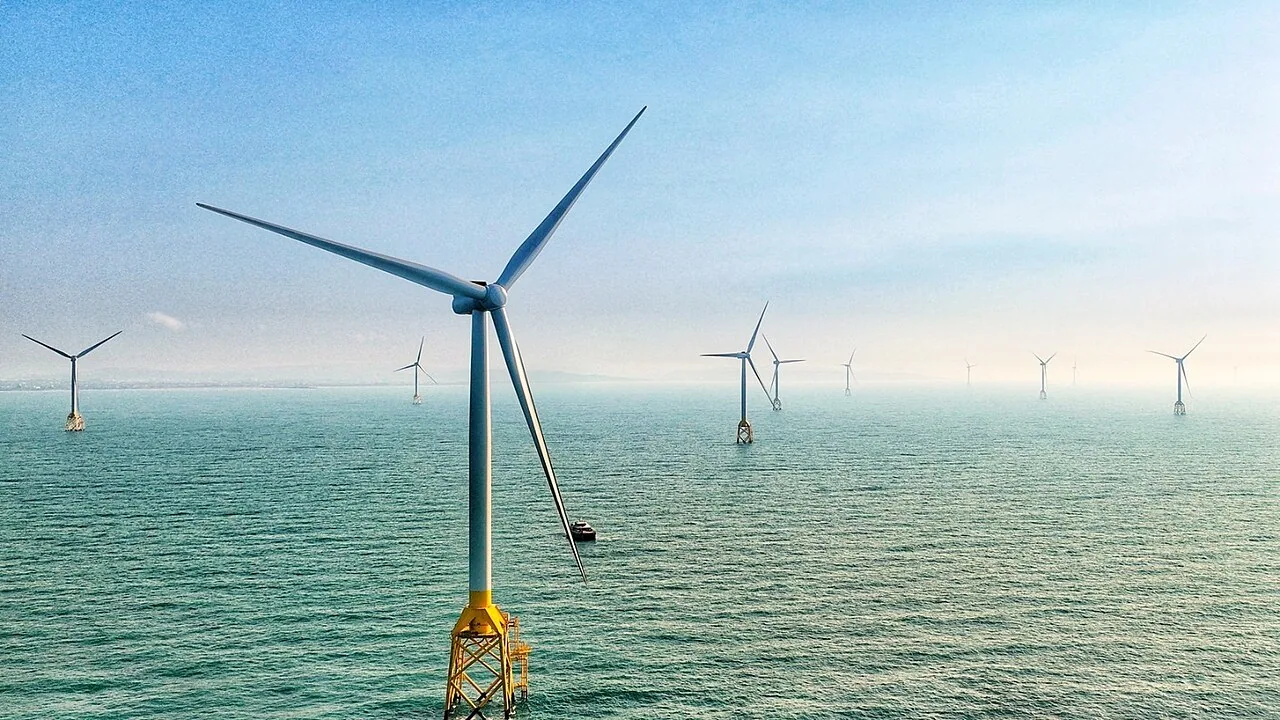
El parque eólico marino Hai Long (Formosa 1), en las costas de Miaoli, entró en operación comercial en 2019 y es el primer gran parque eólico marino de Taiwán. Imagen: Ministerio de Economía de la República de China (Taiwán), Atribución, vía Wikimedia Commons
El estrecho de Taiwán es uno de los mejores campos de viento del mundo. «Debido a factores topográficos, el estrecho de Taiwán genera un "efecto túnel", haciendo que la velocidad del viento sea muy superior a las aguas circundantes, lo que convierte a Taiwán en uno de los lugares con mayor potencial para el desarrollo eólico marino»25. En invierno, el monzón del noreste es comprimido entre la cordillera Central y las colinas de Fujian hacia el estrecho, con velocidades medias de 10-12 m/s. Este hecho geográfico ha convertido a la eólica marina en la apuesta central de la transición energética.
De una capacidad casi nula en 2016, Taiwán alcanzó una capacidad instalada acumulada de aproximadamente 4,5 GW para marzo de 20263, situándose a la vanguardia de Asia en velocidad de expansión. Ørsted, la empresa danesa, completó la construcción de los parques eólicos del suroeste y noroeste de Changhua con un total de 920 MW26. La tercera fase de desarrollo por bloques, iniciada en 2026, asigna una capacidad de 3,6 GW con el objetivo de completar la conexión a la red entre 2030 y 20313.
El plan gubernamental es aún más ambicioso: 13 GW para 2030 y el desafío de los 55 GW para 2050.
Pero los aerogeneradores en el mar no solo traen electricidad, sino también conflictos. En febrero de 2022, más de cien pescadores de Changhua protestaron ante el Ejecutivo, acusando al gobierno de «eliminar a los pescadores» en favor de la energía eólica27. Las zonas prohibidas de navegación delimitadas para los parques bloquearon aguas donde habían operado por generaciones. En mayo de 2025, un tribunal dictaminó que las restricciones de navegación eran ilegales, siendo la primera vez que un tribunal cuestiona la gestión espacial de la eólica marina en Taiwán28.
La energía solar fotovoltaica ha seguido otro camino. En 2024, su capacidad instalada alcanzó los 14.281 MW, representando el 68 % del total de renovables, con una generación de 14.900 millones de kWh29. Los diversos modelos (tejados, suelo, flotantes y agrivoltaica) han convertido al sol en la fuerza principal de las renovables. Sin embargo, la política de agrivoltaica ha suscitado dudas sobre «falsos cultivos para plantar paneles», obligando al Ministerio de Agricultura a reforzar las inspecciones. En una isla con solo 790.000 hectáreas de tierra cultivable, el uso de cada parcela es un problema político.
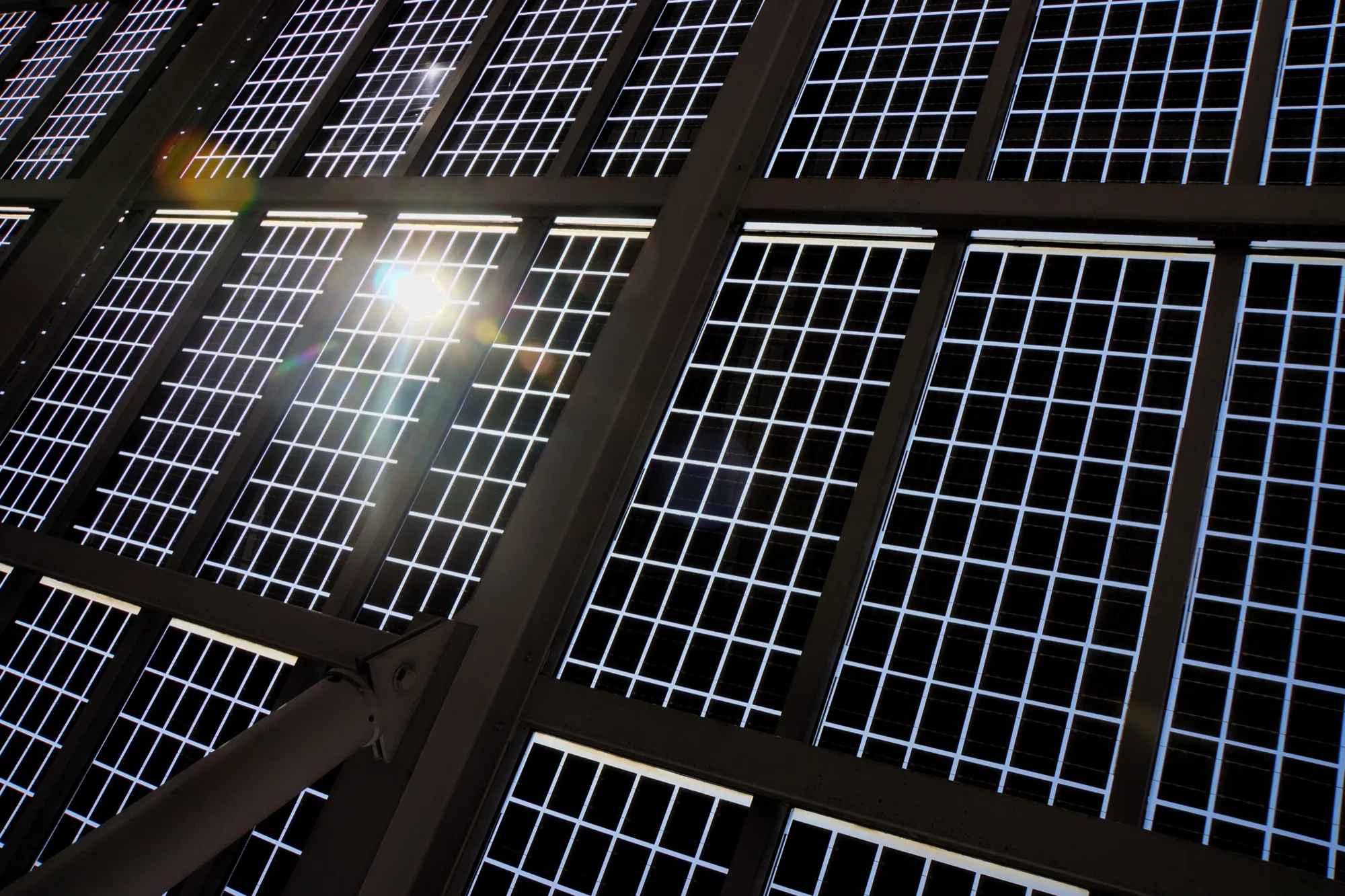
Paneles solares en el tejado de la estación de servicio de Xihu. La capacidad instalada de energía solar fotovoltaica en Taiwán alcanzó los 14.281 MW en 2024, representando el 68 % de las renovables. Imagen: lienyuan lee, CC BY 3.0, vía Wikimedia Commons
El viento y la luz son las piezas más rápidas del puzzle energético, pero son intrínsecamente intermitentes: no hay electricidad cuando se pone el sol o cuando el viento para. Este es el argumento más usado por los defensores de la nuclear en el debate sobre Nucles 3: «las renovables son inestables, se necesita energía de base». Volvemos al punto de la geotermia: que las renovables de base no se construyan lo suficientemente rápido (con una brecha de 27 veces respecto al objetivo) es el soporte político para el cronograma de reapertura de Nucles 3 en 2028.
Aquella tarde del 13 de mayo
El 13 de mayo de 2021, a las 14:37, en la subestación de ultra alta tensión de Lubei en la planta eléctrica de Xingda, Kaohsiung, un operador activó el interruptor n.º 3541 cuando debía activar el n.º 354230.
Este error humano provocó una falla a tierra en la barra colectora, haciendo saltar cuatro unidades y perdiendo instantáneamente 2,2 GW de capacidad de generación. A partir de las 15:00 se implementaron seis rondas de cortes eléctricos zonales en todo Taiwán, cada una de 50 minutos, afectando a unos 4 millones de hogares. Para empeorar la situación, la generación solar disminuyó con el atardecer y la sequía había reducido la generación hidroeléctrica. No fue hasta las 19:00 que las unidades de carbón volvieron a entrar en línea, y a las 20:00 se restableció la electricidad totalmente.
Cuatro días después, el 17 de mayo, la unidad 1 de Xingda volvió a fallar, provocando una segunda ola de apagones. Ambos eventos afectaron a más de 5,62 millones de hogares30.
El «513» y el «517» expusieron la fragilidad de un sistema eléctrico en plena transición; no fue solo un problema de error humano. La solución del gobierno es el almacenamiento de energía: planificar 1,5 GW de baterías para 2025 y ampliarlo a 8,6 GW para 2030. Pero los costes siguen siendo altos y la tecnología aún está madurando.
Esta es la cara más honesta de la transición energética: el sistema viejo ya no es suficiente y el nuevo aún no está listo. Que el referéndum de Nucles 3 se apruebe o no, no cambia esta realidad; solo puede retrasar o acelerar el momento de enfrentarla.
Ponerle precio al carbono
El 7 de agosto de 2023, se inauguró en la zona de Asia New Bay en Kaohsiung la Bolsa de Créditos de Carbono de Taiwán, con un capital social inicial de 1.000 millones de TWD y un capital planificado de 1.500 millones; de los cuales 600 millones fueron aportados por la Bolsa de Valores y 400 millones por el Fondo de Desarrollo Nacional31. El 22 de diciembre del mismo año se completó la primera transacción de créditos internacionales: 45 empresas adquirieron unos 88.500 toneladas equivalentes de $\text{CO}_2$ por más de 800.000 USD31.
En 2025, el sistema nacional de tasas sobre el carbono entró oficialmente en vigor, marcando el «año uno de la fijación del precio del carbono» en Taiwán32. Proyectos de mejora de eficiencia energética de Formosa Plastics se cotizaron a 3.000 TWD por tonelada, mientras que proyectos de generación por biogás de Hanbao Agriculture and Livestock se fijaron entre 3.000 y 4.000 TWD. Pero el mercado sigue tanteando: el volumen de transacciones es bajo y las empresas consideran que los precios nacionales son demasiado altos.
Al mismo tiempo, gigantes tecnológicos como TSMC y Foxconn ya están compitiendo en otro frente. Bajo la iniciativa RE100, estas empresas se han comprometido a usar energía 100 % renovable. TSMC planea alcanzar el cero neto para 2050. Cuando los clientes internacionales convierten la electricidad verde en un requisito de la cadena de suministro, el suministro de energía limpia se convierte en una cuestión de supervivencia industrial y no solo en un tema ambiental.
Cuando el Mecanismo de Ajuste en Frontera por Carbono (CBAM) de la Unión Europea entre plenamente en vigor en 2026, aumentará los costes y la presión de declaración para productos con alta huella de carbono como acero, cemento, aluminio, fertilizantes, electricidad e hidrógeno33. La industria manufacturera de Taiwán es intensiva en energía; el acero, la petroquímica, el cemento y el papel representan el 60 % de las emisiones industriales. Este es otro límite físico: el cronograma impuesto a Taiwán por la estructura del comercio internacional.
En su discurso del Día Nacional de 2024, Lai Ching-te anunció el inicio de una «segunda transición energética», que abarca tres direcciones: energías verdes diversificadas, ahorro energético profundo y almacenamiento avanzado34. Sin embargo, en 2025 la proporción de renovables sigue estando notablemente por debajo del objetivo original del 20 %; según la métrica utilizada, se sitúa entre el 12,7 % y el 13,1 %35. El Ministerio de Economía ha modificado la previsión, estimando que se alcanzará el 20 % a partir de noviembre de 2026 y aproximadamente el 30 % para 2030.
Arrecifes, el pueblo Tao y Meinong: las fallas de la justicia ambiental
Cada ruta energética tiene sus opositores, y cada opositor tiene su historia.
Los arrecifes de coral de Taoyuan. El referéndum de 2021 «Protejamos los Arrecifes» (Caso 20) se opuso a la construcción de la tercera terminal de gas natural en la costa de Datam para proteger el terreno de arrecifes columnares más grande del mundo. El referéndum no prosperó y se implementó una solución intermedia: desplazar la zona portuaria para evitar las áreas de alta densidad de coral. Los expertos sostienen que el estudio de impacto ambiental fue insuficiente, pero el comité lo aprobó en 2023. La disputa persiste; es el cruce físico/ecológico donde «para reducir carbono hay que construir gas natural, y para el gas natural hay que alterar los arrecifes».
El pueblo Tao de Lanyu. Desde 1982 hasta 2026, la historia de 44 años del depósito de residuos nucleares es la herida más larga de la justicia ambiental en Taiwán. El pueblo Tao continuó protestando en 2024 por el incumplimiento del traslado; en mayo del mismo año, el Consejo de Energía Nuclear exigió a Taipower completar la mudanza para 2029. Pero el destino sigue sin respuesta4.
El rechazo a la presa en Meinong. El movimiento contra la presa de Meinong en los años 90, cohesionado por el «Festival de las Mariposas Amarillas» y el «espíritu Hakka», logró detener el proyecto y es un clásico del movimiento ambiental comunitario en Taiwán. Leer hoy sobre Meinong revela que su espíritu sigue influyendo en otros frentes energéticos: cada aerogenerador, panel solar o línea de transmisión que llega a una localidad se encuentra con la respuesta: «no nos oponemos a la transición energética en sí, sino a que el coste de dicha transición recaiga sobre nosotros».
📝 Nota del curador: El debate común sobre justicia ambiental suele detenerse en «equilibrar desarrollo y medio ambiente», pero este marco simplifica demasiado el problema. El verdadero punto común entre Lanyu, los arrecifes y Meinong es que todos son secuelas de decisiones tomadas después de la década de 1980, pagadas por movimientos sociales entre 1990 y 2020. La transición energética generará nuevos «Lanyus» y «arrecifes» antes de 2050 (como los pescadores de Changhua con la eólica marina, los indígenas de Yilan con la geotermia o las salinas de Tainan con la solar). El problema real es si podemos evitar repetir el modelo de decisión de 1982.
Para un contexto detallado sobre la historia de la justicia ambiental, véanse Historia del movimiento ambiental en Taiwán y Desafíos de conservación y gestión de la contaminación marina en Taiwán.
9 billones de TWD y el límite físico
Al poner todas las energías en una misma tabla, emergen las brechas del límite físico.
| Energía | Potencial Teórico en Taiwán | Situación Actual (2025) | Objetivo / Plazo Gob. | Principal Límite Físico |
|---|---|---|---|---|
| Eólica Marina | Uno de los mejores del mundo | 4,5 GW | 13 GW (2030), 55 GW (2050) | Ing. marina / Conflictos pesqueros |
| Solar Fotovoltaica | Tejados + Agrivoltaica | 14,3 GW | 31 GW (2030) | Adquisición de tierras / Intermitencia |
| Geotermia (Superficial) | $\le$ 1.000 MW | 7,4 MW | 200 MW (2030), 6 GW (2050) | Incertidumbre subterránea / Financiación |
| Geotermia (Profunda EGS) | 33.640 MW (Teórico) | Fase de laboratorio | 2040+ | Tecnología EGS no comercializada |
| Energía Oceánica | 9,4 GW (Teórico) | Prueba de 100 kW | 2030+ | Durabilidad ing. marina |
| Hidrógeno (Verde) | Requiere mucha energía renovable | Pruebas en planta Xingda | 2030+ | Coste electrólisis / Fugas GWP |
| Extensión Nucles 3 | 1.902 MW | Parada en 2025 | Reapertura más rápida 2028 | Residuos nucleares / Revisión seguridad |
| Nuclear Gen 4 SMR | Sin planes locales | Prueba EE. UU. 2030 | 2045+ | Seguridad sodio / No proliferación |
Esta tabla responde a una pregunta: ¿Puede Taiwán alcanzar el cero neto para 2050 sin recurrir a la energía nuclear?
Técnicamente, sí. La hoja de ruta del Consejo de Desarrollo Nacional enumera 12 estrategias clave con una inversión prevista de 9 billones de TWD36. Pero esto requiere que la eólica marina, la solar, la geotermia, la oceánica, el hidrógeno y el almacenamiento alcancen simultáneamente sus objetivos. Y actualmente la geotermia está a 27 veces de su meta, la energía oceánica sigue en escala de kW, el hidrógeno está en pruebas y los costes de almacenamiento son altos.
Cada límite físico es tiempo.
En el modelo de Hsu Huang-hsiung, Taiwán no tendrá invierno después de 206037. En las evaluaciones de riesgo costero, las zonas bajas del oeste enfrentan una mayor presión por la subida del nivel del mar y marejadas ciclónicas38. De 1911 a 2020, la temperatura media anual en Taiwán aumentó 1,6 °C, casi una vez y media el promedio global (1,1 °C)37.
Una isla que se calienta una vez y media más rápido
En el verano de 2017, Hsu Huang-hsiung, del Centro de Investigación sobre el Cambio Ambiental de la Academia Sinica, observó los datos en su pantalla y lanzó una predicción que sus colegas apenas se atrevían a decir en voz alta: si la tendencia de emisiones no cambia, el invierno en Taiwán podría desaparecer por completo después de 206037. Los días de invierno caerían a cero y el verano se alargaría hasta siete meses.
No es ciencia ficción. Los días con más de 35 °C en Taipéi pasaron de 3 días al año en la década de 1960 a casi 15 días en la última década39. En el sur es peor: Tainan y Kaohsiung ya superan los 30 días de temperaturas extremas.
En el mismo edificio, Wang Chung-ho, del Instituto de Ciencias de la Tierra, calculaba otros números. Su conclusión es igualmente inquietante: la velocidad de subida del nivel del mar alrededor de Taiwán es el doble del promedio global38. Diversas simulaciones indican que esto, sumado a las marejadas, aumentará el riesgo de inundaciones en las costas bajas del oeste; entre las seis ciudades principales, la población y el terreno expuestos en Nuevo Taipéi, Tainan y Kaohsiung son especialmente preocupantes.
El temperamento de la lluvia también ha cambiado. La precipitación total no ha disminuido significativamente, pero ahora llueve cuando no debe y cae con una violencia extrema. Las lluvias de primavera han caído drásticamente y la estación seca es más seca. En 2021, Taiwán sufrió la sequía más grave en 56 años; el nivel de los embalses alcanzó mínimos históricos y TSMC tuvo que enviar camiones cisterna a sus fábricas para suministrar agua40. Ese mismo mayo, dos grandes apagones golpearon la isla.
Los días con lluvias torrenciales superiores a 200 mm pasaron de una media anual de 5 días en los años 60 a 8 días recientemente. En 2009, el tifón Morakot registró un acumulado de 2.884 mm en Alishan41, la mayor cantidad de lluvia jamás observada en Taiwán; la lluvia de tres días equivalía a todo un año en Taipéi. Durante aquel desastre, la aldea de Xiaolin en Jiaxian, Kaohsiung, fue sepultada por el colapso del monte Xiandun, dejando 491 víctimas42.
«Cada silla representa a un familiar». Así decía el superviviente Wang Min-liang a los visitantes en el Parque Conmemorativo de Xiaolin. Fundó la comunidad Sunlight Xiaolin y organiza giras por todo Taiwán con el grupo de danza y música del pueblo. (Citado de Nuestra Isla de PTS).
El «Informe Científico Nacional sobre el Cambio Climático 2024», coordinado por Hsu Huang-hsiung, señala que los eventos de lluvia extrema que ocurrían cada 50 años podrían ocurrir ahora cada 10 años43. Yunlin, Tainan y Keelung son las zonas con mayor riesgo de inundaciones costeras.
Para una isla de 23 millones de personas, las emisiones de carbono de Taiwán son desproporcionadamente altas: en términos de $\text{CO}_2$ por combustibles fósiles, emite unos 280 millones de toneladas anuales (unos 11,7 toneladas per cápita), situándose entre los niveles más altos del mundo; según diversas bases de datos, se ubica aproximadamente en el puesto veinte a nivel global44. Las emisiones se concentran en el uso de energía y la generación eléctrica. El núcleo del problema es la estructura de generación: en 2024, el gas natural representó el 42,4 % y el carbón el 39,3 % (el gas superó al carbón por primera vez); las renovables fueron el 11,6 % y la nuclear el 4,2 %35. Este es un sistema energético aún muy dependiente de combustibles fósiles, y Taiwán importa el 98 % de su energía. La seguridad energética y la crisis climática son el mismo problema.
La Paralelismo entre la Democracia y la Física
La consulta popular sobre Nucles 3 del 23 de agosto de 2025 puso todos los矛盾 (contradicciones) de este tema en el escrutinio.
Con un 74% a favor, un 29.53% de participación, sin alcanzar el umbral, la entrega por parte de Taipower en marzo de 2026 y una posible reactivación más temprana en 2028. Al mismo tiempo: 97.672 barriles en Lanyu, Onkalo en Finlandia durante 50 años, una diferencia geotérmica de 27 veces, la energía oceánica aún en 100 kW y la energía nuclear de cuarta generación para 2045. Cada número pregunta: ¿El ritmo de la democracia puede seguir el ritmo de la física?
| Cronograma Democrático | Cronograma Físico |
|---|---|
| Votación del 23/08/2025 | Puesta en marcha de Lanyu en 1982, posible hasta 2057 |
| Conferencia de prensa sobre los Tres Principios el 25/08/2025 | Aislamiento de residuos nucleares por 100.000 años |
| Entrega de Taipower el 27/03/2026 | Finlandia tarda 50 años en la disposición final |
| Posible reactivación más temprana en 2028 | Diferencia geotérmica de 27 veces |
| Objetivo Net Zero en 2050 | Pruebas de energía oceánica aún en 100 kW |
Nadie sabe si los 9 trillones de dólares pueden comprar un futuro diferente. Pero ya estamos viendo las consecuencias de no gastar ese dinero: el invierno sin frío de Hsu Huang-hsiung en 2060, los 2.884 mm y 513 de Morakot, la división causada por la consulta sobre los arrecifes de algas y la espera de Lanyu durante 44 años.
Reporte de PanSci cita el consenso de la industria para señalar que "el proyecto Onkalo en Finlandia, el más avanzado a nivel mundial en disposición final, obtuvo permiso de prueba en agosto de 2024. Este proyecto se planificó desde la década de 1970 y tardó casi medio siglo en llegar a esta etapa de pruebas" 9. A Taiwán aún no le ha quedado claro ni dónde ubicar su disposición final. Incluso si Nucles 3 se reactiva en 2028, cada barra de combustible nueva generada durante la reactivación debe encontrar un lugar para ser depositada.
Los 97.672 barriles de Lanyu no desaparecerán porque la consulta haya sido aprobada o rechazada. Están ahí ahora, probablemente seguirán ahí en 2029, y seguirán ahí en 2057 (si el traslado se retrasa de nuevo).
✦ El 23 de agosto de 2025, la consulta no fue aprobada. El 27 de marzo de 2026, Taipower aún entregó su informe. Entre estas dos fechas, el límite físico no ha cambiado ni una sola vez. Lo que ha cambiado es si estamos dispuestos a reconocer que esta isla, cuya energía depende en un 98% de las importaciones, está haciendo cola para enfrentar todos los límites físicos que nadie quiere afrontar.
Lecturas relacionadas:
- Debate sobre la energía nuclear en Taiwán — Este artículo trata sobre la energía y los límites físicos; aquel trata sobre el debate nuclear en sí: cuarenta años de lucha social entre anti-nuclear y pro-nuclear, tres consultas y la gestión de residuos nucleares de Lanyu.
- Historia del movimiento ambiental en Taiwán — Desde contra la energía nuclear hasta contra la contaminación atmosférica, cómo los pueblos indígenas de Lanyu, el rechazo al embalse de Meinong y la consulta sobre los arrecifes de algas han moldeado la política energética actual.
- Gobernanza y desafíos de la contaminación marina en Taiwán — El cruce ecológico entre el vertido de Nucles 3 (80% blanqueamiento de coral), los desechos marinos y la eólica marina.
- Aguas termales y energía geotérmica en Taiwán — Desde el fracaso de la geotermia de Qingshui en 1981 hasta su reactivación en 2024, cómo se ha formado este silencio geotérmico de 30 años.
- Justicia ambiental y conflictos NIMBY en Taiwán — Lanyu, arrecifes de algas, Meinong: la política de distribución del costo de la transición energética.
- Mejora de la transformación industrial en Taiwán — De la manufactura de alto consumo a la industria verde, el balance energético de TSMC RE100, CBAM y la protección del Dios Guardián.
- Árboles viales en Taiwán — La escala temporal y espacial del sombreado proporcionado por los árboles urbanos: para que un árbol dé sombra se necesitan al menos diez años, lo cual es una adaptación de la que no se puede esperar.
- Desarrollo de la modernización agrícola en Taiwán — La presión de la transformación agrícola y los conflictos por el uso del suelo detrás de la simbiosis energía-agricultura.
- Mei (lluvia de temporada)/frente estancado — Observaciones locales del cambio climático: "la lluvia primaveral no llega, y la temporada de lluvias se concentra".
- Mecanismo de precios del petróleo en Taiwán y CPC — La tensión entre subsidiar los combustibles fósiles y las señales de ahorro energético: el congelamiento de precios hace que lo barato sea repartido por litro, y quien más consuma ahorra más, pero nadie ha hecho una tabla para saber quién fue el mayor consumidor en estos seis meses.
Fuentes de imágenes
- Vista exterior de Nucles 3 (Maanshan, Hengchun, Pingtung): Maanshan Nuclear Power Plant, Nan Wan (Foto: M. Weitzel, Wikimedia Commons, CC BY-SA 3.0).
- Repositorio subterráneo Onkalo (Olkiluoto, Finlandia): Onkalo spent nuclear fuel repository entrance (Foto: Posiva Oy, Wikimedia Commons, CC BY-SA 4.0).
- Parque eólico marino Hai Long frente a Miaoli: Hai Long offshore wind farm (Wikimedia Commons, CC BY-SA 4.0).
- Paneles solares en el tejado de una estación de servicio: Xihu Service Area solar panels (Wikimedia Commons, CC BY-SA 3.0).
Referencias
- Comisión Electoral Central: Resultados del referéndum nacional del 23 de agosto de 2025 — ; CNA: Referéndum de Nucles 3 no alcanza el umbral; Taipower: Explicación sobre la solicitud de reactivación enviada al Consejo de Seguridad Nuclear (27/03/2026) — Datos exactos de votos y plazos de reapertura↩23
- CNA: Discurso de Lai Ching-te tras el referéndum; propone los tres principios — Respuesta oficial sobre seguridad, residuos y consenso.↩2
- Administración de Energía del Ministerio de Economía: Anuncio sobre la Fase 3 de desarrollo eólico marino — Datos sobre capacidad instalada (4,5 GW) y objetivos para 2030-2031.↩23
- Consejo de Energía Nuclear: Anuncio de volumen de almacenamiento en Lanyu (2024) — Datos sobre los 97.672 barriles e incumplimientos de traslado.↩23
- Administración de Energía del Ministerio de Economía: Objetivos y capacidad comercial geotérmica (2025) — Comparativa entre la realidad (7,4 MW) y el objetivo 2030 (200 MW).↩
- Wikipedia: Depósito de Lanyu — Antecedentes sobre el engaño de la «fábrica de conservas» y las protestas de 1988.↩
- PanSci: El cierre de Nucles 2 deja residuos por otros 20 años — Análisis sobre el enfriamiento del combustible y el bloqueo en Daren.↩
- PanSci: ¿Cuál es el verdadero problema de extender la vida nuclear? — El conflicto con el gobierno de Nuevo Taipéi sobre el almacenamiento en seco.↩2
- PanSci: Si no hay sitio para los residuos, ¿hay otras formas? — Análisis del proyecto Onkalo y la escala temporal de 100.000 años.↩2
- Posiva Oy: Introducción al diseño del repositorio final Onkalo — Detalles técnicos sobre las barreras de cobre, bentonita y granito.↩
- Oficina Municipal de Daren, Condado de Taitung: Cuestiones del repositorio final de baja actividad — Conflictos locales y falta de referéndums exitosos.↩
- PanSci: Análisis de viabilidad de la eliminación espacial de residuos nucleares — Riesgos de contaminación atmosférica ante fallos de lanzamiento.↩
- PanSci: ¿La generación con gas natural mejorada no emite $\text{CO}_2$? Hidrógeno gris, azul y verde — Explicación de los colores del hidrógeno y pruebas en Xingda.↩2
- PanSci: Musk lo ignora; ¡Bill Gates lo atesora! Energía del hidrógeno — Análisis sobre el hidrógeno blanco/oro y la potencia del GWP del hidrógeno.↩2
- USGS: Geological Hydrogen — A New Energy Frontier (2023) — Informe sobre reservas naturales de hidrógeno en el subsuelo.↩
- CNA: Inicio de obras de planta geotérmica en Tucheng, Yilan; inicio previsto 2026 — Datos sobre la unidad de 5,4 MW y capacidad total de 7,4 MW.↩
- PanSci: ¿Es viable el desarrollo de energía geotérmica en Taiwán? (Parte 1) — Diferencia entre potencial profundo (33 GW) y superficial ($\le$ 1 GW).↩2
- PanSci: Ventajas de la geotermia y aplicaciones en Taiwán — Análisis sobre el valor de la carga base y los problemas de financiación.↩
- PanSci: Cuanto más alta es la «Montaña Dios Protector», mayor es la presión eléctrica: La energía oceánica como solución — Potencial de 9,4 GW y pruebas de 100 kW en la Corriente Negra.↩2
- PanSci: Posibilidades de la generación OTEC en Taiwán — Análisis sobre el gradiente térmico en las aguas del este.↩
- PanSci: Finalmente comienza la construcción de la planta nuclear de cuarta generación de Bill Gates — Comparativa entre refrigerante de agua y sodio líquido.↩
- TechOrange: Proyecto Natrium de TerraPower inicia obras en Wyoming 2026 — Detalles sobre el cronograma y la importancia del reactor rápido.↩
- PanSci: Riesgos de proliferación nuclear de la cuarta generación — El problema del plutonio 239 en reactores rápidos.↩
- PanSci: Desafíos de seguridad del reactor Natrium — Reactividad del sodio con el agua y falta de datos comerciales.↩
- PanSci: La eólica marina es cara y complicada, ¿por qué Taiwán la impulsa tanto? — Explicación del «efecto túnel» en el estrecho de Taiwán.↩
- PV Magazine: Objetivos solares y eólicos marinos de Taiwán — Informe sobre los proyectos de Ørsted en Changhua y planes de expansión hasta 2026.↩
- Centro de Información Ambiental: Protestas de pescadores de Changhua contra la eólica marina (2022) — Reportaje sobre el bloqueo de zonas de pesca tradicionales.↩
- Centro de Información Ambiental: Sentencia judicial declara ilegales las restricciones de navegación eólica (2025) — Primer caso donde un tribunal cuestiona la gestión espacial energética.↩
- Taipower: Estadísticas de generación de energía renovable — Datos oficiales sobre capacidad solar (14.281 MW en 2024).↩
- Taipower: Investigación preliminar del accidente eléctrico del 13 de mayo — ; Ministerio de Economía: Informe de revisión de los apagones del 513 y 517 — Detalles sobre el error en el interruptor 3541↩2
- Comunicado de la Presidencia: Inauguración de la Bolsa de Créditos de Carbono de Taiwán — ; Informe Anual 2023 de la Bolsa de Valores de Taiwán; Análisis de Anew Model sobre el funcionamiento de la Bolsa de Carbono — Detalles financieros y primeras transacciones internacionales↩2
- KPMG Taiwán: Análisis de tendencias en fijación de precios del carbono (2025) — Dinámicas del mercado y precios de créditos nacionales.↩
- Página oficial del Mecanismo de Ajuste en Frontera por Carbono (CBAM) de la UE — Detalles sobre el periodo de transición y aplicación total en 2026.↩
- Reccessary: Perspectivas de la política energética de Taiwán 2025 — Análisis del discurso de Lai Ching-te sobre la «segunda transición energética».↩
- Estadísticas de la Administración de Energía: Estructura de generación por combustible — ; Plataforma de Información Energética del Ministerio de Medio Ambiente; Economic Daily News: Renovables alcanzarán el 20 % en noviembre de 2026 — Comparativa de métricas de generación eléctrica↩2
- Comunicado de prensa de la Presidencia: Discurso de Tsai Ing-wen en el Día de la Tierra 2021 — Declaración del objetivo de cero neto para 2050.↩
- Visión del Grupo United Daily News: Entrevista con Hsu Huang-hsiung — El equipo de Hsu Huang-hsiung analiza datos de temperatura en Taiwán (1911-2020), señalando un aumento de 1,6 °C en un siglo y la posible desaparición del invierno para 2060.↩23
- Think Tank CSRone: Entrevista con Wang Chung-ho — Análisis sobre la subida del nivel del mar en Taiwán, superior al promedio global.↩2
- Plataforma de Información sobre Cambio Climático de la Agencia Meteorológica Central — Base de datos histórica con tendencias de días superiores a 35 °C en Taipéi.↩
- BBC Chinese: La sequía más grave de Taiwán en 56 años (2021) — Informe sobre la crisis hídrica y las medidas de emergencia de TSMC.↩
- Centro Nacional de Tecnología para la Prevención y Reducción de Desastres: Registro del Tifón Morakot — Archivo oficial con el récord de 2.884 mm en Alishan.↩
- The Reporter: Investigación sobre la desaparición de la aldea Xiaolin — Análisis profundo sobre el colapso del monte Xiandun y las 491 víctimas.↩
- Centro de Información Ambiental: Informe Científico Nacional sobre el Cambio Climático 2024 — Hallazgos sobre la frecuencia de lluvias extremas y aumento de días calurosos.↩
- Estadísticas de emisiones de gases de efecto invernadero de la EPA del Ejecutivo — Base de datos oficial de emisiones nacionales y per cápita.↩